


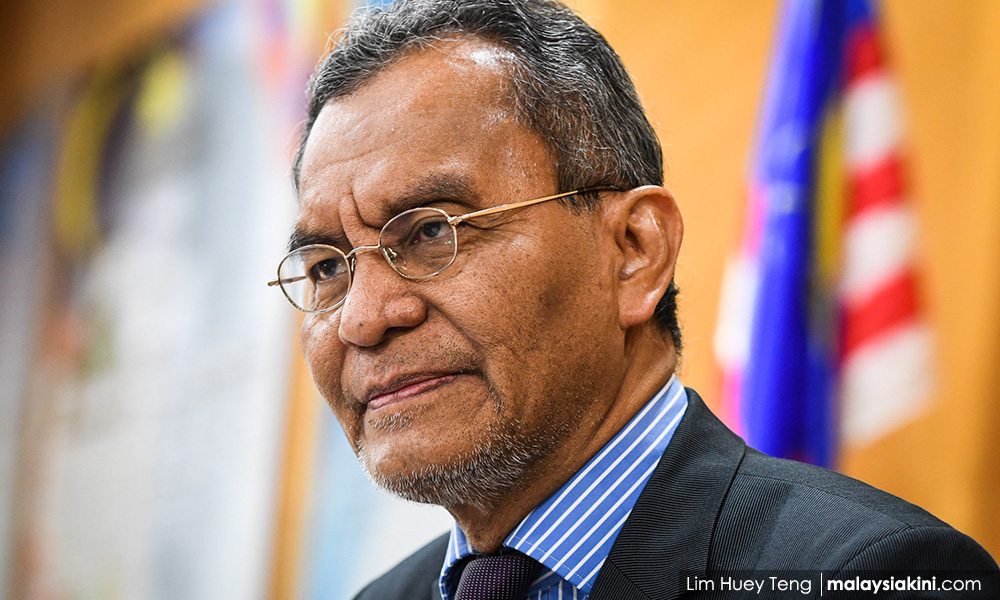

Minister to hand report on Kuala Koh deaths to cabinet on Sept 18
Health Minister Dzulkefly Ahmad is set to present a full report to the cabinet on the deaths of 15 Bateq villagers from Kampung Kuala Koh, Gua Musang in May and June.
An aide to Dzulkefly confirmed that the report would be presented to the cabinet on Sept 18...
Health Minister Dzulkefly Ahmad is set to present a full report to the cabinet on the deaths of 15 Bateq villagers from Kampung Kuala Koh, Gua Musang in May and June.
An aide to Dzulkefly confirmed that the report would be presented to the cabinet on Sept 18.
"Only after the presentation will he inform the media of the findings of the report. God willing, we will hold a press conference in the afternoon, after a post-cabinet meeting," the aide said.
This followed a renewed interest in the deaths of the Bateq tribe members after a report in The Guardian.
The story quoted Federation of Private Medical Practitioners' Associations Malaysia (FPMPAM) president Dr Steven Chow, who had told Malaysiakini of his experience in Kampung Kuala Koh just before the deaths.
Chow has since repeatedly expressed his belief that the deaths were not solely due to measles, and led claims that the government is likely to sweep the issue under the carpet.
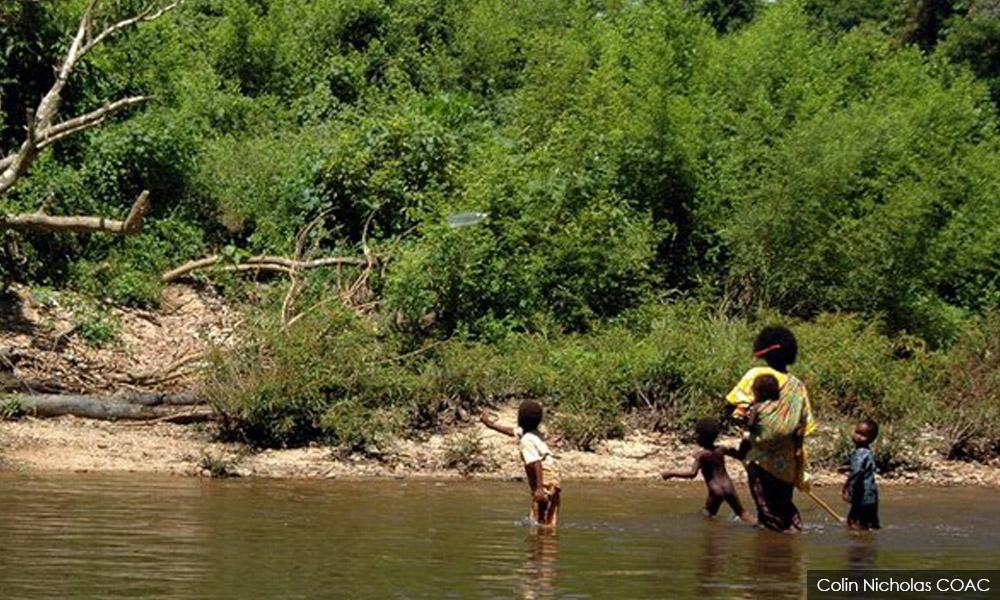
"This is a community left behind, dying from neglect," he said on June 11, questioning the motives behind cordoning off the affected areas.
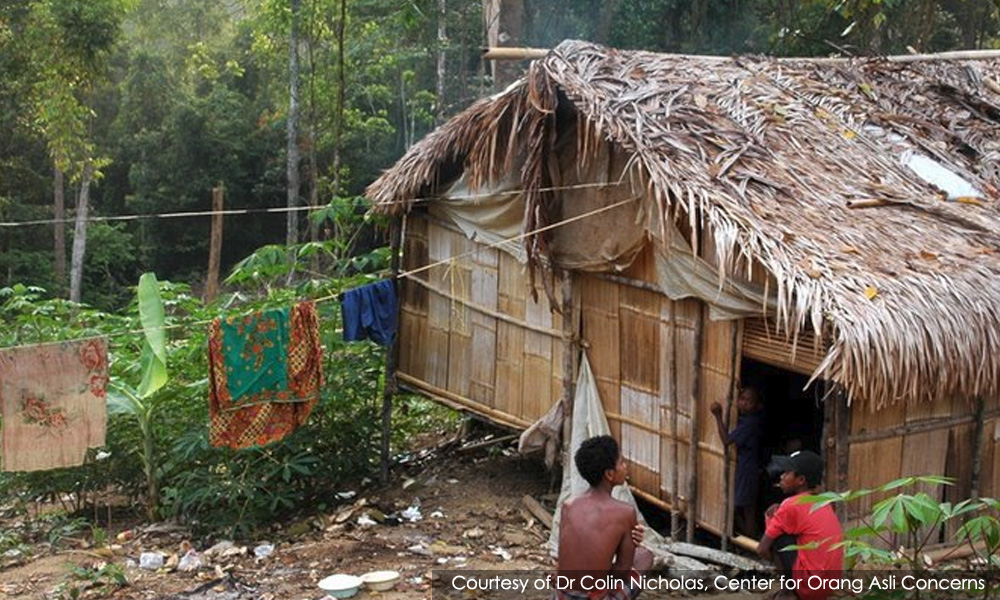
"After their land was taken away for plantations, these people were essentially left to fend on their own and were virtually cut off from the resources of the jungle, which they had previously depended on for their survival."
On July 18, fresh doubts on the underlying cause of the deaths emerged when laboratory tests on samples taken from the waters sourced around Kampung Kuala Koh revealed contamination and toxic substances.
Chow, who helped Malaysiakini break the news, said the samples were taken on June 10 and 11 from five sources.
FPMPAM, along with Pertubuhan Pelindung Khazanah Alam Malaysia (Peka) and the Centre for Malaysian Indigenous Studies, sent the samples for testing in three independent laboratories.
The tests were carried out by the Environmental Engineering Laboratory at Universiti Malaya's Faculty of Engineering, ALS Life Sciences and the Kuala Lumpur branch of ChemLab.
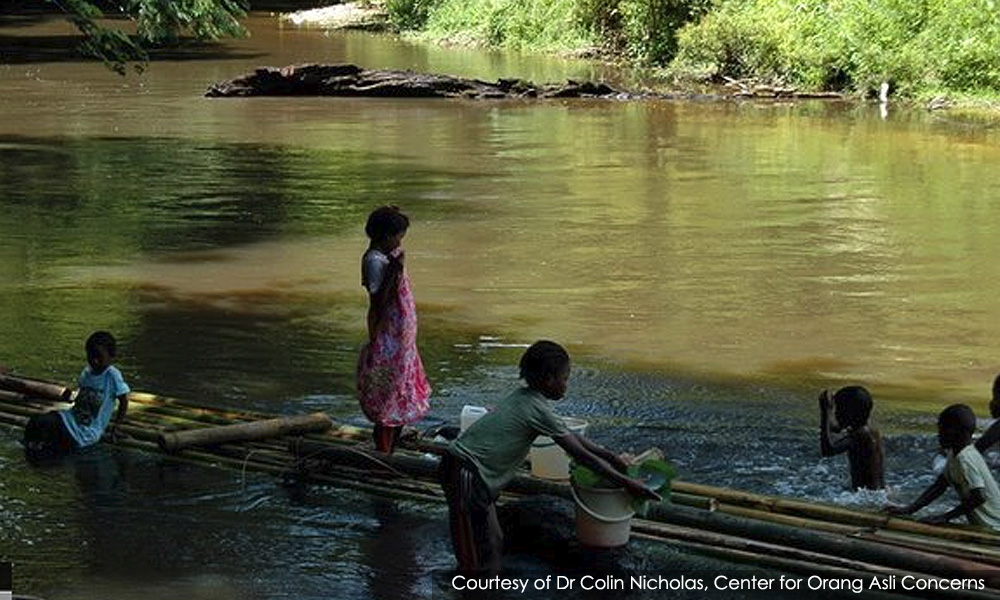
The results of these tests revealed that samples from Sungai Pertang – the main source of water for the community – were not suitable for human consumption unless extensively treated. The water is not even suitable for recreational use.
The Environmental Engineering Laboratory found high levels of ammoniacal nitrogen, ranging from 11.2mg/L to 25.2mg/L. Acceptable levels for river water do not exceed 0.9mg/L.
One study also found that the level of manganese in the water was 2.53mg/L – more than 12 times the safety standard of 0.2mg/L set by the Health Ministry.
The studies also found an unacceptable level of faecal contamination in the water.
The groups met with the health minister on July 18 to urge him to set up an inquiry into the villagers' deaths and expressed their hopes that the Sept 18 report will reveal the truth as to the cause of death of the villagers.
Shortcomings exposed
The human tragedy exposed shortcomings in the administration of emergency medical treatment and raised questions about whether the destruction of the community's habitat or possible contamination of its water supply were behind the deaths.
News of a number of deaths, estimated to be around eight to 10 within a month, first surfaced on June 2 when Sahabat Jariah, an NGO working with the Orang Asli, made a Facebook post highlighting that a number of villagers had died of a mysterious disease.
Another NGO, Klima Action Malaysia, then announced a donation drive, saying it was planning to drop off food, water and medical supplies to the stricken village.
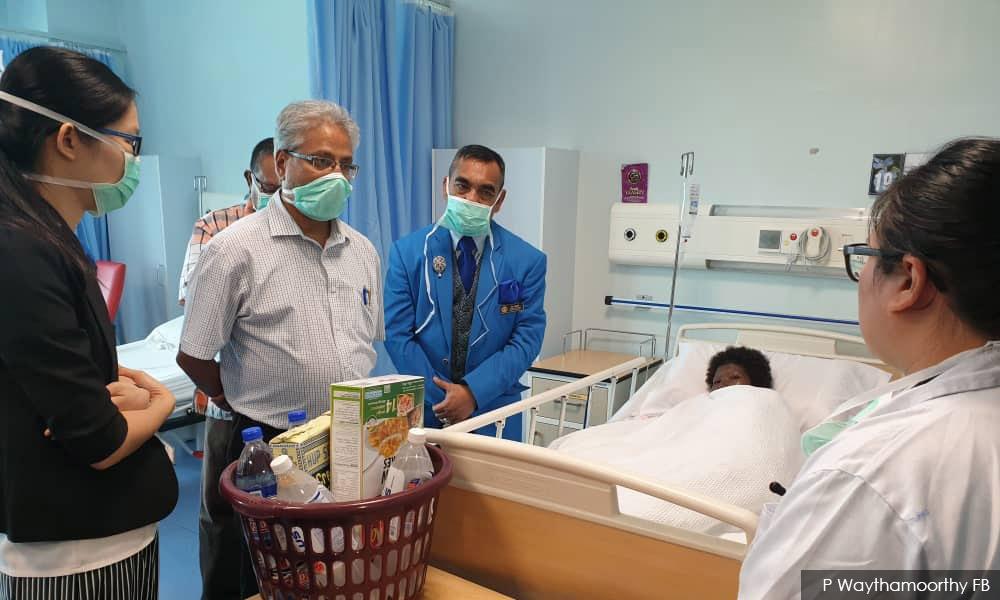
On June 9, news broke out nationally when Minister in the Prime Minister's Department P Waythamoorthy (second from left) flew to Gua Musang. His aide confirmed that there had been 14 deaths in the village since early May.
The village was soon cordoned off to outsiders and declared a red zone. Kelantan Health Department director Dr Zaini Hussin said the move was to curtail the spread of pneumonia infections that could be transmitted through respiration.
The Health Ministry announced that it was carrying out tests to determine the cause of the infections. Initial tests ruled out leptospirosis and tuberculosis, according to minister Dzulkefly.
Colin Nicholas, executive director of the Centre for Orang Asli Concerns, told Malaysiakini then that the root of the problem was that the natural habitat of the Bateq was being destroyed.
"The problem is not medical, but a direct result of what happens when people’s rights to their customary lands are not recognised and that land is destroyed.
"Just seven to 10 years ago, if you visited them, they were perfectly healthy and psychologically happy.
"But their land has been taken away, in this case by the Kelantan government. And their resource base has been destroyed," he said.
Initial post-mortems
Initial postmortems indicated that two Bateq villagers had died of pneumonia, but an order was given for their bodies to be exhumed.
Twelve more bodies had to be retrieved as they had been laid to rest according to traditional beliefs.
The traditional burial practice of the Bateq is for the corpse to be wrapped in tree bark and carried across a river, which according to their belief system, prevents the spirit from returning to the village.
The body is then harnessed to a tall tree in the burial area using vines, and is left there to decompose. Burial grounds are considered taboo by the Bateq.
On June 14, Deputy Prime Minister Dr Wan Azizah Wan Ismail confirmed the Environment Department's findings that there was no water contamination from manganese mining at Aring 10, located 3km from Kampung Kuala Koh.
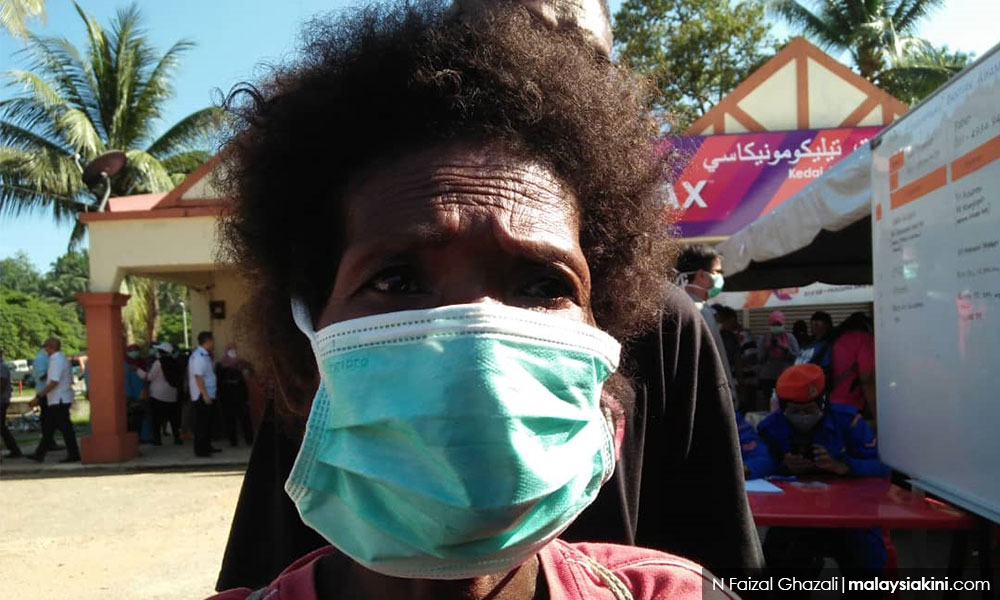
An interview with Som Ngai, 50 (photo), who lost her husband Hamdan Keladi and three children in the space of two weeks, brought home the severity of the tragedy.
"I am still so sad, imagining the pain and suffering of my husband and children.
"I cannot do anything, even cooking and cleaning. I was so sorry to see their condition. Just lying down and unable to eat or drink," Som said.
On June 16, Bateq toddler Nasri Rosli became the 15th victim, passing away due to measles in a hospital in Kota Bharu.
The Health Ministry also then identified measles as the disease affecting the Bateq community.
As many as 37 of 112 members of the community, who are reported to be suffering respiratory tract infections, have contracted measles, Dzulkefly said.
He said these cases were confirmed by laboratory tests, while the results for other diseases like tuberculosis, melioidosis, leptospirosis and coronavirus infections were negative.
Reacting to the revelation, Chow said an outbreak of measles is a plausible explanation for the deaths, but attempts to link the community’s way of life with the tragedy are unfair.
He dismissed the idea that the villagers were not keen to be vaccinated, and rejected claims that the nomadic lifestyle and burial practices of the Bateq might have played a role in the deaths.
Autopsies completed
On June 19, Kelantan police chief Hasanuddin Hassan announced that the autopsies on the remains of all the Bateq villagers had been completed.
On June 20, Dzulkefly confirmed that a second post-mortem conducted on the two deceased Bateq villagers initially deemed to have died of pneumonia, revealed that they died of measles.
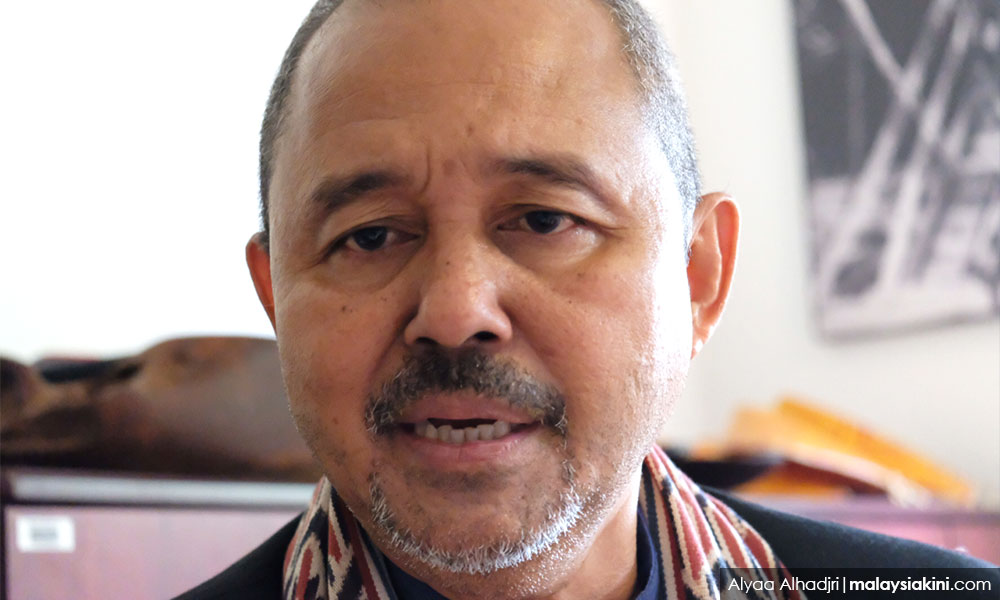
On June 29, Orang Asli Development Department (Jakoa) director-general Juli Edo (photo) told a forum that when he visited the stricken Bateq village, "there was clearly a divide, a 'them and us' situation, and the relationship between the government service providers and the villagers was not warm".
Juli went on to admit that "the majority" of Jakoa staff were "not passionate" about their work, and were there just to "makan gaji (earn a salary)." He also lamented the "ethnocentric attitude" of the staff.
In an exclusive interview with Malaysiakini on July 5, he went on to say that more deaths could be expected if the poverty of the Orang Asli was not addressed.
“The Orang Asli community is still mired in poverty, with nearly 99 percent of them belonging to the B40 income group and most of them in the hardcore poor category.
“What happened in Kuala Koh is a lesson to all. However, I am satisfied with the immediate action taken by the Health Ministry and other government agencies to combat the disease, rather than let it spread to other areas.
“In my opinion, in order to prevent this tragedy from recurring, the first step is the government must strive to alleviate the Orang Asli community from poverty.
Cause of death for three confirmed
On July 6, the Health Ministry said laboratory testing of the three of the deaths among the Orang Asli at Kampung Kuala Koh confirmed that the cause of death was complications due to measles.
However, the postmortems carried out on the other 12 bodies found by the police could not determine the cause of death, largely due to decomposition and contamination.
These 12 bodies were originally buried according to traditional Bateq rites.
Deputy Health Minister Dr Lee Boon Chye said on July 8 that the authorities are facing a tough challenge in determining the cause of death of the 12 as little remained of their bodies.
Denying that the delay of the postmortem report was due to government inefficiency, Lee nevertheless admitted that more could have been done if the bodies had been discovered “much earlier.”



Report this comment
Are you sure you want to delete this comment?
This action cannot be undone.