



Want to be a foodscape volunteer?
It was going to be a hot day with the sun already shining fully at 7.30 am. Thankfully, it was still cool as my friends and I sauntered over to the football field at Kg Sungei Kayu Ara.
In the middle of it sat a bespectacled man with a walking stick leaning against his portable chair. Soon more volunteers joined us. We formed a circle around our sifu, Azlan Adnan.
“I first came across the term foodscape, meaning edible landscape, eight years ago from videos out of the US. Foodscapes were an offshoot and development of the 'Grow Food, Not Lawns' movement in the US where it is still illegal in many cities to grow anything but grass on your lawns.”
He told us that he had been creating foodscapes ...
It was going to be a hot day with the sun already shining fully at 7.30 am. Thankfully, it was still cool as my friends and I sauntered over to the football field at Kg Sungei Kayu Ara.
In the middle of it sat a bespectacled man with a walking stick leaning against his portable chair. Soon more volunteers joined us. We formed a circle around our sifu, Azlan Adnan.
“I first came across the term foodscape, meaning edible landscape, eight years ago from videos out of the US. Foodscapes were an offshoot and development of the 'Grow Food, Not Lawns' movement in the US where it is still illegal in many cities to grow anything but grass on your lawns.”
He told us that he had been creating foodscapes since 2001 even before he heard of the term “foodscape” or “permaculture.”
“I have numerous foodscape sites, several in Kampung Sungai Penchala, one in Kota Kinabalu, in Puchong and in Kampung Sungai Kayu Ara. The one in Kota Kinabalu was created in 2001.
"When I visited the site 10 years later, the pandan and kunyit (which are perennials) were still 1.5 m tall. The tenant says she never waters or fertilises, just takes whatever she needs whenever she needs but otherwise lets them grow wild. “
In theory, we learnt a lot. Adnan had an encyclopaedic grasp of the methods and procedures. Eventually, the theory ended and it was time to get “experiential.” We made our way to the site and gathered at “base camp” under the shady refuge of a lovely cherry tree.
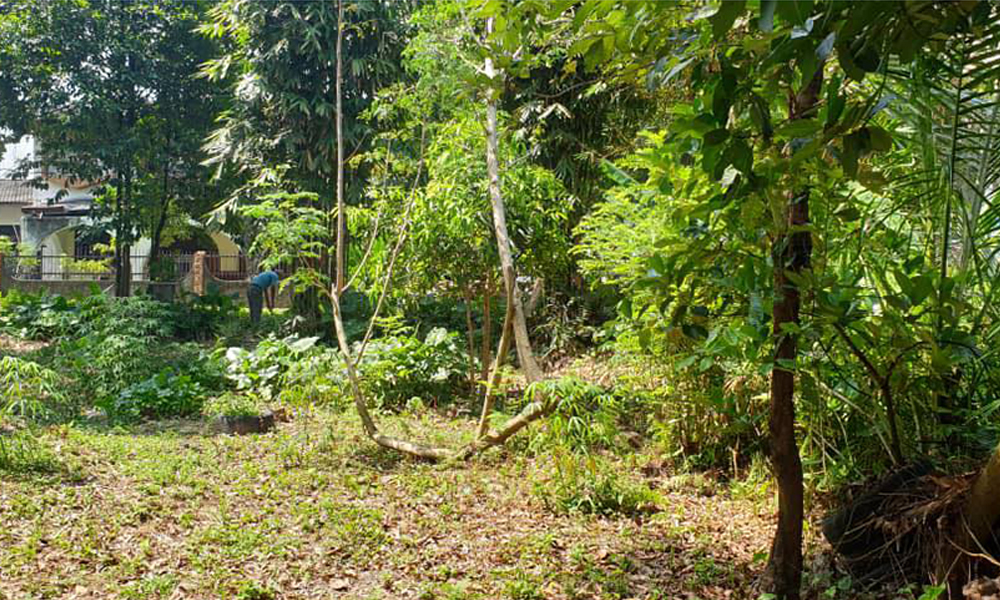
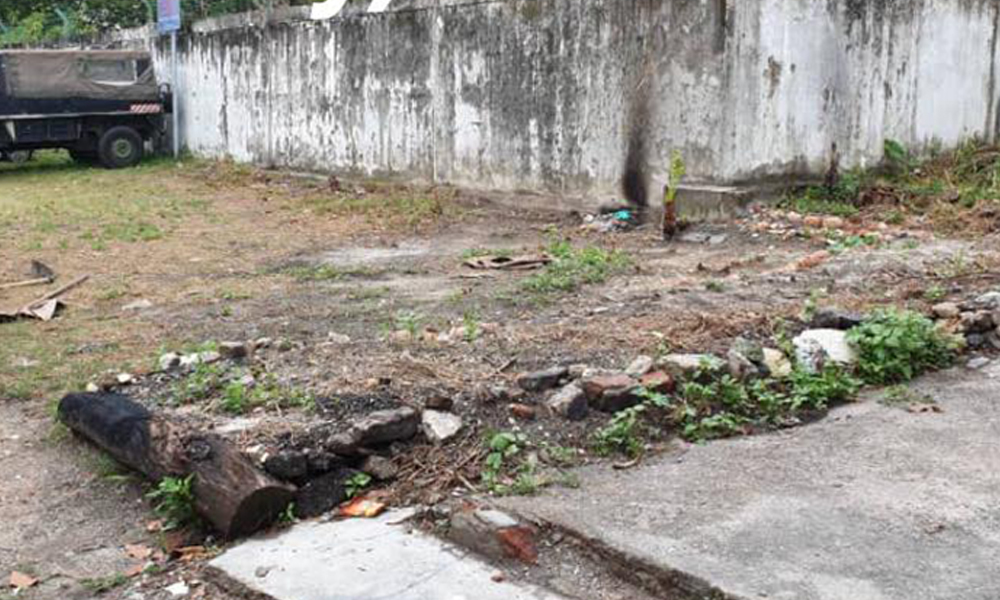
“The Kg Sg Kayu Ara site was an unkempt, overgrown and dirty dumpsite that was an abandoned pasar minggu site. There were all sorts of rubbish, burnt out motorcycle carcasses, mattresses, tyres, Pampers, furniture dumped and burnt on the site.
The aur (elephant grass) was taller than people. There were weeds and vines growing all over the place. The public footpath was reduced to a strip just 1.5 feet wide,” said Azlan.
Connected to earth
Since January 2021, Azlan has worked alone, paying for the grass cutters, collecting the rubbish, preparing the veggie garden beds to be turned into “hugels.”
These are raised beds using permaculture techniques of “layering”. When designed correctly, hugels do not need to be watered (rain once every three weeks is sufficient) or fertilised for 10-15 years.
His first “batch” of volunteers arrived on March 6, then March 14 and every Sunday there on.

There were real estate agents, teachers, architects, journalists, CEOs, parents, home-schoolers, engineers - many who had never touched a cangkul in their lives or “played with dirt” (dirt being the other positive word for “earth.”).
On March 28, I made it to my second session at the Kampung Kayu Aru foodscape site. An L-shaped hugel was almost finished. Pumpkins and ground nuts and honeydews had already sprouted.
Interesting how connected to earth I felt when seeing that. Soon this site will be able to supply organic vegetables to anyone who wants them for food. Nothing was fenced in.
All Azlan asked for was to put back what was taken out, maybe in the form of seeds, manure, soil, compost or simply imparting the knowledge to more people.
Want to be a foodscape volunteer? Contact Azlan Adnan at 011-626-2956 or through email foodscapevolunteers@gmail.com or via Instagram.
Related article:
Back to dirt for a sustainable future
JENNIFER RODRIGO is a freelance writer based in Petaling Jaya who focuses on lifestyle, personality, travel, arts & culture, health & wellness.
The views expressed here are those of the author/contributor and do not necessarily represent the views of Malaysiakini.




Are you sure you want to delete this comment?
This action cannot be undone.