


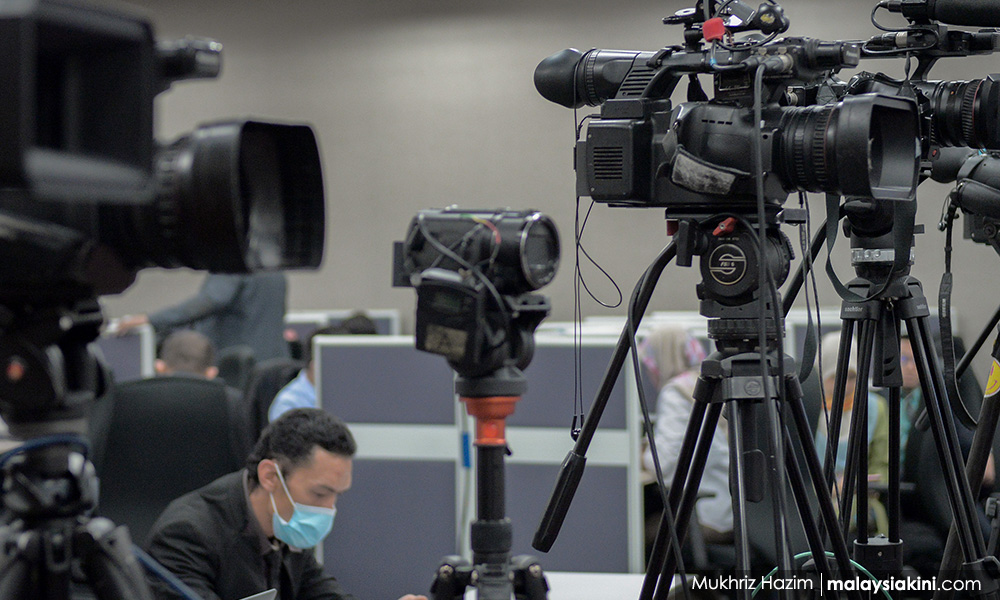

Human rights group slams harassment of M'sian journos, activists
Malaysian authorities are increasingly using criminal investigations to harass journalists, protest leaders and various other critics of the government, said international NGO Human Rights Watch (HRW) today.
It added that under the current administration, free speech is increasingly under threat as many are facing potential prosecution and have been subject to police questioning about their work or speech.
“In a rights-respecting democracy, the government does not view journalism as a crime and accepts criticism and satire as free speech,” said Linda Lakhdhir, HRW's Asia legal advisor.
“The Malaysian government’s growing use of criminal laws to...
Malaysian authorities are increasingly using criminal investigations to harass journalists, protest leaders and various other critics of the government, said international NGO Human Rights Watch (HRW) today.
It added that under the current administration, free speech is increasingly under threat as many are facing potential prosecution and have been subject to police questioning about their work or speech.
“In a rights-respecting democracy, the government does not view journalism as a crime and accepts criticism and satire as free speech,” said Linda Lakhdhir, HRW's Asia legal advisor.
“The government’s growing use of criminal laws to target critics demonstrates its rapidly declining regard for human rights standards.”
HRW, which was founded in New York in 1978, cited how Malaysiakini journalists were called up yesterday over coverage of allegations that police brutality was the cause of the death in detention of A Ganapathy.
"The investigation falls under a broadly worded provision of the Penal Code that criminalises the 'spread of rumours that can cause fear and alarm to the public, which could induce a person to commit an offence against the state or to public peace'.
“Reporting on allegations of government misconduct is part of a journalist’s job,” Lakhdhir said.
“Rather than investigating the reporters, the authorities should be conducting a credible investigation into the allegations of police abuse.”
HRW said the Penal Code, Sedition Act, Peaceful Assembly Act, and Communications and Multimedia Act all contain overly broad and vaguely worded provisions that allow the police to investigate or arrest people for a wide range of activities or speech that the government dislikes.
Last month, international journalism watchdog Reporters Without Borders’ (RSF) annual press freedom index said that Malaysia's press freedom standards fell the most in the world in 2020.
RSF had said Malaysia’s press freedom situation improved dramatically after the 2018 general election, but things have gone in reverse since Prime Minister Muhyiddin Yassin took over, culminating in the recent “anti-fake news” emergency decree allowing the government to “impose its own version of the truth”.
Aside from the calling up of Malaysiakini journalists, HRW said recent cases have targeted people for organising public protests, reporting on allegations of police abuse, drawing cartoons, and posting an ironic Spotify playlist.
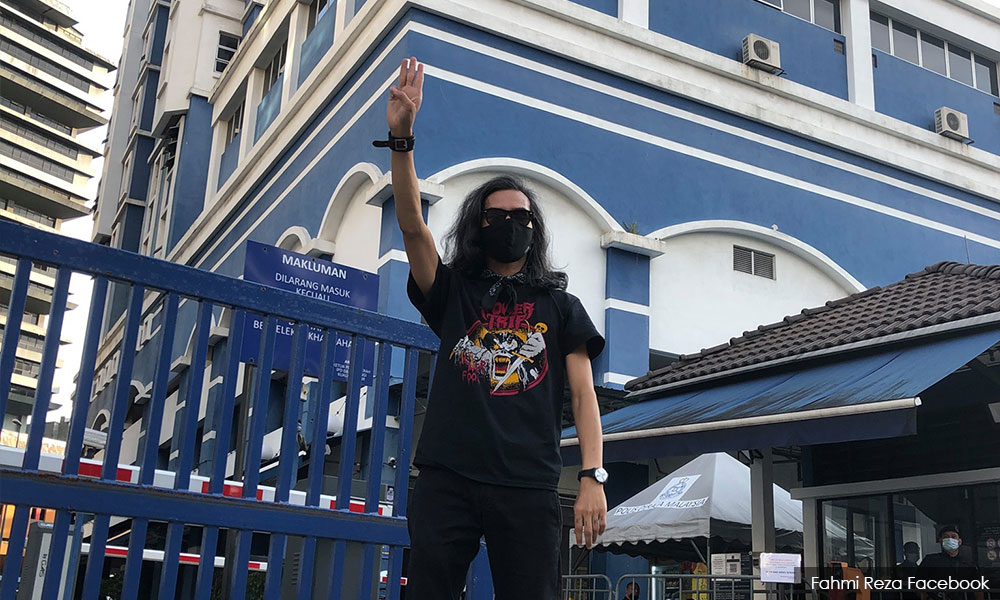
"On April 23, 2021, the police arrested graphic artist and activist Fahmi Reza in relation to a jealousy-themed Spotify playlist he had created as a satirical response to a controversial tweet by Malaysia’s queen.
"He is being investigated under Sedition Act, which criminalises any speech with a tendency to 'excite disaffection' against or 'bring into hatred or contempt' members of the royalty.
"If convicted, Fahmi faces up to seven years in prison," said HRW.
The group also cited the opening of a criminal investigation of political cartoonist Zulfikar Anwar Ulhaque, known as Zunar, over a satirical drawing that mocked the Kedah chief minister for his decision to cancel a holiday marking a Hindu festival.
Zunar was questioned on May 7 as part of an investigation under Section 505(c) of the Penal Code, another provision that criminalises speech “which is likely to incite any class or community of persons to commit any offence against any other class or community of persons,” and section 233 of the Communications and Multimedia Act.
Peaceful protests don't warrant investigations
HRW also questioned why leaders of recent peaceful protests have also been the target of police investigations.
"The police have called in for questioning eight people who participated in a “breaking fast” event on April 30 in Kuala Lumpur to protest the continued suspension of the Parliament.
"The eight, which include several opposition politicians, are being investigated under Section 9(5) of the Peaceful Assembly Act for failure to give notice of the event.
"Earlier in May, the police questioned several people, including opposition MP Fahmi Fadzil and Sevan Doraisamy, the executive director of the human rights group Suara Rakyat Malaysia, over their participation in a solidarity protest for Fahmi Reza held outside the Dang Wangi police station on April 24, the day of his remand hearing," it said.
HRW added that international norms establish that no one should be held criminally liable for the mere act of organising or participating in a peaceful assembly.
"The imposition of criminal penalties on individuals who fail to notify the government of their intent to peacefully assemble is disproportionate to any legitimate state interest that might be served.
“The investigations are bad enough, but Malaysia has such vague and overbroad laws that the police can go after almost anyone for just about anything they do or say.
“The government needs to stop treating criticism as a crime and amend or repeal the abusive laws being used against critical speech and peaceful protest," it said.





Are you sure you want to delete this comment?
This action cannot be undone.