


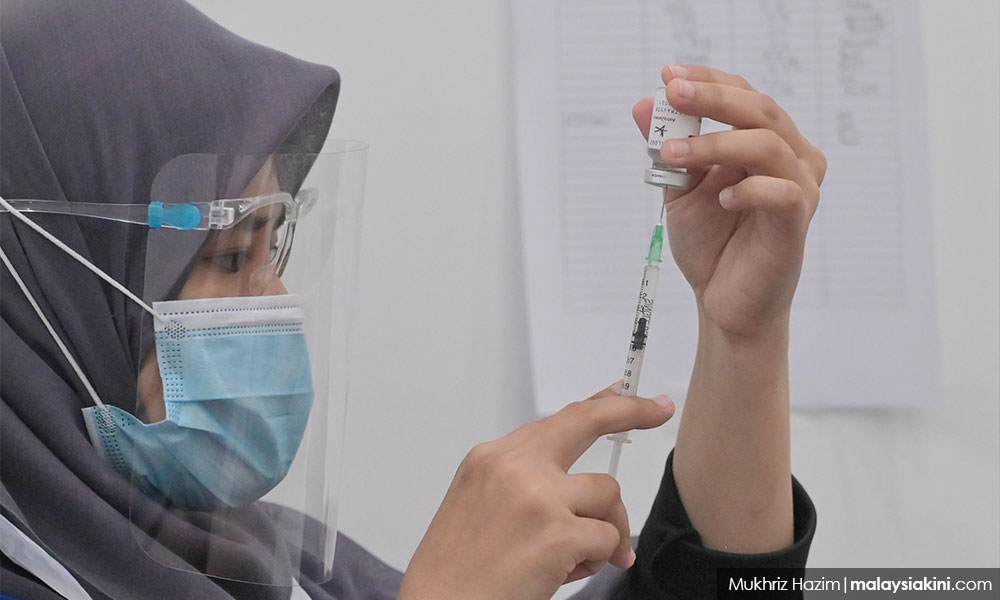

KJ: AstraZeneca doses interval to be shortened to six weeks beginning Oct
COVID-19 | The Health Ministry today announced that the time interval for the AstraZeneca vaccine will be shortened to six weeks starting Oct 1.
It means that those who have received their first dose of the vaccine no longer have to wait for nine weeks as required under the current practice.
Health Minister Khairy Jamaluddin said the decision was made...
COVID-19 | The Health Ministry today announced that the time interval for the AstraZeneca vaccine will be shortened to six weeks starting Oct 1.
It means that those who have received their first dose of the vaccine no longer have to wait for nine weeks as required under the current practice.
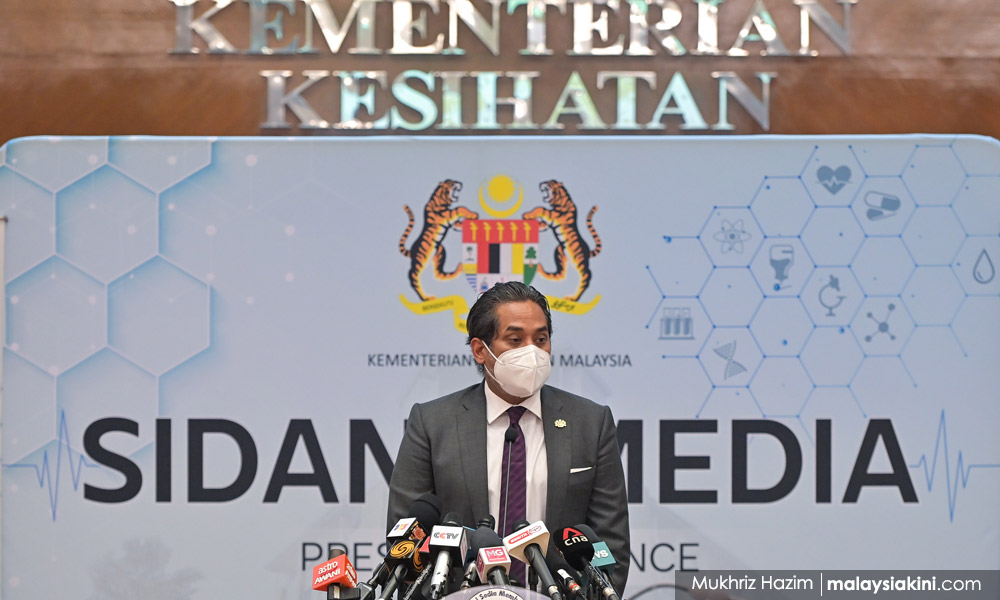
Health Minister Khairy Jamaluddin said the decision was made to make it "easy" for vaccine recipients as they no longer have to wait for a long period to get their second dose.
"I want to announce that starting this Oct 1, we will shorten the interval between the first and second dose of AstraZeneca from nine weeks to six weeks.
"This was decided in order to make it easy especially for those who have received their first dose of AstraZeneca," he told a press conference today.
This was the second time where the ministry has shortened the time gap for AstraZeneca, one of the three main vaccine types that are being used by the government in its National Covid-19 Immunisation Programme (NIP).
The interval was 12 weeks when Putrajaya first enrolled the vaccine in May before it was reduced to nine weeks in July.
Two other vaccines being rolled out under the NIP are Pfizer and Sinovac, both require two shots for complete immunisation. Both vaccines have a three-week interval between doses.
Khairy also announced that the ministry has started discussing with a Covid-19 vaccine manufacturer to acquire its vaccine that is being developed to be administered to children aged 12 and below.
The minister, however, was tight-lipped on the name of the company but said that it is now working to prepare and send the vaccine's clinical data to major pharmaceutical regulatory bodies around the world for approval.
"They said they need some time. They would send the information for evaluation by NPRA probably next month so that the vaccine can be registered for us here," Khairy said.
He was referring to the National Pharmaceutical Regulatory Agency, a body under the Health Ministry in charge of checking and approving medicinal products before they can be used in Malaysia.
Khairy said he is also confident that more companies will do the same soon, as several manufacturers have also started their clinical trials on vaccines for children.
To date, Malaysia has only approved Covid-19 vaccines for the use of adults and teenagers aged between 12 and 17.
Khairy told reporters that they are looking forward to vaccinating children below age 12 as soon as possible, fearing that there will be another pandemic involving the group.


Are you sure you want to delete this comment?
This action cannot be undone.