




S'gor floods: PM blames weakness at state and district levels
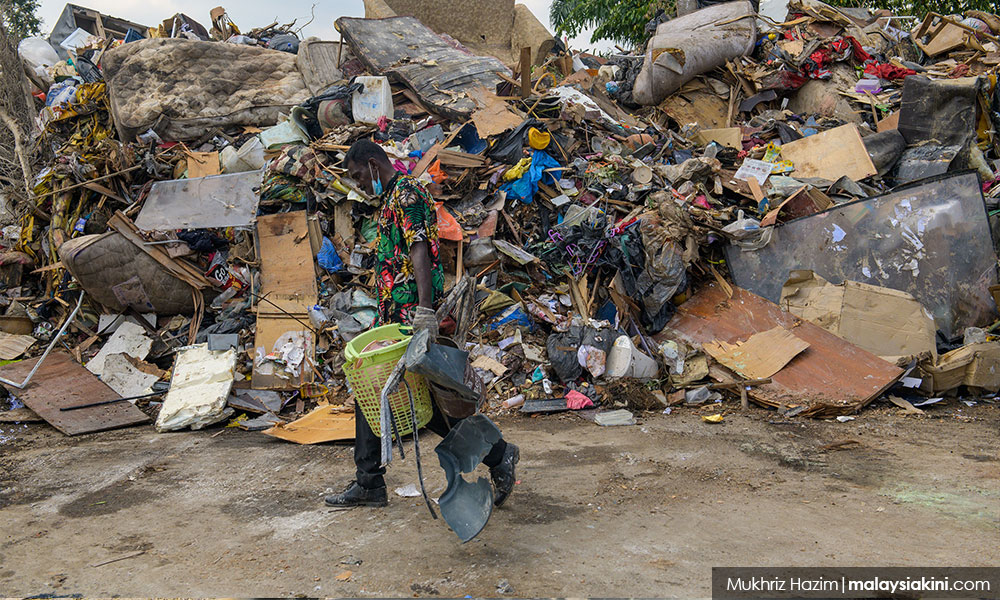
Prime Minister Ismail Sabri Yaakob has blamed the weaknesses at the state and district levels in Selangor for the lacklustre disaster response in December last year.
He added that during the same period, Pahang saw worse flooding but was able to manage the disaster well.
"I need to emphasise that the floods in Selangor were...
Prime Minister Ismail Sabri Yaakob has blamed weaknesses at the state and district levels in Selangor for the lacklustre disaster response in December last year.
He pointed out that during the same period, Pahang saw worse flooding but was able to manage the disaster well.
"I need to emphasise that the floods in Selangor were unexpected and following weaknesses identified at the state and district levels, I was forced to intervene.
"For public knowledge, during the same period, there were a number of other states which also saw large-scale flooding that was even worse such as Pahang.
"However, as the disaster management apparatus at the state and district levels were ready and orderly, the disaster was managed well despite a number of challenges," he told the Dewan Rakyat special sitting today.
Ismail Sabri said according to the National Security Council, the local command and control for disaster management lies with the respective district police chief and district Fire and Rescue Department officer.
If the district disaster management committee was incapable to cope with the situation, it has the responsibility of informing the state disaster management committee and subsequently the federal disaster management committee, he added.
Weather warnings ignored
Ismail Sabri revealed that preparations for the floods had been made in a series of meetings as early as September.
"The northeast monsoon which was supposed to flow towards the Andaman Sea passed the Straits of Malacca due to a low-pressure system in the waters. This led to unusually heavy rain, particularly in Selangor.
"The Meteorological Department issued six significant weather warnings of continued heavy rain. However, the weather warnings were ignored by certain quarters directly involved in disaster management due to an assumption that only east coast states will be affected by flooding brought about by heavy rain from the monsoon."
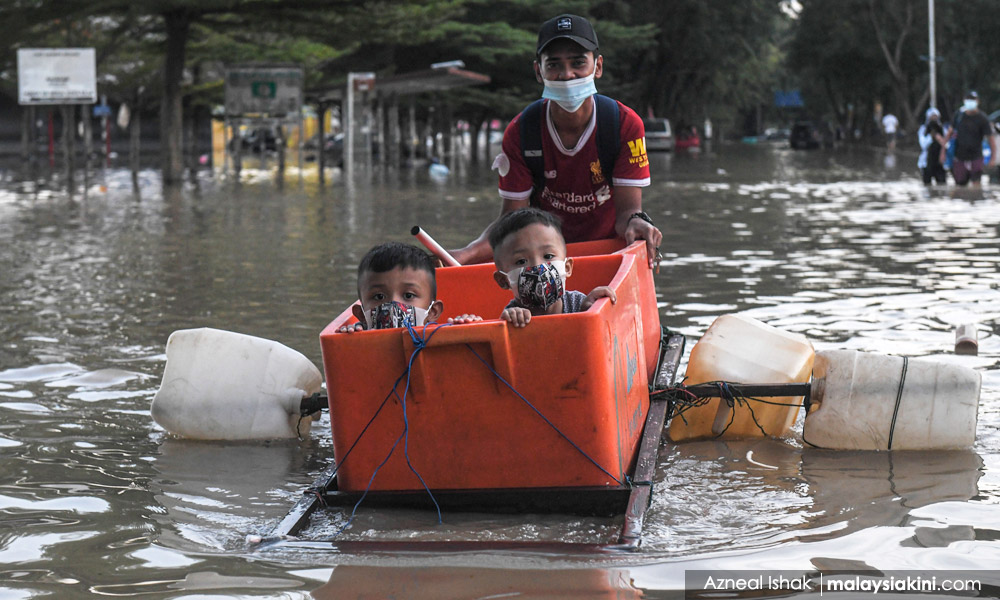
He said on Dec 18, Selangor saw rainfall of 380mm, equivalent to a month's worth of rainfall.
"Due to the unprecedented flooding, the flood management in Selangor was disorganised (kelam-kabut) on its first day, causing rescue teams to face difficulties to carry out their operations due to the complexities of urban flooding.
"The Selangor flood management also did not see significant changes on the second and third day, leading to dissatisfaction among victims due to lateness in the rescue operation and aid relief," he added.
Reasons for lacklustre response
Ismail Sabri gave various reasons for the shortcomings in the Selangor disaster response. They include:
- The environment was dark
- Many flood victims refused to leave their homes
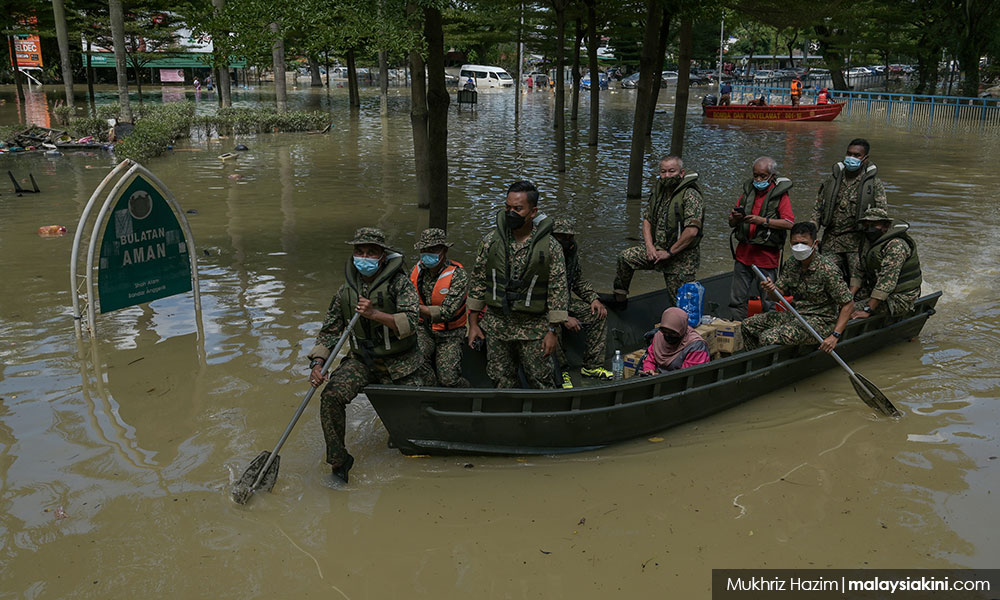
- Stranded vehicles at entrances obstructed rescue vehicles
- Rescue boats were obstructed by submerged vehicles
- Out-of-state rescuers were unfamiliar with the terrain
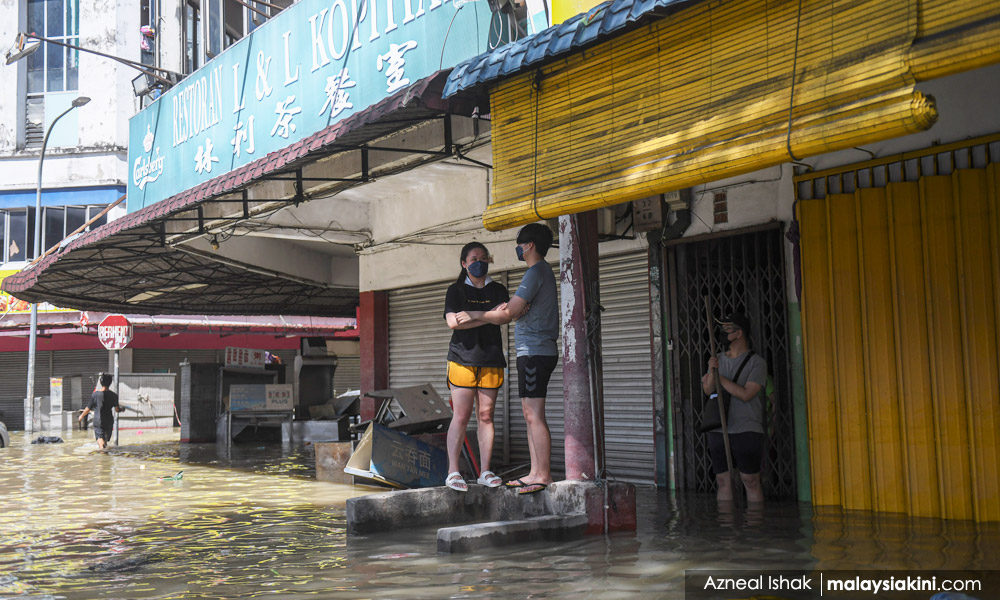
- Premises intended as relief centres were themselves flooded
- Loss of electricity and communication infrastructure
The prime minister said he was aware of the critical situation in Selangor since the night of the floods on Dec 18 and had rushed to the National Disaster Command Centre (NDCC) to learn the situation on the ground.
"I had personally contacted the armed forces general, army general and inspector-general of police to mobilise additional assets from the armed forces and police from states near Selangor to assist the Fire and Rescue Department, Civil Defence Department and other agencies conducting rescue operations.
"Following the communication, the armed forces general ordered the 11th bridge general to immediately arrange personnel and additional assets to the affected areas.
"The inspector-general of police also ordered additional personnel and assets from nearby states to assist the existing teams," he added.
After his visit to NDCC, Ismail Sabri went to observe the flood situation at Kampung Bukit Lanchong, Putrajaya Heights until late in the night before visiting the flood relief centres at SK Telok Gong and SK Johan Setia in Klang the following day.
The premier said following the negative reaction towards the disaster management at the state and district levels, he also took the initiative to chair several meetings with state officials including Selangor Menteri Besar Amirudin Shari.
"For information, the police, Fire and Rescue Department, armed forces and Civil Defence Department have already mobilised their team on Dec 18 to evacuate victims but faced difficulties as it was getting dark and many victims refused to leave their homes at the time," he said.
No mention of climate change
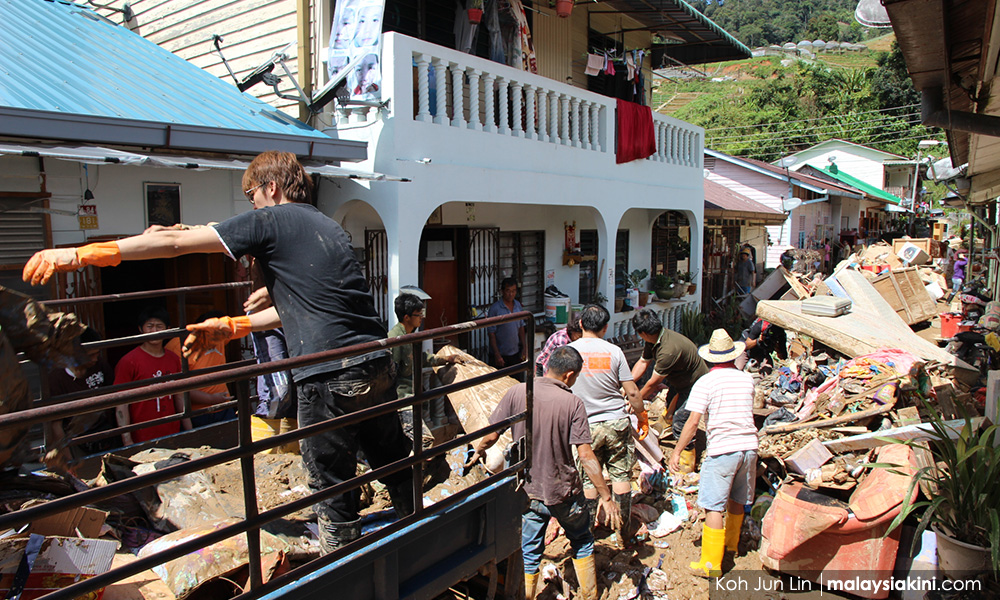
Throughout the floods, Ismail Sabri said 136,030 people from 38,113 families were evacuated to 1,112 relief centres.
A total of 55 people perished, including 40 male adults, 12 female adults, two boys and one girl. Two are still missing.
Following the floods, RM1.4 billion in cash aid was allocated, he added.
The government has also identified three areas that need to be improved.
Ismail Sabri said the first was a lack of understanding between federal, state and district agencies as well as the private sector and NGOs on their roles in a disaster.
The second point was weaknesses in command and control, noting that the National Disaster Management Agency did not have a presence at the state and district levels, making local coordination difficult.
Thirdly, he said, was weaknesses in information collection which still relied on conventional means.
To address these concerns, the flood warning and prediction system will be improved and stakeholders must know their roles well and involve civil society organisations, he added.
"I see the disaster not only in terms of the destruction it has brought but also from a positive angle for us to learn and take stock so we can be more prepared and resilient towards future disasters," he said.
The prime minister made no mention of climate change or the tropical depression that hit the country from Dec 17 to 18 last year, which was reported by various typhoon tracking sites, a similar phenomenon that devastated Penang in 2017.



Report this comment
Are you sure you want to delete this comment?
This action cannot be undone.