


/file/publisher-c1a3f893382d2b2f8a9aa22a654d9c97/2023/04/dc1307d310085e50d6778292859c03bb.jpg)

Nature lovers give critters a social media presence
“I think it’s an accumulated experience from my travels when I was young,” she told Malaysiakini before going on to describe how her father would bring the family on trips to various islands on the South China Sea for snorkelling, as those were the nearest travelling options.
“I have fond memories of those trips and the image of colourful fishes and coral reefs still stays in my mind,” she recalled.
When Leong was 17, she stayed in New Zealand in a home that was surrounded by nature.
She described her host as an outgoing and nature-loving person.
“Seeing how New Zealanders live harmoniously with nature with mutual respect shaped some of my perspectives on nature. I guess these experiences all added up to gradually cultivating a love for nature in me and when there came an opportunity to further my study in environmental science, I immediately took it.
“My lecturer also played an important role in painting the wilderness in a positive light for me and I started discovering various Malaysian jungles after that,” explained Leong.
Right place, right time
She said her journey of becoming a conservationist had a lot to do with being in the right place at the right time...
MALAYSIANSKINI | Film director and wildlife researcher Leong Shen Nyan, 38, does not recall the exact moment that made her want to become a conservationist.
“I think it’s an accumulated experience from my travels when I was young,” she told Malaysiakini before going on to describe how her father would bring the family on trips to various islands on the South China Sea for snorkelling, as those were the nearest travelling options.
“I have fond memories of those trips and the image of colourful fishes and coral reefs still stays in my mind,” she recalled.
When Leong was 17, she stayed in New Zealand in a home that was surrounded by nature.
She described her host as an outgoing and nature-loving person.
“Seeing how New Zealanders live harmoniously with nature with mutual respect shaped some of my perspectives on nature. I guess these experiences all added up to gradually cultivating a love for nature in me and when there came an opportunity to further my study in environmental science, I immediately took it.
“My lecturer also played an important role in painting the wilderness in a positive light for me and I started discovering various Malaysian jungles after that,” explained Leong.
Right place, right time
She said her journey of becoming a conservationist had a lot to do with being in the right place at the right time.
“When I graduated and was looking for a job, there was a job opening as a wildlife researcher where the job scope encompassed conversation duties and I ended up in the field of conservation,” said Leong.
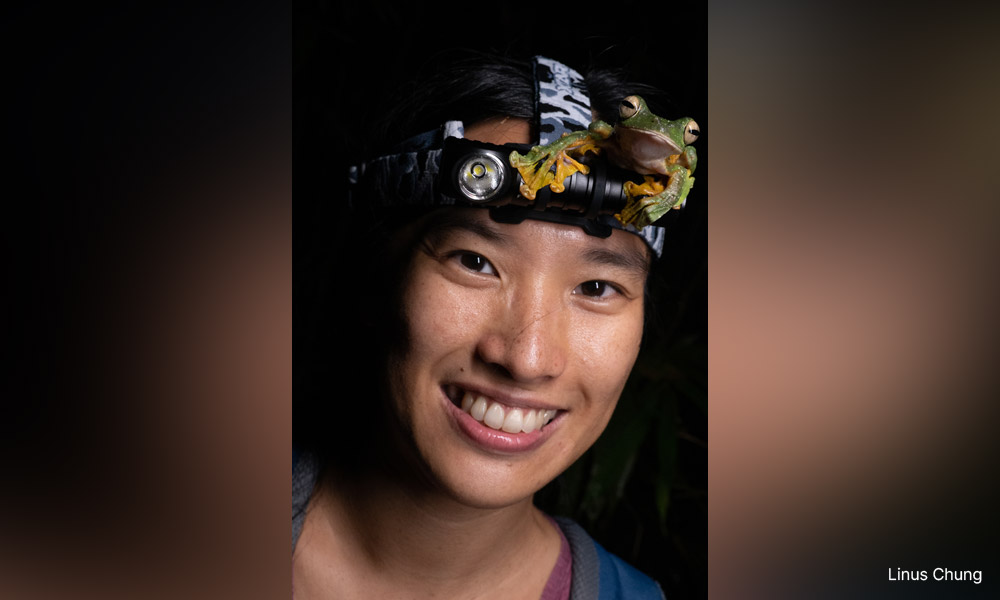
“My experience as a conservationist was mostly a positive one due to very supportive team members, who formed a positive working environment.
“Sometimes, we do have different opinions on how things should work, but everyone was very united with the same goal of caring for wildlife rather than competing for personal gain.
“It was harsh in the beginning, but as a person who loves nature and yearns to discover as much of the wilderness as I can, being in nature all the time is the biggest reward I can earn,” said Leong, who is currently on an unpaid sabbatical and homeschooling her three children.
She recalls the highs and lows of being a wildlife researcher (she was a tiger researcher), with the highs that include the cheerful nature of the Orang Asli folk and the downside that includes seeing animals trapped by snares as well as encounters with poachers.
“Hearing news of land conversion from jungle to farm or other uses was also depressing when we can’t do much about it from the ground,” she lamented.
The jungles at night
Animal photography has always been a hobby for Leong.
“Some take pictures of birds (they call themselves birders), some photograph insects (insect microphotography group) and some like to photograph snakes and small frogs (herpetology enthusiasts - people who are interested in reptiles and amphibians).
“We pick a location that we are familiar with, get a permit from forestry (the Forestry Department) to go in if it’s necessary and gather for dinner and chit-chat. Once it’s dark, we go into the forest following the trail.
“We usually walk slowly and use a headlamp to look around the forest to spot animals such as snakes, frogs, insects, or any unusual stuff you would find in the forest at night. Most of the time, we see nothing much, and usually, we encounter common wildlife that we have seen before, take a photo as a record and move on.
“Sometimes we find animals that we read about but never encounter in real life. That is when the group will get excited, stop walking, and share stories about the species while taking out the camera gear attached with flashes and lights to try to capture images or videos of the animal in the forest.”
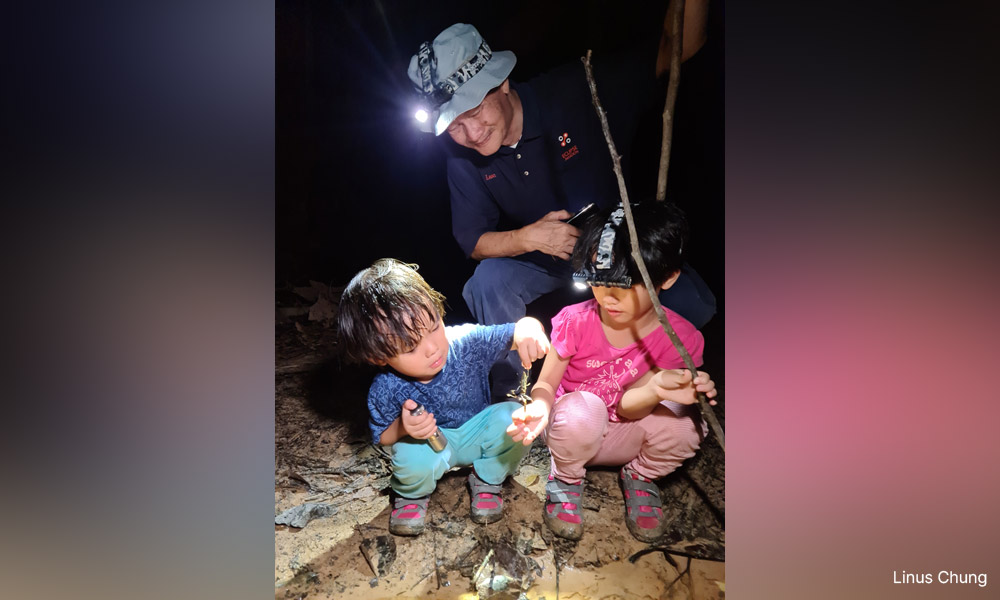
Leong said that it takes a while to ensure the animals are not alarmed and do not take off and everyone in the group gets to take a good clear photo.
“A herping (herpetologists who search for amphibians and reptiles in nature) session sometimes takes four to seven hours depending on what we encounter that night,“ she explained.
Unique attraction of nocturnal animals
Leong has always been fascinated by different animals that come out in the forest at night.
She has done night walks with different guides during her visits to various national parks.
“Recently, I found a renewed interest in night herping after being acquainted with a few old friends from the Malaysian Nature Society herp group that does herping regularly. Again, the group dynamic plays an important role in keeping the momentum going.
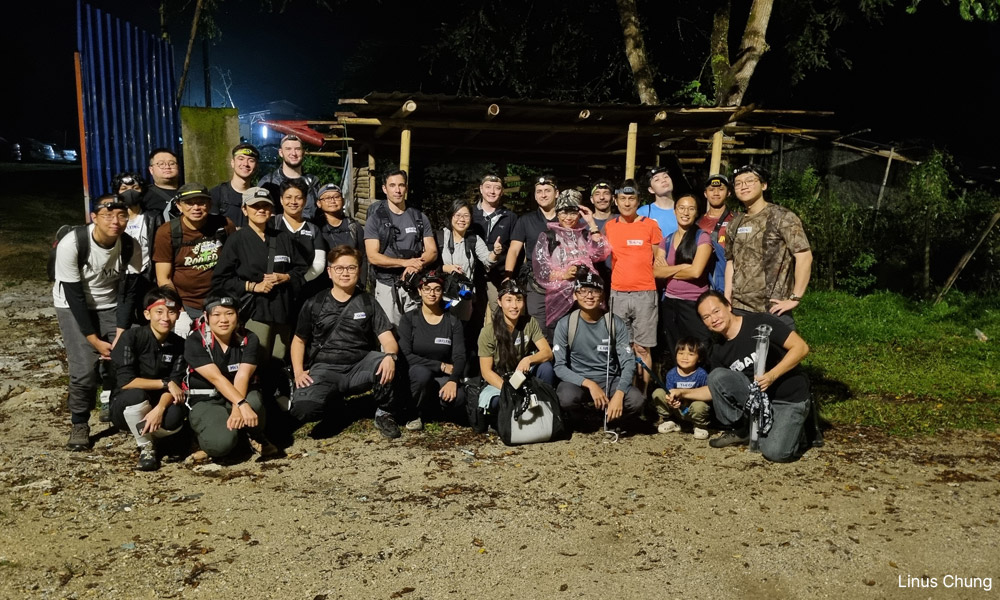
“We shared the same passion for learning about wildlife and not many people will joke around in the forest with you and hike until 2am, just because we found one or two rare species that we have never seen,” she added.
For those night trips to look for nocturnal animals, Leong said they are mostly looking for snakes, frogs, lizards, insects, and some nocturnal mammals.
“We don’t need to avoid getting bitten by anything. Animals in jungles don’t actively target humans to bite and most animals are not aggressive but shy. We just need to not provoke them so that they feel threatened and want to defend themselves with whatever weapons they have like claws, teeth, stingers, venom, etc.
“Try to stay on the trail and be aware of where we are stepping and most of the time you’ll be okay,” she advised.
Blessed with rainforests
Leong shares that Malaysia is blessed with rainforests that house diverse species of wildlife and many distinct animals live in the forests right next to our cities. These animals have different morphology that serves different ecological functions.
“This amazes many of us who want to study them and understand them more. Not much is known about many of the species in the rainforest, especially insects, as they are rarely observed and studied.
“Of course, the prospects of finding a new species or a species in a new place, or even discovering the habit of an existing species that was not observed by other people is very exciting and satisfying to us,” said the avid wildlife researcher.
“Different people are drawn to a different family of animals and have their favourite animal that they want to see. For me, it is everything strange and new to me that I have never seen before.
“Since there are so many species to discover in our forest, I don’t think we can ever see everything in our lifetime. I guess the main motivation behind this for me is to keep finding something new and keep learning about our rainforest every time.”
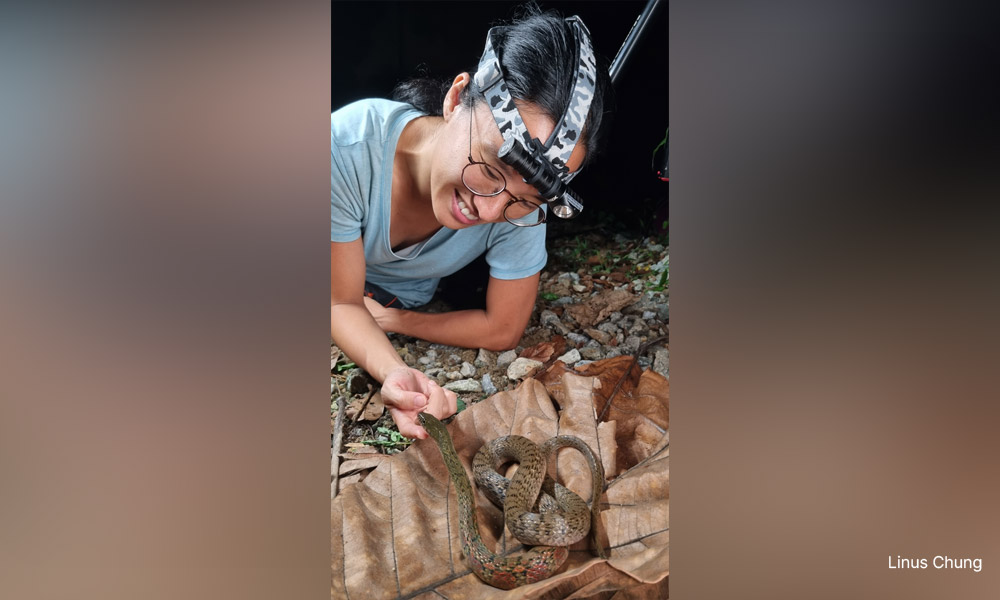
These little trips sometimes spring a few surprises.
“We found a rarely recorded frog scientifically named Gastrophrynoides Immaculatus, which is so far only recorded in Negeri Sembilan, but we found the species in the Gombak area of Selangor.
“We released it undisturbed after taking a picture. A herpetologist who saw the picture is now trying to find that frog to verify it as this would be a major range extension for the species,” said Leong about a rare frog that is commonly referred to as Ah Tung’s Frog.
Social media stars
While she believes giving these animals a social media presence is important, Leong also feels they need to be selective about how much information they are giving to the public.
“I am currently sharing some pictures and videos on our herping trip on our Instagram, Youtube, and TikTok, called greatlittlestories, and I hope, by putting wildlife and nature on these very modern platforms, will also encourage the love of nature and, with that love of nature, a natural tendency to conserve it.”
Using social media, she wants to expand the public’s knowledge of the treasures that our rainforests house and make them care about the importance that wildlife plays in our ecosystem without the hassle of needing to hike into the humid forest that may have leeches and other “dangerous things that bite”.
Leong feels that if this encourages people to take their first step to go into the jungle and experience nature first-hand, that would be something great.
“There is also a downside to too much social media exposure. While we do not harm or capture these animals, some might be tempted to capture these creatures as pets or, worse, make a business out of selling them.
“We do not want unscrupulous parties to use information from social media to capture wildlife from their natural habitat and put them in captivity, sell them as pets, or for medicinal uses.
“This will be a big problem if the animals are especially rare as pressure from poaching can even push some common animals into the endangered category,” she said.
That is why she and her friends limit the sharing of information on wildlife locations to a general area. For example, just sharing the state where it is found but not a particular forest to deter poaching by irresponsible parties.
“We hope that the public is aware that wild animals are best left in the wild. If you want a pet, get a domesticated animal,” Leong advised.
Collecting information on wildlife
Department head and researcher (ecology and ethnozoology) at Monash University Malaysia, Cyren Wong Zhi Hoong, 34, shared with Malaysiakini that his journey as a naturalist and conservationist began at a very young age,
“As far back as I can remember, I have always had an inquisitive mind that was strongly predisposed towards uncovering the meaning of things that I was observing.
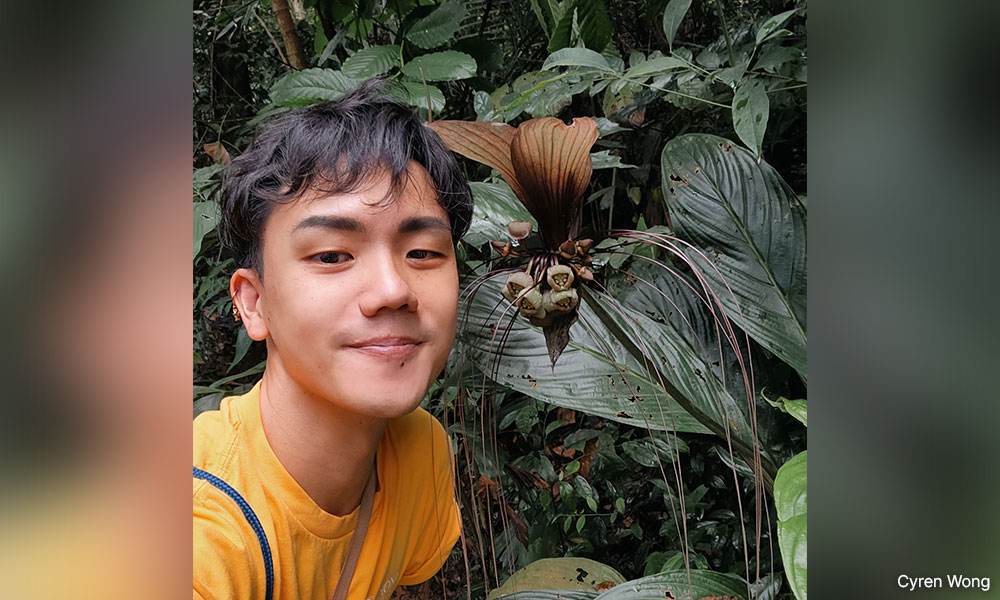
“Nature, with her countless mysteries and phenomena, provided me with just that; a never-ending playground with all manner of things and occurrences that I could observe, document, and immerse myself in.
“Long before Pokemon, I found that I could derive great personal satisfaction just in collecting as much information as I could about animals that lived in the world around me.
“I started small, literally, and began by raising insects; caterpillars, beetles, grasshoppers, and all sorts of other ‘creepy crawlies’, and in doing so facilitated my first-hand observation of metamorphosis - the process through which an animal undergoes a radical transformation from immature larvae to adult,” explained Wong.
He said that to the eyes of a nine-year-old child; watching a worm-like grub grow into a moth, a butterfly, or a ladybird beetle, is nothing short of a miracle, and that is what “sealed the deal” for him.
As he got older, he got more systematic in the way he recorded his findings and adopted the tools of the natural historian.
“I kept a field journal of sorts for my notes and learned how to draw what I saw - the good old days before cameras and smartphones were so easily accessible.
“Later on, I even started collecting voucher specimens. This eventually culminated in my present profession today as a researcher in the field of ecology and ethnozoology,” said Wong.
Fewer butterflies
However, the more he learned about the natural world around him, the more he became aware of the precarious state it is in.
“For example, my light traps (a sampling method for observing nocturnal insects) started to yield fewer and fewer insects with each passing year, butterflies that were once plentiful during my childhood are growing scarcer and scarcer as housing projects and shopping malls replace expanses of open grassland and fields.
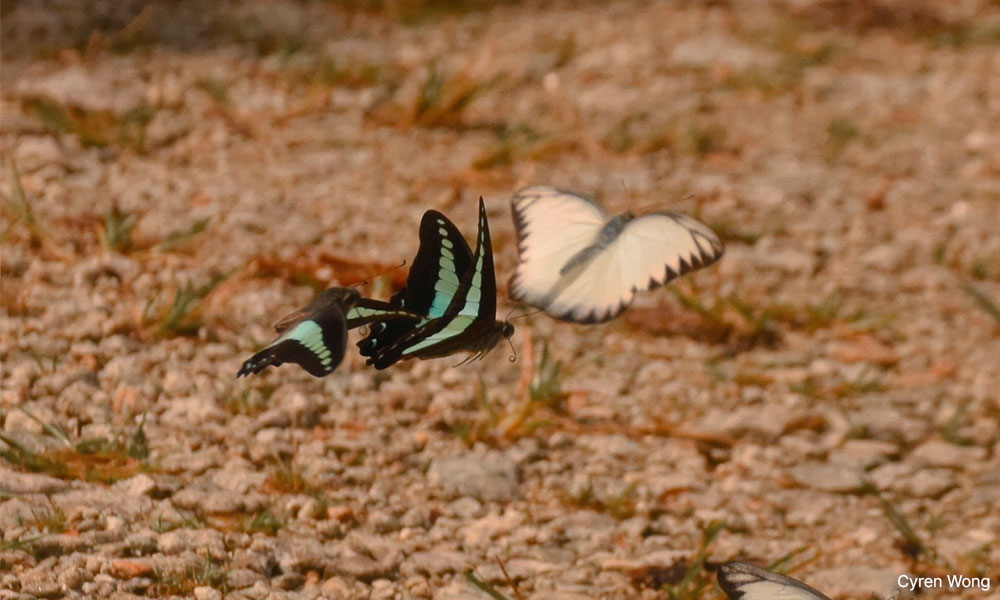
“I knew from my own experiences, that nature; this amazing, diverse, collective entity that I loved with all my heart, was dying and in need of protection, and so I decided I had to be more than just a naturalist (someone who studies nature), I had to also be a conservationist (someone who advocates for the protection of nature),” said Wong.
He has often been a part of excursions into the jungles at night to capture wild animals on film.
Describing himself as a birder and an entomologist, these night trips are great for those who love to observe insects.
“Insects are abundant both during the day and at night. But with night-time insect viewing, it is often more productive to have the insects come to you by setting up a light trap (which is composed of a white sheet of cloth strung between two poles that is backlit with a mercury vapour bulb).
“It is a lot easier to count the number of insects that show up this way, and also, to identify the different species that show up,” Wong explained.
Citizen science
These activities started as part of his initiative to introduce more Malaysians to “citizen science”, which is small and contained scientific research that even those without a background in the relevant field can contribute to.
“Counting insects by setting up a light trap in one’s neighbourhood, for example, is an easy way for citizens to contribute data that will help researchers understand the environment better.
“I feel that this helps instil a stronger sense of participation, investment and ownership of communities and their surrounding environments,” Wong said.
Wong often joins other groups such as “herpers” who often head out at night as the cooler temperature and the nocturnal behaviour of insects make it more conducive for spotting them.
“Most of the animals one encounters at night that can bite are more likely to run away or stay very still in an attempt to avoid being seen by humans.
“You will not get bitten by them unless you go out of your way to antagonise the animal, in which case, the animal is just reacting to what it perceives as a threatening situation that it cannot extricate itself from in any other way.
“As a general rule, I always advise people who accompany me into the jungle at night to not handle any wildlife they come across without the explicit consent and facilitation of the group leader.
“If you see something interesting, call it out and have one of the group leaders or facilitators come over to provide insight on the animal and handle it - if necessary,” said Wong.
He said it is always awesome to go with a group of experts from many different fields, to increase the likelihood of spotting different kinds of wildlife as well as have someone present who can teach you a bit about its behaviours, habits, and ecology.
“If I’m alone, I tend to zoom in on a lot of insects and invertebrates. Moths are one of my favourites, followed by fireflies - both the males and the very impressive females.
“Scorpions are also always a wonderful treat whenever encountered along the trail. Then, after an hour or so, when the initial excitement of the insects has worn off, I start to notice frogs.
“First, the different calls indicate the different species present. And then, the tell-tale presence of ‘eye-shine’ - light from our torches reflecting off of the animals’ eyes.
“My herper friends and peers have tried to teach me how to spot snakes as well, but I must have some sort of ‘snake-blindness’ because I cannot - for the life of me - pick out a snake on the trail at night, even when it is just inches away from my face!” Wong recalled.
Nature worth fighting for
Wong believes it is impossible to love, appreciate and value something without first knowing it.
He maintains two social media accounts for this purpose, one on Facebook called “Naturetalksback with Dr Cyren Asteraceya”, which functions as a science communication and biodiversity education platform, and one on Instagram called “@_send.newts_” which shares byte-sized factoids about animals and their proper care.
“To me, every part of nature is a wonder to behold! I look at nature with my lifetime of study and observation informing that gaze. Everything we see today; from the most majestic hornbill to the seemingly common and polarising cockroach, has gone through millions and millions of years of iterations before arriving at its present form.
“I think that gives them all inherent worth and value as things that are worth fighting for, that is worth protecting. I hope that by helping people come to know of nature’s inherent value, we can encourage more people to conclude that she is worth protecting and fighting for as well,“ explained Wong.
MALAYSIANSKINI is a series on Malaysians you should know.
After victory over dam and loggers, Orang Asli activist takes on Putrajaya
Yasmin Yusuff still firing on all cylinders
Just like YBeeee, Jo Kukathas moves with the times
Chicago Hound's Duke Krishnan scores another first for M'sian rugby
Artist Hasanul lives out sci-fi dreams through his work
106 countries on two wheels: A retiree’s goal to combat climate change
Called a monster as a child, Joshua Benedict is now Mr Malaysia World
Interpreting Hannah: How sign language interpreter duo bridges two worlds
/file/publisher-c1a3f893382d2b2f8a9aa22a654d9c97/2021/03/a1ef5a6ee335b3b87cdc35bff41551fa.jpg)
/file/publisher-c1a3f893382d2b2f8a9aa22a654d9c97/2022/05/67500ff79ba0eb48a73eea7bc04843fe.jpg)
/file/publisher-c1a3f893382d2b2f8a9aa22a654d9c97/2023/02/55809176db4ef09d567526d015ab1e8d.jpg)
/file/publisher-c1a3f893382d2b2f8a9aa22a654d9c97/2022/05/07b0c10e0608afe36f50f5f526f33237.jpg)


Report this comment
Are you sure you want to delete this comment?
This action cannot be undone.