


/file/publisher-c1a3f893382d2b2f8a9aa22a654d9c97/2023/05/1e3f5220c677f6c1ffdae6359c872cd7.jpg)

Punk rockers bringing light to interiors of Sabah
Through the sale of woodcut prints that depict the simplicities of village life, Pangrok Sulap raised RM75,000 to generate renewable electricity for 27 households.
Their first project in March helped villagers in Kampung Penulangon, which is nestled in the Trusmadi forest reserve in Ranau, Sabah.
Living up to punk’s do-it-yourself culture, 21 volunteers from the collective were joined by villagers and NGO Lightup Borneo - which brought the know-how on channelling hydroelectricity to homes.
Starting at the water source, they connected a micro-hydroelectric generator and laid cables all the way to the village, powering up each household with free electricity.
Kampung Penulangon was previously fitted with a limited number of cheap solar panels that did not generate enough electricity for the whole village.
Bam Hizal, a member of the Pangrok Sulap collective, said the villagers had to journey all the way from the interiors of Sabah to the closest town for fuel to power their generator, and this was costly to sustain.
“Sabah has so many rivers so we decided to take advantage of this renewable energy.
“We also go back to the village to carry out maintenance work,” he said...
MALAYSIANSKINI | The non-conformist ethos of punk rockers may not be attractive to a consumerist society. However, a Sabah collective of punk musicians is striking a chord with Malaysians as they use art to generate electricity.
Through the sale of woodcut prints that depict the simplicities of village life, Pangrok Sulap raised RM75,000 to generate renewable electricity for 27 households.
Their first project in March helped villagers in Kampung Penulangon, which is nestled in the Trusmadi forest reserve in Ranau, Sabah.
Living up to punk’s do-it-yourself culture, 21 volunteers from the collective were joined by villagers and NGO Lightup Borneo - which brought the know-how on channelling hydroelectricity to homes.
Starting at the water source, they connected a micro-hydroelectric generator and laid cables all the way to the village, powering up each household with free electricity.
Kampung Penulangon was previously fitted with a limited number of cheap solar panels that did not generate enough electricity for the whole village.
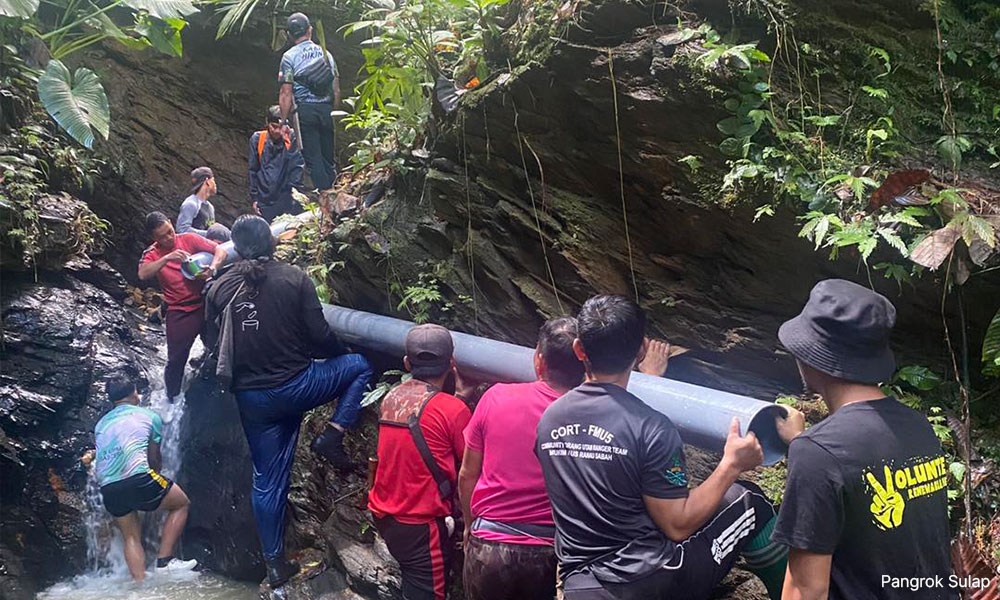
Bam Hizal, a member of the Pangrok Sulap collective, said the villagers had to journey all the way from the interiors of Sabah to the closest town for fuel to power their generator, and this was costly to sustain.
“Sabah has so many rivers so we decided to take advantage of this renewable energy.
“We also go back to the village to carry out maintenance work,” he said.
Depictions of village life
It had been exactly a year since members of Pangrok Sulap journeyed to the village last March, not with the sole intention of powering up the village but to also empower its residents with their direct involvement in this project.
“We taught them the art of woodcut printing and during a workshop there together, we created a large artwork which depicts life in that village,” said Bam.
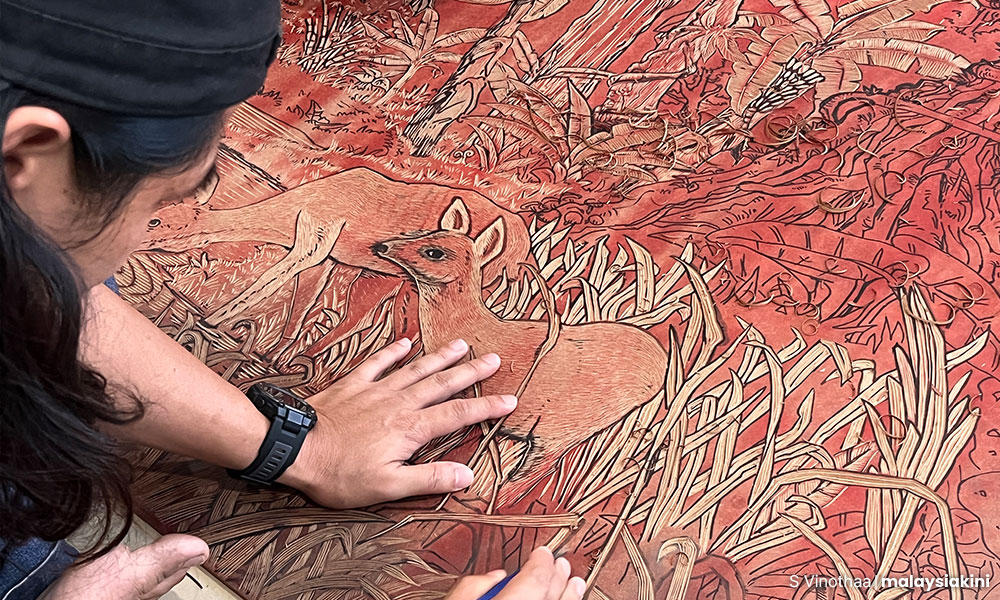
The 1.2m x 2.4m collaborative piece titled Cahaya Kehidupan (Light of Life) is filled from corner to corner with intricate depictions of the many layers of life in the village that seamlessly merge into one picturesque view.
From the mountains in the background to a villager taking a bath in one corner of the foreground, Cahaya Kehidupan keeps the viewer coming back to find something new.
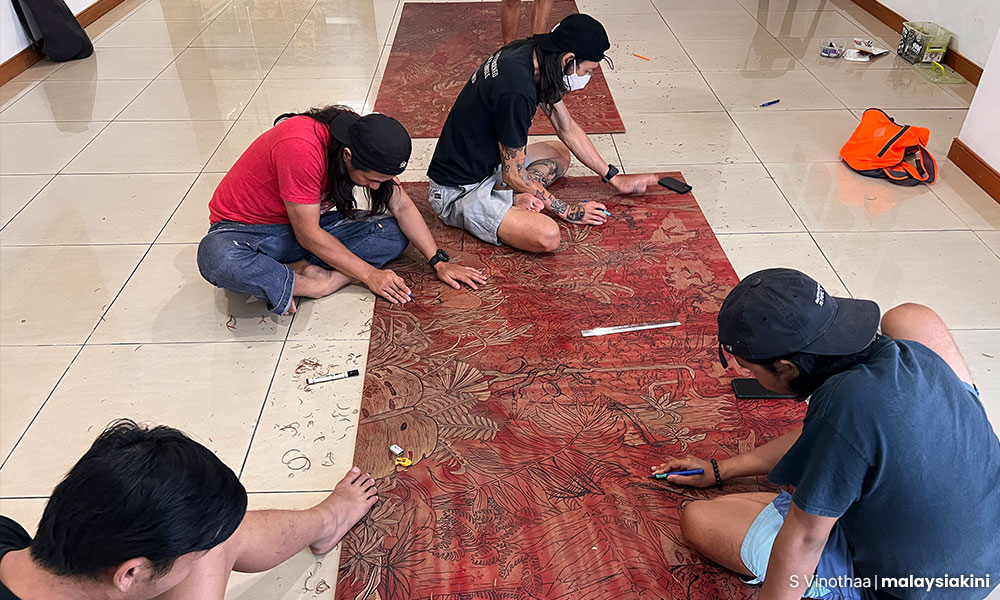
Among the scenes are volunteers busy with the installation of the hydroelectricity generator and the laying of the cables to connect electricity to the homes and this depiction turned the art piece into a historical narration.
It tells of how electricity was channelled from the river to the village where many were living in darkness.
Ten editions of the artwork made on fabric were sold to raise funds for the project while it was being exhibited at the Ilham Gallery in Kuala Lumpur from May to October last year.
To garner funds, Pangrok Sulap also released an album by various artists in a more folksy genre, titled Orang Kampung.
Launched at KongsiKL in Kuala Lumpur, the limited edition art and CD box set are still available.
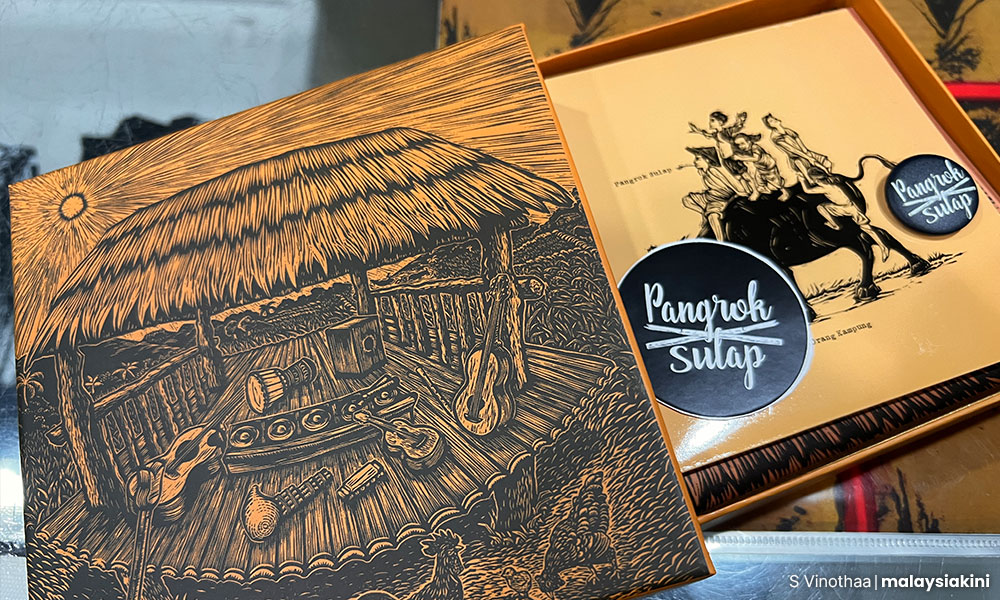
The CD box set was produced with the support of the Goethe Institute Kuala Lumpur and comprises a mini album of five songs performed by the Sabahan collective, two posters, a sticker, and button badge.
Unassuming Sabahans
The collective’s name may seem strange to West Malaysians but Pangrok is Sabahan slang for punk rock and Sulap is the local word for a hut in the middle of a paddy field where a farmer rests instead of returning home which could be further away.
“It reflects our identity. We were born and grew up in villages. The simple village life inspires our work and reflects our identity,” said Bam, who is a psychology graduate from Universiti Malaysia Sabah (UMS).
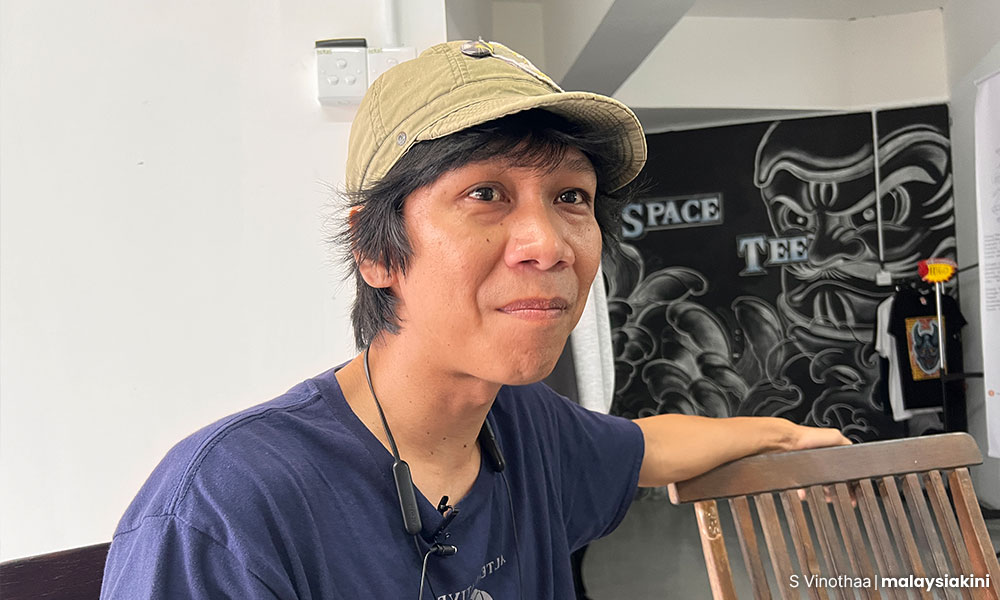
Without the colourful hairdos, clothes, and rebellious manner punk musicians are often associated with, these unassuming Sabahans who perform in their respective bands are also making a name for their collective.
Bam said Pangrok Sulap previously used street graffiti to illustrate the messages in their lyrics. While those depictions went viral on social media, he said it wasn’t until they started volunteering for charitable projects in 2010 did the collective start to take shape.
Its founding members are Jirum Manjat, Rizo Leong, and McFeddy Simon.
Rizo manages Pangrok Sulap, McFeddy focuses his talents on researching and reviving traditional musical instruments in Sabah, while Jirum is settling into family life.
“Our messages are not focused on one issue. We voice out our observations as Sabahans and we have an opinion on current issues like the politics of the day, environmental disasters, extinction of endangered species, human rights violations of stateless people in Sabah, and any other current issues.
“Our messages were street graffiti until 2013 when members of Marjinal, an Indonesian band on tour in Sabah, taught us this medium of art,” he said.
The name Pangrok Sulap is fast becoming synonymous with hard-hitting messages and Kuala Lumpur got a preview of their latest work when large posters depicting the effects of transboundary haze went up on monorail pillars along Jalan Tun Perak recently.
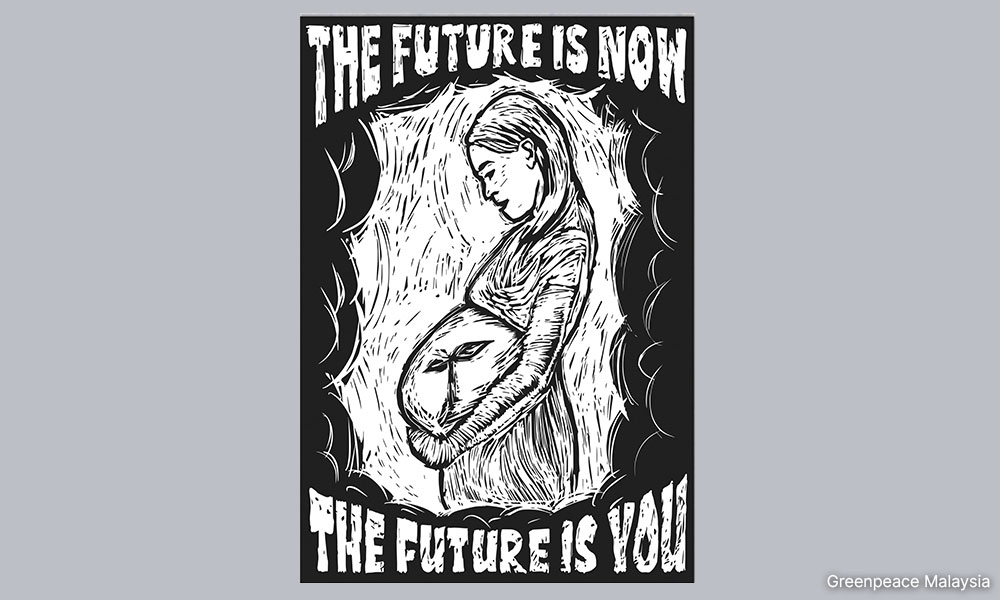
Commissioned by Greenpeace Malaysia, they are part of the “Haze: Coming Soon!” exhibition which is on now until May 14 at RexKL.
Registration for the exhibition is free.
Simultaneously, different pieces of their work are also on display at the A+ Works of Art in Bangunan Perdagangan Sentul, until May 27 but viewing is by appointment.
‘Ruang Tamu’ for collaborations
Whether it’s bringing hydroelectricity to a village or creating artwork, everything they do is either a self-taught endeavour or something they picked up through collaborations.
Members of Pangrok Sulap are also passionate about sharing their knowledge with any community they come into contact with.
Operating out of an office space less than a kilometre from UMS in Kota Kinabalu, they recently expanded to occupy two floors with a new space called ‘Ruang Tamu’ for youth to interact and collaborate with members.
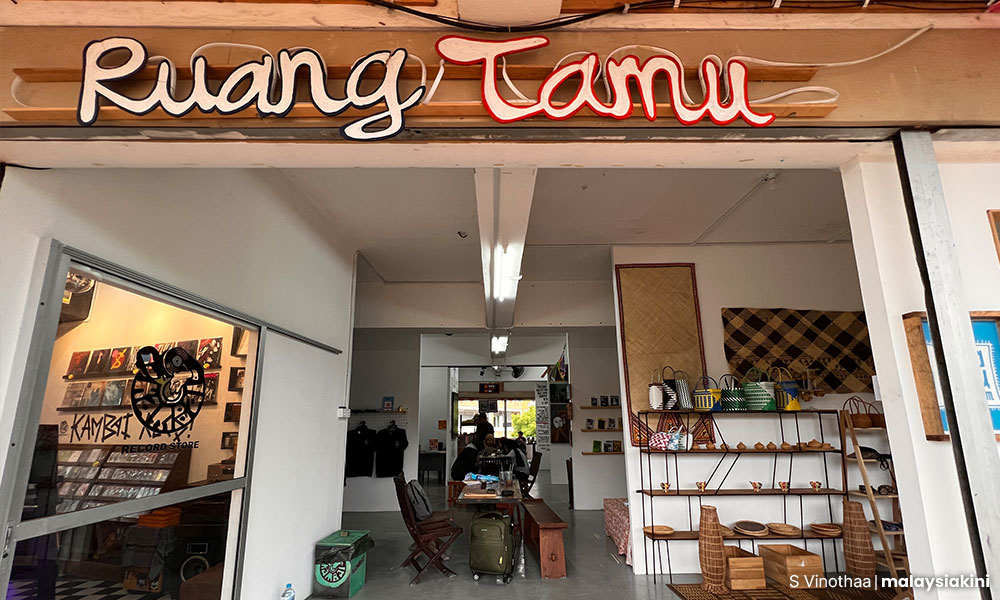
The open, minimalist concept of ‘Ruang Tamu’ houses a small cafe, 10 exhibitors who are local artists and activists, with thought-provoking exhibits and a small reading nook with a bookshelf.
Exhibitors include the likes of Borneo Komrad, Space Tee, and Kambai Record Store.
“Ruang Tamu is a place for Sabahans from all walks of life to gather and exchange ideas.
“We also hold all our programmes here which vary from children’s events, poetry recitals, talks, musical gigs, and workshops.
“Ruang Tamu is very relevant because Sabah is short of galleries or a suitable space for artists to gather, collaborate, and organise events together,” said Bam.
Print parties
As Pangrok Sulap thrives on collaborative art, they have introduced group dancing as part of the process of printmaking.
Instead of a roller press, participants move to traditional music while gently stepping on an inked wooden block to transfer the art onto fabric.
Calling it a “print party”, the group holds workshops wherever their artwork has been displayed - locally and abroad.
They have been invited to hold joint exhibitions in Singapore, Japan, and Hong Kong.
Their latest international invitation came from South Korea to participate in the “Soft and Weak Like Water” series at the 14th Gwangju Biennale exhibition last month.
Their eight pieces that hung in the gallery were especially poignant depictions of the Gwangju Uprising in 1980 which broke out after a coup installed a military dictatorship.
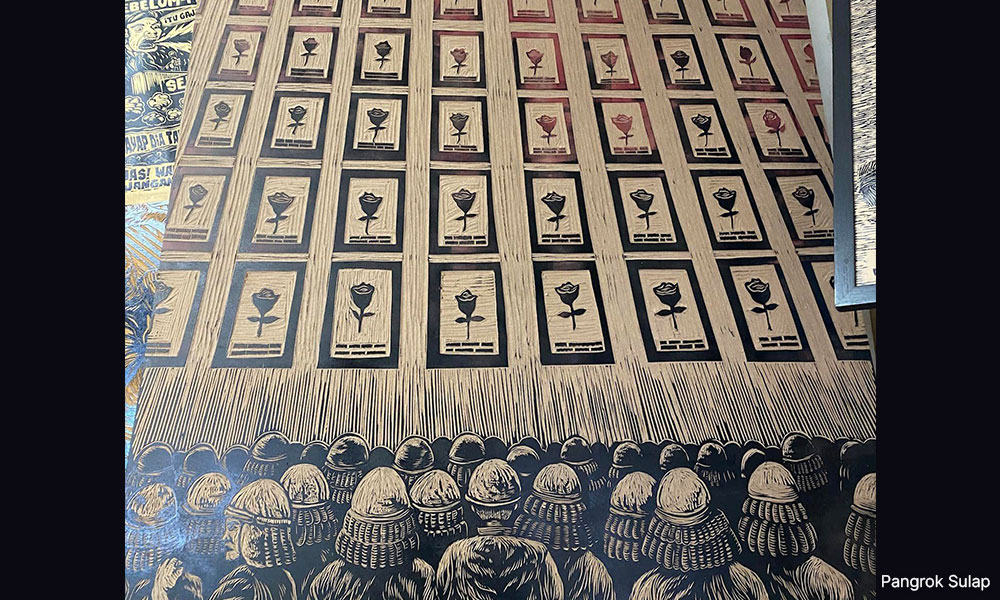
The uprising formed a turning point for South Koreans as it initiated the national struggle for democracy.
MALAYSIANSKINI is a series on Malaysians you should know.
Indie studio makes waves with Southeast Asia-themed games
Nature lovers give critters a social media presence
After victory over dam and loggers, Orang Asli activist takes on Putrajaya
Yasmin Yusuff still firing on all cylinders
Just like YBeeee, Jo Kukathas moves with the times
Chicago Hound's Duke Krishnan scores another first for M'sian rugby
/file/publisher-c1a3f893382d2b2f8a9aa22a654d9c97/2021/01/86d3e0ab55ebffbb398935372604de06.jpg)
/file/publisher-c1a3f893382d2b2f8a9aa22a654d9c97/2021/09/9cb477731db69936d81fdaece94c2da3.jpg)
/file/publisher-c1a3f893382d2b2f8a9aa22a654d9c97/2022/12/6b8cbb5017e4fcef2d7dc3c0c071d7af.jpg)
/file/publisher-c1a3f893382d2b2f8a9aa22a654d9c97/2022/10/4351fa86ce111e98933086543fe6cc69.jpg)


Report this comment
Are you sure you want to delete this comment?
This action cannot be undone.