


/file/publisher-c1a3f893382d2b2f8a9aa22a654d9c97/2023/09/7387ef7c2193bce781674d62b59dfbbd.jpg)

Rafizi: Rare earth policy not hypocritical, to stop abuse by state govts
EXCLUSIVE | While one of the themes stated in the 12th Malaysia Plan (12MP) mid-term review is on “advancing green growth” to move towards a low-carbon nation, the government also said it will develop a policy to unlock the value of rare earth elements (REE).
The policy - which Prime Minister Anwar Ibrahim said is intended to prevent the exploitation of REE and resource loss and will guarantee “maximum returns for the country” - has since been viewed as hypocritical considering the environmental impacts of mining activities.
This is especially since...
EXCLUSIVE | While one of the themes stated in the 12th Malaysia Plan (12MP) mid-term review is on “advancing green growth” to move towards a low-carbon nation, the government also said it will develop a policy to unlock the value of rare earth elements (REE).
The policy - which Prime Minister Anwar Ibrahim said is intended to prevent the exploitation of REE and resource loss and will guarantee “maximum returns for the country” - has since been viewed as hypocritical considering the environmental impacts of mining activities.
This is especially since the lucrative rare earth deposits that the plan estimates can boost the GDP by RM9.5 billion are sitting under rainforests - crucial carbon sinks.
However, Economy Minister Rafizi Ramli, who is spearheading the 12MP, has dismissed such claims.
In fact, Rafizi said it’s pertinent for the federal administration to develop a framework to ban REE export to stop state governments from approving mining activities at their whims or Malaysia would risk losing such minerals in totality in the next two to three years.
“This is actually why we have to expedite this (framework). The forests and minerals are under state jurisdiction. They (the state government) can do what they would like.
“To make it worse, from a national perspective, we really don’t get any value by just exporting the raw materials,” he told Malaysiakini in an interview at his office this week.
He said without such a framework, states would be free to allow exploration and mining companies to mine for rare earth and export the raw materials, getting little in return.
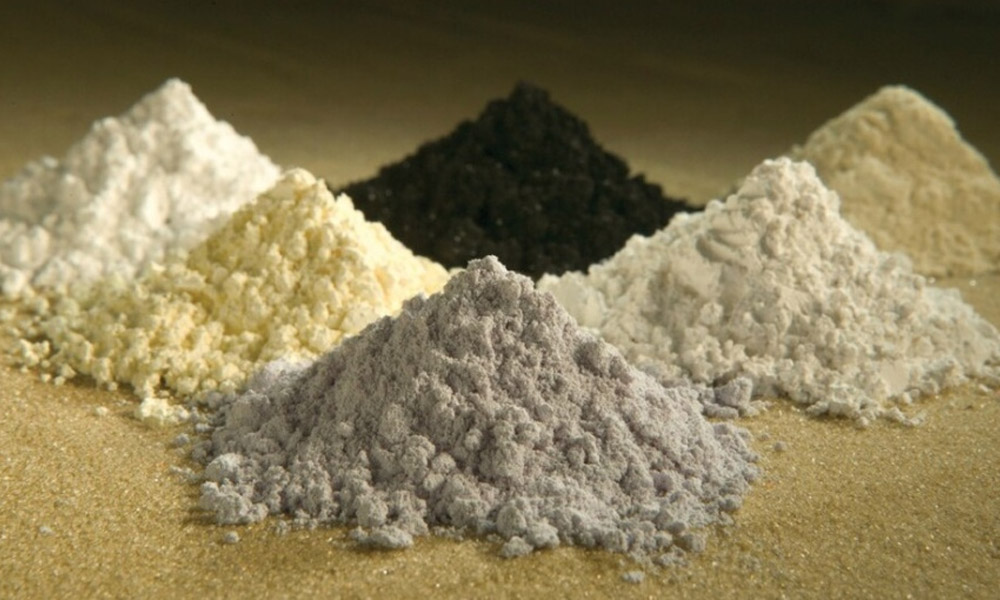
“And in no time, suddenly, they have extracted everything and the country doesn’t get anything except for the mess with the environment and the mines that they leave behind,” Rafizi said.
Mining already started
Rare earth mining has already commenced in some states, including Kedah where on July 18, an anti-corruption probe was initiated against Menteri Besar Muhammad Sanusi Md Nor for alleged abuse of power over REE mining in the state.
The mining was allegedly conducted illegally and resulted in losses to the state government.
Several investigation papers had been opened under Section 17(A) and Section 23 of the Malaysian Anti-Corruption Commission (MACC) Act 2009.
Yesterday, MACC chief Azam Baki told the New Straits Times that Sanusi will be called in within the next two weeks over the REE mineral theft issue.
The top graft buster said MACC's investigations into this case were almost completed.
READ MORE: Risky targeted subsidy framework won't topple govt, says Rafizi
Not apple-to-apple comparison with Lynas
Meanwhile, Rafizi said it would only be logical for Putrajaya to want to develop the whole stream of the REE industry covering upstream, midstream, and downstream, not just in exporting the raw minerals.
He also asserted that the government’s move to develop the rare earth industry in Malaysia should not be compared to operations that had been done by rare-earths producer Lynas Corporation - which processes materials imported from Australia.
“Our principle is that whatever (minerals that) is ours, we’ll manage it, we’ll get the best value for it. We can balance the cost and the risk of storing it here.
“It’s actually not apple-to-apple with Lynas. The rare earth (that Lynas processes) is from Australia, it is sent to us here for upstream processing, leaching, and so on to remove the waste.
“The waste is kept here. The intermediary product, which is where the value is, is sent back.”
However, he admitted that the government has yet to find a solution to mining REE minerals in an environmentally sustainable way.
“I don’t necessarily have all the answers now but that is the government policy.
“The way it works in the civil service in government is that once a policy has been made, all these concerns will be mapped out and it comes as a regulation one after another.
“So the concerns about striking a balance between environmental concerns and the best practices for extraction, all that are the kind of things that we need. But now, we don't (have a framework),” he explained.
READ MORE: Not 'Big Brother': Govt assures mega database Padu is secure
Pilot study in Gerik on ‘less damaging’ mining
The government is reported to be conducting a pilot project using a method called in situ leaching at a rare earth mine in Gerik, Perak, to determine the standard operating procedure for mining such minerals.
According to the environment news website Macaranga, the process is considered “less damaging” because the forests need not be cleared and or excavated but chemicals are used to pull the minerals out.
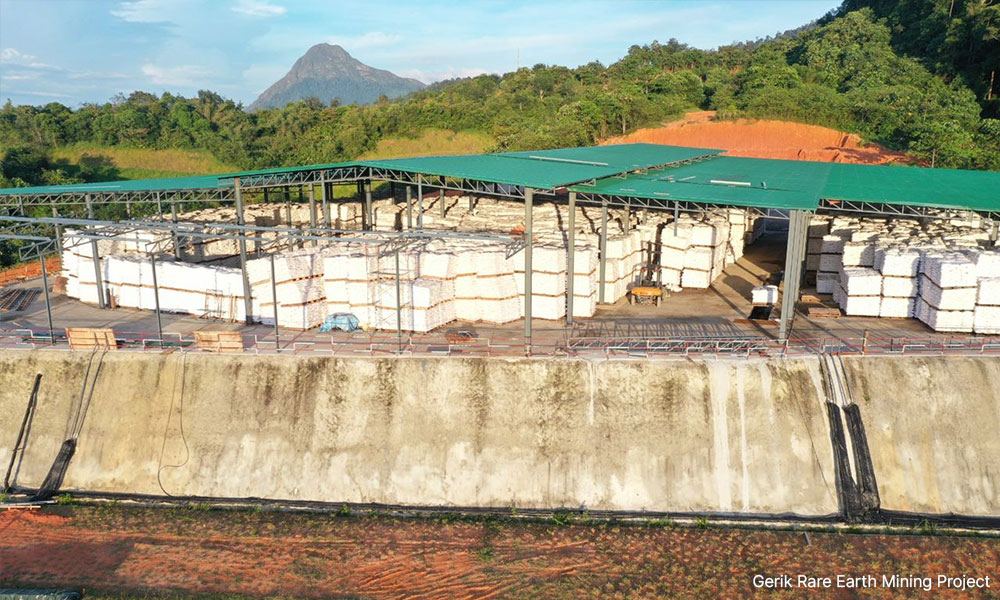
There is a risk of groundwater contamination, but so far, those conducting the trials said the pilot project in Gerik has not caused such pollution, Macaranga reported.
On Wednesday, Natural Resources, Environment and Climate Change Minister Nik Nazmi Nik Ahmad was reported as saying that the SOP for REE mining is expected to be enforced this year.
Nik Nazmi said a Minerals Industry Development Coordination Committee meeting will be held on Oct 2 to discuss matters related to the proposed expansion of the SOP throughout the country.
The government has also imposed restrictions on some of Lynas’ operations due to concerns regarding radiation levels from cracking and leaching, a matter that Lynas has disputed.
/file/publisher-c1a3f893382d2b2f8a9aa22a654d9c97/2023/09/3871c4d1f5f4d574cbd3c41422cd0f00.jpg)
/file/publisher-c1a3f893382d2b2f8a9aa22a654d9c97/2021/04/2a6d63de3fc0150e78b37c88fea080ff.jpg)
/file/publisher-c1a3f893382d2b2f8a9aa22a654d9c97/2023/08/bf99888e70d6f6c5fa4905b4be1adad0.jpg)
/file/publisher-c1a3f893382d2b2f8a9aa22a654d9c97/2023/05/91c9cc4428f79a0b5ec8b900a1819bd6.jpg)
/file/1247/cf5248282f8806fb9c599e1e4e37016e.jpeg)
/file/publisher-c1a3f893382d2b2f8a9aa22a654d9c97/2023/06/22409e7c6c3ab77ffc1eb1d6c471c24a.jpg)
/file/publisher-c1a3f893382d2b2f8a9aa22a654d9c97/2023/06/943885c226fe8da240f7826f7a2c5c31.jpg)


REE under rainforests and forest reserves should just be left untouched, considering that our rainforests are now in a critical situation, in terms of area, degree of fragmentation and biodiversity. Much land in the country has already been developed. What is left now are fragments of undeveloped Ecological Sensitive Areas (ESA). In view of the small area of ESAs left, it’s high time they be left untouched and the government come up with amendments and policies to put all ESAs, mining activities, coastal development and reclamation as well as management of islands with marine parks under federal jurisdiction rather than state jurisdiction to better control mismanagement of the remaining ESAs. Government policies regarding environmental protection must be amended in order to keep up with the critical need for the protection of ESAs. The government should also discard the idea that a country can only prosper if it has got natural resources. Just look at Singapore. I’m sure, buried under its country are also vast sources of rare earth metals. But did they mine them to prosper? No, they developed their human resources instead. In the 1950s, they were economically on par with us. Now, they are economically and technologically way far ahead of us, without dependence on natural resources and despite their land area being 453 times smaller than ours. Exporting REE does bring immense profits, But the expenditure for mitigation of impacts due to mining might outweigh the profits. Furthermore will mining companies foot the mitigation bill ? No, it will all be piled upon the government, in the end causing no net gain for the government. The only parties getting net gain are the mining companies, state heads and their cronies and the importing countries. Earlier this year, Nik Nazmi said his ministry has also identified a more environmentally friendly 'in-situ' leaching method which involves minimal land clearing for mineral extraction from the ground. This method reportedly has less impact on the environment than the current open-pit mining method used, which involves forest clearing. In-situ leaching as compared to open-pit mining is supposed to be more environmentally, friendly, with minimal land clearing and less impact on the environment. Firstly, less impact as compared to open-pit mining doesn’t mean that the impact of in-situ mining is small. Surely, the impact is going to be great but the only thing is, it’s less when compared to that of open-pit mining. Secondly, let’s say the layer of rare earth elements (NR-REE) lies below a forest. The initial natural state of the NR-REE is most likely a solid, insoluble ore of the REE. So initially it’s a thick layer of forest soil on top of this layer of NR-REE ore. Then, using in-situ leaching, an acidic or alkaline solution is pumped through pipes into the ore layer so that the ore reacts with the acid or alkaline solution to produce a solution of NR-REE. Then the NR-REE solution is pumped out to the processing facilities. New acid or alkaline solution is continuously pumped into the ore layer till most of the REE is extracted in its solution form. So eventually, isn’t the solid ore layer going to be replaced by a solution or liquid layer? Wouldn’t soil particles above this ore layer go to sink into the solution? Eventually, wouldn’t the whole forest floor sink, destabilising the forest trees?
Are you sure you want to delete this comment?
This action cannot be undone.