


/file/publisher-c1a3f893382d2b2f8a9aa22a654d9c97/2024/09/dabd305137ce408d1b1c01107ee22f74.jpg)

KINIGUIDE | Understanding Jakim, its inception and powers
They expressed unease regarding news from Sabah that officers from the Islamic Development Department (Jakim) would be placed in all government departments to ensure its decisions align with Islamic principles.
As a result, the issue has sparked a debate, which supposedly stemmed from misunderstandings about Jakim's true function and role.
In this instalment of KiniGuide, we will take a look into...
KINIGUIDE | Earlier this week, the Malaysian Consultative Council for Buddhism, Christianity, Hinduism, Sikhism and Taoism (MCCBCHST) voiced their concerns following reports that Islamic religious officers would be stationed in all government departments.
They expressed unease regarding news from Sabah that officers from the Islamic Development Department (Jakim) would be placed in all government departments to ensure its decisions align with Islamic principles.
As a result, the issue has sparked a debate, which supposedly stemmed from misunderstandings about Jakim's true function and role.
In this instalment of KiniGuide, we will take a look into what Jakim does and how it came into being.
How was Jakim established?
In 1969, the Conference of Rulers decided on the need to establish an agency to coordinate efforts for the development and progress of Muslims in Malaysia, in line with its status as the religion of the federation.
Following this decision, a secretariat was established under the National Council for Islamic Affairs (MKI) to preserve the sanctity of Islamic beliefs and teachings.
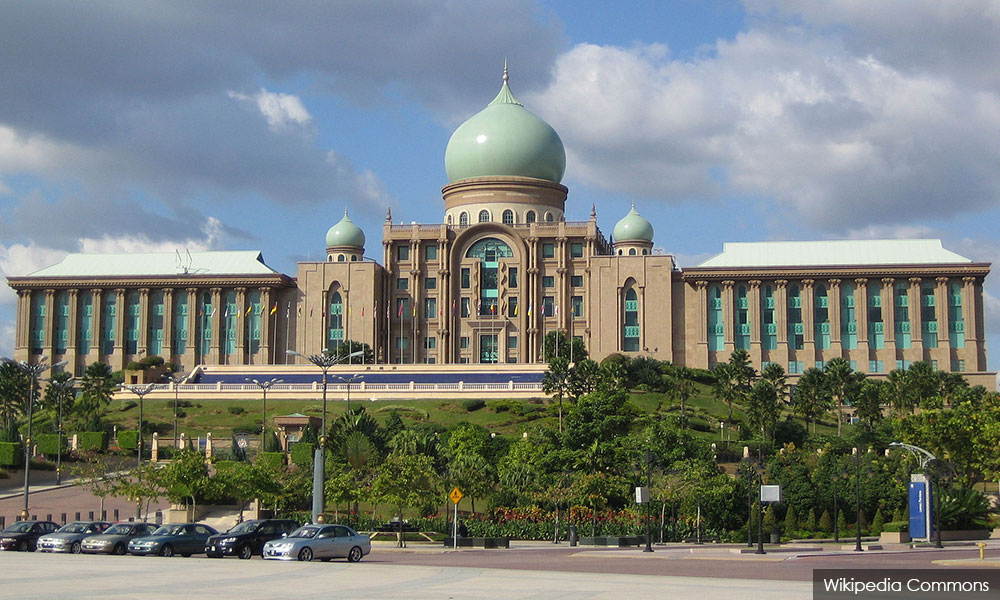
This secretariat was later expanded into the Religious Affairs Division and placed under the Prime Minister’s Department. It was subsequently upgraded again to the Islamic Affairs Division (Baheis).
On Jan 1, 1997, Baheis was upgraded into a full-fledged department named Jakim, still under the Prime Minister's Department.
Jakim's organisational structure, financial allocation
At its inception, Jakim had 14 divisions, which have since grown to 19 divisions and now include 26 divisions across four sectors as follows:
Director-General Sector
o Director-General’s Office
o Malaysian Islamic Training Institute (ILIM)
o Legal Division
o Darul Quran
o Malaysian Halal Council Secretariat
o Malaysian Sarawak Islamic Skills Institute (IKMAS)
o Sabah Islamic Studies and Propagation Institute (IPDAS)
o Sabah Jakim
o Sarawak Jakim
o Corporate Communications Unit
o Integrity Unit
Policy Sector
o Islamic Advancement Policy Division
o Research Division
o Shariah Enforcement and Prosecution Coordination Division
o Secretariat and External Relations Division
o Halal Management Division
o Maqasid Shariah Division
Operations Sector
o Propagation Division
o Family, Social and Community Division
o Publications Division
o Broadcasting Division
o Education Division
Management Sector
o Human Resource Management Division
o Finance Division
o Information Management Division
o Management Services Division
Jakim is headed by a director-general, a post currently held by Hakimah Mohd Yusoff, and is supported by three deputy directors-general (policy, operations and management) as the agency's highest-ranking positions.
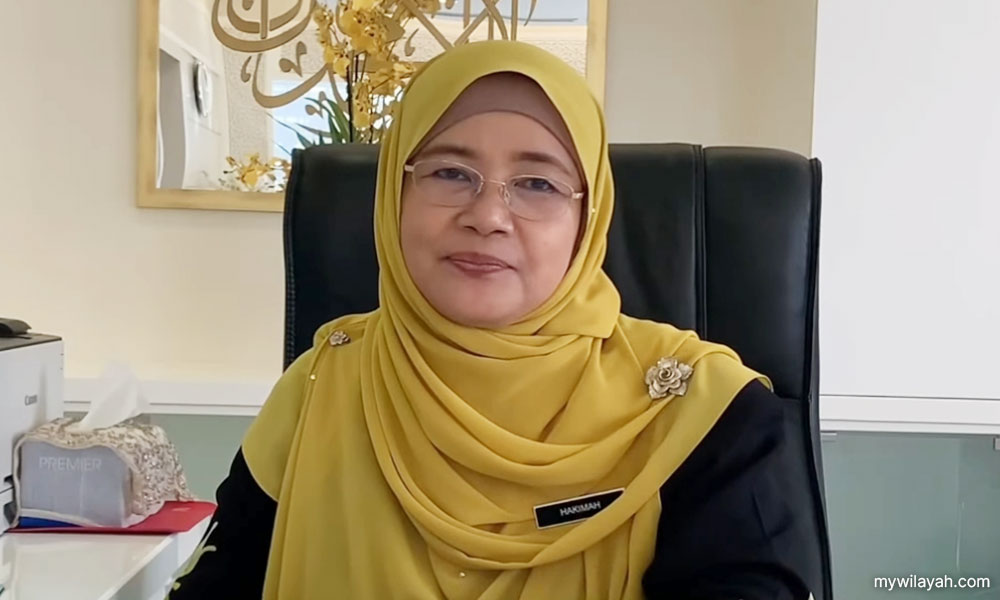
In addition, the Jakim’s includes senior directors, legal advisers, division directors and state directors, along with officer and support staff positions at the lower levels.
According to the Budget 2024, Jakim has been allocated an operating budget of RM1,147,796,000 and a staff of 1,465 people nationwide.
What does Jakim do?
As the primary agency for handling Islamic affairs at the federal level and the secretariat to MKI, Jakim carries out the following three main functions:
Formulation and standardisation of Islamic laws
Coordination and development of Islamic education
Coordination of Islamic administration
Jakim acts as the central agency for planning the management of Islamic affairs and the development of the ummah (Muslim community) and steers the development and progress of Islamic affairs in the country.
This agency also formulates policies for the development of Islamic affairs in Malaysia and safeguards the sanctity of Islamic beliefs and teachings.
It assists in drafting and standardising laws and regulations and evaluates and coordinates the implementation of existing laws and administration.
Jakim also implements ummah development programmes, promoting Islamic values in national governance and coordinates the mechanisms for enforcing laws and regulations for administrating Islamic affairs in the country.
Additionally, Jakim plays a role in evaluating Islamic programmes, acts as a collector, disseminator and reference centre for information on Islamic affairs, and implements ummah development efforts through regional and international cooperation.
Does Jakim play a role in non-Islamic religious affairs?
No. This is because Jakim's establishment and function are as an agency to coordinate efforts for the development and progress of Muslims in Malaysia.
In other words, Jakim does not interfere with the religious affairs and activities of other faiths in this country.
Jakim is also responsible for ensuring that no one touches on sensitivities involving the religion and Muslims.
Does Jakim have enforcement authority?
No. However, Jakim has a Shariah Enforcement and Prosecution Coordination Division, which plays a role in enhancing and refining tasks related to enforcement, investigation and prosecution carried out by the state governments in Malaysia.
This division acts as a coordinator between Jakim and the state Islamic religious departments.
This division has three branches - the enforcement coordination branch, prosecution coordination branch and administration and support services unit.
Are Jakim officers stationed in ministries, depts and federal agencies?
Yes, the existence of posts known as Islamic Affairs Officer Cadre Service Scheme (PHEI) in ministries, departments and federal agencies is based on positions approved by the Public Service Department (PSD). Such placements are based on current needs in the ministries, departments and agencies.
The placement of Jakim officers is rooted in the government's introduction of the “Inculcation of Islamic Values Policy” in the civil service in 1985 to fulfil the government's aspirations to integrate noble values in government administration at both the federal and state levels.
It is aimed at developing human capital that is more balanced in terms of spiritual and physical strength.

In 1987, the government introduced “Islamic Work Ethics” to instil best governance practices among civil servants through the practice of religious values such as trustworthiness, responsibility, sincerity, dedication, diligence, discipline, cooperation, mutual assistance, kindness, and gratitude, as well as promoting the concept of work as worship.
In line with this purpose, Jakim’s PHEI officers began to be stationed in several ministries and federal agencies - including the Youth and Sports Ministry, Home Ministry, Health Ministry, Agriculture Department, Prime Minister's Department, Prisons Department and National Anti-Drug Agency.
PHEI officers perform various service functions, including management, administration, education, research, healthcare, prevention, enforcement, development, rehabilitation, security, regulatory, agricultural industry and economic and financial sectors.
Why place PHEI officers in other govt agencies?
The objective of placing Jakim PHEI officers is to implement programs and activities to achieve the following:
Strengthen understanding and appreciation of noble values in the service to produce civil servants with balanced intellectual, spiritual and emotional strength.
Increase work motivation among civil servants based on the integration of noble values to enhance organisational productivity towards achieving good governance.
Reinforce the appreciation of the contemporary Islamic approach implemented by the government in service delivery.
Enhance understanding of Islam to overcome various Islamophobia issues among public servants and the general public.
Prevent any activities spreading deviant beliefs that contradict the Islamic creed, such as “deviant teachings”, liberalism, pluralism, extremism, Shiism and beliefs that contravene the Ahli Sunnah Wal Jamaah school of thought.
Are new placements of PHEI officers still being made?
Last week, Communications Minister Fahmi Fadzil informed that no new placements of Jakim officers are being made in government departments.
He said the Jakim officers never touched on policy matters within a ministry.
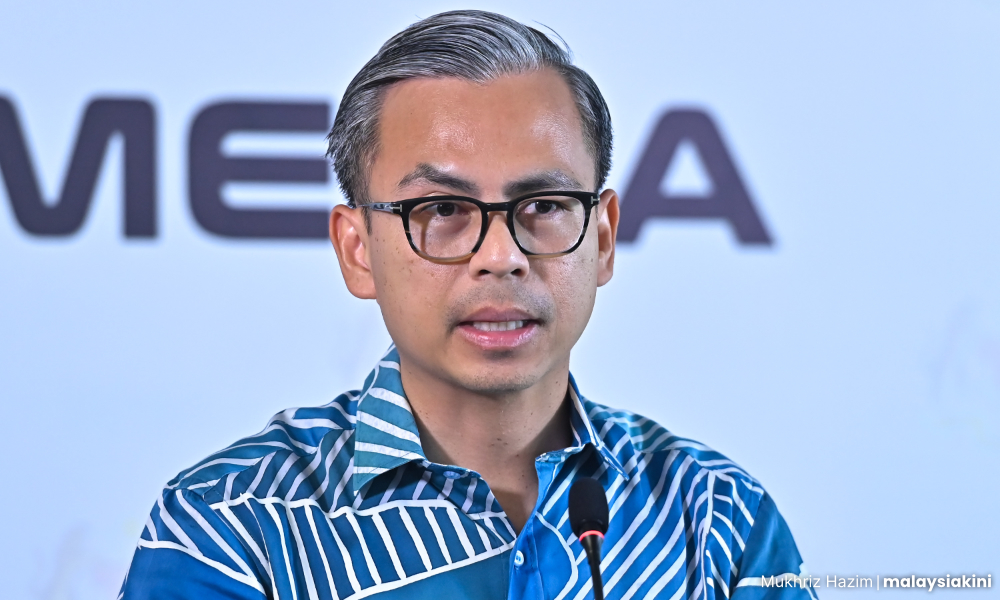
He clarified that the original objective of placing these officers was to assist the government, particularly in terms of integrity and spiritual content within a ministry.
What is Jakim's involvement in halal certification?
The government’s role in granting halal certification to food products and Islamic consumer goods in the country began in 1974.
Starting from 1994, halal certification was issued in the form of a certificate along with a halal logo, and from Sept 30, 1998, halal inspections were carried out by the company Ilham Daya, which was appointed by the government.
On Sept 1, 2002, the government decided that all halal certification matters would be fully handled by Jakim - through the Islamic Food and Consumer Goods Research Division, which only had a staff of 28 people.
With the rapid development of the food industry in the country and the growing needs of Muslims, on Nov 17, 2005, the PSD approved 165 positions in various schemes and grades under the new name “Halal Hub Division”.
On April 2, 2008, the management of halal certification was taken over by the Halal Industry Development Corporation.
What are controversial issues handled by Jakim?
Recently, there have been several controversial issues that required Jakim's intervention. Among these was when a shoe design is alleged to contain the word “Allah”.
Jakim promptly ordered the company involved to immediately withdraw the product from its 70 outlets across the country, including Sabah and Sarawak.
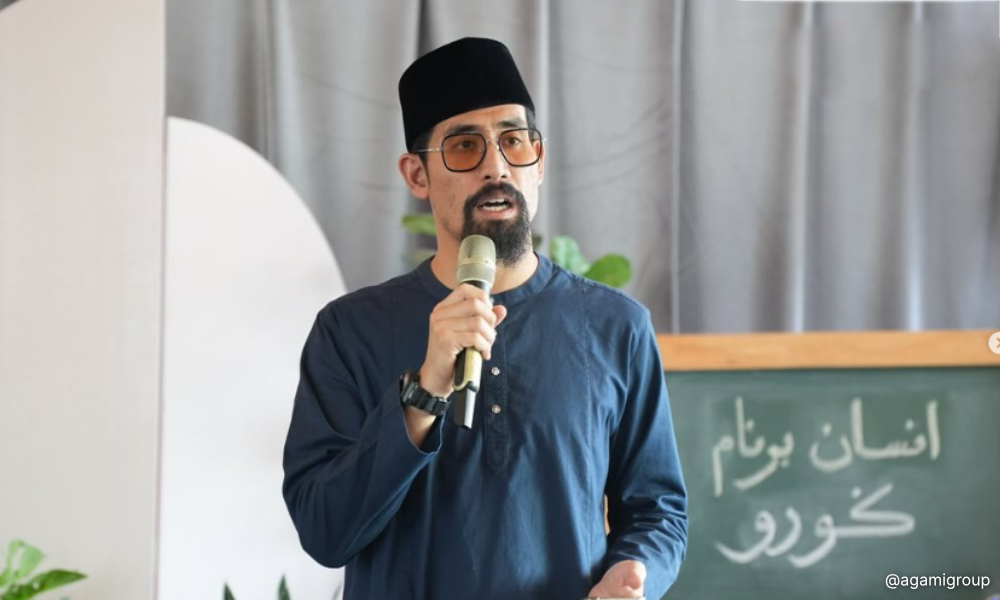
Additionally, Jakim was responsible for addressing the controversy involving the independent preacher Don Daniyal Don Biyajid after his sermon, which included stories about the life of Prophet Muhammad that attracted criticism from various parties.
Jakim also played a role in the controversy involving a convenience store chain regarding socks that featured the word "Allah."
At the end of last year, Jakim intervened to clarify an issue where a cake shop claimed it could not write the phrase "Merry Christmas" or "X'Mas" on cakes due to fear of violating its halal certification.
The agency clarified that there is no prohibition for businesses with halal certification to fulfil customer requests to write any festive greetings on cakes or similar orders.
/file/publisher-c1a3f893382d2b2f8a9aa22a654d9c97/2024/07/f6d77216796cf04202526d701fbb61a7.jpg)
/file/publisher-c1a3f893382d2b2f8a9aa22a654d9c97/2024/09/cd837c1fd07512765eb050a4e78c34dd.jpg)
/file/publisher-c1a3f893382d2b2f8a9aa22a654d9c97/2024/07/89ddb9b0bda9358603d6e85557597eac.jpg)
/file/publisher-c1a3f893382d2b2f8a9aa22a654d9c97/2024/07/be29ba60f9a6c9c434573a3f89370177.jpg)
/file/publisher-c1a3f893382d2b2f8a9aa22a654d9c97/2024/09/f5922133126f47993ae9a0e30c72ba24.jpg)
/file/publisher-c1a3f893382d2b2f8a9aa22a654d9c97/2024/09/697766c42e5912ee46f70112610b36e0.jpg)


Report this comment
Are you sure you want to delete this comment?
This action cannot be undone.