


Ministry probing its departments on unchecked iron mining
The Natural Resources and Environmental Sustainability Ministry is investigating the departments responsible for overseeing an iron ore mining operator that operated for nine years in Kelantan, without an Environmental Impact Assessment (EIA) report.
Its minister Nik Nazmi Nik Ahmad said owing to the overlapping approval mechanisms at the state and federal levels, the matter was not straightforward.
“We will check the details as...
Summary
The Natural Resources and Environmental Sustainability Ministry is conducting an internal investigation into how an iron ore mine operated for nine years without an environmental impact assessment.
State governments had issued mining licenses without checking for EIA report compliance.
Minister denies that the state deliberately bypassed EIA rules due to opposition rule.
The Natural Resources and Environmental Sustainability Ministry is investigating the departments responsible for overseeing an iron ore mining operator that operated for nine years in Kelantan, without an Environmental Impact Assessment (EIA) report.
Its minister Nik Nazmi Nik Ahmad said owing to the overlapping approval mechanisms at the state and federal levels, the matter was not straightforward.
“We will check the details as to why and what,” he responded when asked if enforcement officers did not check the operations for almost a decade because the mines held legitimate mining licences.
“Yes, yes (there is an investigation),” Nik Nazmi confirmed to reporters after launching the Asean chairmanship at the NRES level at the Forest Reserve Institute Malaysia today.
Following a Malaysiakini exposé last December, Nik Nazmi ordered two iron ore mines on Bukit Tambun, Gua Musang, to halt operations over suspected heavy metal contamination in nearby rivers.

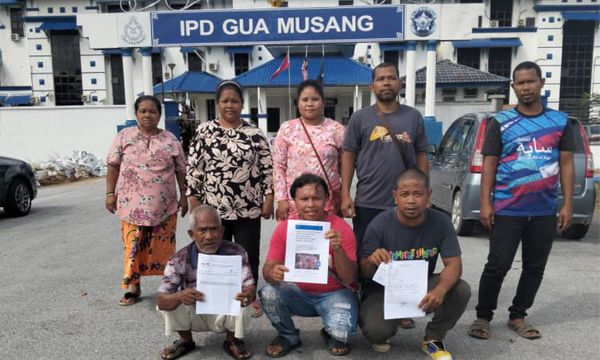
The Malaysiakini report also revealed high levels of chromium - a carcinogenic heavy metal - in the blood of one of six Orang Asli villagers whose families have been living downriver from the mines for generations.
The youngest of them, a 19-year-old boy, had a chromium level that put him at a lifetime risk of developing cancer at an estimated 64,000 times higher than normal.
Mid-last month, the Health Ministry collected blood samples of at least 60 of the 200 Temiar villagers in Kampung Kelaik, leaving out children and the elderly.
EIA requirement bypassed
The EIA approval falls under the jurisdiction of the Environment Department, while mining operations are monitored by the Minerals and Geoscience Department, and mining licences are issued by the respective state governments.
However, Nik Nazmi dismissed claims that the state bypassed the EIA requirement because it was governed by an opposition party.
He said EIA reports were a requirement even at the state-level licence approvals stage.
“That’s how it appears to be and we will look into the details,” he said when asked if the state had issued a license despite the company lacking an approved EIA report.
The Kelantan state government issued a 10-year mining license to Aqua Orion Sdn Bhd which will come up for renewal this year.
When Nik Nazmi ordered the companies to halt operations in December to facilitate investigations, he also asked the Kelantan government not to renew Aqua Orion’s mining license until investigations were completed.
Malaysiakini had reported that rudimentary iron ore processing was done under shacks with workers manually hosing down the operations with a handheld hose at Aqua Orion.
Aqua Orion ponds were also observed to be dug up routinely to ensure depth and the tailing - refuse from iron ore mining - was dumped at the sides.
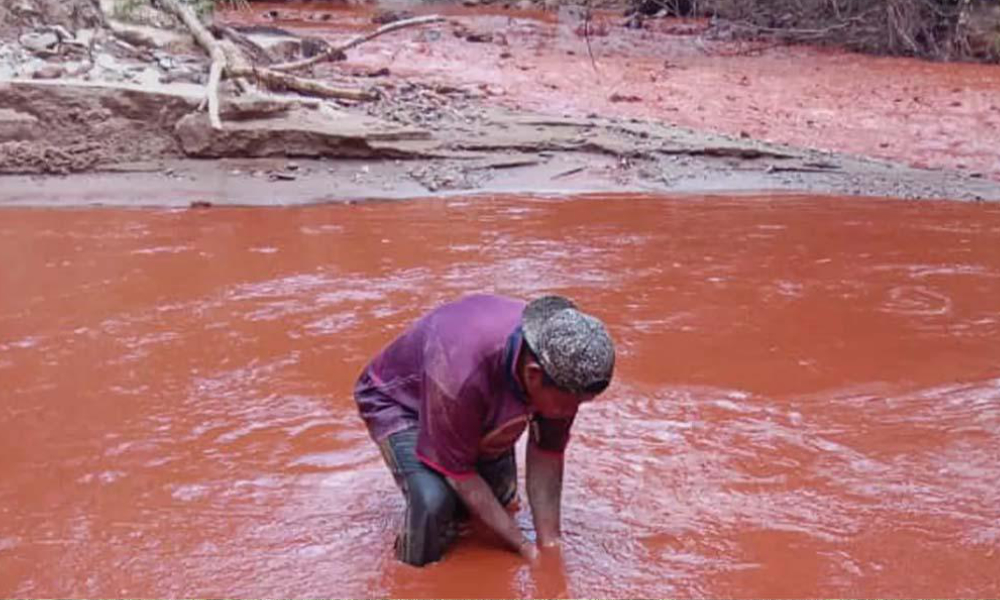
The other company operating there is Redstar Capital Sdn Bhd contracted by mining license holder Syarikat Perlombongan Gua Musang Sdn Bhd, which was found not to be operating.
Syarikat Perlombongan Gua Musang applied for EIA approval after it became compulsory for all mining operations and received its approval in 2019.
The company was issued a 21-year mining licence, which will expire in 2030.
When contacted, Redstar Capital said it does not discharge wastewater or effluents into the river and follows all regulations.
Challenges of enforcement
Nik Nazmi acknowledged that enforcement challenges stem from overlapping policies and state-level regulatory mechanisms.
“It’s the same challenge we face in the issues of forestry, land and mines because they are state matters.
“There are national policies, but the challenge of enforcement at the ground level would be reverted back to the state jurisdiction.
“We have the Mineral Development Act 1994 (a federal regulation) but we still need to go back to the state because minerals are under the state lease.
“Sometimes we need to persuade states to understand the higher standards,” he said, adding that it was an ongoing process (of persuasion) for many years.
“But we will continue to communicate with the state that it’s in their interest to hold higher standards with regards to mining and forestry.
“Because in the current situation, you (companies) might not get people who will want to buy your products if you do not abide by higher standards,” he stressed.






Report this comment
Are you sure you want to delete this comment?
This action cannot be undone.