


/file/publisher-c1a3f893382d2b2f8a9aa22a654d9c97/2024/04/386882ce803fa087cf2c4e01a982c25c.jpg)

Klang-based wildlife trader exposed in int'l report already fined, cops say
Malaysian authorities have confirmed that an elusive wildlife trader in Malaysia who recently caught the attention of global investigative outlet Bellingcat was nabbed and fined two years ago for illegally trading animals.
The police’s Wildlife Crime Bureau/Special Investigation and Intelligence Unit (WCB) said the trader, Ridzuan Norizan, was arrested by the Wildlife and National Parks Department (Perhilitan) in March 2023 for illegally selling otters, a protected species.
Summary
Police confirm that an illegal wildlife trader in Malaysia who was recently exposed by the media was caught and fined two years ago for wildlife trading offences.
Authorities claim they have not been contacted before the report’s publication and welcome further information on the case.
The man is a prolific wildlife trader who had been openly advertising his services on social media for more than a decade, and Bellingcat managed to trace his address and some of the sources from which he obtains animals for sale.
Malaysian authorities have confirmed that an elusive wildlife trader in Malaysia who recently caught the attention of global investigative outlet Bellingcat was nabbed and fined two years ago for illegally trading animals.
The police’s Wildlife Crime Bureau/Special Investigation and Intelligence Unit (WCB) said the trader, Ridzuan Norizan, was arrested by the Wildlife and National Parks Department (Perhilitan) in March 2023 for illegally selling otters, a protected species.
“His arrest underscores the authorities’ proactive stance through continuous monitoring and public reporting mechanisms,” WCB chief Azlin Sadari told Malaysiakini.
He said WCB handles intelligence gathering and field operations, while Perhilitan assumes responsibility for post-arrest investigations, evidence compilation, and case preparation for prosecution.
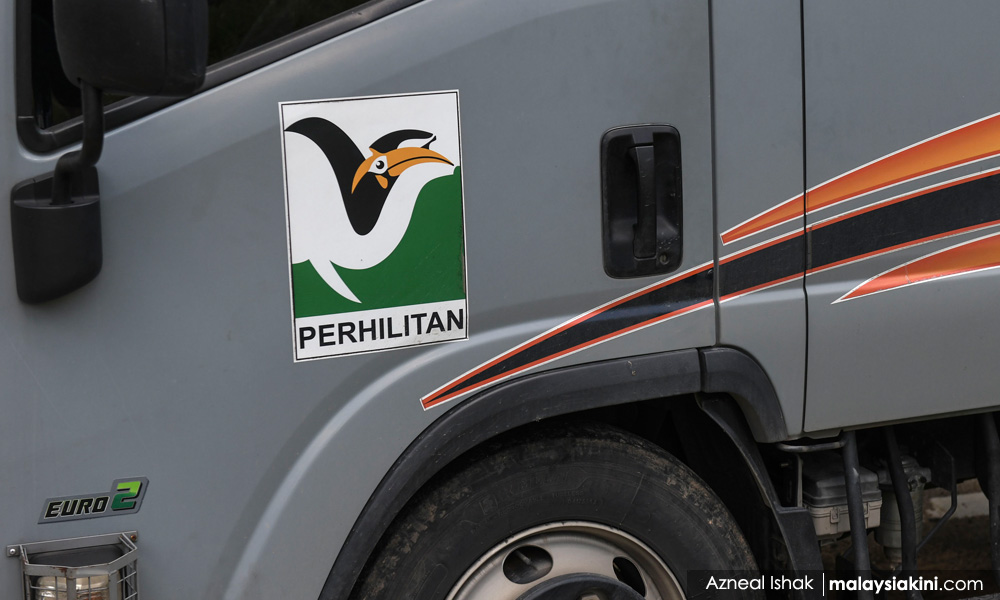
Perhilitan director-general Abdul Kadir Abu Hashim confirmed that Ridzuan was charged in the Klang Sessions Court on April 4, 2023.
He was arrested at his home in Kampung Sungai Udang, Klang, on Feb 8, 2023.
He was then charged under Section 68(1)(a) of the Wildlife Conservation Act 2010 (Act 716) for keeping two Asian Small-Clawed Otters without a special permit.
On July 25 that year, he was fined RM50,000 in default of five months in prison, Kadir told Malaysiakini.
Kadir cautioned the public against conducting such acts, as Perhilitan enforces strict measures against illegal wildlife trade.
Cops say not contacted for report
Bellingcat recently exposed Ridzuan’s operations in its report and contacted the police on the case. The publication said the authorities had not responded to the queries by publication on Feb 11.
However, WCB said it did not receive any communication on the matter.
“No, WCB has not received any official communication, documentation, or evidence from Bellingcat regarding this case.
“(However), the department remains open to reviewing credible information from all sources, including Bellingcat, to support enforcement actions,” said Azlin.
He said the department would also initiate a comprehensive review of the allegations based on Bellingcat’s report.
“Preliminary findings from our investigation indicate that the Facebook accounts cited (eg Putra Klang @ BK @ Mohd Rizwan bin Norizan, or Norhasni B) are believed to be (used by) the same person or administrative by the same person.
“Some of his Facebook accounts have been inactive since 2016, with no activity logs or posts after that year. This predates the report’s publication, but WCB will collaborate with Meta (Facebook’s parent company) to verify historical data and pursue leads if warranted,” he said.

WCB, first set up in May 2022, was integrated with the police’s Special Investigations Intelligence Unit and addresses not only wildlife poaching and trafficking but also the illegal exploitation of all natural resources.
The integration is meant to leverage the force’s strength and experience in intelligence gathering and investigations. Consequently, the bureau’s workforce has increased from 50 to 78 officers.
Azlin added that WCB has a team that actively monitors social media platforms such as Facebook, Instagram, TikTok, Mudah, and Carousell for illegal wildlife trading.
Bellingcat’s expose
On Feb 11, Bellingcat exposed a Malaysian wildlife dealer who was advertising rare and endangered animals to thousands of followers online.
The outlet’s investigations, which started in 2022, revealed the man has been selling all sorts of wildlife including lions, leopards, tiger cubs, house cats, weasels, raccoons, and donkeys for more than a decade.
Using open-source investigation techniques, Bellingcat traced the man’s identity and home address and the sources of some of the wildlife he was selling.
For example, a photo advertising an animal was determined to have been taken in Bangkok due to a lake in the background and rooftops commonly found in a specific area of the Thai capital.

The outlet also traced his home address using photos the trader posted online and cross-referencing the elements with images on Google Street View.
Modus operandi
On Facebook, the dealer’s main account has 3,500 friends, and he is also the admin for several groups, one of which is devoted to the trade of exotic animals.
His Facebook banner image features an infant dusky leaf monkey, another endangered and protected species under Malaysian Law, found only on the Malayan Peninsula.
Despite his considerable online presence, the dealer was careful to keep his identity and location hidden, Bellingcat reported.
Following its investigation, Bellingcat reported the issue to social media platforms TikTok, Facebook, and Instagram, which removed and suspended the dealer’s social media accounts.

However, the outlet reported that the dealer returned with a new account and posted adverts of exotic animals within hours of TikTok taking down his old content. This prompted the reporter to contact the platform again to suspend the new account.
Wildlife trafficking hub
The report comes amid multiple recent incidents of wildlife smuggling involving air passengers travelling from the Kuala Lumpur International Airport (KLIA).
Customs authorities at multiple airports in India had intercepted attempts to smuggle various wildlife including gibbons and turtles in checked-in suitcases by passengers travelling from KLIA.
In response, the Malaysian Customs Department said it only scans hand luggage while check-in baggage is handled by Malaysia Airports Holdings Bhd.
MAHB declined to comment when contacted and referred to its 2023 statement, which said multiple checks and extra resources have been put in place to combat wildlife trafficking at KLIA.
/file/publisher-c1a3f893382d2b2f8a9aa22a654d9c97/2025/02/1e86b69712c6b23531b9452806bb1c51.jpg)
/file/publisher-c1a3f893382d2b2f8a9aa22a654d9c97/2025/02/04101a2a69f82e2e561ec540f56fed52.jpg)
/file/publisher-c1a3f893382d2b2f8a9aa22a654d9c97/2024/10/3094d61f1fb304305cf8bfbdc476af7a.jpg)
/file/publisher-c1a3f893382d2b2f8a9aa22a654d9c97/2024/01/a66589c92c6247906c945ed7a06bc770.jpg)


Report this comment
Are you sure you want to delete this comment?
This action cannot be undone.