


/file/publisher-c1a3f893382d2b2f8a9aa22a654d9c97/2025/07/cdadf4b622f1623945cc6005f9217663.jpg)

US tariffs: Zafrul admits negotiations complex, but not a failure
Investment, Trade and Industry Minister Tengku Zafrul Abdul Aziz has admitted today that tariff negotiations with the US are complex and require certain sacrifices.
“However, our goal remains clear - to ensure market access for our exports, modernise our economy, and protect Malaysians’ livelihoods in the long term," said Zafrul, who led Malaysia's tariff negotiations with the US.
Summary
Investment, trade and industry minister insists talks with the US remain constructive despite the new 25pct blanket tariff.
He says the ministry consulted multiple agencies on industrial, agricultural, and digital trade.
Zafrul believes a resolution is likely and denies the situation signals crisis or negotiation failure.
Investment, Trade and Industry Minister Tengku Zafrul Abdul Aziz has admitted today that tariff negotiations with the US are complex and require certain sacrifices.
“However, our goal remains clear - to ensure market access for our exports, modernise our economy, and protect Malaysians’ livelihoods in the long term," said Zafrul, who led Malaysia's tariff negotiations with the US.
The ministry had also conducted engagement sessions with various other ministries and agencies to gather their feedback and approval, he explained.
These sessions covered a range of topics, including industrial products, agricultural goods, and digital trade.
Zafrul was speaking at a special press conference in Kuala Lumpur on the latest round of retaliatory tariffs imposed by the US on Malaysian exports.
The US yesterday announced a blanket 25 percent tariff on all Malaysian products exported to the country, effective Aug 1, separate from existing sectoral tariffs. This is one percent higher than the tariff announced in April.
‘Talks on the right track’
Zafrul stressed that the negotiations over the matter should not be viewed as a failure, as discussions and engagements are still progressing constructively.
He said this is not about a failed negotiation or a crisis faced by Malaysia or the world, but rather part of the global trade dynamics.
“In all negotiations, meetings, and international platforms, Malaysia continues to voice support for multilateral principles and a rules-based trading system, with the World Trade Organisation as its core,” he added.
At the same time, Zafrul expressed confidence that the ongoing trade talks are still on the right track.
He acknowledged the existence of several minor issues that could be easily resolved.
“If given a 50-50 choice, I’m leaning more than 50 percent toward the likelihood of reaching a consensus,” he added.
Zafrul also assured that several "red lines" will not be compromised in negotiations.
Any negotiations taking place, he said, would never mortgage sovereignty nor undermine national interests.
"We have discussed our ability to impose taxes, including a digital tax, and that is a red line for us. We feel that it is our sovereign right.
"Issues related to legislation, including criminal law regarding digital e-commerce, which Parliament recently passed, are also amongst the matters raised.
"Similarly, with government procurement issues, the government's ability to make procurement according to the procurement policy. These are issues that we consider important and we defend," he said.
He added that during the 90-day negotiation period, Malaysia had conducted more than 25 engagement sessions with counterparts from the US.
Up to Trump to explain
The government will be leaving it to US President Donald Trump to explain his actions regarding the imposition of additional tariffs on Malaysian exports.
Zafrul said this was because Malaysia had submitted enquiries to the US Trade Representative's (USTR) office regarding the tariff increase, but no official response has been received thus far.
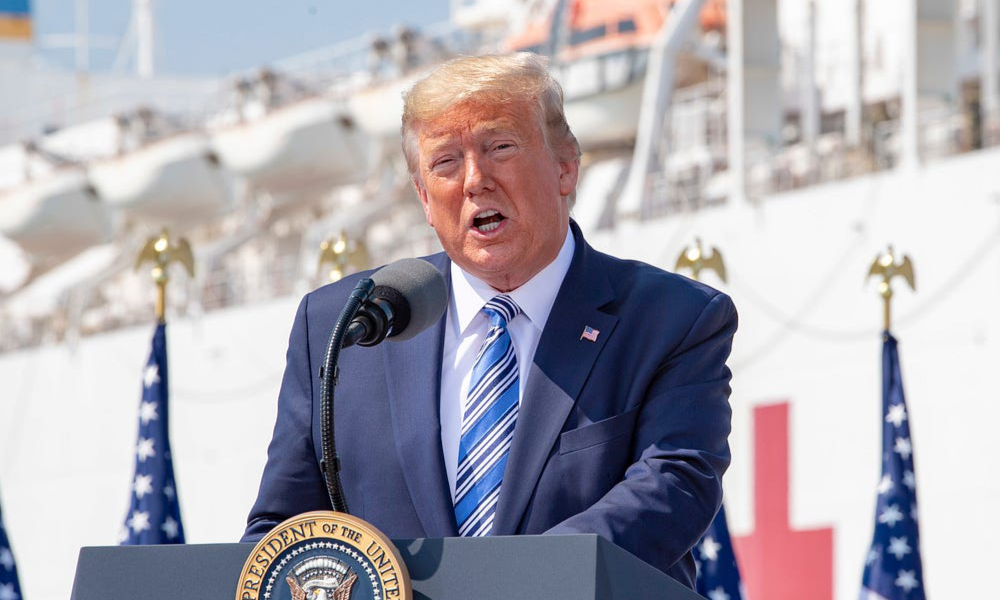
"That has to be asked of USTR, we've already asked them but there's no answer because this is up to Trump.
"Japan also asked why it suddenly went up by one percent. But we accept this in the context of discussions.
"One percent is still low compared to countries like Thailand, Indonesia and so forth," Zafrul pointed out.
The minister stressed that the policy is yet to take effect until Aug 1, and that the government will continue negotiations.
Zafrul was responding to questions about why, despite positive negotiation prospects, the US suddenly imposed additional tariffs on Malaysian exports.
He elaborated that discussions with the US were not only about tariffs, but involved various aspects, including domestic legislation.
"Laws that are important for our country and we cannot compromise on.
"Therefore, we need to look at this holistically and as I mentioned earlier, if possible we want to reduce it below 25 percent with a floor of 10 percent," he added.
Among the countries that will face 25 percent tariffs are Japan, South Korea, Tunisia, and Kazakhstan.
Higher rates will be imposed on other countries such as South Africa and Bosnia and Herzegovina (30 percent), Serbia and Bangladesh (35 percent), as well as Cambodia and Thailand (36 percent).
/file/publisher-c1a3f893382d2b2f8a9aa22a654d9c97/2025/07/97d47b689c4ab8f0c971989ef4e570e0.jpg)
/file/publisher-c1a3f893382d2b2f8a9aa22a654d9c97/2025/07/8c37638543c1a65ae3a2f7a1b554ba85.jpg)
/file/publisher-c1a3f893382d2b2f8a9aa22a654d9c97/2024/10/1223d6ef7a823432d5fb583e7fbb8c35.jpg)
/file/publisher-c1a3f893382d2b2f8a9aa22a654d9c97/2025/06/cc188626d3ddf2d8771e0a26d21f9043.png)
/file/publisher-c1a3f893382d2b2f8a9aa22a654d9c97/2024/08/047b1facd49492d895d50303ab34ac94.jpg)


Are you sure you want to delete this comment?
This action cannot be undone.