


/file/publisher-c1a3f893382d2b2f8a9aa22a654d9c97/2023/01/2cf8b194f7bd5305424f71aae4354b57.jpg)

Sabah polls: Group urges state leaders to include quota for women reps
Civil society organisations and political parties have called on Sabah leaders to introduce a quota for women lawmakers in the upcoming state election.
In a joint statement led by gender-equity group Projek Sama, they called on Chief Minister Hajiji Noor, Warisan president Shafie Apdal, and BN Sabah chairperson Bung Mokhtar Radin to promise in their manifestos the conversion of Sabah’s six appointed seats into women-only additional seats.
Summary
Projek Sama and a coalition of civil society organisations urge Sabah leaders to introduce a gender quota for women reps in state polls.
The group also proposes nationwide constitutional amendments to enable a hybrid electoral system, citing Malaysia’s low global and regional rankings in women’s political representation.
Civil society organisations and political parties have called on Sabah leaders to introduce a quota for women lawmakers in the upcoming state election.
In a joint statement led by gender-equity group Projek Sama, they called on Chief Minister Hajiji Noor, Warisan president Shafie Apdal, and BN Sabah chairperson Bung Mokhtar Radin to promise in their manifestos the conversion of Sabah’s six appointed seats into women-only additional seats.
“We call upon all political parties to nominate a minimum of 30 percent women candidates in the 16th general election and state election.
“We also urge the Madani government to enact a Political Financing Act with public funding for political parties that is partially tied to the number of women parliamentarians,” the group said today.
They further urged amendments to the Federal Constitution to allow closed list proportional representation (CLPR) voting at the state level to be introduced alongside the existing first-past-the-post (FPTP) electoral system.
This hybrid method, similar to Thailand and Taiwan, they explained, would easily allow the creation of a 30 percent of women’s representation quota within the FPTP system, which presently hinders competent women candidates from being elected.
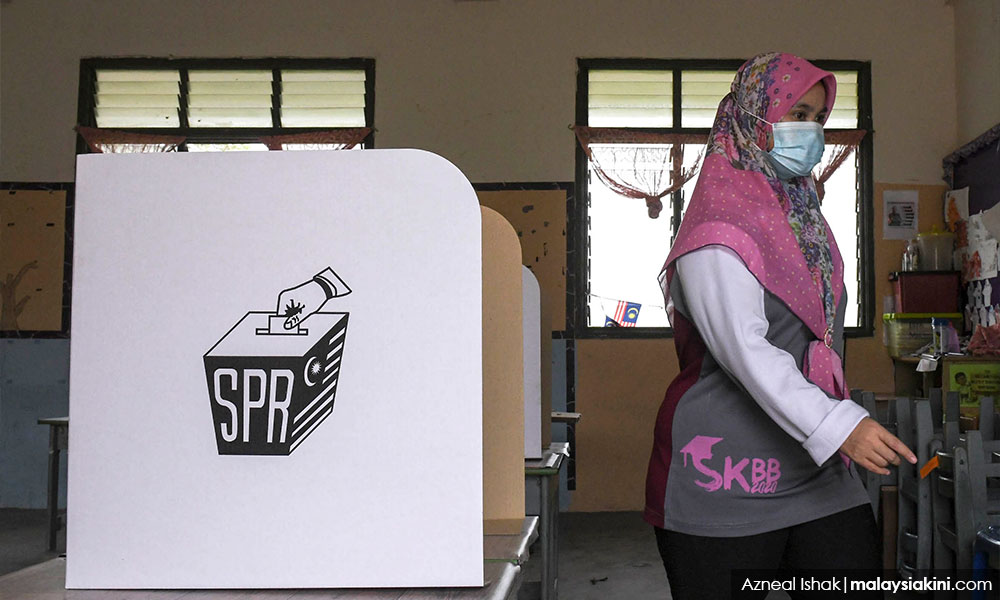
On a federal level, the group called upon Minister in the Prime Minister’s Department (Law and Institutional Reform) Azalina Othman Said as well as Women, Family and Community Development Minister Nancy Shukri, and Parliamentary Special Select Committee on Women, Children, and Community Development chairperson Yeo Bee Yin, to initiate nationwide dialogue on these constitutional amendments.
“At the state level, the existing appointed seats allowed in Sabah (six), Pahang (five) and Terengganu (four) can be easily converted to CLPR-like women-only additional seats allocated to parties based on their vote shares in the normal FPTP elections,” they added.
Support TWOAS
Following this, the group also demanded Selangor Menteri Besar Amirudin Shari back the introduction of ‘Top-Up Women-Only Additional Seats (TWOAS)’ after it had initially been proposed by Selangor exco Anfaal Shaari on Aug 12.
They also urged the Terengganu and Pahang state governments to study the conversion of existing appointed seats into women-only additional seats, and for Penang Chief Minister Chow Kon Yeow to restart the project, which had previously been tabled as a white paper.
In November 2022, Chow, together with the Penang Women’s Development Corporation, proposed the TWOAS system as a structural remedy to address the under-representation of women in existing legislatures, due to the single-member nature of the FPTP electoral system.
‘Pathetic’ low numbers
According to Projek Sama, Malaysia does not lack women talent, but male retirees. Further, the existing electoral system makes it difficult for women MPs to replace their male incumbents.
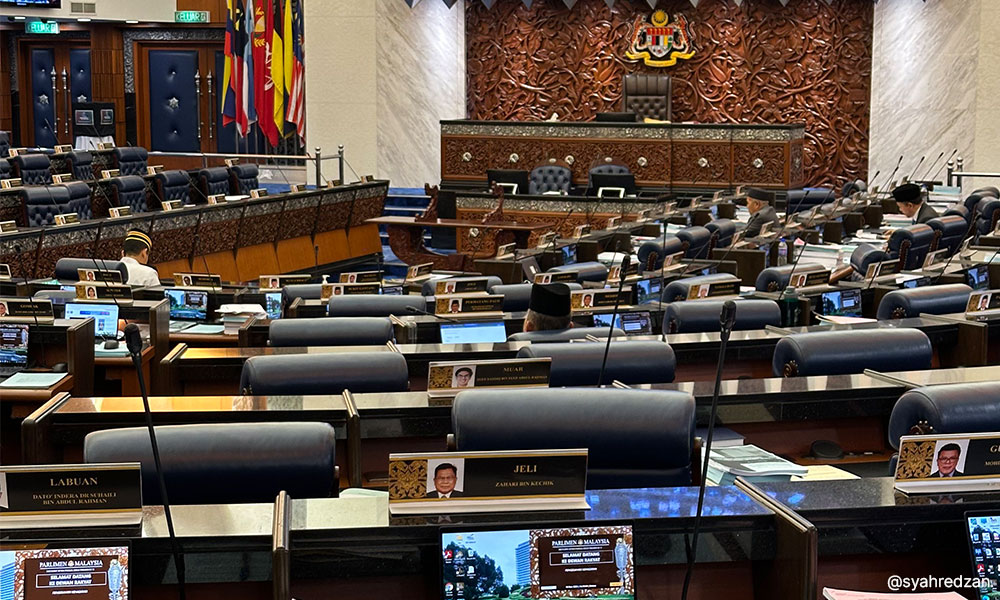
“Tomorrow, Sept 15, is the 30th Anniversary of the Beijing Declaration and Platform for Action, adopted at the UN’s Fourth World Conference on Women, which called for a minimum 30 percent women’s representation in all decision-making bodies, including legislatures.
“After 30 years, taking into account non-elected speakers, deputy speakers and appointed members alongside elected members, only 30 (13.45 percent) out of 223 members of Dewan Rakyat and 72 (11.56 percent) out of 623 assemblypersons are women.
“This puts Malaysia at a pathetic 152nd spot out of the 188 countries in women’s parliamentary representation as per the Inter-Parliamentary Union monitoring as of July.
“As the Asean chair, we embarrassingly rank 9th in women’s parliamentary representation in the entire Southeast Asia,” said the group.
Hence, these numbers further emphasise the need for all parties at both state and federal levels to introduce party-list seats with a gender quota, they explained.
The joint statement was backed by more than 60 co-signatories, including NGOs such as All Women’s Action Society, SIS Forum, Tenaganita, and political parties such as Muda, PSM, and Parti Solidariti Tanah Airku.
/file/publisher-c1a3f893382d2b2f8a9aa22a654d9c97/2025/09/04ba787d629f40dca2873949384f57c3.jpg)
/file/publisher-c1a3f893382d2b2f8a9aa22a654d9c97/2025/08/5bb2a97ec1dcd45fac9ca654ce76fa2b.jpg)
/file/publisher-c1a3f893382d2b2f8a9aa22a654d9c97/2024/12/76bfba80076fcace30d19cf51688a082.jpg)
/file/publisher-c1a3f893382d2b2f8a9aa22a654d9c97/2025/07/d67811672e0235bde637610b3290490e.jpg)
/file/publisher-c1a3f893382d2b2f8a9aa22a654d9c97/2025/09/7a3536436dc7aed7c92d96aa70dd08af.jpg)


Are you sure you want to delete this comment?
This action cannot be undone.