


/file/publisher-c1a3f893382d2b2f8a9aa22a654d9c97/2024/11/fe35970561c23c81671a1614e28ecbee.jpg)

Experts: Systemic challenges enable persistent influence networks
Although key parts of a pro-Anwar Ibrahim cybertrooper network have been dismantled following media enquiries in the lead-up to Malaysiakini’s exposé on Tuesday, the official responses from both the government and the platform have left key questions of accountability unanswered.
The Prime Minister's Office has denied any knowledge of or involvement with the network. Meta, meanwhile, stated that its review has not found evidence of violations of its coordinated inauthentic behaviour (CIB) policy.
Summary
Experts warn platforms face systemic challenges, including political pressure from Malaysia’s social media licensing scheme, which a researcher said may risk Meta’s licence if it removes accounts linked to the prime minister.
The Centre for Independent Journalism (CIJ) urges Meta to conduct forensic reviews and apply technical measures, while calling on regulator MCMC to focus on public literacy campaigns and avoid censorship.
Although key parts of a pro-Anwar Ibrahim cybertrooper network have been dismantled following media enquiries in the lead-up to Malaysiakini’s exposé on Tuesday, the official responses from both the government and the platform have left key questions of accountability unanswered.
The Prime Minister's Office has denied any knowledge of or involvement with the network. Meta, meanwhile, stated that its review has not found evidence of violations of its coordinated inauthentic behaviour (CIB) policy.
A similar dynamic of official denial in the face of platform action occurred in 2022. After Meta announced its investigation had found links between a 596-account CIB network and the Royal Malaysia Police, the police issued a statement denying any involvement.
The persistence of these networks, experts said, points to systemic challenges that go beyond any single operation. They identify a situation where platforms face political pressure, and the burden of discovery often falls on outsiders.
Catch-22
Benjamin Loh, a researcher at Monash University Malaysia, highlighted the Catch-22 situation platforms now face under Malaysia’s social media licensing scheme, which took effect on Jan 1, 2025.
He argued that this new regulation creates a Catch-22 situation for platforms operating in the country.

“Given the presence of the licensing system and this report directly implicating the prime minister, Meta would risk having their licence revoked for removing these accounts,” he said.
This specific political pressure is a recent development. However, experts note that a more general, systemic issue has long existed.
“Even when tech platforms do act, they often rely upon the exhaustive work of under-resourced journalists or researchers to uncover the widespread and abundant influence campaigns on their platforms,” said Ross Tapsell of the Australian National University.
This mirrors the discovery of the 2022 police-linked network, which was also initially flagged not by Meta, but by academic researchers at Clemson University.
A roadmap for platforms
However, social media platforms are far from powerless. The Centre for Independent Journalism (CIJ) insisted that Meta has the tools to act decisively.
“Meta has the resources to carry out forensic (backend) reviews,” the CIJ said in a statement to Malaysiakini, noting that the platform’s “internal backend logs can determine if the accounts are coordinated or managed by the same operator or command centre.”

The NGO outlined several concrete steps Meta could take, urging its content moderation to include “additional resources to address the context and language specificities” of the Malaysian environment.
CIJ also recommended technical measures, such as tightening rules on how quickly multiple accounts are allowed to post near-identical comments, and automatically flagging accounts that use repeated templates.
MCMC’s role
Beyond the platform, CIJ also point to the crucial role of regulators like the MCMC.
It recommended that the MCMC focus on proactive, public-facing solutions, such as launching digital literacy and public awareness campaigns to help citizens spot inauthentic behaviour themselves.
The NGO also called for transparent multi-stakeholder engagements to review policies on political communication and establish rapid-response procedures for identified CIB networks.
However, the CIJ stressed that any regulatory action must be carefully balanced.
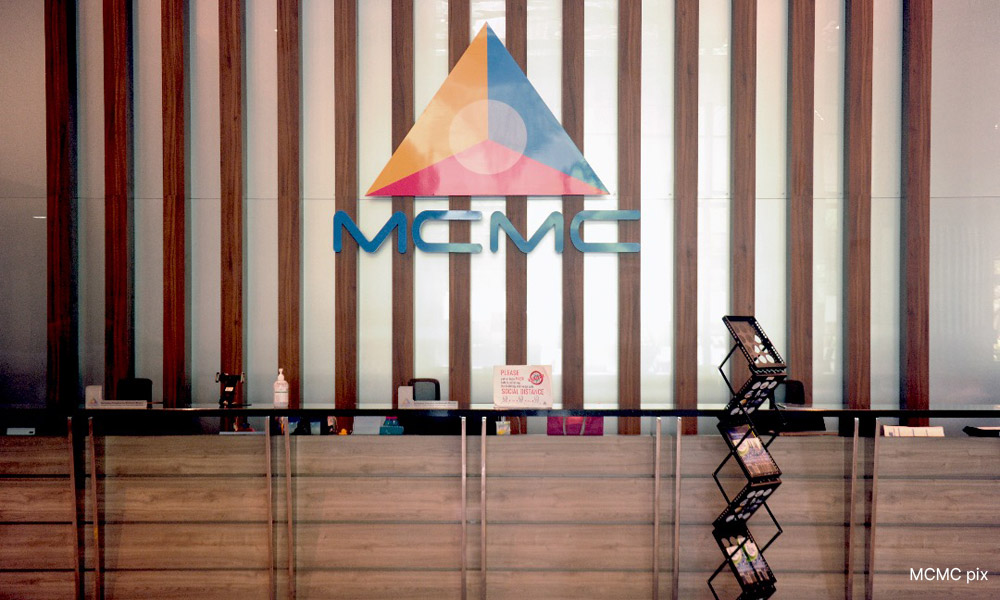
Any response, it said, must “respect freedom of expression and avoid becoming a tool for censorship”, and should be grounded in a clear "harm test" to protect public discourse from heavy-handed interventions.
Despite challenges, Loh argued that pressure from the public and civil society can break the cycle of inaction.
“It is still worth trying. And if done on a large scale when working with other civil society members, it might be effective through using the public to pressure the government to either admit they are doing this or not to interfere if Meta were to remove these accounts,” he said.
Part 1: Investigation: Network of 263 'cybertroopers' spurs Anwar's FB support
Part 2: Deception and data: Inside pro-Anwar CIB network investigation
/file/publisher-c1a3f893382d2b2f8a9aa22a654d9c97/2025/09/42d62bd48bb4a5b1c89097b400633269.jpg)
/file/publisher-c1a3f893382d2b2f8a9aa22a654d9c97/2025/09/a4ffa2263a6ef239fea449197e57514e.jpg)
/file/publisher-c1a3f893382d2b2f8a9aa22a654d9c97/2024/08/6cabe2b4853cdb163548e95613113034.jpg)
/file/publisher-c1a3f893382d2b2f8a9aa22a654d9c97/2025/09/5ab106a3983459ad95c9ebcd234fe9fe.jpg)


Report this comment
Are you sure you want to delete this comment?
This action cannot be undone.