


/file/publisher-c1a3f893382d2b2f8a9aa22a654d9c97/2023/08/146e6b748f8cf0ebbf3844f3116f8b26.jpg)

Former deputy IGP defends Sosma use for terrorism, but rejects ISA revival
Former deputy inspector-general of police Ayob Khan Mydin Pitchay has defended the Security Offences (Special Measures) Act 2012 (Sosma), saying specialised laws are necessary to deal effectively with terrorism and organised crime.
Ayob, who previously headed Bukit Aman’s counter-terrorism division from 2016 to 2020, said ordinary remand procedures under general criminal law were inadequate for large-scale operations involving numerous suspects and extensive evidence.
“I didn’t just...
Former deputy inspector-general of police Ayob Khan Mydin Pitchay has defended the Security Offences (Special Measures) Act 2012 (Sosma), saying specialised laws are necessary to deal effectively with terrorism and organised crime.
Ayob, who previously headed Bukit Aman’s counter-terrorism division from 2016 to 2020, said ordinary remand procedures under general criminal law were inadequate for large-scale operations involving numerous suspects and extensive evidence.
“I didn’t just arrest one person when I was in counter-terrorism. Within 24 hours, I arrested 40 suspects,” he reportedly said in an interview with Free Malaysia Today following his recent retirement after 35 years in the police force.
Ayob said investigators would need sufficient time to examine seized items, analyse mobile phones and laptops, and complete investigations involving dozens of suspects, which would be difficult if courts only granted short remand periods.
Sosma allows suspects to be detained for up to 28 days for investigations before they must either be charged or released.
‘Our social fabric is different’
The law has faced criticism from rights groups and political leaders, with repeated calls for its repeal or amendment.
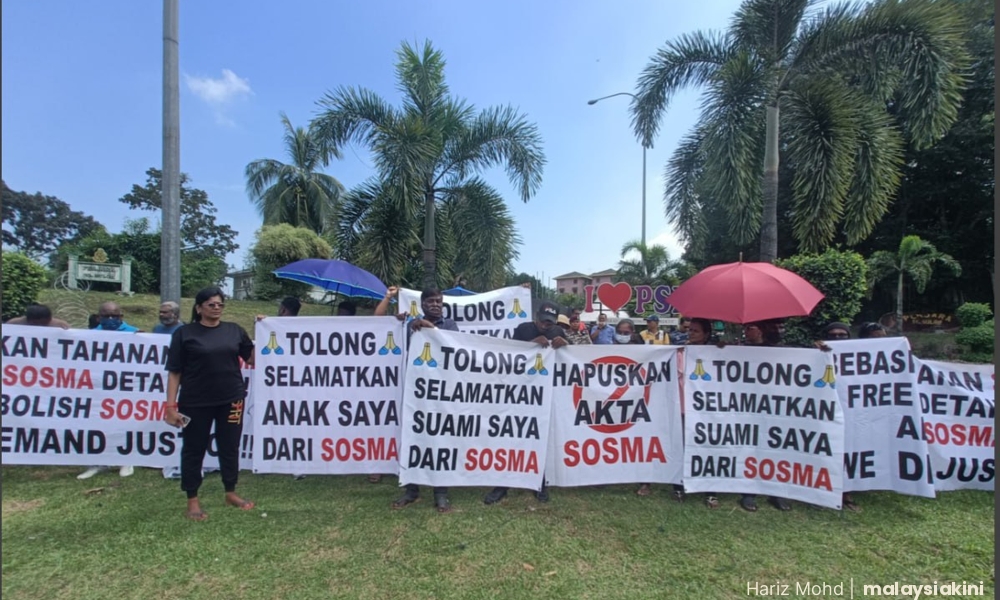
Ayob reportedly argued that strong security laws were necessary in Malaysia’s multiracial society to prevent communal tensions from escalating, citing previous racial clashes in Kampung Medan and Kampung Rawa.
“Our social fabric is different. We cannot simply take the model Western countries use,” he said, warning politicians against prioritising short-term political mileage over long-term national security.
In recent months, DAP leaders were among those who advocated for Sosma’s repeal or substantial reform, including after the January arrest of a 16-year-old girl in Kedah.
Terror groups spied on senior cops
Ayob, meanwhile, recalled how Islamic State-linked operatives had even monitored the movements of senior police officers, including himself and then inspector-general of police Khalid Abu Bakar.
“They tracked the movements of certain officers, including the inspector-general of police at the time. They knew I would go for a jog at Taman Tasik Perdana, and that then IGP (Khalid) went for convoy bike rides on Saturdays.
“I received information about this because we were also in the group (monitoring them),” Ayob was quoted as saying.

The threat prompted him to take additional security precautions, including travelling in a bulletproof vehicle, changing routes, and remaining alert to his surroundings.
Ayob said he would also sit facing outwards when eating at restaurants so he could monitor people around him.
He said such practices were rooted in security techniques developed during the authorities’ fight against the Malayan Communist Party from the 1950s to the 1980s.
‘No’ to ISA
Ayob, however, stressed that his defence of Sosma should not be construed as support for reviving the Internal Security Act 1960, which allowed indefinite detention without trial and was repealed in 2012.
Among the most prominent cases during Ayob’s time leading the counter-terrorism unit was the June 2016 grenade attack on the Movida nightclub in Puchong, which police described as Malaysia’s first successful IS-linked attack.
Eight people were injured in the blast. Two men, Imam Wahyudin Karjono and Jonius Ondie @ Jahali, were later sentenced to 25 years’ jail each after pleading guilty to committing a terrorist act.
/file/publisher-c1a3f893382d2b2f8a9aa22a654d9c97/2026/04/4a612918215aa0d36b8e59e2a2c29a1c.jpg)
/file/publisher-c1a3f893382d2b2f8a9aa22a654d9c97/2023/09/89b78b7e43c580d2175e324d8fb536dc.jpg)
/file/publisher-c1a3f893382d2b2f8a9aa22a654d9c97/2025/09/83a17768c8b1c7d8091eff3231656bba.jpg)
/file/publisher-c1a3f893382d2b2f8a9aa22a654d9c97/2025/09/b1a4dedf87fc6380bc4ecc4fee0e56a9.jpg)
/file/1189/8b535cf517cb51ce71bff732287138e1.jpeg)
/file/1087/7f27e5d041d5ee2a4efcf8125d3b9ec3.jpg)


Report this comment
Are you sure you want to delete this comment?
This action cannot be undone.