


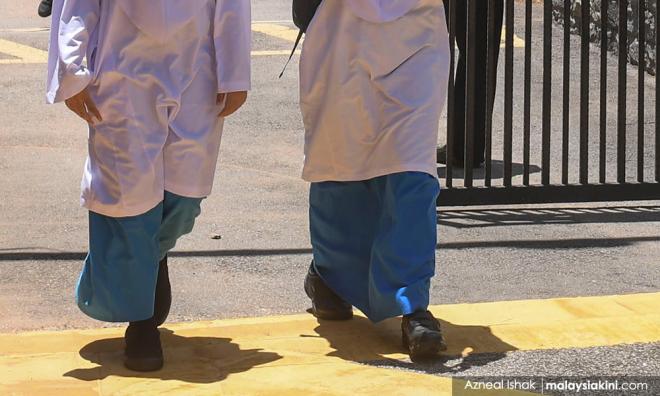

Schoolgirl killings expose gaps in protection against gender-based violence
Women’s rights, legal, and mental health advocates have called for systemic gaps to be addressed to better protect girls and women, following the killings of two schoolgirls that have renewed concerns over gender-based violence.
On Oct 15, a Form Four student was charged with murdering his schoolmate, Irene Sofiya Khairool Faisal, in Yong Peng, Johor. Another student, Yap Shing Xuen, was killed in Bandar Utama, Selangor, last year.
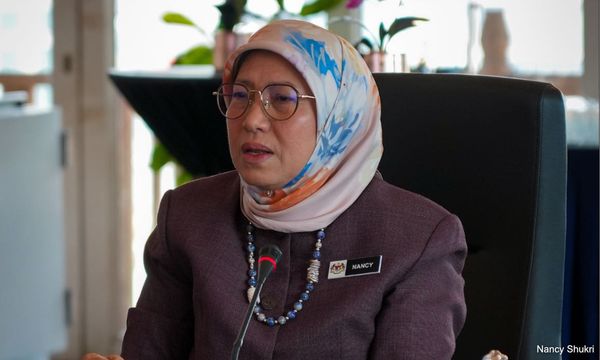
PSM Youth chairperson Amanda Shweeta Louis said the cases exposed...
Women’s rights, legal, and mental health advocates have called for systemic gaps to be addressed to better protect girls and women, following the killings of two schoolgirls that have renewed concerns over gender-based violence.
On Oct 15, a Form Four student was charged with murdering his schoolmate, Irene Sofiya Khairool Faisal, in Yong Peng, Johor. Another student, Yap Shing Xuen, was killed in Bandar Utama, Selangor, last year.
PSM Youth chairperson Amanda Shweeta Louis said the cases exposed institutional failures and social attitudes that allowed gender-based violence to persist.
She stressed the importance of early psychological and psychiatric intervention, noting that mental health services remained inaccessible to many families outside major cities and those from lower-income households.
“We need affordable mental health care, school counsellors with adequate resources, trained educators, and clear referral pathways between schools, families, and health services.
“These must be available to working-class families, not only those who can afford private specialists,” she said.

On the legal front, Women’s Aid Organisation (WAO) advocacy officer Pavitra Muniandy said existing protection mechanisms were inadequate, pointing out that the Domestic Violence Act 1994 does not cover non-marital intimate relationships.
Former Selangor Bar chairperson Kokila Vaani Vadiveloo noted that Section 302 of the Penal Code, which deals with murder, does not specifically account for gender-based hatred.
Pavitra reiterated WAO’s call for the government to recognise femicide in law, referring to the intentional killing of women or girls with a gender-related motivation.
However, clinical psychologist Shaleen Chrisanne cautioned that creating a distinct offence of femicide would not necessarily make women safer.
“In some countries that have introduced one (a legal category for femicide), critics say it focuses on punishment after the fact while prevention goes underfunded, and that is a fair criticism,” she said.
READ MORE: Group demands femicide recognition, stronger protection after spate of killings
On Oct 9, Johor police chief Ab Rahaman Arsad said Irene’s killing may have stemmed from resentment, including the accused’s rejected romantic advances and her relationship with his best friend.
In Yap’s case, the 16-year-old was stabbed to death in a school toilet.
Last month, the Shah Alam High Court acquitted her schoolmate of murder and ordered him to be institutionalised, ruling that he could not be held criminally responsible because he was of unsound mind at the time of the killing.

The court heard that he had developed an infatuation with Yap around August 2024 and became convinced she reciprocated his feelings, despite the two never having spoken or interacted in person. His feelings gradually developed into envy, anger, and an intention to kill her.
Based on testimony from court-appointed forensic psychiatrist Dr Ian Lloyd Anthony, judge Adlin Abdul Majid concluded that the boy had untreated and undiagnosed “very early-onset schizophrenia”.
READ MORE: Legally insane: 3 takeaways from court judgment on school stabbing
Addressing patriarchal attitudes
Discussing the two cases, all four women highlighted patriarchal attitudes that contribute to gender-based violence, particularly the sense of male entitlement when romantic advances are rejected.
“Misogyny is not always someone openly saying they hate women. Sometimes, it appears in the belief that a girl owes someone affection, that rejection is an insult, or that a boy’s anger is more important than a girl’s autonomy,” Kokila said.
She questioned whether existing safeguards were adequate in responding to reports from girls facing unwanted attention.
“We should not label every boy a potential perpetrator, but we must stop dismissing possessiveness, threats, and controlling behaviour as harmless teenage drama,” she said.

Shaleen said preventing gender-based violence required action in classrooms, clinics, and homes, where young people should learn about healthy relationships and respect for personal boundaries.
“It means teaching boys that rejection hurts but is survivable, that a girl’s ‘no’ is not an insult, that women’s agency deserves respect, and that anger is never a licence to control,” she said.
Girls, meanwhile, should be taught that surveillance and fear are not expressions of love, and that they are not to blame for boys’ violent behaviour, she added.
READ MORE: School violence shows how misogyny can warp young minds
Pavitra urged schools and parents to work together to prevent unwanted behaviour from escalating.
Schools need clear safeguarding procedures and reporting channels to ensure warning signs are addressed promptly, she said.
Parents, she added, could help by staying involved in their children’s lives, understanding their social relationships, and creating a safe environment for open conversations.
However, Amanda cautioned against making parents “convenient scapegoats” for systemic failures.
“Both realities can be true: families have responsibilities, and the state has a responsibility to make support accessible,” she said.
She also criticised victim-blaming disguised as practical advice, such as telling women to dress or behave differently to avoid violence.
Such advice frames violence as a matter of individual morality, shifting attention away from perpetrators’ conduct and institutions’ responsibility, she added.
Ultimately, Amanda said, girls' and women's safety should not rest on them alone.
“We have to build a society in which boys are taught to respect boundaries, people experiencing mental health conditions can access treatment early, and institutions know how to act when warning signs appear,” she said.

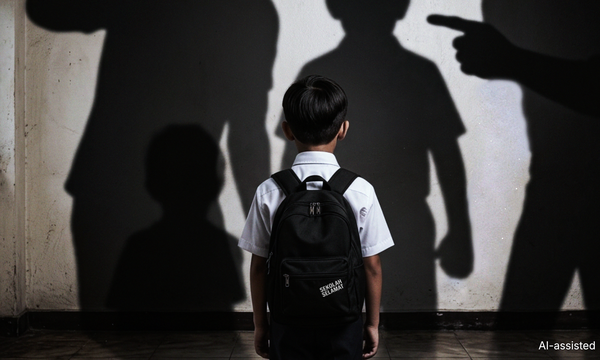


The usual verdict on the schoolgirl killings is that they expose gaps in protection against gender-based violence. The gendered pattern is real: it is overwhelmingly boys who answer rejection with lethal violence. But a statute defines the crime. It cannot explain what is happening inside a 16-year-old, or reach him before he picks up a weapon. The girls are not the problem. They have outscored boys in national examinations for decades and outnumber them at university, and a girl who declines a romantic advance has done nothing wrong. The real question is why some boys cannot hear "no". Part of the answer is timing. In adolescence, the brain's emotional and reward circuitry matures years ahead of the prefrontal cortex, which supplies the brakes: a powerful engine with a weak handbrake. Hormones get the blame, but testosterone is a weak predictor of violence. Boys are also, on average, given fewer words for feelings and are less likely to seek help, so distress tends to leave by one exit: anger. Rejection alone does not make a killer. Millions of teenagers are turned down every year and almost none turn violent. What matters is what rejection lands on: a habit of bracing for it, reading hostility into neutral looks, staking one's worth on being admired, or believing affection is owed. Researchers call these rejection sensitivity, hostile attribution bias, threatened egotism and aggrieved entitlement. Public humiliation lights the fuse. Where does that vulnerability come from? Freud blamed an unresolved Oedipus complex and castration anxiety at ages three to six, but modern psychology has largely set his stage theory aside as untestable. The evidence points to neglect, abandonment, abuse and chronic harsh discipline. Constant shouting, insults and threats are not firmness. They count as psychological maltreatment and predict later conduct problems and depression. Firmness is warm, consistent and explained. Most harshly raised children never turn violent, but the risk compounds when no one notices. Peer cruelty runs both ways: girls tend towards rumours, nicknames and exclusion, boys towards fists. Mocking an awkward admirer never justifies violence, but schools should teach both sexes how to decline without contempt and how to be declined without retaliation. So where are the psychologists? Secondary schools run at roughly one guidance and counselling teacher per 500 students, against a ministry target of 1:250 that remains unmet, and those teachers are also burdened with administrative duties. That is one lifeguard watching a football-field-sized pool while doing the school's paperwork. Psychologists are not stationed in schools. Experts now propose district-based school psychology teams, since one psychologist per school is unlikely any time soon. A court can punish. Only trained professionals, using behavioural threat assessment rather than hunches, can spot the boy who is unravelling before he does something irreversible.
Gender identity is starting to take hold. What happened is a tragedy but any pupil female or male would be in danger when an event like this happens in schools. This is a gap in physical security for all genders, all ages. Stop this boy blaming, this isn't right. Stop trying to split the genders apart. Stop doing the devil's work.
Report this comment
Are you sure you want to delete this comment?
This action cannot be undone.