



'Flexibility has value': Economists warn Sara credit can't cover rent, bills
Economists have cautioned that an unchanged total in government aid for low-income families risks masking a squeeze on household cash, as credit for groceries cannot cover rent, utilities, and transport costs.
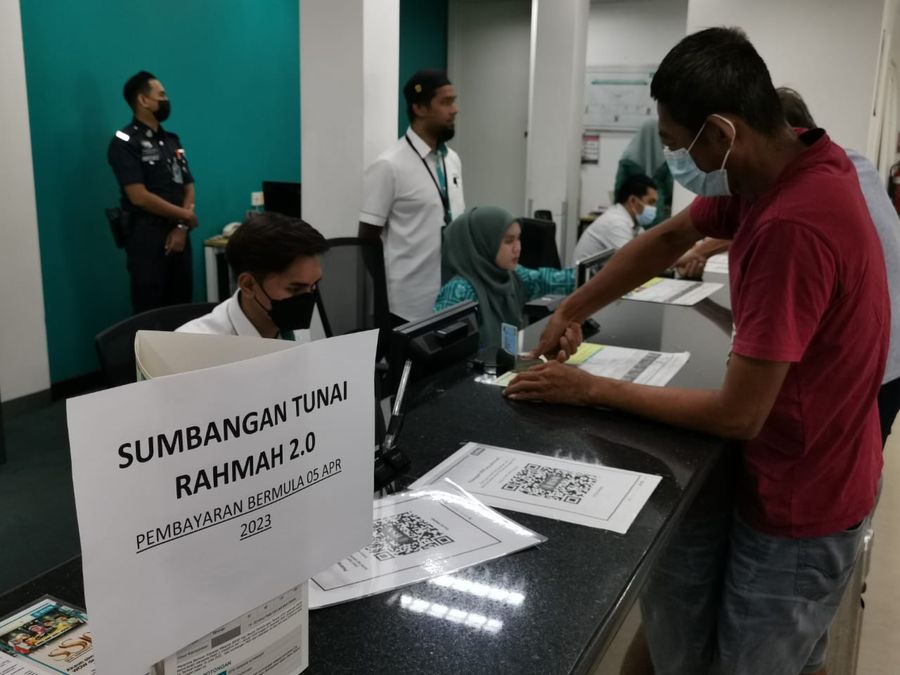
The alert came after it was reported that Putrajaya will slash cash aid for disadvantaged families under the Rahmah Cash Contribution (STR) next year, with the reduction offset by an increase in Rahmah Basic Contribution (Sara) grocery credits.
STR is...
Economists have cautioned that an unchanged total in government aid for low-income families risks masking a squeeze on household cash, as credit for groceries cannot cover rent, utilities, and transport costs.
The alert came after it was reported that Putrajaya will slash cash aid for disadvantaged families under the Rahmah Cash Contribution (STR) next year, with the reduction offset by an increase in Rahmah Basic Contribution (Sara) grocery credits.
STR is a cash payment to lower-income households, singles, and senior citizens without a spouse, while Sara, regarded as an extension of STR, is a monthly amount credited to recipients’ MyKad and can be spent only on approved categories of essential goods at participating retailers.
According to data in an Inland Revenue Board (IRB) FAQ on STR for next year, the aid will be reduced by up to RM600 per year for families earning less than RM2,500, with household STR amounts determined by income and the number of children.
However, total financial assistance remains largely the same as Sara will be increased to RM1,800 annually for this income group, with recipients identified through the government’s eKasih poverty database.

Samirul Ariff Othman opined that while the government’s move towards more credit and less cash aid is not “automatically good or bad” for families, it might not make up for lost cash in every household.
Noting that the key question is whether the new balance matches how low-income families actually spend, the Universiti Teknologi Petronas adjunct lecturer acknowledged that the Sara grocery aid likely gives families a predictable monthly cushion for household necessities.
He explained that if some families already spend more than their Sara allocation on eligible groceries, the increased credit next year will replace spending such households would have made anyway, thus freeing up cash for other purposes.
However, Samirul said such equivalence has limits, highlighting that while cash can fulfil responsibilities such as rent, electricity bills, transport to work, or urgent repairs, grocery credits cannot directly meet such expenses.

“A family may have enough credit for household goods while also struggling to find cash for the bus fare needed to earn its income,” he told Malaysiakini.
Access, timing can shrink aid value
Samirul added that Sara credit’s value also depends on where and when it can be used, explaining that if recipients must travel further, face limited eligible stock, or pay more than they would at their usual shops, the effective value of the assistance falls.
He said that timing is also a factor, pointing out that while monthly assistance supports routine spending, families also face larger, irregular expenses.
“An unchanged annual total (of government assistance) does not necessarily provide the same financial flexibility when bills arrive - the total may be unchanged, but flexibility has value.
“Sara can protect the grocery budget, and cash gives families room to deal with the rest of life,” Samirul added.
Similarly, economist Geoffrey Williams argued that the issue lies in how credit-type assistance limits how recipients can utilise such aid.

“Cash is better because it gives people complete freedom to use it as they need to.
“Credit restricts them to pre-approved products and shops. It treats recipients like children and also pushes money to government-approved stores and away from mom-and-pop stores,” he asserted.
Evidence-based reform
To address this, Samirul proposed a “mixed approach” where Sara credits support essential consumption while a sufficient cash component lets families manage their own circumstances.
He also said that any potential further shifts by the government towards restricted credit should be supported by evidence on recipients’ spending, access, and financial difficulties.
Meanwhile, Williams posited that the government need not convert aid into credit at all, saying: “If they just took the amount for each eligible category and paid it monthly in cash, it would be better.”
He further suggested transferring aid to individuals rather than households, which he said would allow women to receive the funds directly instead of through a spouse and give single people a “fairer deal”.

Reiterating his appeal for a universal basic income system, the founder and director of Williams Business Consultancy said the STR-Sara format could be converted into such a system.
“We are moving in that direction slowly, but as usual, the political will is not there to do it quickly and properly,” he lamented.
Williams, however, noted that Bersama’s shadow budget has moved to establish such universal social support measures.
READ MORE: Safe vs bold reforms: Economists size up Putrajaya's Budget 2027 against Bersama's alternative






Reframe it in another way. Cash in hand might be abused; used to buy drugs, alcohol and gambling. With grocery credit, at least the family won't die from hunger.
More Sara credit can help cover groceries and free up cash for other expenses. But the concern about flexibility is fair. Families still need money for rent, transport and unexpected bills. Perhaps the government could retain a basic monthly Sara allocation and let recipients choose whether to receive the additional assistance as cash or grocery credit. Keep it within the same entitlement, with a simple process to select their preference. Families have different needs. Giving them some choice would make the assistance more useful.
Report this comment
Are you sure you want to delete this comment?
This action cannot be undone.