


MPs urge stronger global action to end Myanmar conflict, stem refugee influx
PARLIAMENT | Two MPs across the political divide have urged the government to address the root cause of the Myanmar refugee influx in Malaysia by pushing for stronger international action to end the ongoing conflict in Myanmar.
Both lawmakers called for a coordinated international response, with Ahmad Tarmizi Sulaiman (PN-Sik) urging greater pressure to end the violence, while William Leong (Harapan-Selayang) sought greater clarity on Malaysia's diplomatic efforts within Asean.
Speaking during the Foreign Ministry's committee-stage debate on the Supply (Budget) Bill 2027 in the Dewan Rakyat, Tarmizi said Malaysia's refugee crisis could not be resolved without addressing the ongoing conflict in Myanmar.
“If we talk about refugees in our country, the issue will not be resolved unless we stop the killings and genocide taking place in Myanmar itself, as this is the root cause of the influx of refugees into Malaysia,” the PAS lawmaker said.
Drawing comparisons with past international interventions in Bosnia and Kosovo, he said the international community should not allow the killing of civilians to continue without effective action.
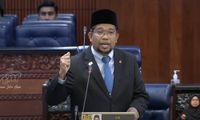
He warned against a repeat of the Srebrenica massacre and urged the Foreign Ministry to work with the United Nations (UN), Asean, and the Organisation of Islamic Cooperation (OIC) to pressure Myanmar to end attacks against civilians.
He also called for stronger international legal efforts through the International Criminal Court (ICC) and UN investigative mechanisms.
Repatriation operation
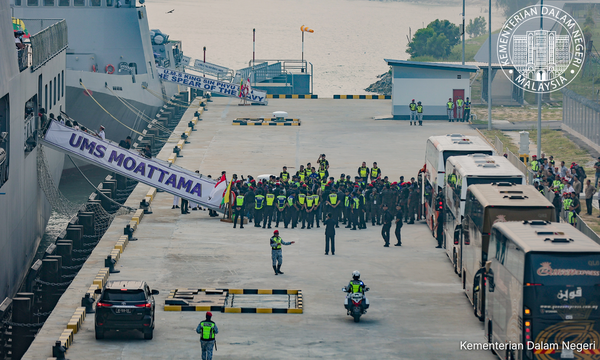
On Sept 29, Malaysia repatriated 1,476 Myanmar refugees despite condemnation and concerns over their safety given the ongoing conflict in their home country.
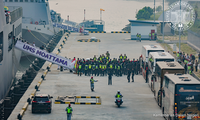
The operation marked the first phase of a programme involving 5,000 people. According to the Home Ministry, the initial group was selected from a verified list supplied by Myanmar and returned aboard Myanmar naval vessels.
However, the UN High Commissioner for Refugees (UNHCR) expressed concern over the returns amid Myanmar’s continuing conflict as well as dire human rights and humanitarian conditions.
Amnesty International Malaysia and Asylum Access Malaysia likewise questioned whether the returns could be genuinely voluntary under those circumstances, despite government assurances that those involved had signed consent documents.
Malaysia is not a signatory to the 1951 Refugee Convention and has no specific law recognising refugees or defining their legal status.
Five-point consensus
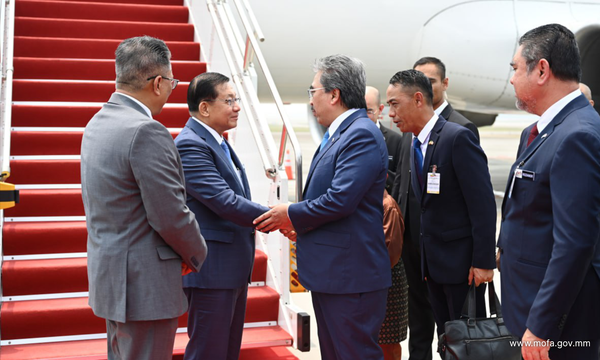
Leong further asked whether Malaysia's direct engagement with Myanmar's military-led authorities was consistent with Asean's Five-Point Consensus.
The consensus is a diplomatic framework aimed at addressing the crisis in Myanmar, including through calls for an end to violence, inclusive dialogue, and a political solution.

Leong noted that the Foreign Ministry had maintained that such engagement was intended to address practical issues rather than formally recognise Myanmar's military regime.
However, he questioned how the approach was viewed by other Asean member states.
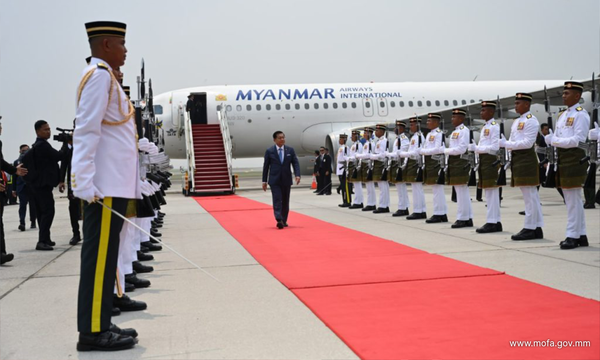
READ MORE: Condemnation to red carpet: Anwar's Myanmar turn draws fire, Charles says 'RIP Asean'
"And what is their assessment of current developments concerning efforts to restore peace in that country, as well as the subsequent steps to be taken?" he asked.
The PKR lawmaker also questioned whether Malaysia would consider engaging with other stakeholders - including the National Unity Government, People's Defence Force, and ethnic armed groups - to support an Asean-led peace process.
Zakir's issue
Separately, during the Foreign Ministry's winding-up speech, RSN Rayer (Harapan-Jelutong) interjected in apparent support of questions raised by Radzi Jidin (PN-Putrajaya) on the extradition of undocumented migrants.
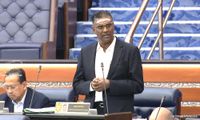
While expressing support for such extraditions, Rayer questioned why controversial Islamic preacher Zakir Naik had yet to be returned to India.
"What is so special about Zakir?" he asked.
Home Minister Saifuddin Nasution Ismail earlier said Putrajaya had not received any fresh extradition requests from India for Zakir.
He said the last request was received on Jan 19, 2018, followed by a diplomatic note on May 29, 2020, in which India asked Malaysia to reconsider its decision not to extradite the preacher.


The ASEAN and international community should share it's responsibility for the sake of humanity. The neibouring country should be proactive on this issue
Report this comment
Are you sure you want to delete this comment?
This action cannot be undone.