


Shared paternity leave: Employers' federation says no, cites work disruptions
Ampang MP Rodziah Ismail's proposal for mothers to share their maternity leave entitlement with their husbands has drawn opposition from the Malaysian Employers Federation (MEF).
In a statement to Malaysiakini, MEF cited several concerns over the proposal, including its potential impact on business operations and productivity.
"Among the implications...
Ampang MP Rodziah Ismail's proposal for mothers to share their maternity leave entitlement with their husbands has drawn opposition from the Malaysian Employers Federation (MEF).
In a statement to Malaysiakini, MEF cited several concerns over the proposal, including its potential impact on business operations and productivity.
"Among the implications that should be given due consideration is disruption to operations when two employees from different organisations are absent for extended or overlapping periods.
"There are also difficulties in planning staff replacements, work schedules and workforce deployment and additional costs arising from the hiring of temporary employees, overtime and replacement staff training," it said.
The statement, issued by MEF senior adviser Syed Hussain Syed Husman, was in response to Malaysiakini's query on the proposal mooted by Rodziah in the Dewan Rakyat last month.

The PKR lawmaker had suggested that the government review existing maternity leave provisions to allow the entitlement to be shared between spouses.
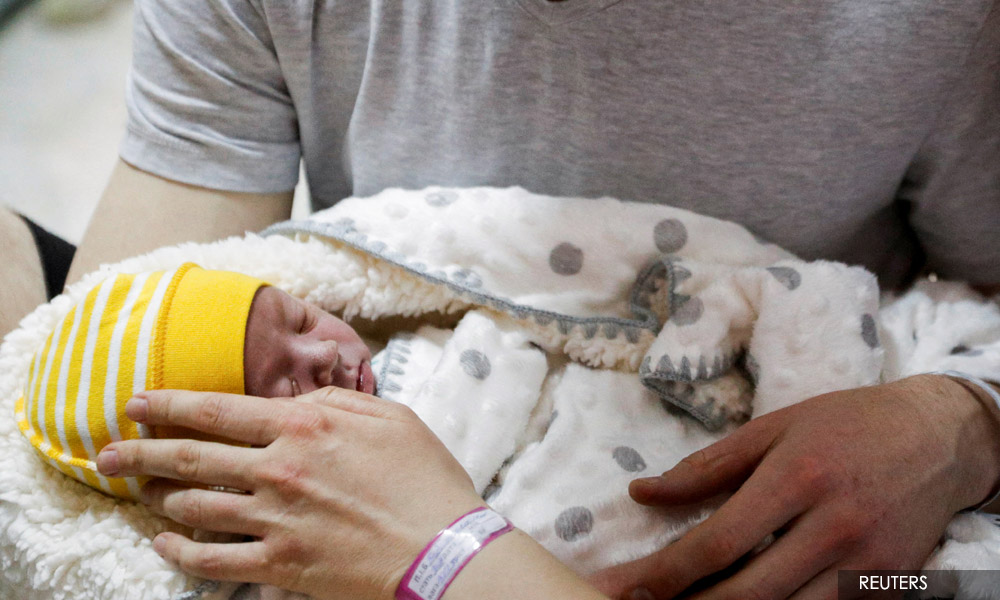
She said the arrangement could help couples manage specific situations following childbirth, including when a baby develops jaundice and requires additional care.
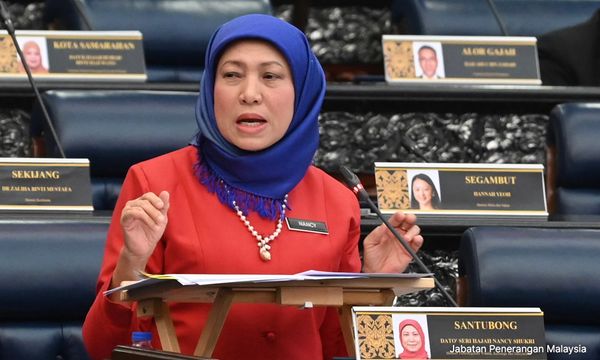
Women, Family and Community Development Minister Nancy Shukri has since said the government is open to reviewing the proposal.
According to MEF, sharing maternity leave could create more complex operational challenges, as husbands and wives may work for different employers, in different sectors, or hold critical job responsibilities.
The proposal could also pose greater challenges for micro, small and medium enterprises (MSMEs), as well as businesses operating on a shift-based or continuous basis, or those dependent on skilled workers.
Exclusive entitlement
While acknowledging the good intentions behind Rodziah's proposal, MEF maintained that maternity leave should remain an exclusive entitlement for mothers.
"MEF is of the view that maternity leave should not be shared with or transferred to husbands, as it serves a specific purpose, namely to provide mothers with time to recover after childbirth, as well as to enable them to breastfeed and care for their babies during the early stages of the child's life.
"MEF believes that the existing provisions, namely 98 days of maternity leave for female employees and seven consecutive days of paid paternity leave for husbands, constitute a reasonable and balanced framework.
"Any proposed changes should be evaluated comprehensively, taking into account the interests of employees and employers, business operational continuity and national productivity," it said.
The federation added that husbands who require additional time for their families can utilise existing options such as annual leave, unpaid leave subject to the employer's agreement, or flexible working arrangements.
However, MEF's current position appears to differ from a proposal it reportedly made in 2024, when it suggested allowing new mothers to share their maternity leave entitlement with their husbands.
In a report published by The Star on Aug 15, 2024, Syed Hussain was quoted as recommending that the government consider introducing shared parental leave to distribute caregiving responsibilities more evenly between spouses.

Strengthened, not reduced
Civil society group Family Frontiers has also cautioned against reducing mothers' maternity leave entitlement to accommodate shared parental leave.
While welcoming efforts to promote shared parental responsibilities and greater involvement by fathers in childcare, the group said this should not come at the expense of mothers.
"The current 98 days' leave is a move in the right direction, but it can be strengthened and not potentially reduced by taking the father's additional leave out of it.
"These policies must be equitable and, in this context, we should be looking to 'add' on to these policies, rather than 'subtract'," said its research and policy coordinator Patricia Low Pek Wan.
She added that mothers needed maternity leave to recover postnatally and bond with their babies.
"Fathers should be given their own entitlement; we can start with two weeks and increase upon review, with an option for extended leave with partial wage replacement.
"But we must also be cautious that there must be no penalisation or effect on the father's career or job security if they choose to avail of this leave," Low stressed.





Who runs the country, MEF or the workers? MEF has the lobby but workers have the vote.
Paternity Leave 7 days are provided to the legitimate father with the legal wife currently for a max of 5 children only with effect 2027. With this new proposal of sharing 98 days Maternity Leaves with the legal wife and legitimate father: - for a maximum of five(5) children entitlement regardless of having 1 wife or 4 wives. – It to be utilised for 1 child per year. If he is able to have more than 1 wife, he should be able to run the household & baby sit with ease. So, I agreed with MEF that Maternity Leaves 98 days are not meant to be shared by the father per say.
I think MEF is being unfair when it calls seven days of paternity leave a reasonable balance. Reasonable for whom? A mother may still be recovering from a caesarean when her husband has to go back to work. A baby with jaundice may need repeat hospital visits. Someone still has to handle the night feeds, change nappies, take care of the older children and make sure the mother gets some rest. And plenty of couples don’t have grandparents nearby who can step in. Telling fathers to take unpaid leave assumes the family can afford to lose income at the very moment their expenses are going up. I understand that small businesses have shifts to fill and that covering leave costs money. That is a reason to plan for it and discuss what support smaller employers need. Keep the mother’s full 98 days and give fathers at least two weeks of paid leave of their own, with protection for taking it. A father caring for his newborn is doing his share of the parenting, and our leave policy should give him the time to do it.
Report this comment
Are you sure you want to delete this comment?
This action cannot be undone.