



ICJ: Myanmar committed genocide against Rohingya
The International Court of Justice on Thursday found Myanmar in breach of several of its obligations under international treaties to prevent and not to commit genocide.
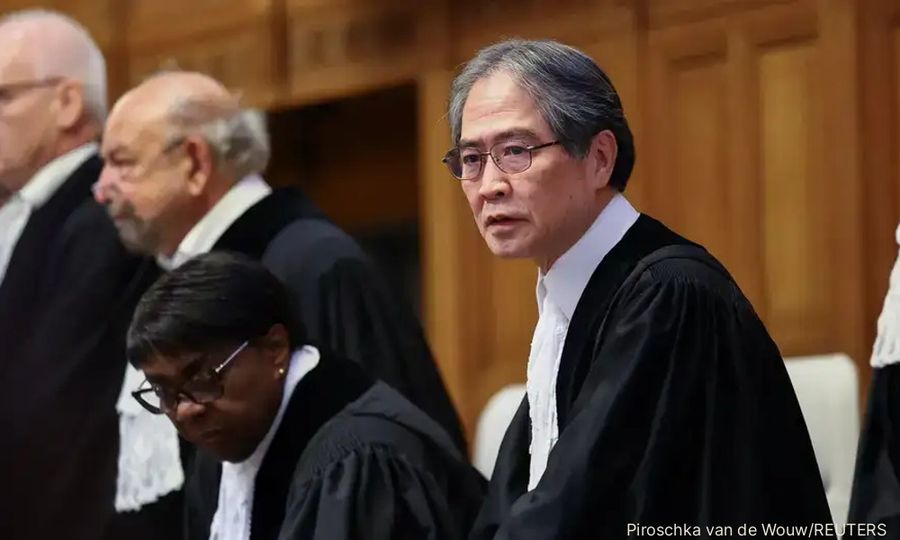
The ICJ's president, Judge Yuji Iwasawa said that the panel of 15 judges had decided by nine votes to six that Myanmar had committed genocide against the Rohingya in Rakhine state.
The judges also found the country guilty of a series of other more specific violations by majority rulings.
"On the basis of all the evidence taken together, the Court is of the view that...
The International Court of Justice on Thursday found Myanmar in breach of several of its obligations under international treaties to prevent and not to commit genocide.
The ICJ's president, Judge Yuji Iwasawa said that the panel of 15 judges had decided by nine votes to six that Myanmar had committed genocide against the Rohingya in Rakhine state.
The judges also found the country guilty of a series of other more specific violations by majority rulings.
"On the basis of all the evidence taken together, the Court is of the view that the only reasonable inference that can explain Myanmar's actions is an intention to destroy a substantial part of... the Rohingya population in northern Rakhine State," ICJ President Yuji Iwasawa said.
Iwasawa said that Myanmar should make efforts to pay reparations to victims or their associates where possible and appropriate.
He also called for it to facilitate the safe return of refugees, and to take measures to investigate and if necessary prosecute individual wrongdoing by its nationals and security forces.
What is the case about?
The case centers around the military crackdown in Rakhine state on the country's western coastline against the predomiantly Muslim Rohingya minority in 2017.
Violence had been brewing for several years beforehand, but the most intense phase of the military crackdown in the north of region was triggered by a coordinated attack by a Muslim militia group against several police and military installations and personnel in August 2017.
A UN fact finding mission later concluded that some 10,000 people likely died in the military clearance operations that followed. Around 700,000 people fled to Bangladesh, where most still reside in the world's largest refugee camp.
The Gambia filed the complaint at The Hague in 2019, alleging a deliberate campaign of arson, rape and murder designed to wipe out the Rohingya minority in whole or in part.
Myanmar's influential military, now back in full de facto control of the country albeit amid a long-running civil war, has maintained that it was engaged in a legitimate counterinsurgency.
Aung San Suu Kyi, who was the civilian president at the time, took a slightly more nuanced stance, but nevertheless traveled to The Hague to contest the charges, calling them "incomplete and incorrect."
What else did Judge Iwasawa say as he read out the verdict?
The ICJ said that by its consideration, the Rohingya constituted a distinct ethnic group with their own defining language and culture, as well as self-identifying as such. This means they qualified as a protected group for the purposes of international laws against genocide.
Myanmar's security forces "killed thousands of Rohingya civilians, perpetrated acts of sexual violence, as well as extreme violence against children," and also attacked Rohingya as they tried to flee the fighting, the ICJ's Iwasawa said.
"The court is fully convinced that the 2017 clearance operations caused serious bodily and mental harm to a significant number of the protected group," Judge Iwasawa said.
Iwasawa also said that some civilian participation in the clearance operations could not necessarily be considered state-ordered or state-sanctioned behavior. But the court found that the government and security forces also made no meaningful efforts to prevent non-Rohingya civilian atrocities and if anything fanned the flames of ethnic and religious tension.
At one point reading the details of the findings, Iwasawa noted "Myanmar's failure, genuinely to investigate the alleged atrocities, and its refusal to facilitate access to evidence and witnesses, or provide information requested."
He said this meant it was possible the court did not have reliable knowledge of information available only from within Myanmar to which it was not given access.
- Deutsche Welle



Before you share another video shaming a Rohingya woman begging by the roadside, stop and ask yourself what you would do if you had children to feed and no legal way to earn a living. The ICJ has found that Myanmar committed genocide against the Rohingya. Read what happened to these families and then look at how some of us in Malaysia, across all communities, talk about them. When someone breaks the law, deal with that person’s actions. What have the women and children you hound online done to deserve that humiliation? If roadside begging bothers us so much, then give refugees a legal way to work. Let them earn a wage, support their families and live with some dignity. We can do something about the problems we see here. Filming a mother at her lowest and putting her on the internet for people to mock is a choice. So is treating her like a human being.
Report this comment
Are you sure you want to delete this comment?
This action cannot be undone.