


COMMENT | When those in power fail to respect the media
COMMENT | On Nov 25, at Wisma Perkeso in Kuala Lumpur, Human Resources Minister R Ramanan showed how a person in power can shift attention from questions of policy to the credibility of the person asking.
The Malaysiakini journalist had not even finished posing the question when Ramanan cut in: “It’s okay. I don’t need to answer. You’re from Malaysiakini, right?”
He then said: “I don’t want to answer tabloids. I don’t want to answer blogs. Give me real media, and I’ll answer.”
The journalist tried to continue asking about a case in which several international migrant worker NGOs went to Geneva to submit a memorandum to United Nations experts seeking an independent cross-border investigation into a centralised digital system for managing migrant workers approved by the Malaysian government.
Instead, she was belittled by the minister’s reply. “Have you ever been to Geneva?”
He ended the exchange by saying: “I hope you, the media, show some respect.”
But respect for whom?...
COMMENT | On Nov 25, at Wisma Perkeso in Kuala Lumpur, Human Resources Minister R Ramanan showed how a person in power can shift attention from questions of policy to the credibility of the person asking.
The Malaysiakini journalist had not even finished posing the question when Ramanan cut in: “It’s okay. I don’t need to answer. You’re from Malaysiakini, right?”
He then said: “I don’t want to answer tabloids. I don’t want to answer blogs. Give me real media, and I’ll answer.”
The journalist tried to continue asking about a case in which several international migrant worker NGOs went to Geneva to submit a memorandum to United Nations experts seeking an independent cross-border investigation into a centralised digital system for managing migrant workers approved by the Malaysian government.
Instead, she was belittled by the minister’s reply. “Have you ever been to Geneva?”
He ended the exchange by saying: “I hope you, the media, show some respect.”

But respect for whom? And why should a question be met with an attack on a media practitioner rather than an answer to the issue raised?
In that incident, the issue in question never became the focus. Instead, doubt was cast upon the credibility of the journalist and the organisation she represented. Even her personal experience was used to diminish his standing.
Yet a journalist’s task before a minister is not to seek recognition, but to seek explanation.
When a minister chooses to judge who is qualified to ask before answering what was asked, the problem is no longer merely poor communication but unaccountability.
This is not the first time Ramanan has labelled Malaysiakini a “blog”. When the same label is repeated, it raises the question of whether belittling a particular media organisation has become a way to avoid facing uncomfortable questions.
Unfortunately, such a tendency is not isolated.
In politics, when a question is seen as an irritation, the easiest path is to attack the one asking it instead of answering it.
The journalist is made the issue, while the issue that should have been explained is left hanging.
When a journalist’s credibility is targeted every time an unwelcome question is asked, public debate loses its focus.
The people no longer receive an explanation of government policy or decisions, but are instead forced to judge who is asking and whether that person deserves to be heard.
This is what makes belittling the media more serious than a mere spat at a press conference: it diverts attention from the responsibility of those in power to the identity of their critics.
27 years of testing power
Malaysiakini was established on Nov 20, 1999, when the print media had to renew its annual licence under the Printing Presses and Publications Act, subject to the discretion of the powers that be. As such, mainstream media criticism against the government is often limited.
Malaysiakini founders Steven Gan and Premesh Chandran built an independent news portal at a time when internet access was far from the convenience enjoyed today.
They built a space to test power through reports, questions, and scrutiny of political decisions, not to worship the elites.
Malaysiakini reported on Reformasi, the rise of Bersih, major scandals, and high-profile trials.
Its stance towards those in power should not be measured by who is in charge of the publication, but by the facts and public interest highlighted in its reports.
Independent media is not loyal to any party, minister, or government, but to the facts and the people’s right to know them.

That principle comes with a price. In January 2003, police raided Malaysiakini’s office and seized its computers following the publication of a reader’s letter.
In 2021, the portal was fined RM500,000 by the Federal Court in a contempt of court case over readers’ comments. The fine was paid with funds collected through a public donation drive.
Intimidation of the media is also not ancient history. I experienced firsthand how investigations can be used to pressure journalists.
While preparing an investigative report concerning the Human Resources Ministry, I gave the ministry almost a month to reply before the report was published. There was no response throughout that period.
However, after the report was published, the ministry lodged a police report, which subsequently led to a police raid on my home.
The case was eventually classified as “no further action”.
That decision does not in itself prove whether the report was legally valid. But it does not change the fact that a journalist was investigated and raided after publishing a report concerning a ministry.
For a journalist, pressure does not come only from proven threats. Investigations, raids, and uncertainty can also affect the freedom to carry out one’s duties.

That is why, when a minister belittles a media organisation in front of the cameras, it shouldn’t be seen merely as a spat at a press conference.
In an environment where journalists already face legal and institutional pressure, the language used by those in power affects relations between the government and the media.
Journalists do not merely relay official statements. They carry out investigative reporting, scrutinise policy, follow court proceedings, and test leaders’ statements.
This work requires diligence, thoroughness, and the courage to ask questions that may not be welcome.
Malaysiakini does not crave the minister’s praise. It demands something far more basic: the right to ask without being insulted, and the right to get answers without the journalist’s credibility attacked.
It’s the attitude towards criticism
On Oct 29 last year, Housing and Local Government Minister Nga Kor Ming also drew criticism after he was alleged to have threatened to contact the Utusan Malaysia editor-in-chief after a journalist from the publication raised questions raised about the use of English in a tourism project theme.

The National Union of Journalists Peninsular Malaysia (NUJM) and the Independent Media Movement (Geramm) condemned the incident. Subsequently, Communications Minister Fahmi Fadzil also said journalists are free to ask questions.
Nga later apologised and retracted his remarks.
However, freedom announced in official statements means little if the powers that be do not uphold the principle when facing journalists on the ground.
All journalists have the right to ask questions without aspersions being cast against the organisations they represent as long as they carry out their duties within a professional and legal framework.
Which media is a journalist from is not the problem; it is when authorities treat uncomfortable questions as a threat.
In January 2026, NUJM again spoke out over allegations that a senior GLC officer confiscated a journalist’s media card in front of other media practitioners after a press conference by Religious Affairs Minister Zulkifli Hasan.
These incidents do not necessarily share the same motive or context, but they should be examined as part of a broader question about the attitude of those in power towards media freedom.
Media freedom is not just a matter of law or policy. It also depends on how those in power treat media practitioners as they carry out their duties.
Respect cannot be forced with power
Ramanan asked the media to show respect. But in a democracy, respect does not mean journalists must bow, flatter, or censor their questions to suit the minister’s wishes.
Respect means recognising each other’s roles.
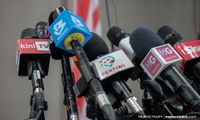
Journalists are responsible for asking professionally, verifying facts, and giving the criticised party room to respond. Ministers are responsible for explaining policies, decisions, and actions that involve the public interest.
A minister is not obliged to like journalists. Not every question must be answered immediately, and there are situations that call for further explanation or a written reply.
But there is a big difference between postponing an answer and belittling the questioner.
If not ready to answer, a minister can ask for the question to be sent to his office. If the question contains inaccurate facts, the minister can correct them. If the question is considered irrelevant, the minister can explain why.
All of that takes less than a few minutes, yet is far more meaningful than publicly attacking a journalist’s credibility.
The argument that the media was trying to blow an issue out of proportion at any particular event also does not justify how journalists were treated.
The circumstances or context of the event where the question is asked may determine the timing and manner of an answer, but they do not justify insults.
Respect cannot be demanded by putting others down. It is built through action, professionalism, and a willingness to face criticism.
The forgotten Port Dickson promise
I still remember one evening in 2018, when Anwar Ibrahim had just become the Port Dickson MP and hosted a Deepavali Open House. I attended as a Malaysiakini stringer.
After my media colleagues and I asked a few questions, he turned to me and said: “Your question is easy. Journalists should ask harder questions.”

Those words stayed with me, as they recognised that a journalist’s job is not merely to repeat a leader’s statements, but to test answers, question decisions, and ensure that power does not escape scrutiny.
Ironically, a principle he once championed when not occupying the highest seat of power now needs protection from the government he leads.
Reformasi nostalgia cannot settle the difference between how a principle was espoused and how it was practised. Only action can prove it, and Anwar’s principles should not change just because he is now in power.
The prime minister must ensure that the principle he once stressed in Port Dickson does not become merely a memory.
Hard questions are not a disturbance to democracy. They are part of a journalist’s responsibility to ensure the people receive not only regurgitated statements, but also explanations.
Ministers need not like every question put to them, but they must understand that their office is not a licence to belittle media practitioners.
A journalist’s job is to ask questions, including uncomfortable ones, and a minister’s job is to answer with facts, firmness, and dignity.
When they answer a question with an insult, they do not just attack a journalist's dignity and credibility; they also raise questions about their own accountability.
Anwar should remind his ministers of this.
B NANTHA KUMAR is a member of the Malaysiakini team.




Nantha Kumar is right that respect goes both ways. Journalists should be able to ask ministers difficult questions without being belittled. If a minister needs time to check the facts, say so and come back with an answer. The public asked to trust those decisions has every right to understand them. I would also ask something of Malaysiakini and every other newsroom in Malaysia. When reporting the news, tell us what happened, give us the relevant context and make room for the people involved to respond. Columnists are entitled to take a stand, and good opinion writing can help us see an issue differently. It can also acknowledge other reasonable views and trust readers to make up their own minds. That’s why I’d suggest calling pieces like this “Opinion” instead of “Comment”. Malaysiakini already discloses that Nantha Kumar is part of its team. A clearer label at the top would help readers immediately recognise that they’re reading his personal assessment, especially when the piece is shared outside the site. Both ministers and the media serve the public better when they give people enough information to draw their own conclusions.
Ramanan is the great god we never will need!
Well said Kumar. They still have not made any progress since Bloomberg said "everyone gets a cut" and despite the excellent MK journalism focused on the money making machine of foreign labour and trafficking.
Report this comment
Are you sure you want to delete this comment?
This action cannot be undone.