


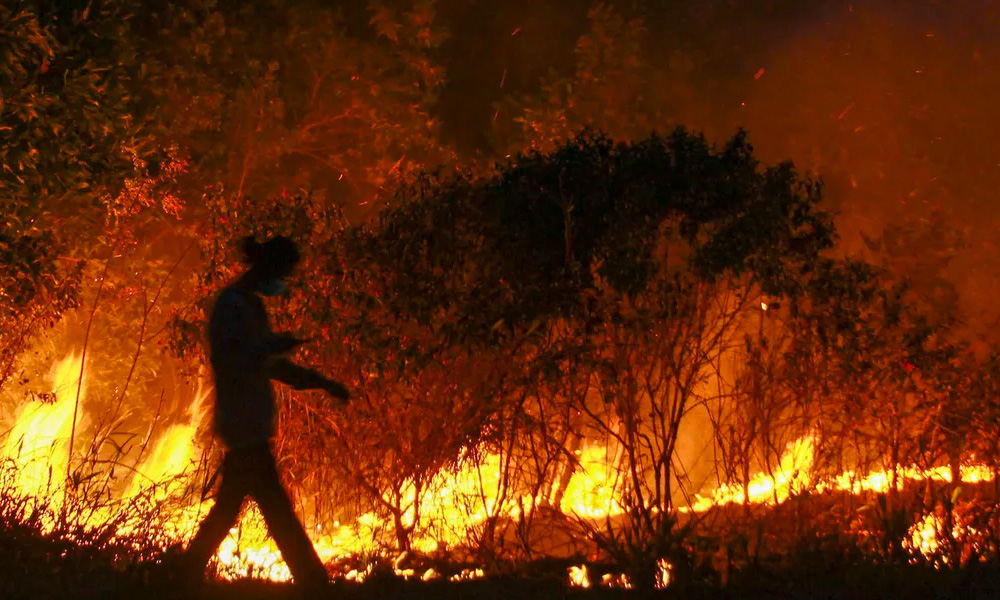

Purple haze - some men like to watch the world burn
COMMENT | Sometimes when writing columns one is tempted to go back to a previous work and hit copy and paste.
After all, as surely as the haze has descended on the Klang Valley so has that feeling of deja vu.
It’s always the same, isn’t it? For more than 25 years, we have been living with haze.
COMMENT | Sometimes when writing columns one is tempted to go back to a previous work and hit copy and paste.
After all, as surely as the haze has descended on the Klang Valley so has that feeling of deja vu.
It’s always the same, isn’t it? For more than 25 years, we have been living with haze.
Sure we have occasionally been given a respite of a year or two, but musim jerubu (haze season) has slowly but surely become part of our consciousness.
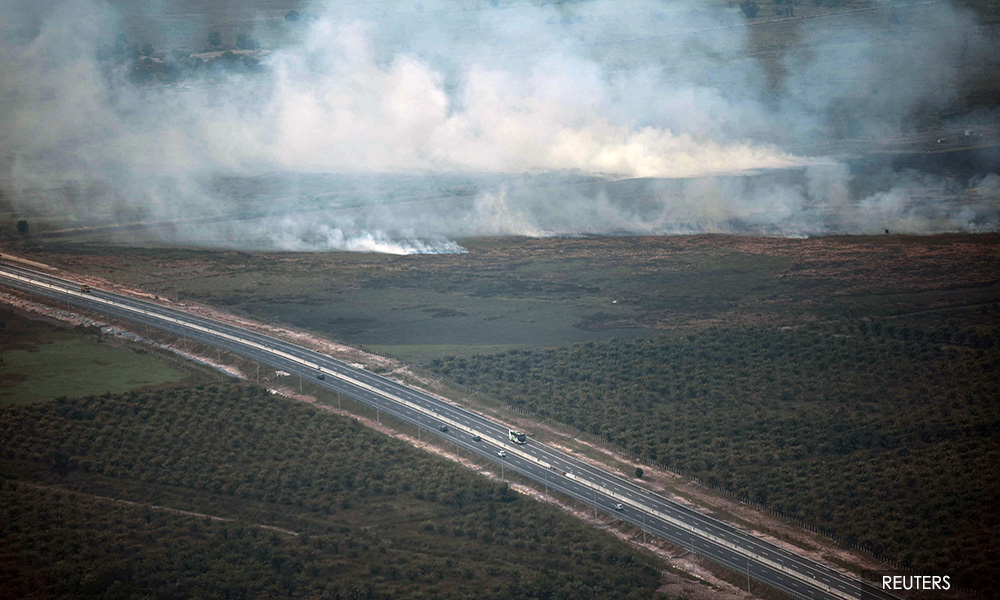
Take a drive outside and you get a vision of what post-apocalyptic Malaysia must look like - for the cars have vanished and thick grey smog has descended.
Smoke so heavy that it causes a lack of transparency of the air, which itself is heavy with the acrid smell of burning. And here comes the face masks en masse as we start fantasising about cloud-seeding and showers of rain.
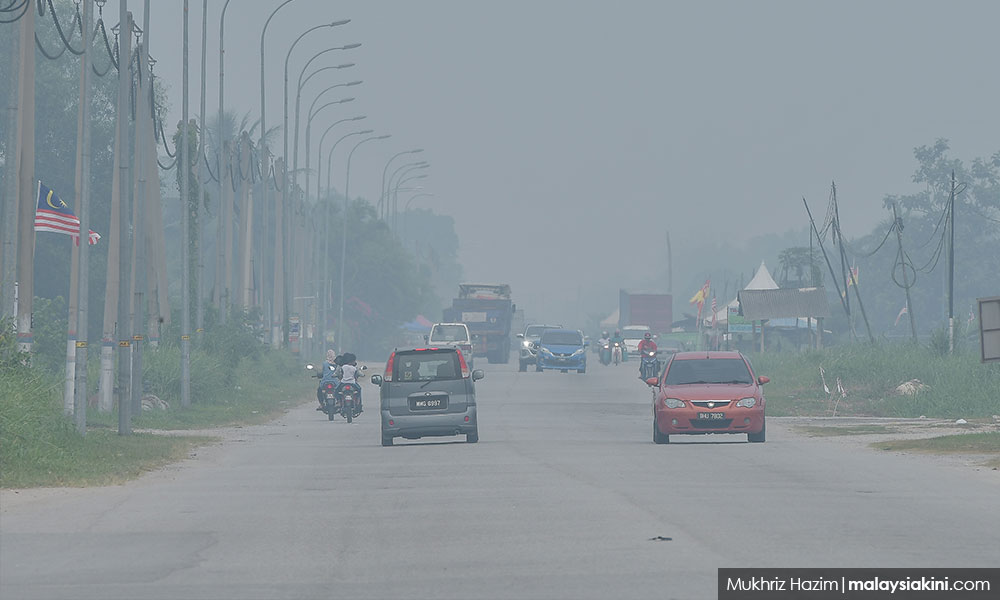
Undeniably – haze season is back.
If you’ve been paying attention, it’s been looming for more than a month ever since parts of Sarawak started registering high API readings. On Aug 12, Miri and Kuala Baram registered API readings of over 300, which, according to the Department of Environment, is hazardous.
You wouldn’t have thought so, however, because the immediate reaction to the haze from officials was that proactive one of holding one’s breath and waiting for the whole thing to blow over.
Surely there could be no other explanation for the muted initial reaction. After all, decades of dealing with this should have warned us that there was more to come.
Predictably, the situation only demanded action (or going through its motion) when the haze came to the Klang Valley in the last few days. For us KL folks, it got out of control this week, a full month after the early warnings from Sarawak.
Because we are so used to it, the first way in which we cope with it is humour. Playlists like Smoke on the Water, Purple Haze, The Air That I Breathe, Smoke Gets In Your Eyes, and Hazy Shade Of Winter start appearing, as well as memes like "Malaysia Truly Hazesia".
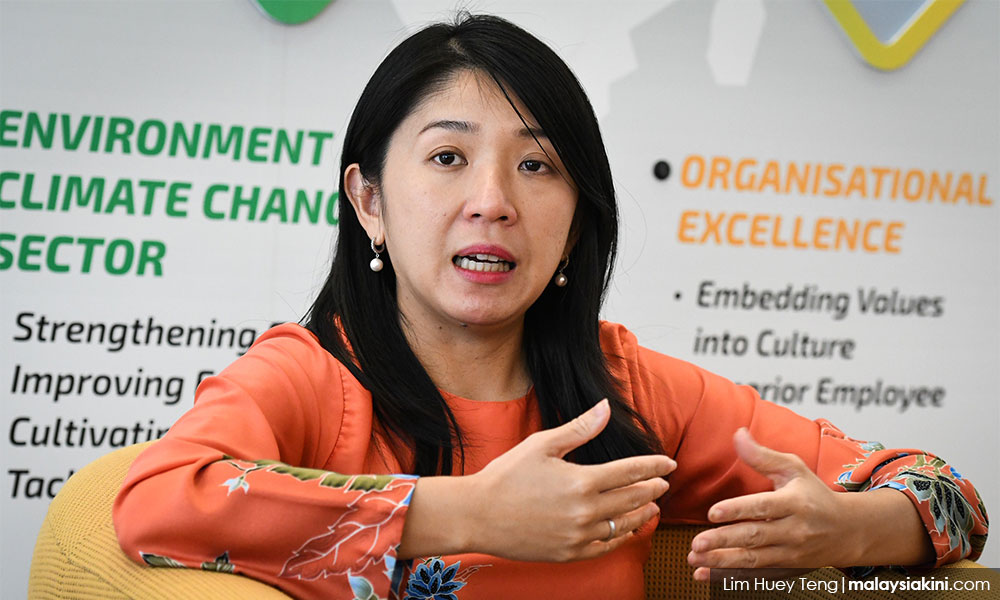
And when our Energy, Science, Technology, Environment and Climate Change Minister Yeo Bee Yin (photo) got into a war of words with her Indonesian counterpart Siti Nurbaya Bakar over the source of the fires that are to blame for the haze – well which right-thinking Malaysian didn’t snigger at the irony of Bakar’s last name?
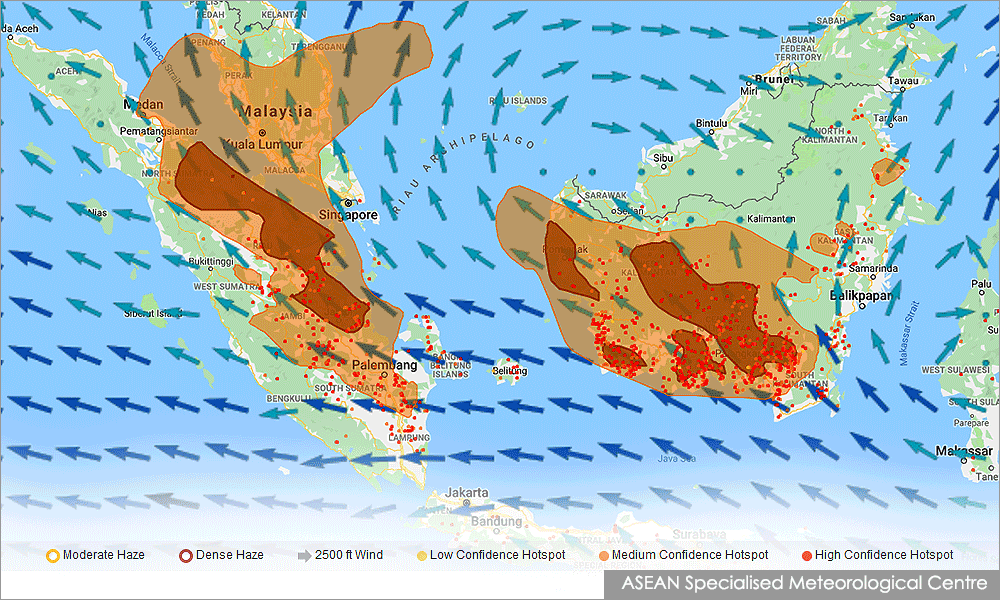
Incidentally, when Yeo told Siti Nurbaya not to be in denial over the cause of haze in the region, she highlighted the Asean Specialised Meteorological Centre's (ASMC) data, which show that the haze in Peninsular Malaysia primarily originated from Sumatra while the haze in Sarawak originated from Kalimantan.
In fact, there were seven hotspots in Malaysia but over 800 in Indonesia (474 in Kalimantan and 387 in Sumatra), and yet the Indonesian minister had the cheek to accuse Malaysia of not being transparent about its forest fires.
But you know what? The haze is just another ongoing crime we will never have the political will to address.
Firstly, there is the issue of Malaysians who take advantage of the haze to slip in a spot or two of their open burning. The more the merrier, these fellas must be thinking to themselves as they heap more fuel onto their bonfires.
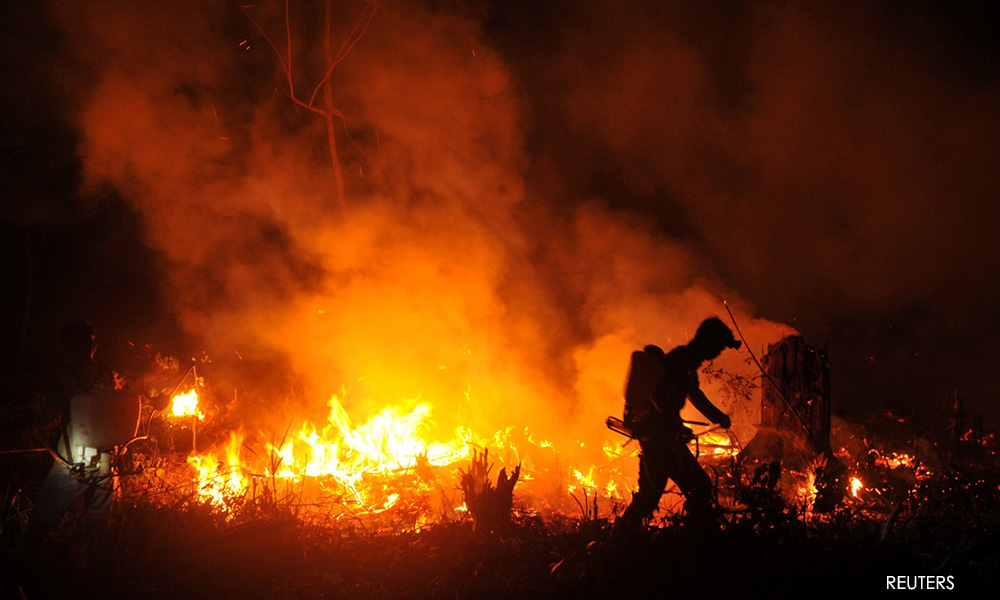
Reports of bomba rushing to put out blazes in places like Bestari Jaya and Sabak Bernam have largely gone under the radar and as usual, we are just left combatting the symptom and not going after the root cause.
Then there is the issue of how many forest fires in Indonesia are being carried out by Malaysian-owned companies. This resulted in another predictable distraction when the Indonesian government named four Malaysia-linked palm oil companies as the culprits behind several forest fires in the country, including IOI Corporation and Sime Darby Plantation.
The companies named are Sukses Karya Sawit, which is a unit of IOI Corporation (IOI), Sime Indo Agro, which is a unit of Sime Darby Plantation (Sime Darby), Rafi Kamajaya Abadi, a unit of Terengganu-owned TDM Berhad, and Riau-based Adei Plantation and Industry, a unit of Kuala Lumpur Kepong Berhad.
The next thing you know, our politicians rushed to defend this threat to the palm oil industry.
That’s well and good, but how I wish the same vigour had been brought to enforcing regional commitments to combatting transboundary haze from forest fires. This is something we have been talking about since the Asean Agreement on Transboundary Haze Pollution in 2002 which, I’m sorry to say, must rank among the most useless documents of my time in terms of implementation.
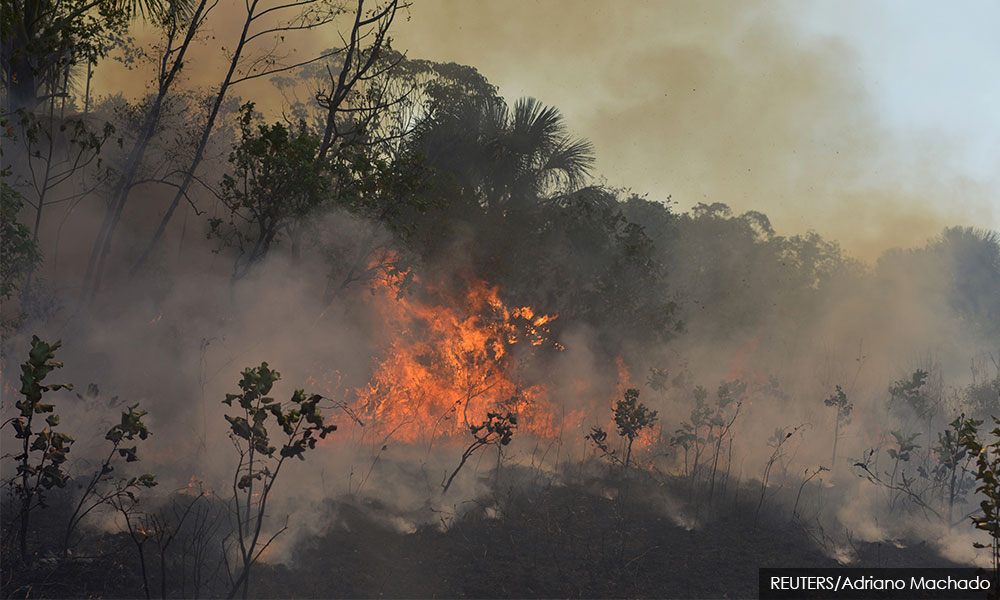
This is happening the world over, ostensibly because it’s the easiest way to clear the jungle. I guess some men really do like to watch the world burn. Bolstered by Brazil's president Jair Bolsonaro, forest fires in the Amazon are raging. The Indonesian military has also been accused of burning Papuan villages in its suppression of the independence movement there.
But my whole life, big business has fuelled denial of the environmental crises. Acid rain, depleting ozone layer, oil spills, climate change and more. Deny, deny, deny.
When it comes to haze and other things, the government needs to make difficult decisions. Be firm, be correct, and makes sacrifices for the short term. We have to be serious about catching and punishing the culprits. Throw a few CEOs in jail and then see if things change?
In our case, the government doesn’t seem to have that courage. We all know why. They are justifiably worried that too much change will hand power back to the newly formalised right-wing alliance of Umno and PAS. They are justifiably worried that if the economy lags and sags as they tried to repair all the damage under the previous regime, Pakatan Harapan will probably be tossed out.
So here we are, in the same old Catch-22. More than 22 years after the first stifling haze of August 1997, we are still caught in a trap, trying just to catch our breath.
MARTIN VENGADESAN is a member of the Malaysiakini team.



Report this comment
Are you sure you want to delete this comment?
This action cannot be undone.