


/file/publisher-c1a3f893382d2b2f8a9aa22a654d9c97/2024/05/733d2460a9bae1338bad6b2c6a8c3d1e.jpg)

COMMENT | 10 ways to solve migrant worker issues
COMMENT | Migrant labour is a rather tricky problem to solve because of corruption, patronage, abuse etc at every stage of the process involving senior ministers and politicians, government servants at every level, and enforcement agencies.
It is a ginormous muddle without a solution unless the Madani government is prepared to pull it out by the roots, face down all attendant problems and bring to account hundreds of people involved.
The eventual losers are the migrant workers who are left high and dry by syndicates even after paying huge amounts to get here and employers who will have to pay needlessly large amounts of money to get migrant labourers.
Malaysiakini’s latest exposé talks of syndicates which obtain quotas for imports of foreign workers but have no need for them. They sell those quotas to those who need them, pocketing millions of ringgit for nothing at all.
That’s only the tip of the iceberg. Others cream off thousands of ringgit per worker for getting them employment and others (sometimes the same persons or companies) get thousands more from employers for each worker.
COMMENT | Migrant labour is a rather tricky problem to solve because of corruption, patronage, abuse, etc at every stage of the process involving senior ministers and politicians, government servants at every level, and enforcement agencies.
It is a ginormous muddle without a solution unless the Madani government is prepared to pull it out by the roots, face down all attendant problems and bring to account hundreds of people involved.
The eventual losers are the migrant workers who are left high and dry by syndicates even after paying huge amounts to get here and employers who will have to pay needlessly large amounts of money to get migrant labourers.
Malaysiakini’s latest exposé talks of syndicates which obtain quotas for imports of foreign workers but have no need for them. They sell those quotas to those who need them, pocketing millions of ringgit for nothing at all.
That’s only the tip of the iceberg. Others cream off thousands of ringgit per worker for getting them employment and others (sometimes the same persons or companies) get thousands more from employers for each worker.
Exorbitant fees
Currently, agency fees for a domestic worker amount to between RM18,000 and RM25,000, often more than the entire salary paid per year. Workers pay as high as a similar amount to merely get hired, an extremely exploitative process, exacerbated by long hours and poor living conditions.

In Singapore, agency fees are as low as S$1,000 or a mere RM3,300, which begs the question of why it is six to eight times that here. Obviously, those who get those permits are making large amounts of money. It seems like everything is about money.
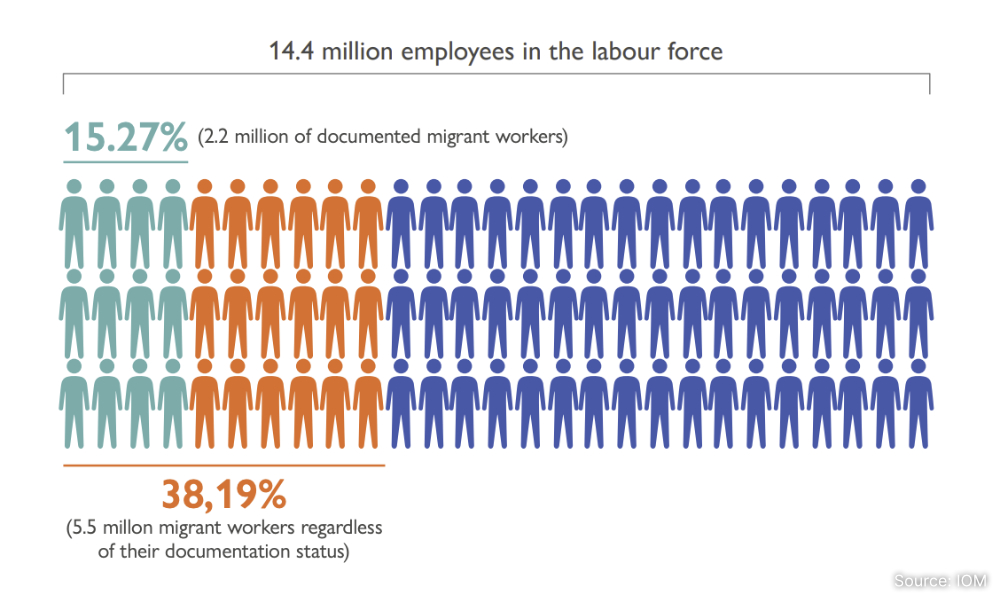
Then there is the problem of too much foreign labour. According to the UN’s International Organization for Migration (IOM), documented migrant workers here make up 2.2 million of the total 14.4 million employees in the labour force as of 2022.
“The total number of migrant workers in Malaysia, regardless of their documentation status, could amount to 5.5 million based on an unofficial estimation of 2016.
“Labour-intensive sectors such as construction, agriculture, manufacturing, services, mining, and quarrying have driven demand for migrant workers, including undocumented migrant workers,” the report said.
The chart shows the extent of the problem in Malaysia, with some 38 percent of the country’s 14.4 million strong workforce consisting of migrant workers, both documented and undocumented.
Such an unmitigated influx of migrant labour can be traced back to Mahathir-era politics, in which the Sabah RCI had found efforts to rebalance the population by flooding in migrant workers who could become citizens and form part of the Malay community.
Here are 10 suggestions, which if done with sincerity, competence, compassion, willingness and honesty will over time sort out this problem once and for all.
1. Rethink migrant labour requirements
The migrant labour system exploits nationals of other countries and depresses wages for local labour. It delays productivity improvement and alternative ways of doing things faster and more efficiently.
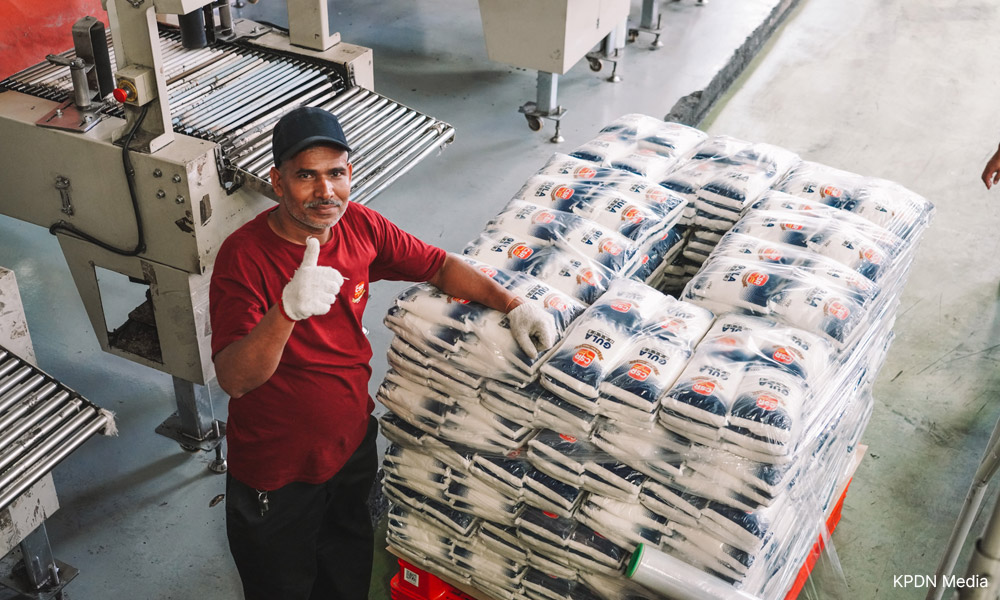
Much of it is little more than slave labour distorting wages, making it lower for Malaysian workers. We really need to rethink our labour requirements and see where we need them and control them, so that we can monitor where they are, ensure they are treated fairly, and have their rights taken care of.
If this is done properly, we can estimate the sustainable level of migrant labour we need and move towards that figure.
2. Planned reduction of migrant labour
Once that study is done, we can plan for a gradual reduction in migrant labour to that figure from the current one, say over six years, from the current estimated 5.5 million or nearly 40 percent of the workforce.
The phased reduction will give employers enough time to adjust to the new figures with little or no disruption to production.
3. Legalise undocumented migrant labour through amnesty
Yes, that’s right. Illegal labour, according to IOM figures, accounts for 3.3 million or a massive 23 percent of the workforce of 14.4 million. You might as well legalise all of them since you need them, but not grant them citizenship, mind you.
That way, they don’t have to hide from the police and the Immigration Department, make a decent living, and be absorbed as legitimate members of the workforce instead of the illegitimate ones now.

But the caveat is after that, illegal labour simply will not be tolerated. Don’t say that it can’t be done, it can, provided our enforcement agencies do the job they are paid to do and are scrupulous with it. Look over the Causeway, hardly any illegals there. Why?
4. Strict and fair enforcement
However, be strict but fair with enforcement. No more taking money and turning a blind eye. Undocumented migrants must be deported back to their country of origin. Do that enough and there will be no incentive for illegal immigrants to come anymore. But the next two points are vital for this.
5. Clean up the police
We all have heard countless stories of how the police repeatedly harass undocumented migrants for money, even legal ones. The message must be made clear to them that such behaviour will no longer be tolerated. That will mean taking strong action against them if they persist in their old ways.
6. Clean up immigration and others
That would apply to all other enforcement agencies as well, especially the Immigration Department. Things such as low-cost planeloads of migrants squatting and given quick approvals for entry and a hundred and one other things will be a thing of the past.

Legitimate establishments with legitimate workers should be free of repeated raids where, even with proper documentation, workers are needlessly and unfairly harassed and detained with deleterious effects on businesses.
7. Centralise migrant labour under one government agency
All things to do with migrant labour should be centralised under one government agency which will be clean, competent, well-staffed, and source for the best but fair labour deals, minimising the amount that employers pay for agents and ensuring workers don’t pay anything at all.
If you need a “belajar sambil melawat” plan, just take a bus or train trip to Singapore to see how they do it. You can even come back the same day to avoid accommodation costs.
8. Bring down agency fees
The centralised agency will, of course, need agents as intermediaries but these should be vetted thoroughly and their fees kept down. If everything is run properly, agency fees should be no more than Singapore’s RM3,300.
9. Protect the rights of migrant workers
We are a Madani government running on Islamic and universal values, which take into account the rights and privileges of everyone. That must include migrant workers, who must enjoy all the rights and privileges accorded to our own workers.

That means minimum wages, health benefits, leave days, and Employees Provident Fund benefits. If employers are unwilling to bear these, let them employ locals, in which case they will have to bear these costs anyway.
We should not be an economy that relies on cheap, exploitative migrant labour to push our economy up. That’s very un-Madani.
10. Crack down on miscreants
Finally, if we want anything to improve, we must take firm action under the law against miscreants. I had to do a double-take when I read that Human Resources Minister Steven Sim said that he would blacklist those abusing quotas for migrant workers.
Let’s be clear. This is breaking the law. You lied to the government about the quotas, and government officers must have known about this. Why are they not being charged, why are no police reports being made? Why is there no investigation?
That brings us to the heart of the problem. There is no will, desire, urgency, or intent to bring such culprits to books. They involve government ministers, civil servants, and enforcement officials.
Until such time as there is, things won’t change. Will the Madani government do something? Let’s wait and see.
P GUNASEGARAM says most problems can be solved - where there is a will, there is a way.
The views expressed here are those of the author/contributor and do not necessarily represent the views of Malaysiakini.
/file/publisher-c1a3f893382d2b2f8a9aa22a654d9c97/2023/10/e9ab584cf212b06c20615d0e7bdfaefa.jpg)
/file/publisher-c1a3f893382d2b2f8a9aa22a654d9c97/2022/04/0fa9b532128fc1d401f359aaa0cba6be.jpg)
/file/publisher-c1a3f893382d2b2f8a9aa22a654d9c97/2024/11/eb5d86ea0a102499dd9bd15f498f68ad.jpg)
/file/publisher-c1a3f893382d2b2f8a9aa22a654d9c97/2023/09/702a0488841d85575baf8128cf57399c.jpg)
/file/publisher-c1a3f893382d2b2f8a9aa22a654d9c97/2024/04/6e2ce305488ec794d2416bee2458e849.jpg)
/file/publisher-c1a3f893382d2b2f8a9aa22a654d9c97/2024/11/1d58a863163a3f0ce3f64ffa8d01911d.jpg)


