


/file/publisher-c1a3f893382d2b2f8a9aa22a654d9c97/2026/06/79b6e7bf7363ba8cb26a7eba6587d277.jpg)

COMMENT | State polls first audit of Anwar's political arrangement
COMMENT | When the Johor state assembly was dissolved on June 1, Negeri Sembilan followed four days later.
The contests were dismissed as scheduled state elections, but they are nothing like that. Coming barely halfway through the federal term, there is no general election forcing the timing.
This is the first occasion since 2022 on which the Pakatan Harapan and BN partnership must defend itself before voters as more than a marriage of convenience.
Both Harapan and BN will heed the state elections’ outcomes as a verdict on whether the unity government is a durable settlement or a ceasefire that has outlived its usefulness.
The stakes are high because...
COMMENT | When the Johor state assembly was dissolved on June 1, Negeri Sembilan followed four days later.
The contests were dismissed as scheduled state elections, but they are nothing like that. Coming barely halfway through the federal term, there is no general election forcing the timing.
This is the first occasion since 2022 on which the Pakatan Harapan and BN partnership must defend itself before voters as more than a marriage of convenience.
Both Harapan and BN will heed the state elections’ outcomes as a verdict on whether the unity government is a durable settlement or a ceasefire that has outlived its usefulness.
The stakes are high because the partners do not contest as one coalition. Johor BN, which never entered a formal state-level unity pact, confirmed in May that it would contest the election alone, and Harapan responded by fielding candidates across all seats.
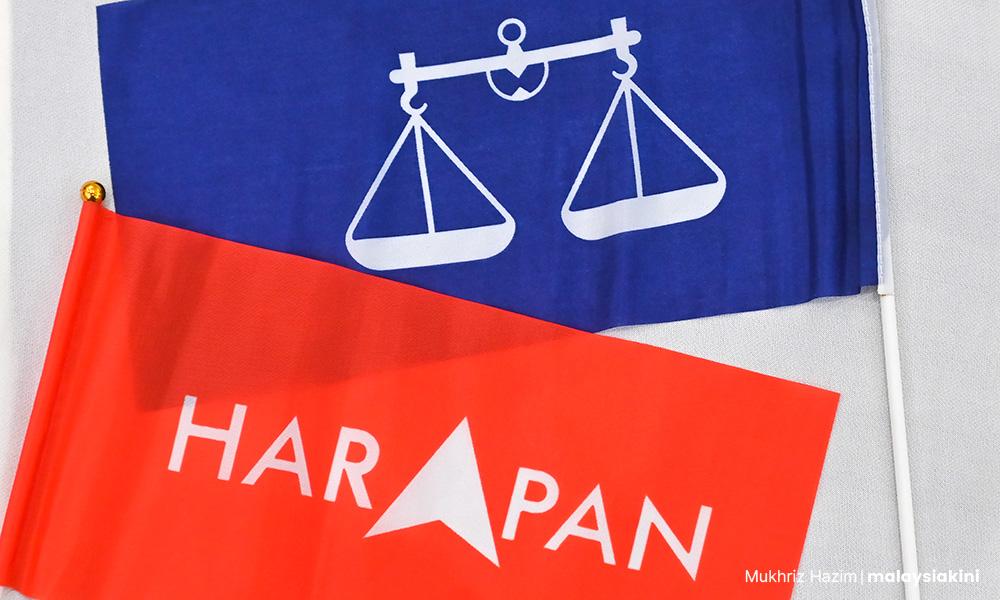
Interestingly, the coalition that governs together in Putrajaya is therefore slitting each other’s throats at the state constituency level.
Madani was never a partnership
The arithmetic explains the unease; in Johor, BN won a supermajority in 2022 while Harapan bagged 12 of 56 seats.
A year later, in Negeri Sembilan, the relationship was inverted, with Harapan barely governing the state by a simple majority with additional support from 14 BN assemblypersons.
These were simple models dictated by who was stronger, never partnerships on equal footing, asking the same pool of voters to endorse cooperation in Putrajaya, Malaysia.
Nevertheless, choosing between partners at home strains the model's logic, and Negeri Sembilan has shown how quickly that logic breaks down.
In late April, all 14 Umno assemblypersons withdrew their confidence in Menteri Besar Aminuddin Harun over a dispute concerning royal and customary institutions, briefly pushing the Harapan-led government below the 19 seats it needed to maintain a majority.
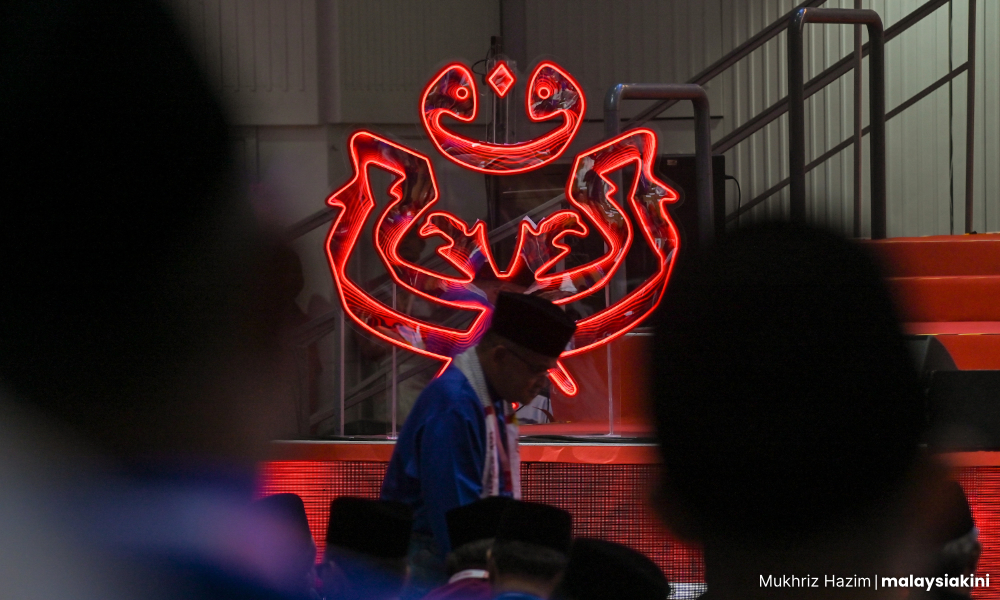
Perikatan Nasional then offered BN an alliance with five of its assemblypersons. The crisis was patched only after Umno president Ahmad Zahid Hamidi’s intervention.
Although the Yang di-Pertuan Besar advised Aminuddin to carry on, Negeri Sembilan Umno never rescinded its loss of confidence; it was simply a political ceasefire.
The gap between what the grassroots feel and what the leadership commands is the fault line running through the arrangement.
Prime Minister Anwar Ibrahim’s authority rests less on shared conviction than on the absence of a better option for Umno’s senior figures, several of whom owe their rehabilitation to the present political arrangement.
Reformist elements in the PKR remain uneasy, and the recent defection of Rafizi Ramli and a bloc of followers has exposed how thin the reform dream has become.
A poor result may not topple the federal government, but it will embolden every faction waiting for evidence that the partnership costs more than it delivers.
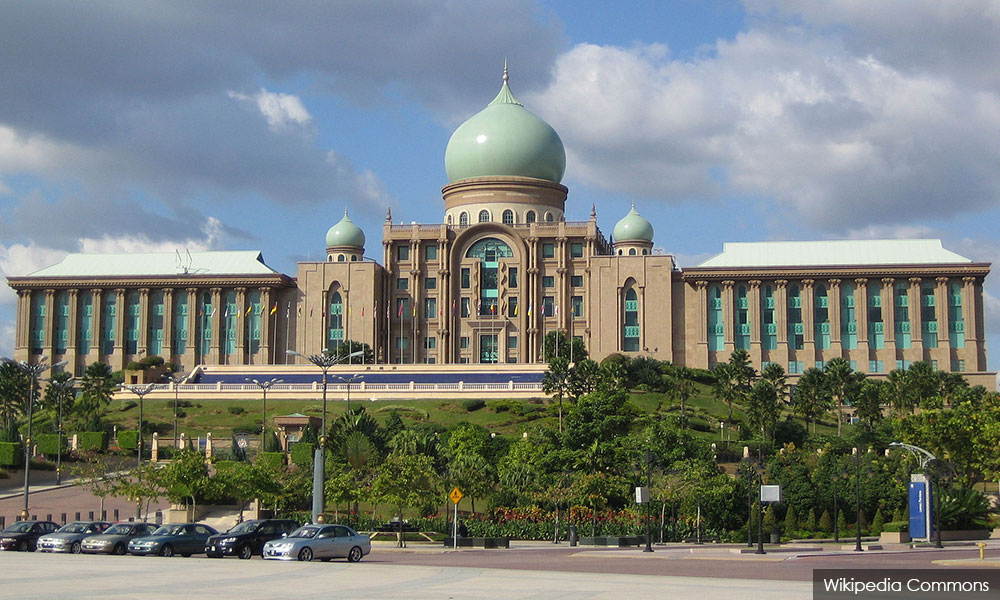
The ruckus also paved the way for the constitutional monarchy to intervene increasingly in the democratic process. Since 2020, the rulers have repeatedly leveraged parliamentary deadlocks, turning them into political tug-of-war referees.
Unprecedented disruption
These strains would be serious in any season, but the polls fall amid the most severe global energy disruptions.
The near-total closure of the Strait of Hormuz since early March, following military operations involving the United States, Israel, and Iran, drove Brent crude past US$100 (RM400) a barrel.
This incident, which the World Bank has called the largest oil market shock on record, is directly affecting transport costs, food prices, and the fiscal weight of fuel subsidies.
Nevertheless, the global economy will take at least six months to recover.
Such anxiety rarely produces a single predictable vote but reliably erodes the incumbents’ support. Since both Harapan and BN govern these states, neither can run as the change candidate.
Nonetheless, this does not mean that the advantage flows to PN, since PAS and Bersatu had just ceased their formal political partnership.
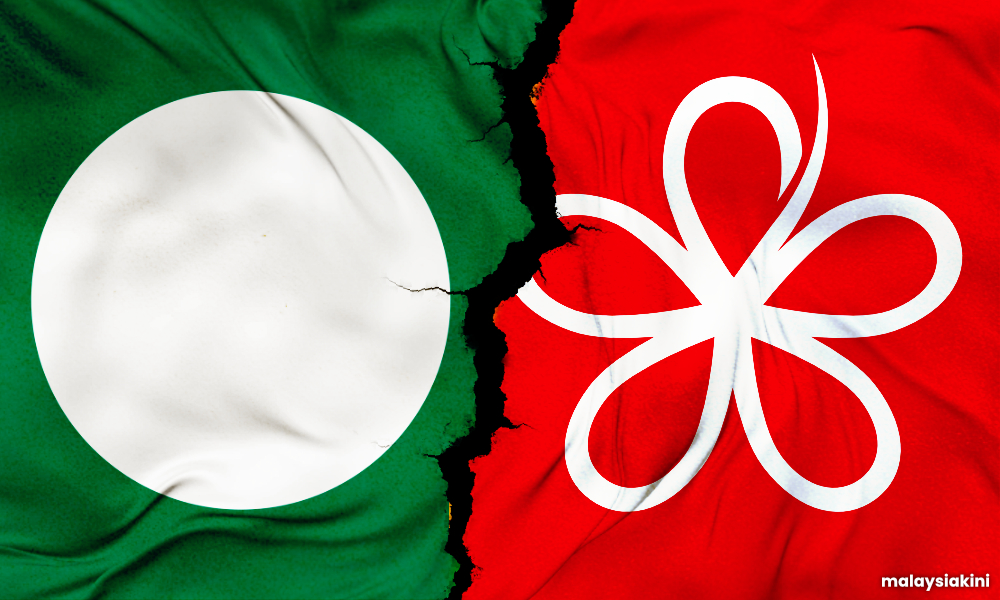
In a recent update, PN also removed Bersatu’s Azmin Ali and Radzi Jidin from its organisational structure. In my view, this will spice up the drama leading to the state elections.
Underlying all of this is a generational shift that the established parties have not absorbed yet.
Since the voting age was lowered under Undi18, a large cohort of young and first-time voters has entered the electorate carrying grievances such as unemployment, unaffordable housing, and scepticism toward elites, which map poorly onto traditional loyalties.
Narratives now travel through TikTok faster than any party machine can manage, producing an electorate that is more volatile and less anchored.
PN has read this terrain most astutely; if younger voters break decisively in one direction, they will confirm that Gen Z has become the swing bloc on which future elections turn.
Prolonged instability likely
The Harapan and BN model was always defensive, built to keep PN out rather than to advance a shared programme, and such coalitions hold only while the threat exceeds the friction between partners.
The likeliest trajectory is not a dramatic collapse but a prolonged era of unstable coalitions and fragmented mandates, tending over time toward an ideological sorting into Islamist, nationalist, and reformist blocs, with the centre the unity government tried to occupy squeezed from both sides.
These are state elections only in name. In substance, they are the first real audit of the political order that Malaysia improvised three years ago.
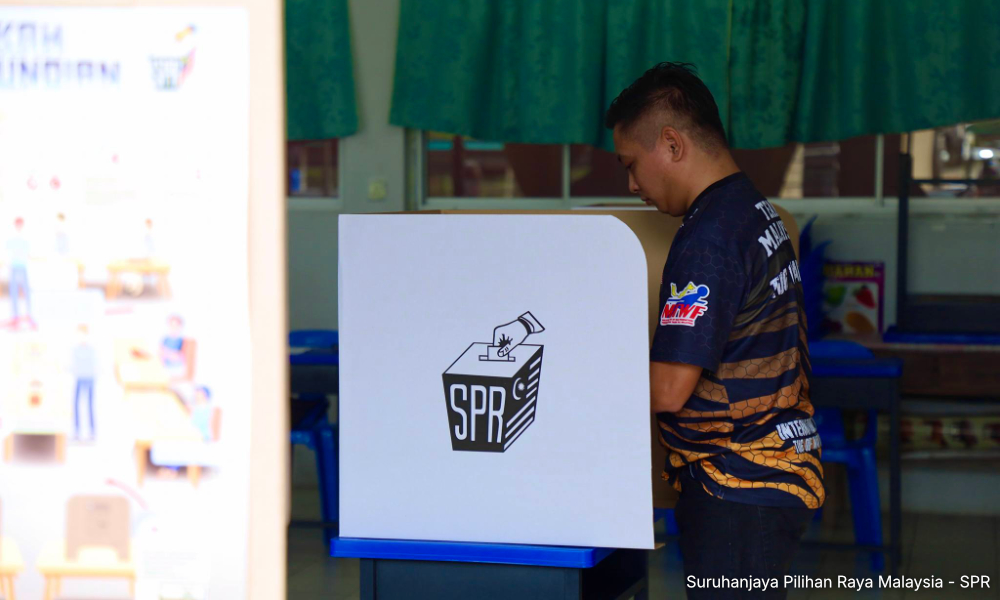
If the partners emerge bruised but functional, Anwar retains room to govern until the next general election.
If voters punish the partnership, pressure for realignment and defection will build, and the monarchy may again be drawn to do the work that elected politicians cannot.
Either way, the margin for error is wider than at any point since 2022.
RIZAL HAMDAN is a senior programme officer at Merdeka Centre.
The views expressed here are those of the author/contributor and do not necessarily represent the views of Malaysiakini.
/file/publisher-c1a3f893382d2b2f8a9aa22a654d9c97/2026/06/10a205f0aa450d9578f22c7aa611edc3.jpg)
/file/publisher-c1a3f893382d2b2f8a9aa22a654d9c97/2024/12/331c3b1b264d43d903649e30ac746bde.jpg)
/file/publisher-c1a3f893382d2b2f8a9aa22a654d9c97/2024/05/e673f4d144e404ec7d3b43653c08d52f.jpg)
/file/publisher-c1a3f893382d2b2f8a9aa22a654d9c97/2026/02/ca52cbc77a88cb443b14927bf2a4bcda.jpg)
/file/publisher-c1a3f893382d2b2f8a9aa22a654d9c97/2026/01/1707b31ae103ca4fde84308a2475af1a.jpg)
/file/publisher-c1a3f893382d2b2f8a9aa22a654d9c97/2026/04/c0000669eb0b9879059d3a920a7f5203.jpg)


Report this comment
Are you sure you want to delete this comment?
This action cannot be undone.