


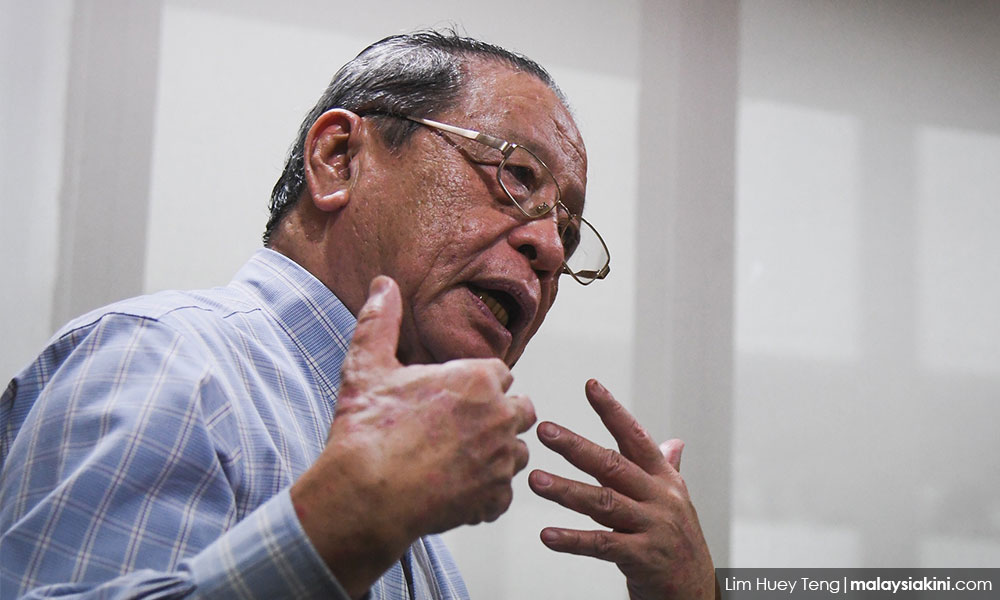

In defeat, Kit Siang reminds M’sians ‘we’re in the same boat’
INTERVIEW | The general election last May saw DAP’s greatest triumph. It was perhaps the most successful individual party in Pakatan Harapan, and its leaders now walk the corridors of power after five decades of struggle.
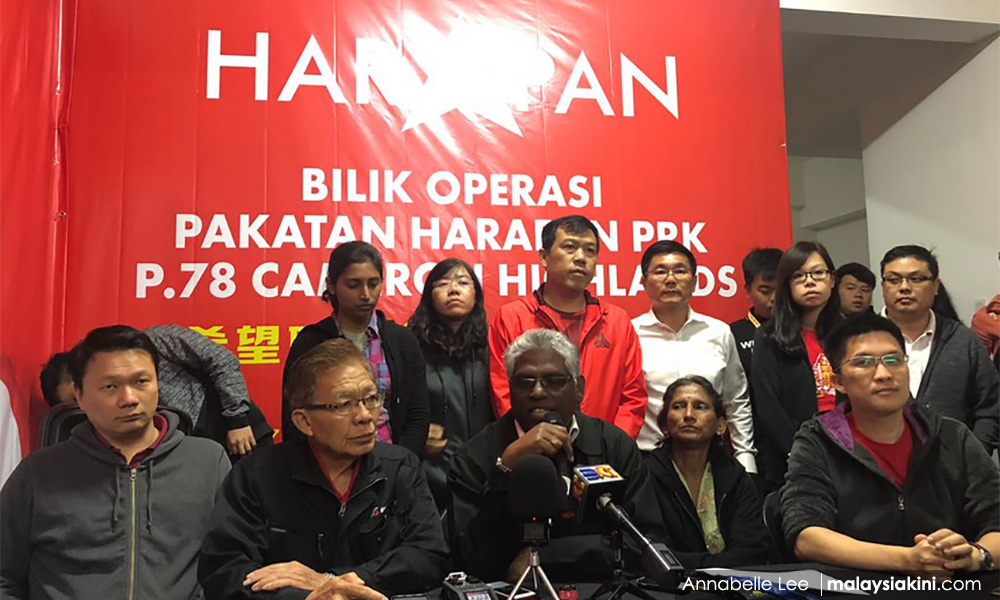
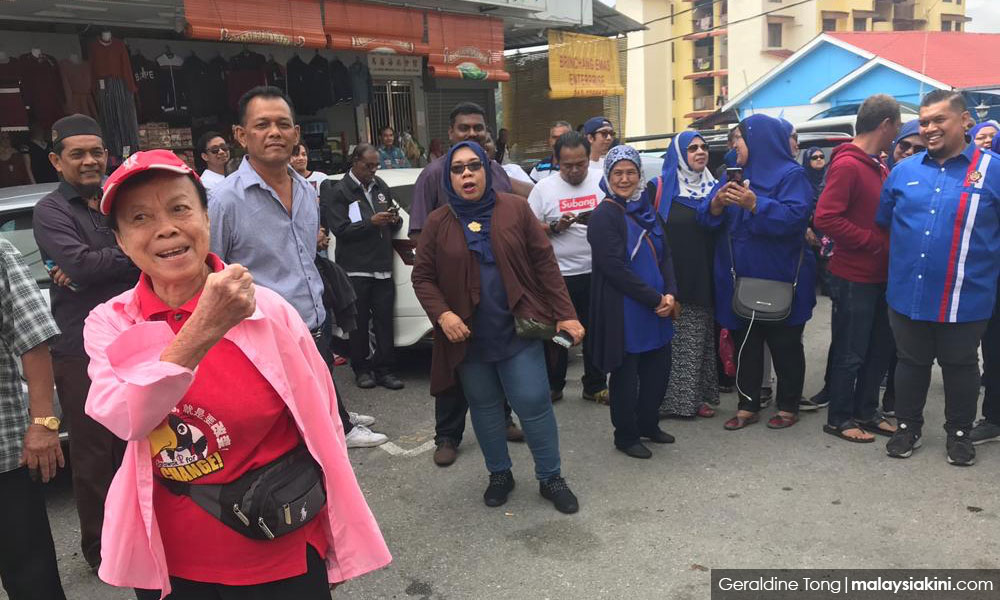
The euphoria of victory was dampened last Saturday, however. DAP, representing Harapan, emerged from the Cameron Highlands by-election with just 40 percent of the vote.
More importantly, Harapan was trampled in Malay-majority areas, winning at most 10.14 percent of the Malay vote, by Malaysiakini’s estimate.
During an interview on Thursday, DAP veteran Lim Kit Siang pointed out that despite the low percentage, this was actually an improvement from the general election last year.
“Very insignificant – almost two percent,” he said.
Harapan made microscopic gains in all but one of the nine Malay-majority voting districts in Cameron Highlands...
INTERVIEW | The general election last May saw DAP’s greatest triumph. It was perhaps the most successful individual party in Pakatan Harapan, and its leaders now walk the corridors of power after five decades of struggle.
The euphoria of victory was dampened last Saturday, however. DAP, representing Harapan, emerged from the Cameron Highlands by-election with just 40 percent of the vote.
More importantly, Harapan was trampled in Malay-majority areas, winning at most 10.14 percent of the Malay vote, by Malaysiakini’s estimate.
During an interview on Thursday, DAP veteran Lim Kit Siang pointed out that despite the low percentage, this was actually an improvement from the general election last year.
“Very insignificant – almost two percent,” he said.
Harapan made microscopic gains in all but one of the nine Malay-majority voting districts in Cameron Highlands.
Throughout the interview, what appeared to concern Lim most was how the Malay community viewed DAP, Harapan and Malaysia's future.
Lim constantly referred to a survey by Ilham Centre which suggested that 60 percent of Malays were unhappy with the Harapan government, and that the government was being dominated by DAP.
“I think if they had conducted a same survey among the Chinese, whether they are happy with a ‘Chinese government’, I’m sure an overwhelming majority would say they are not happy.
“So, there is a misperception altogether. I don’t think you will even get one percent of Chinese voters who would say they are happy because this government is run by the Chinese against the interest of the Malays.
“Why is there such a disconnect?” he asked rhetorically.
‘True or not?’
For Lim, the Harapan government is a “Malaysian” government that looked after the interest of all Malaysians. The challenge for DAP and Harapan, he said, was to help voters realise this.
“Something has gone wrong. The Cameron Highlands results, this latest survey, I think throws into sharp relief the problems Malaysians as a whole face: that it is time we come together and stop hating each other or inciting hate, fear and begin to trust each other.
“Whether we succeed or fail, we are in the same boat. I think that is a very significant message for all Malaysians,” he said.
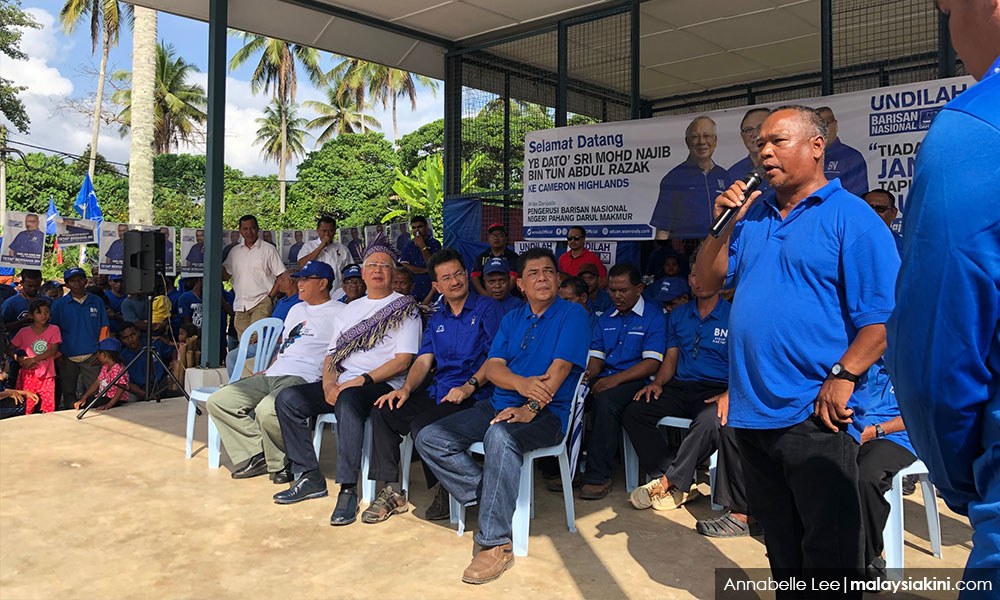
For the first time in history, DAP had to contend with the combined might of Umno and PAS’ campaign machinery, whose repertoire was less on policy but more on racial and religious tropes.
One ceramah kelompok after another, vote canvassers would define Harapan’s DAP candidate M Manogaran by race, and condemn his party as the enemy of Islam.
According to Lim, one social media message making the rounds during the campaign accused him of seeking to remove the words “Malay” and “Islam” from the Federal Constitution in Parliament.
“I didn’t say that. This is a reflection of the lies, hate and fear generated to mislead the people."
Lim expects more of the same from Umno and PAS in the upcoming Semenyih by-election, where supporters of both parties exist in considerable numbers.
His plea was for voters to sift through the information that they receive.
“I am optimistic that in the long term, they are fighting a losing battle. The country must be able to survive meanwhile.
“In an age where information travels at the speed of light, it is not easy to continue with lies and falsehood.
“Malaysians have to develop a more cynical and sceptical attitude towards what they receive on social media. They must ask themselves ‘true or not?’"
Uptick in Orang Asli support
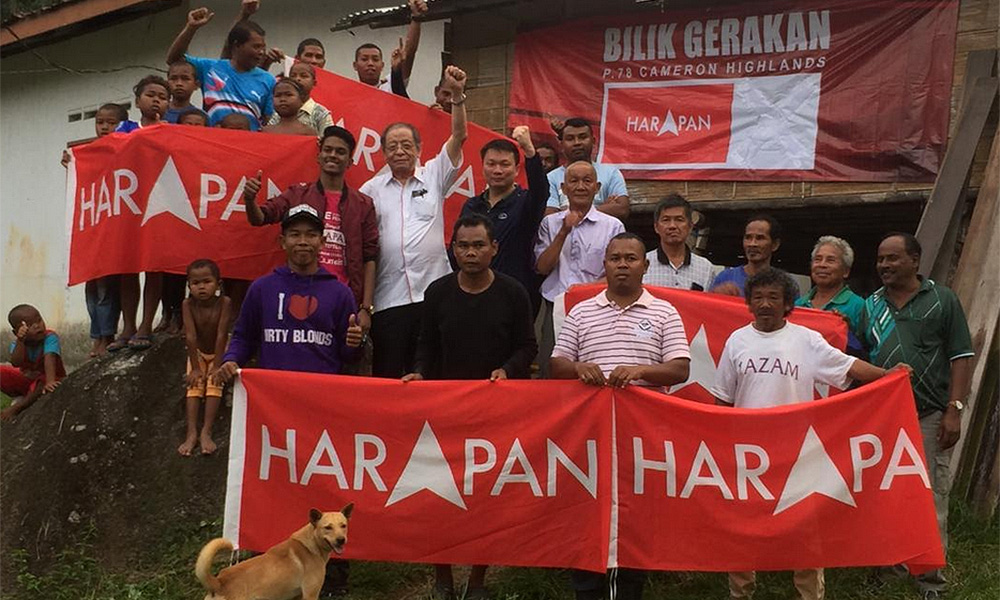
Although Malay voters may be a challenge for DAP, Lim took comfort in the significant swing in Orang Asli votes.
By Malaysiakini’s estimate, Harapan’s vote share among the Orang Asli had increased to 27 percent, up from 5 percent previously.
Lim was Harapan’s lead campaigner in Orang Asli areas throughout the campaign, often spending hours commuting on muddy and bumpy dirt roads between villages.
But why would someone at the age of 77 subject himself to this?
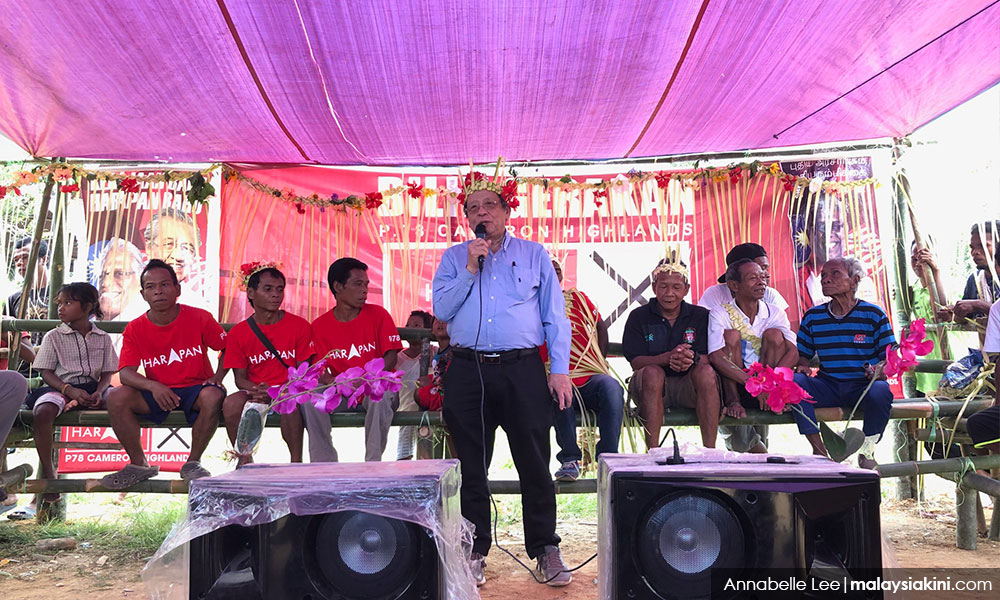
“So long as I am in active politics, I should do what I can,” said Lim, who believes that the time has come for DAP leaders to move out of their urban shell and expose themselves to new constituents.
Lim said that his visits to the Orang Asli villages resulted in shock and dismay – that indigenous people do not enjoy the same basic rights to clean water and electricity as their urban counterparts.
“The very fact that you have the first Orang Asli director-general of the Orang Asli Development Department (Jakoa) just nine months ago and BN fielding its first Orang Asli candidate is a testimony of the country’s neglect,” he said.
Lim, who had pledged mid-campaign to hold a conference to help the Orang Asli chart their own way forward, said he found it difficult now to convene such a meeting given that Harapan did not win majority support from the Orang Asli.
“I thought that if we can win, it would be on the basis of significant Orang Asli support. And if there a significant Orang Asli support, that would be the basis for a conference to see how we can uplift the Orang Asli conditions.
“If there is no significant Orang Asli support, then what locus standi do I have? We need the locus standi. Without their support, if you call a meeting, who is going to come? The ones who are now at the beck and call of the BN hierarchy (the tok batin system) will not respond…"
Lim said that if it took the DAP five decades to get their message across in the urban areas, it will be even harder to do so in the hinterlands.
“All along, they have been under the influence of the hierarchy they have. A lot of tok batin in fact, as you can see when Najib was there, were in BN colours. They parroted the line that they were expected to (by their leaders).
“I think there is a need for all Malaysians, Orang Asli as well, to think for themselves, not to just parrot the party lin, but instead do what is in the best interest for the community and the country.”




We're NOT in the same boat! It's YOU who brought a Racist into the boat!!!
No matter how small the majority may be, PH lost n excuses a galore. Just correct your strategy n liberalise PH. One man dominance will lead to the party’s downfall. PH needs immediate change in it’s leadership or Anwar will be left with a big hole to patch.
It is hard to find another LKS a statesman very concerned with the well being and future of this nation despite his age . It is a pity that there are people just don't bother but they shamelessly and relentlessly continue to spew lies hate and slander falsehood against DAP. All right thinking people know the good intentions of DAP aiming to build a progressive and prosperous new Malaysia for all races.As he said we were in the same boat, it is important for all races to commit themselves for the grand goal otherwise the future is bleak for the nation if a certain quarter of the population wishes to remain as racists and religion bigots.
Report this comment
Are you sure you want to delete this comment?
This action cannot be undone.