


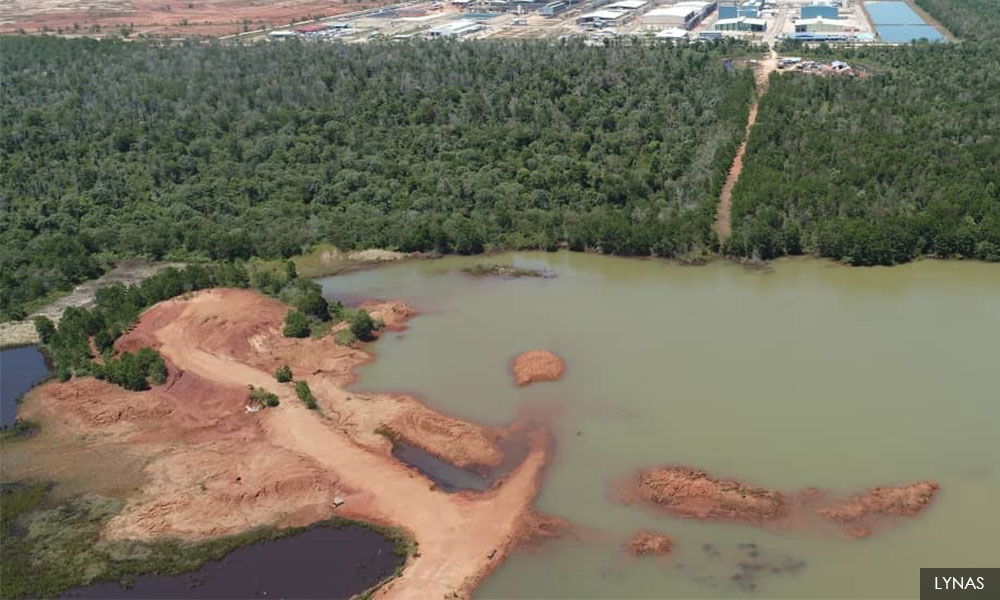

'Bauxite mine not far, just 1km from Lynas plant'
Lynas Malaysia today disputed the claim that bauxite mines are too far to contribute to contamination of groundwater under the firm's rare earth processing plant in Gebeng, Pahang.
Its director Ismail Bahari said two previously used bauxite mining pits are located within 1km of the Lynas Advanced Materials Plant (Lamp)...
Lynas Malaysia today disputed the claim that bauxite mines are too far to contribute to contamination of groundwater under the firm's rare earth processing plant in Gebeng, Pahang.
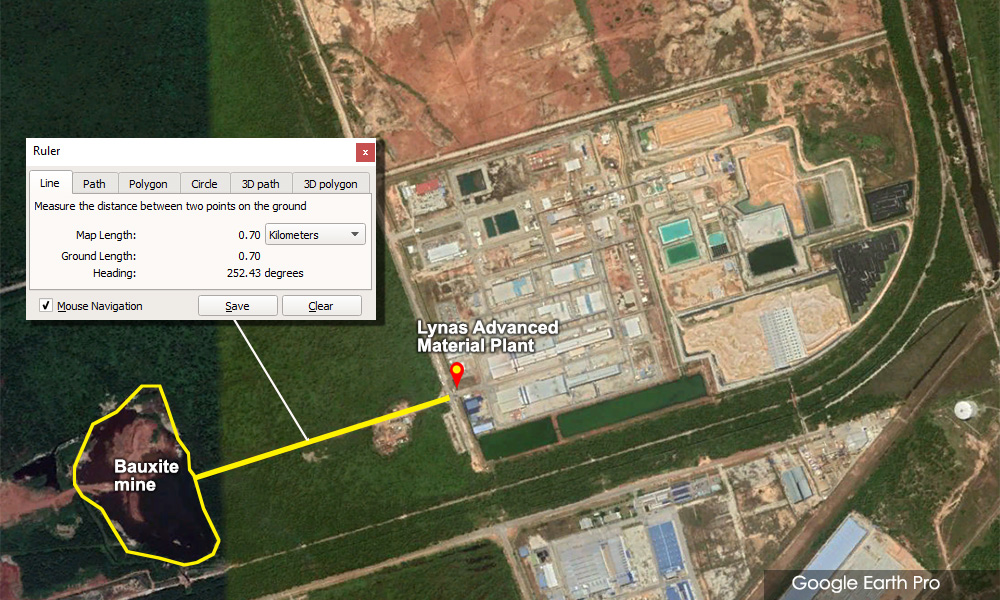
Its general manager Ismail Bahari said two previously used bauxite mining pits are located within 1km of the Lynas Advanced Materials Plant (Lamp).
A check on Google Earth found the nearest spot appearing to be an open mine is less than 800m from the Lamp compound.
Earlier, environmental group Malaysia Nature Society's Pahang chairperson Noor Jehan Abu Bakar cast doubts on Lynas' claim that the groundwater under Lamp was contaminated by bauxite mining.
She said the plant is located far from the mines and the stockpile sites.
Most of the bauxite mining was in Bukit Goh, some 37km away from the Lamp and the stockpiles were at the Kuantan Port about 15km away.
This was in response to Lynas' assertion that waste from the rare earth processing plant did not contaminate groundwater there.
The government review committee had found a spike in heavy metal content in the groundwater beyond acceptable levels.
Nickel concentration shot up from 7μg/L in 2007 to 96,110 μg/L in March 2016.
The Dutch Intervention Value, a measure of contamination, for nickel is 75μg/L.
The review committee said some 50 households in the area access drinking water via wells.
Bauxite mining was halted in 2015 due to severe pollution, but the government is looking to reintroduce it, with strict guidelines.
Parliamentary caucus invited to Lamp
Meanwhile, Ismail also invited the Parliamentary Caucus on Monitoring Lynas to visit Lamp, like some 17,000 other visitors the plant has received since opening its doors.
"We continue to hope that all members of the parliamentary caucus committee will accept our invitation to visit our plant or meet with management to ensure they have accurate information about our operations," he said.
The caucus yesterday backed the Ministry of Energy, Science, Technology, Environment and Climate Change's (Mestecc) order for Lynas to remove its water leach purification (WLP) residue - a solid waste that contains naturally occurring radioactive material - to continue to operate. The site now has 451,654 tonnes of WLP.
Mestecc also ordered Lynas to submit a plan for another type of waste it produces - the naturalisation underflow residue (NUF) - which is regulated by the Department of Environment.
It had approval for temporary storage of the NUF until Feb 15 and must submit a new plan for approval. There are 1.113 million tonnes of NUF now accumulated.
But Entrepreneurship Minister Mohd Redzuan Othman said Mestecc's position was not endorsed by cabinet.
Prime Minister Dr Mahathir Mohamad said the cabinet will meet on the issue.




Report this comment
Are you sure you want to delete this comment?
This action cannot be undone.