


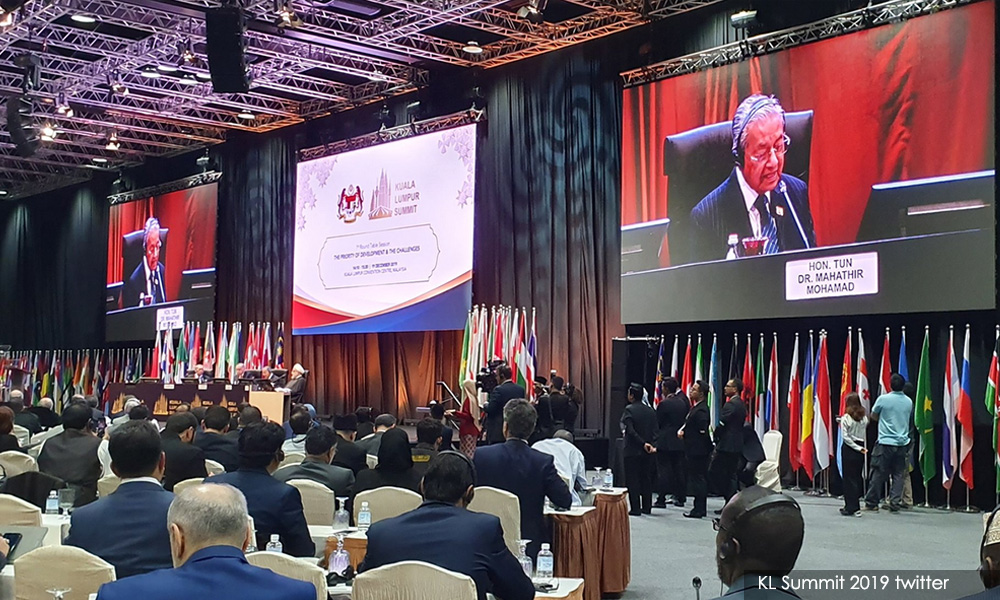

From Isma-led do to gov’t event - your KiniGuide to the KL Summit
KINIGUIDE | The Kuala Lumpur Summit now taking place has hit headlines locally and abroad, most prominently after Pakistan Prime Minister Imran Khan’s decision to sit out the international pow-wow.
But those following the issue may be hard-pressed to understand why this summit is important, and what indeed is this summit which is taking place in the Kuala Lumpur Convention Centre from Dec 18 to 21. The KiniGuide below explores the issue.
KINIGUIDE | The Kuala Lumpur Summit 2019 now taking place has hit the headlines locally and abroad, most prominently after Pakistan prime minister Imran Khan’s decision to sit out the international pow-wow.
But those following the issue may be hardpressed to understand why this summit is important and what indeed is taking place in the Kuala Lumpur Convention Centre from Dec 18 to 21. The KiniGuide below explores the issue.
What is the KL Summit?
Based on the description on the official website, it is a talk-shop featuring Muslim leaders and scholars from around the world.
It doesn’t have a specific focus other than to discuss “issues revolving in the Muslim world”. The summit’s theme is "The Role of Development in Achieving National Sovereignty".
Speeches and panel discussions have included topics like Muslim unity, Islamophobia and political development, while some of the memoranda of agreement (MOUs) signed between participating countries include everything from Islamic finance to dairy farming.
Is this the first time it is being held?
No, the first KL Summit was held in 2014 and was the brainchild of Islamist group Isma leader Abdullah Zaik Abdul Rahman, according to organisation’s mouthpiece, "Ismaweb".
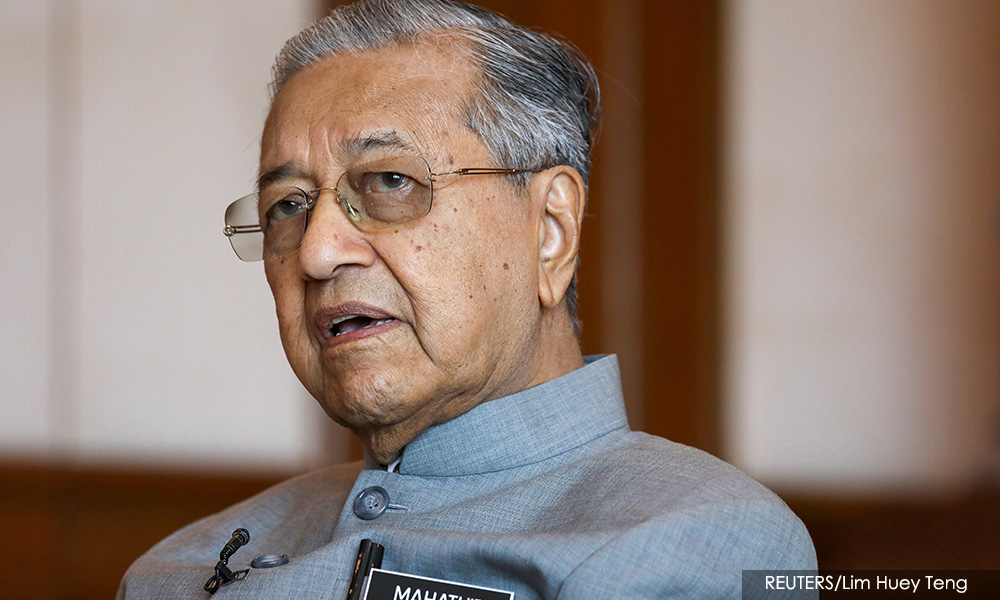
The first summit was also chaired by Dr Mahathir Mohamad who was at that point retired from politics.
“The KL Summit was his idea based on current developments in the Arab and Muslim world. It has attracted more than 80 thinkers from more than 14 Islamic nations,” Ismaweb reported in 2014.
This year’s KL Summit is the fifth instalment, the fourth being held in Turkey in April, Ismaweb reported.
Who are key members of the KL Summit?
The website lists Mahathir as chairperson while Economic Affairs Minister Azmin Ali, Qatar royal Moza Nasser, Turkish Finance Minister Berat al Bayrak, former chief secretary to the government Ahmad Sarji Abdul Hamid and Mauritania Islamic scholar Muhammad al Hassan a Dedaw as co-deputies.
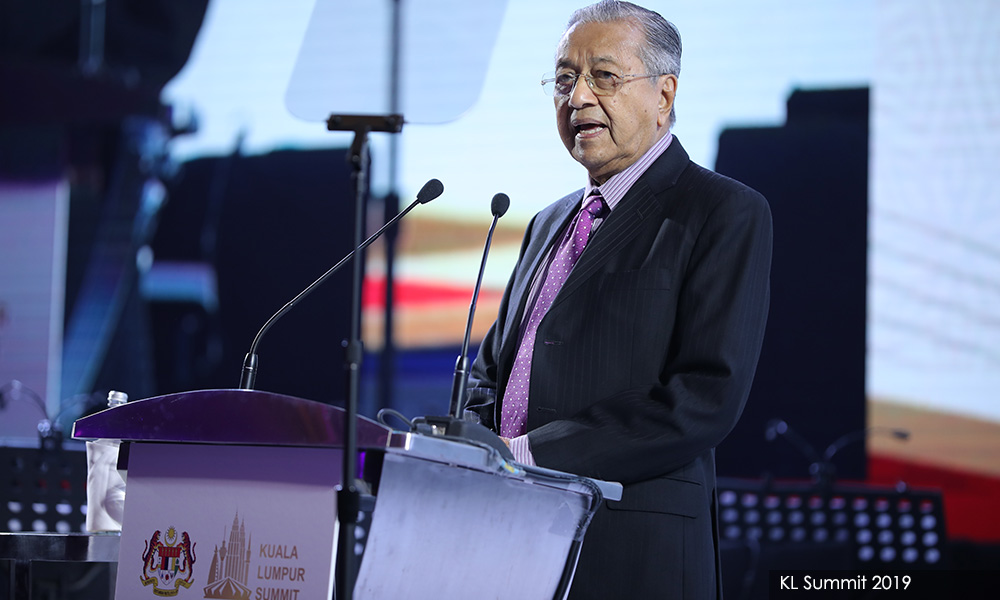
Other prominent members are Algerian Islamist party Movement of Society for Peace president Aberazzak Makri, Malaysian ministers Saifuddin Abdullah and Syed Saddiq Abdul Rahman, businessman Syed Mohktar Al Bukhary and former Bank Negara governor Zeti Akhtar Aziz.
Who is attending this time?
Prominent attendees are Turkish President Recep Tayyip Erdogan, the Emir of Qatar Sheikh Tamim Hamad Al Thani and Iranian President Hassan Rouhani.
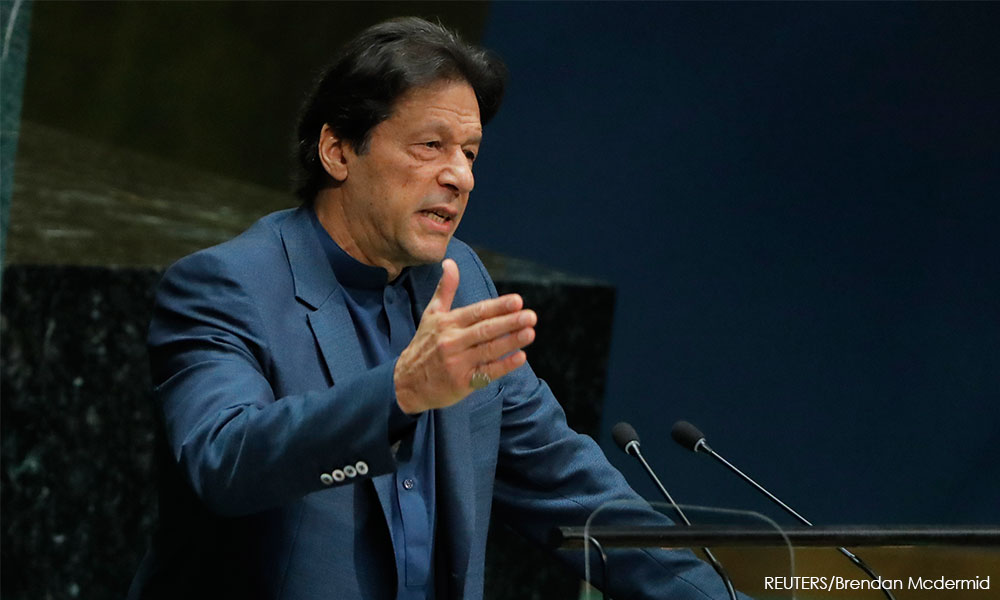
Indonesian Vice-President Ma’ruf Amin cancelled citing health reasons, while Pakistan prime minister Imran Khan (below) pulled out at the last minute.
Also missing are top leaders from Saudi Arabia.
Why is Saudi Arabia’s and Khan’s absence an issue?
Saudi Arabia’s absence and the attendance of Qatar, Turkey and Iran have caused a stir due to ongoing geopolitical struggles in the Middle East involving these countries. It has also raised questions on Malaysia’s position in the struggle, although Malaysia has said it is a neutral party.
Karachi-based Business Recorder reported that Khan cancelled his trip to Kuala Lumpur after spending a weekend in Saudi Arabia, fuelling talk of Saudi displeasure with the summit. However, Mahathir denied this and said Khan called him to apologise for not attending.
The Saudi Arabia factor is closely followed by watchers of Middle East geopolitics. Middle East website Gulfnews described the KL Summit as a “rival” to the Organisation of Islamic Cooperation (OIC) and reported Saudi Arabia’s King Salman lauding the OIC on Dec 18.
Without naming the KL Summit, OIC secretary-general Yousef al-Othaimeen told Sky News Arabia “it is not in the interest of an Islamic nation to hold summits and meetings outside the framework of the (OIC), especially at this time when the world is witnessing multiple conflicts”.
KL Summit organisers and attendees have dismissed the suggestion that the summit is trying to take over from the OIC or isolate some factions.
Any other controversies?
On the first night of the summit, Erdogan reportedly skipped the official conference dinner with Mahathir and hosted Anwar for dinner at the Turkish embassy instead.
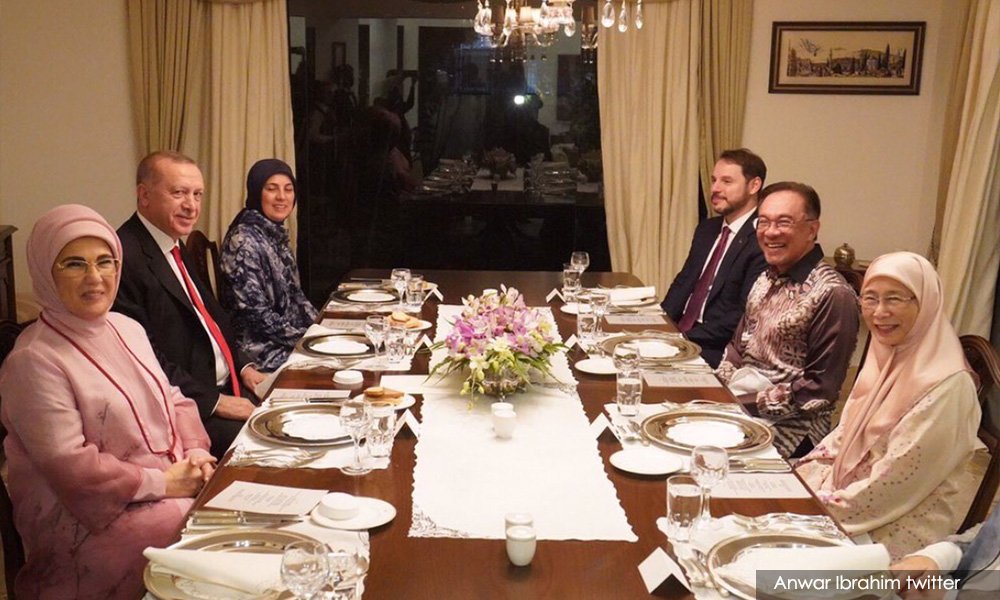
This drove speculation that the Turkish president was showing who he favours more to be Malaysia’s leader.
However, it should be noted that Erdogan and Anwar have close relations which have been sustained for several decades. Last year, Erdogan visited Anwar in hospital after the latter underwent spinal surgery in Istanbul.
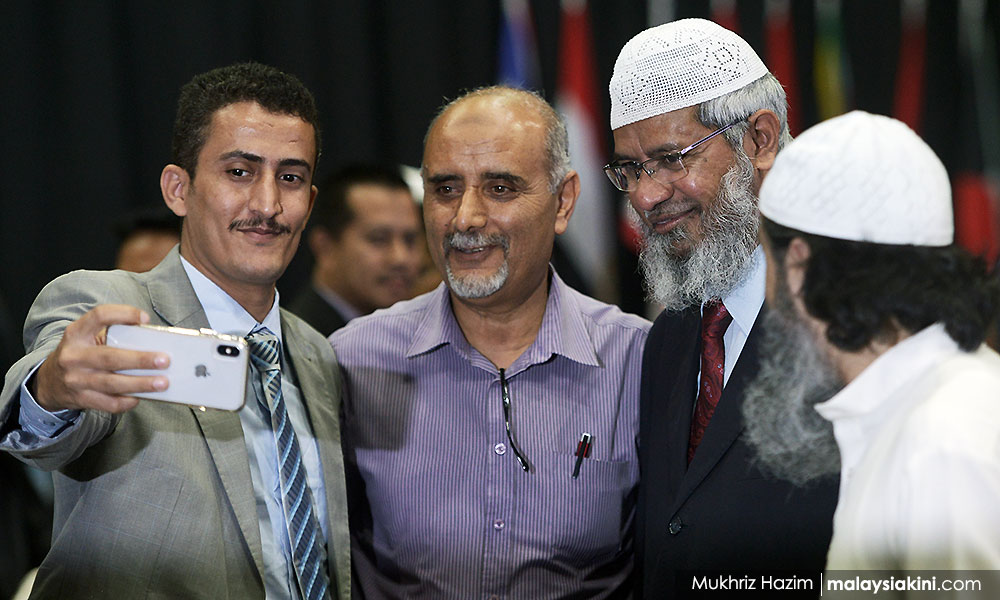
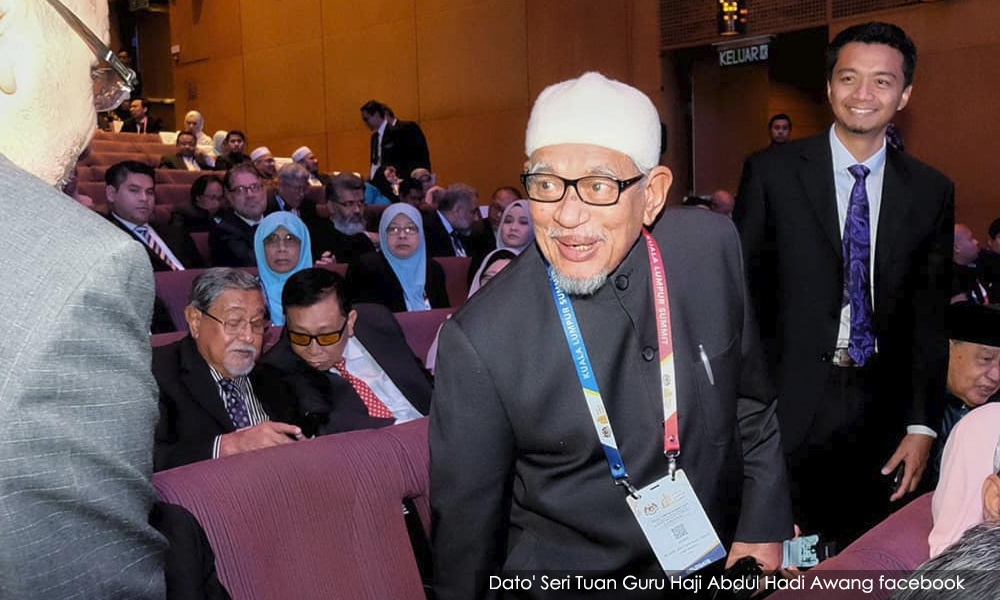
On the local political front, the summit has managed to attract Pakatan Harapan rivals PAS while controversial Islamic preacher Zakir Naik was also spotted at the event.
What have been the key messages coming out of the KL Summit so far?
Besides the general call for Muslim unity, the Palestine issue took centre stage at the KL Summit.
There were also agreements on youth exchanges, food security, media collaboration as well as defence and security agreement signed between countries.
Mahathir also proposed a Muslim trade market to reduce reliance on the non-Muslim world and for Muslim nations to catch up technologically.
Iran proposed the use of a common cryptocurrency among Muslim nations. Turkey is reportedly on board for this while Mahathir said he supports further research into it.
The summit has not spoken on the issue of the reported persecution of Uyghurs in China.
Is this a state-organised event?
Yes, the event is organised by the Malaysian Industry-Government Group for High Technology (Might), an independent non-profit technology think-tank under the purview of the Prime Minister's Department.
Might describes itself as an entity which “plays a key role in developing Malaysia's high technology for business through its role as a private-public consensus building and business nurturing platforms".
It was recently in the news for its RM20 million investment into drone company Aerodyne the same firm behind the flying car project. Might clarified the RM20 million investment was not related to the flying car project.
What is the cost or benefit to taxpayers?
Might is a corporate entity and its contracts do not have to go through government procurement processes.
This means any tender or contract related to the KL Summit will not be listed on the Treasury-maintained MyProcurement or E-Perolehan websites.
The summit's co-secretary-general Samsudin Osman said the event was "privately" funded and had also received "donations".
"It is not from the government," he had told journalists covering the event.
However, Samsudin said he did not have the immediate figures to disclose the overall cost of the event.
As a comparison, the three-day Annual Judges Conference held at Hilton Hotel in Kuala Lumpur last year cost RM587,500. The same conference held in Shangri La Hotel in 2015 cost RM967,853.85.
Unlike the Annual Judges Conference, the KL Summit includes an exhibition by companies, prominent international political leaders and would require branding and communication teams, so costs are likely to differ.
The KL Summit may also generate an income, either from the selling of tickets or exhibition booths, which could offset costs.
However, the potential benefit in areas of foreign relations and trade is not immediately quantifiable and may outweigh the cost of organising such a summit.
Malaysiakini has contacted Might for a breakdown of costs and income generated, if any.
This instalment of KiniGuide was compiled by Aidila Razak.



Are you sure you want to delete this comment?
This action cannot be undone.