



‘Tighten quarantine rules to avoid Australia’s Covid-19 fate’
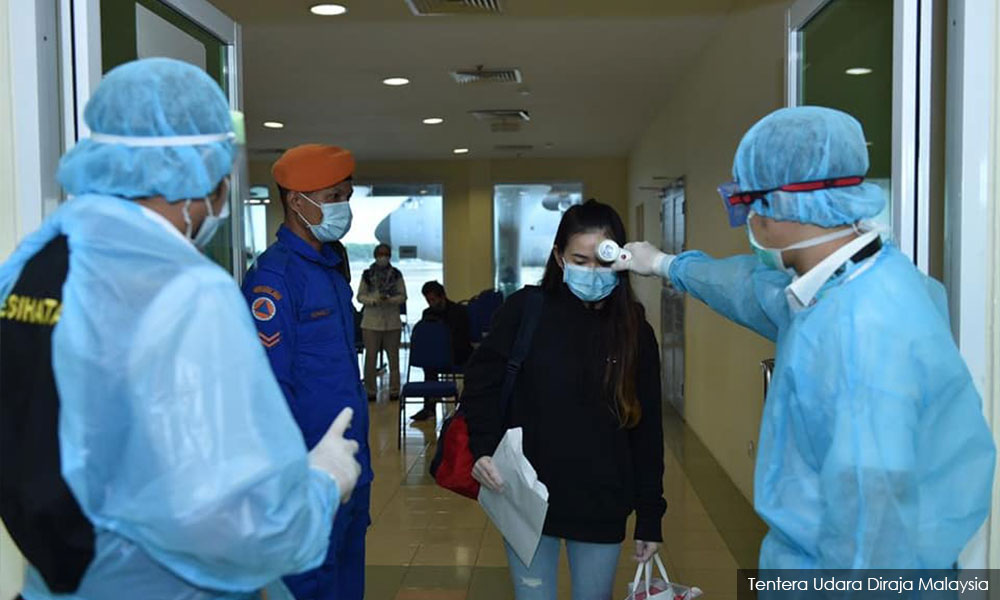
Former Prime Minister Najib Abdul Razak has urged the government to tighten quarantine rules following reports of new Covid-19 clusters involving imported cases.
He said the government should review its decision to allow those returning from overseas to undergo home surveillance, and those who breach quarantine should be imprisoned instead of being let off with a RM1,000 fine.
Former Prime Minister Najib Abdul Razak has urged the government to tighten quarantine rules following reports of new Covid-19 clusters involving imported cases.
He said the government should review its decision to allow those returning from overseas to undergo home surveillance, and those who breach quarantine should be imprisoned instead of being let off with a RM1,000 fine.
“If cost is a factor for allowing quarantine at home, I believe those arriving or returning from overseas can bear the cost of a 14-day quarantine at a government quarantine centre or government-approved hotel.
“Tell them to pay for it themselves. Those arriving from overseas should be considered as suspected cases and handled accordingly until they reach a quarantine centre or hotel,” he said in a Facebook post yesterday.
He cited Australia as a cautionary tale, saying that weaknesses in its quarantine system have led to a second wave of Covid-19 infections.
“I believe Malaysians cannot bear to undergo another six weeks of the movement control order after we have already sacrificed for two months.
“Our economy will suffer huge losses if we are forced to repeat the movement control order,” he said.
Malaysia had initially quarantined overseas returnees at makeshift quarantine stations and specially-designated hotels at the government’s expense.
The quarantine is for a 14-day period, based on the Covid-19’s incubation period.
Beginning June 1, however, Malaysians returning from abroad would have to pay half the cost of the quarantine, which is RM150 per day or RM2,100 for two weeks. Non-Malaysians including permanent residents and dependents of Malaysian citizens would have to pay the full cost.
But from June 10 onwards, overseas returnees would undergo quarantine at home instead, where they are expected to be confined in their rooms.
‘High-risk’ countries
Health Ministry director-general Dr Noor Hisham Abdullah justified the decision saying that only a small proportion of overseas returnees subsequently test positive for Covid-19, but later mooted reinstating institutionalised quarantine for those returning from “high-risk” countries.
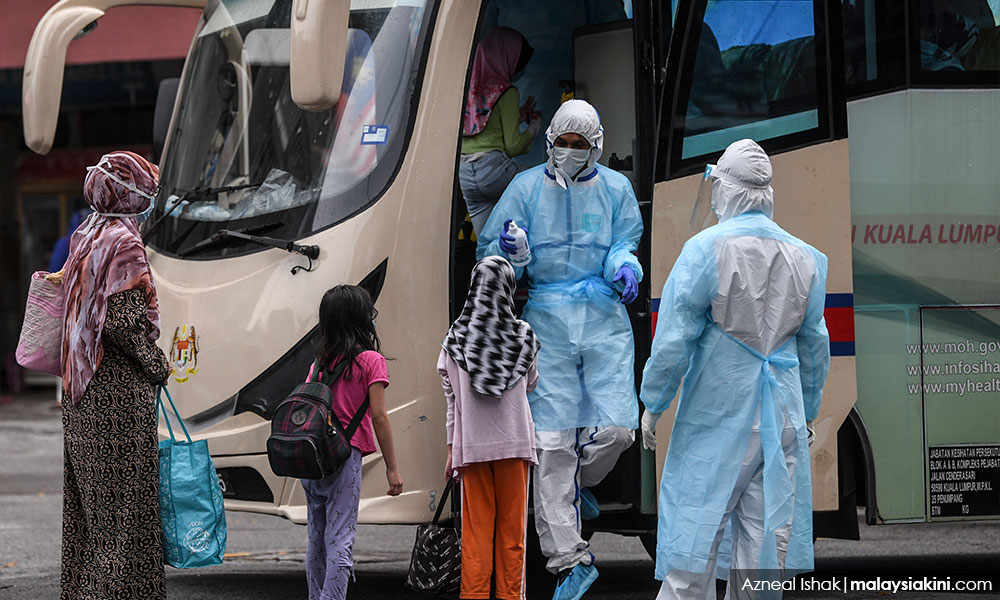
The apparent change of heart came after two Malaysians returned from Novgorod, Russia, on July 5. One tested positive for Covid-19 upon arrival and was isolated, but the other tested negative and was allowed to undergo quarantine at home.
While undergoing home quarantine, the patient developed symptoms and subsequently tested positive for Covid-19, and the patient’s father was also infected.
Since then, other Covid-19 clusters involving imported cases have also been detected, including three out of four new clusters reported yesterday.
The PUI Pitakwa Cluster involved a Malaysian who returned from Nigeria and infected two people during the quarantine period.
The PUI Shirala Cluster involved a foreigner who entered Malaysia for work purposes and initially tested negative, but started developing symptoms five days later. The patient subsequently tested positive for Covid-19, and contact tracing led authorities to one more patient.
The Jupiter Cluster involved three sailors who worked aboard a ship that was in Malaysian waters off Sarawak when one of them became ill. The ship had a history of visits to Japan and Singapore.


Are you sure you want to delete this comment?
This action cannot be undone.