



What are we pretending not to know?
Say you cultivate vegetables and fruits in your garden and you have been doing this for some years now. A few of your neighbours do the same. Some of them start their own seed banks.
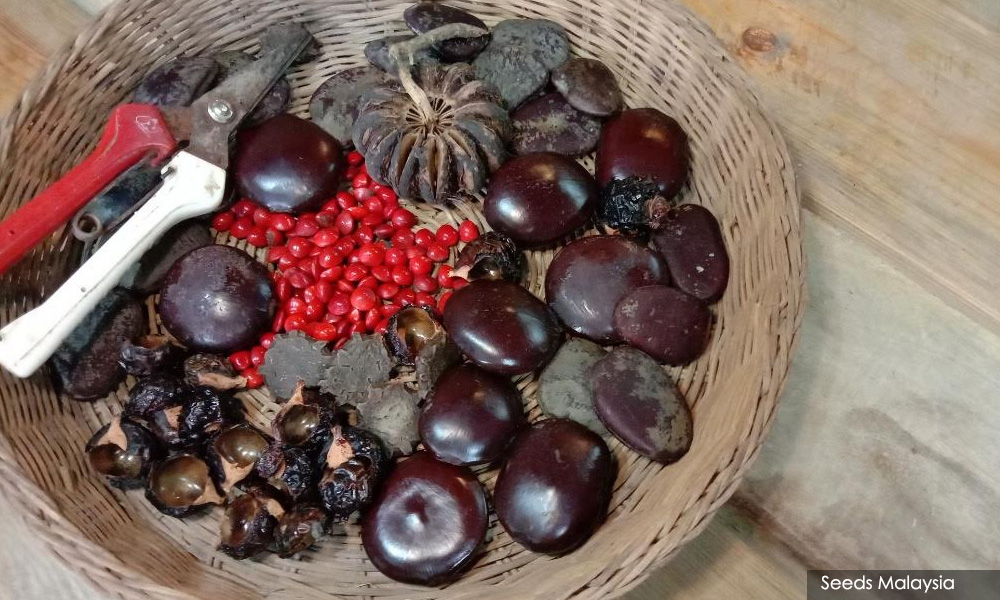
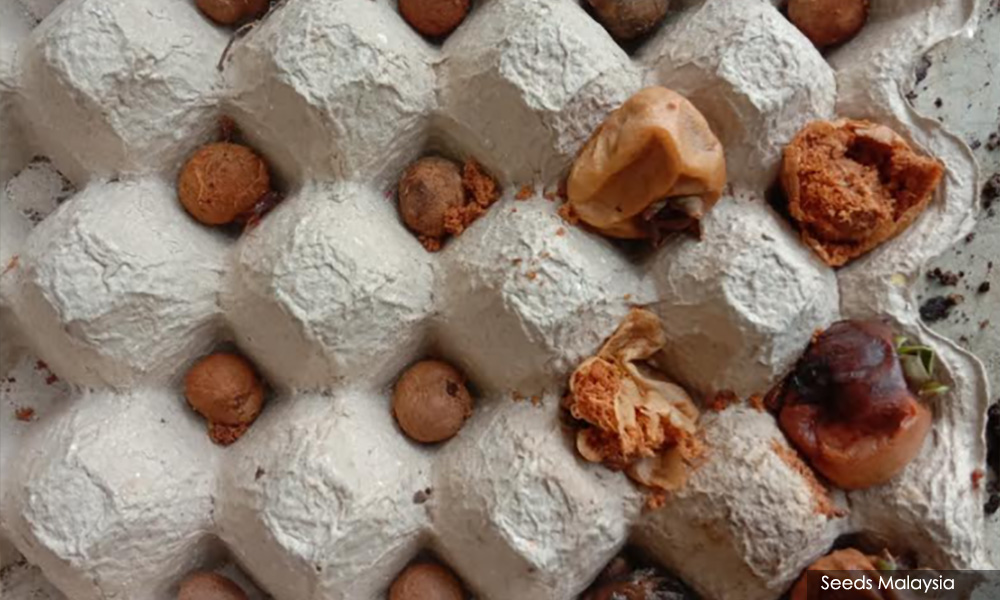
Everyone within your community exchanges and shares their seeds. Because, naturally, you want the seeds of the sweetest mango, nangka, banana, guava, jambu and the best quality vegetables.
Into this community enters a corporation that decides to sell you seeds...
Say you cultivate vegetables and fruits in your garden and you have been doing this for some years now. A few of your neighbours do the same. Some of them start their own seed banks.
Everyone within your community exchanges and shares their seeds. Because, naturally, you want the seeds of the sweetest mango, nangka, banana, guava, jambu and the best quality vegetables.
Into this community enters a corporation that decides to sell you seeds which they claim are superior- weed resistant they say, so less time spent with weed killing.
You buy the seeds and are then told you cannot propagate or share them. They are patented. You do not listen and share them anyway. Suddenly you are slapped with a legal suit and sued for using the seeds. So are the others who plant the seeds which you shared with them.
Say what?
This idea of controlling seeds is so mind-bogglingly preposterous that it sends a chill down one's spine when you realise it has been actually happening since the 1990s.
Are we pretending not to know?
This is an extract taken from a Vanity Fair article in 2008:
"Ever since the commercial introduction of its genetically modified seeds, in 1996, Monsanto has launched thousands of investigations and filed lawsuits against hundreds of farmers and seed dealers. In a 2007 report, the Center for Food Safety, in Washington, DC, documented 112 such lawsuits in 27 states."
But it is not just the United States. This is happening globally.
Order 81 was signed on April 26, 2004, by Paul Bremer, the administrator of the Coalition Provisional Authority (CPA) in Iraq, to control Iraq's agriculture.
The Order was a declaration of war against farmers. Article 14 of this law states: "Farmers shall be prohibited from re-using seeds of protected varieties."
Order 81 amends Iraq's original law No 65 on patents, created in 1970. The most significant part of Order 81 is the subject of Plant Variety Protection (PVP), which ensures not the protection of biodiversity but rather the protection of the commercial interests of the USA and European major seed corporations.
In order to qualify for PVP, seeds have to be 'new, distinct, uniform and stable' - the sort of seeds being encouraged to grow by corporations such as World Wide Wheat Company (WWWC), Monsanto and others registered under PVP.
To protest this globally, organisations, activists, farmers and people from various professional backgrounds observe April 26 as International Seeds Day (ISD), advocating for patent-free seeds, organic food and farmers' rights.
ISD is an educational day for the public to learn about genetically modified food and its hazardous health effects and the agribusiness of the major US and European companies - and their monopoly over agriculture in Africa and Asia, with emphasis on India, Iraq and Afghanistan.
"Seeds are life. It does not make sense for anyone to think this way. Do you patent air? Water? Food?
"Everything will crumble if we bow down to this tyranny. We can see what it has done. For us to even consider it is mind-boggling. Patenting seeds is to claim it owns the seeds. So someone wins, someone loses.
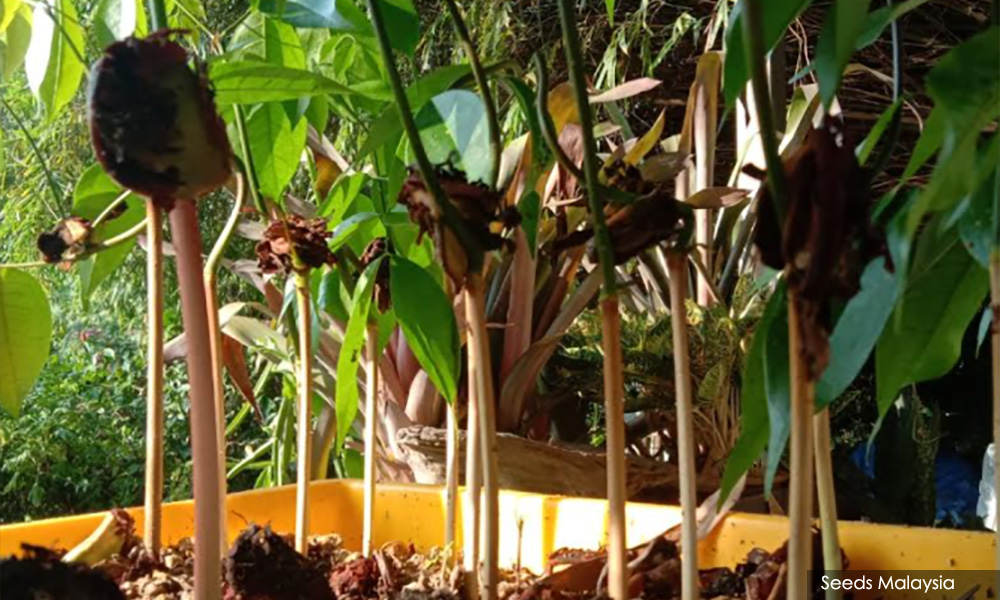
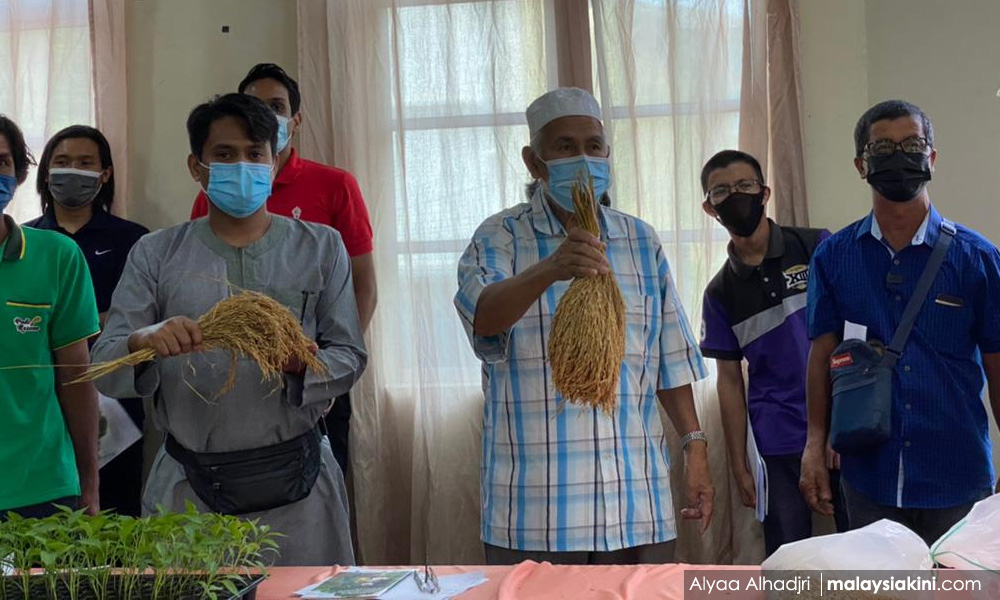
"We the farmers have been sharing seeds for aeons. So clearly it is simply to make money, to monopolise," explained Razak Aziz, permaculture practitioner of more than 17 years at Seeds Malaysia.
"Indigenous seeds are superior to imported seeds because they are already part of soil microbiology here. Imported seeds are mostly GMO seeds, no longer diversified.
"Did you know that corn from indigenous seeds is multicoloured? Only commercial corn is orange or yellow in colour because some businessperson decided that it was good for marketing and branding.
"Go to a supermarket today, and you will find only three to four types of bananas. I have seven different types of bananas on my farm. Go to a market stall in India, and you will be amazed at possibly over 33 varieties of bananas.
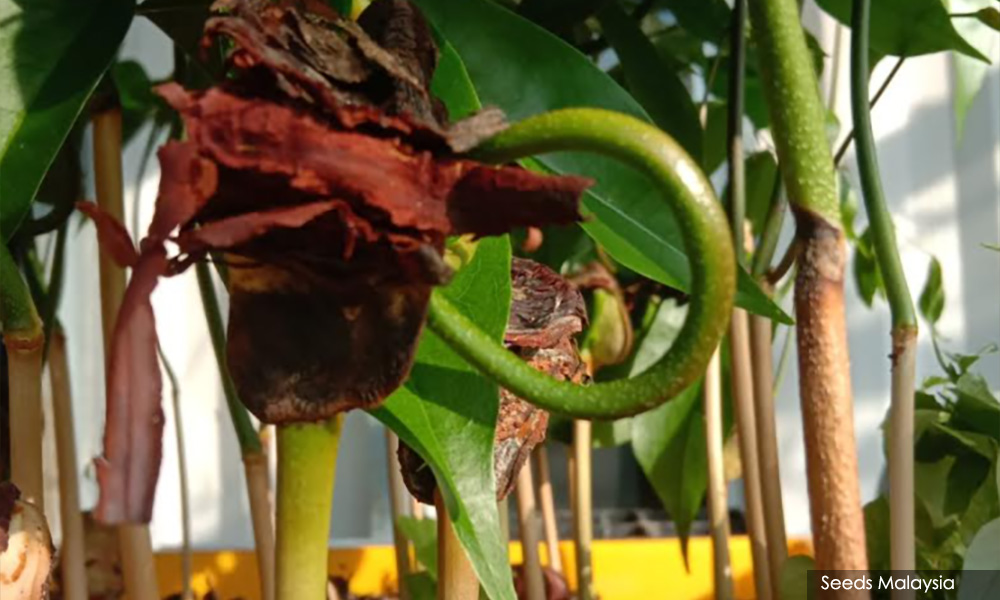
"With patented seeds, rubber could not have travelled from South America to Malaysia. Bananas could not go all over the world. We, the farmers in each country, need to create our own biodiversity. And this has to come from the community taking charge, no corporations or governments for the sole purpose of making money without looking at the long-term damage," Razak said.
When governments of the world step in to control seeds, they need to know how to strike that fine balance between "making money" with "where is the food to eat?"
In a world stricken with a pandemic and the disruptive chaos it can cause, this question is of utmost importance to our survival. It is important for each and every person on this planet to ask themselves, "what have you been eating?"
And every day, this is backed by science. We have to beware of organisations, especially governments, digital barons, mega-corporations colonising what is free and bequeathed by nature by using the name of "sustainability".
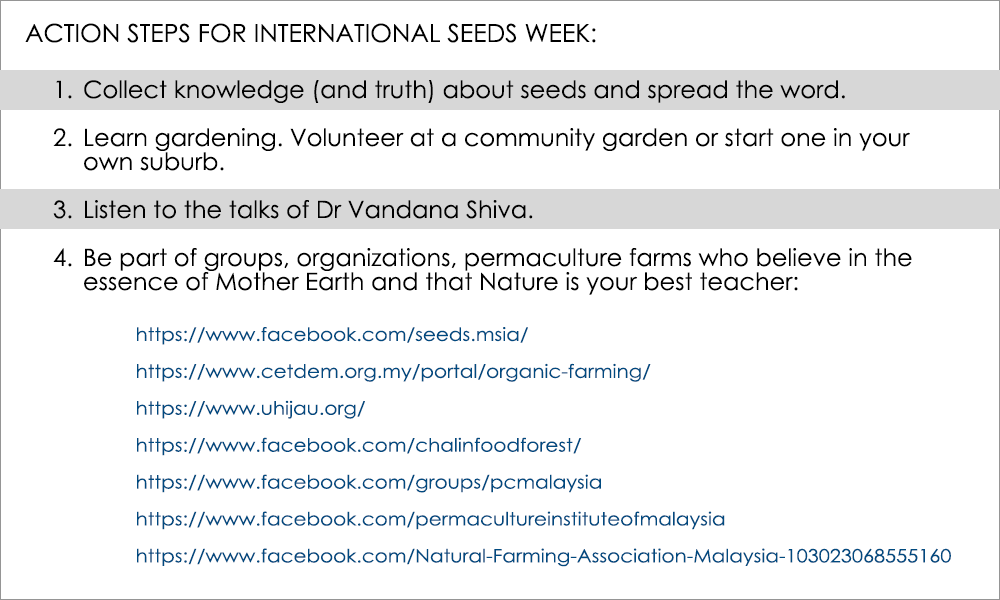
Become part of this call, this campaign, this mission to do the right thing. To say no to patented seeds, work towards organic food and ultimately give all farmers their rights, especially their rights to take charge of seeds and continue to share them as has been done since ancient times.
"You are not doing the earth a favour, The earth is doing you a favour when you garden, saying Welcome Back child."
- Vandana Shiva.
JENNIFER RODRIGO is a freelance writer based in Petaling Jaya who focuses on lifestyle, personality, travel, arts & culture, health & wellness.
The views expressed here are those of the author/contributor and do not necessarily represent the views of Malaysiakini.



Are you sure you want to delete this comment?
This action cannot be undone.