


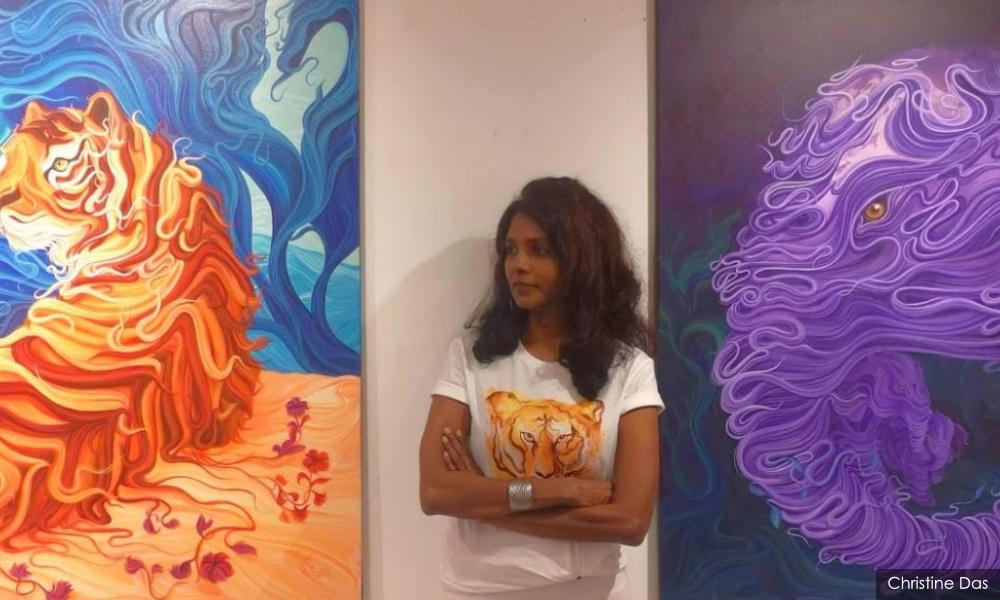

From party animal to animal conservation artist
MALAYSIANSKINI | When Christine Nalina Das left her corporate job as a graphic designer in 2007, she never expected that years later she would be accepted into the world’s leading artist collective, Artists for Conservation.
The Canadian-based international non-profit represents 500 artists from over 30 countries who are committed to conservation in the nature or wildlife art genre.
The collective seeks to engage, inspire and inform the public about the environment through festivals, exhibits, collaborative art projects, art-science expeditions, awards, publications, films and online initiatives.
Das is the only Malaysian member of the collective, having been granted admission in December 2020 after having applied for several years.
The now 55-year-old Penang-born artist continues to hustle and challenge herself artistically and emotionally through her art and endeavours.
Nor was it always an easy journey for Das, having gone through years of self-discovery, hard work, adaptability and even grief to get her to where she is today.
“In my 20s and 30s I was a wild party animal, so I was not really concerned about what was going on outside of myself.
“It was only when I hit 40 that I re-evaluated my life. I began to question...
MALAYSIANSKINI | When Christine Nalina Das left her corporate job as a graphic designer in 2007, she never expected that years later she would be accepted into the world’s leading artist collective, Artists for Conservation.
The Canadian-based international non-profit represents 500 artists from over 30 countries who are committed to conservation in the nature or wildlife art genre.
The collective seeks to engage, inspire and inform the public about the environment through festivals, exhibits, collaborative art projects, art-science expeditions, awards, publications, films and online initiatives.
Das is the only Malaysian member of the collective, having been granted admission in December 2020 after having applied for several years.
The now 55-year-old Penang-born artist continues to hustle and challenge herself artistically and emotionally through her art and endeavours.
Nor was it always an easy journey for Das, having gone through years of self-discovery, hard work, adaptability and even grief to get her to where she is today.
“In my 20s and 30s I was a wild party animal, so I was not really concerned about what was going on outside of myself.
“It was only when I hit 40 that I re-evaluated my life. I began to question: ‘Why am I here? Why was I born?’
“I knew I was born with a mission but at the time, I did not have an inkling as to what it was.
“I was sitting in the office from 9 to 5pm, doing nothing but working in front of a computer. To me, that was not living.
“I knew there was something else out there,” she said in an exclusive interview with Malaysiakini.

Despite facing incredible anxiety over her decision, she resigned from her job to pursue contemporary art, while simultaneously embarking on a journey of self-discovery.
She had initially pursued Christian faith pieces before making the transition to nature.
“Getting into contemporary art was a whole new world for me, and I had to learn everything from scratch.
“When you are painting, it is also a journey within oneself. I think when you dabble into any kind of art form, it somehow translates internally, and you go through a soul searching process.
“It was through this process that I realised that nature was something that mattered to me,” Das said.
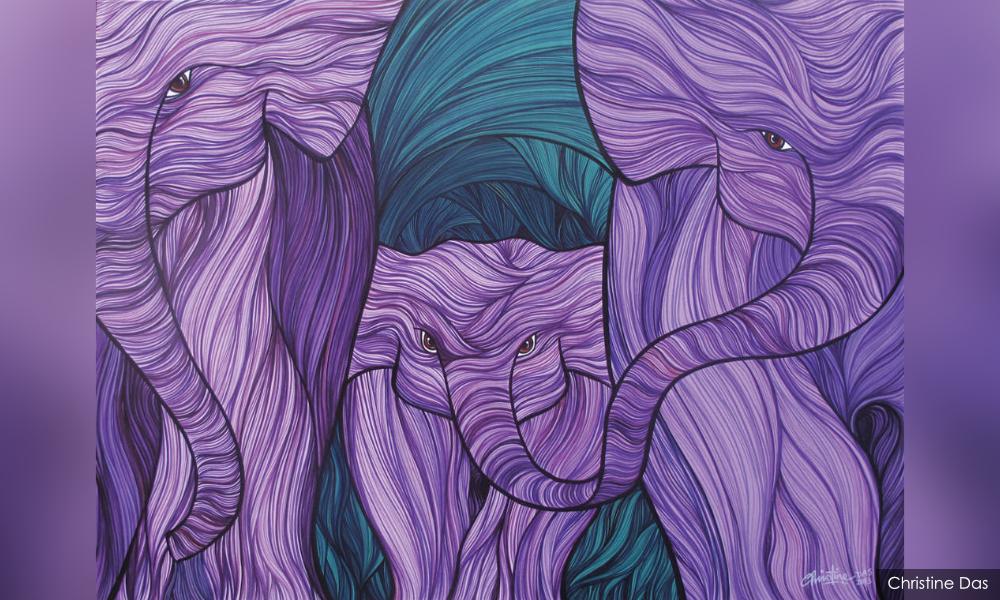
Das only began to discover her purpose in wildlife conservation in 2013 following the tragic deaths of 14 Borneo pygmy elephants in Gunung Rara Forest Reserve in Tawau that died mysteriously with poisoning suspected.
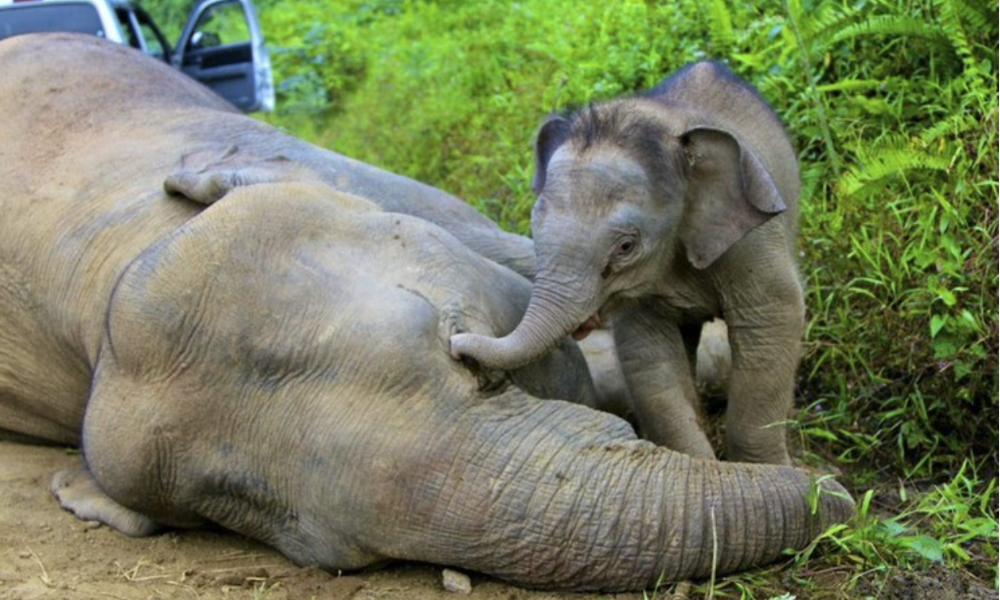
The sole surviving elephant in the herd was a three-month-old baby elephant - pictured trying to nuzzle its dead mother.
The incident went viral across the globe due to the gut-wrenching photograph and the baby was then named Kejora, which means “Morning Star” and rescued by wildlife authorities.
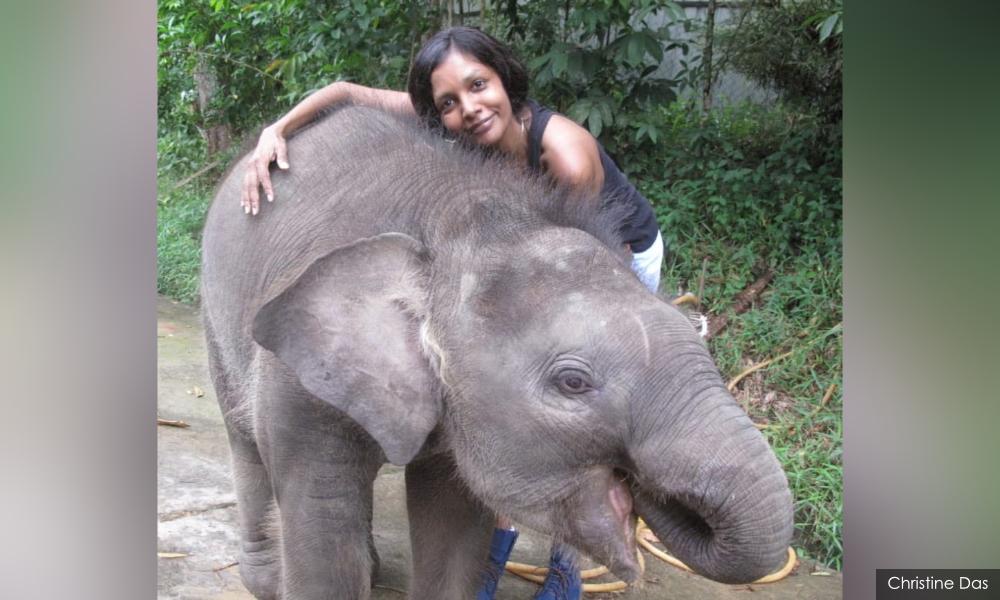
Das is a firm believer that she and the baby elephant whom she calls “Little Joe” have a special connection - and she was severely impacted by the incident.
“When I read on the media about what had happened, I grieved for this baby.
“I kept wondering why I was feeling so much emotion for this elephant that I never even met.
“For two weeks I would cry myself to sleep, and wake up crying. Eventually, I told myself that two weeks was a bit too long.
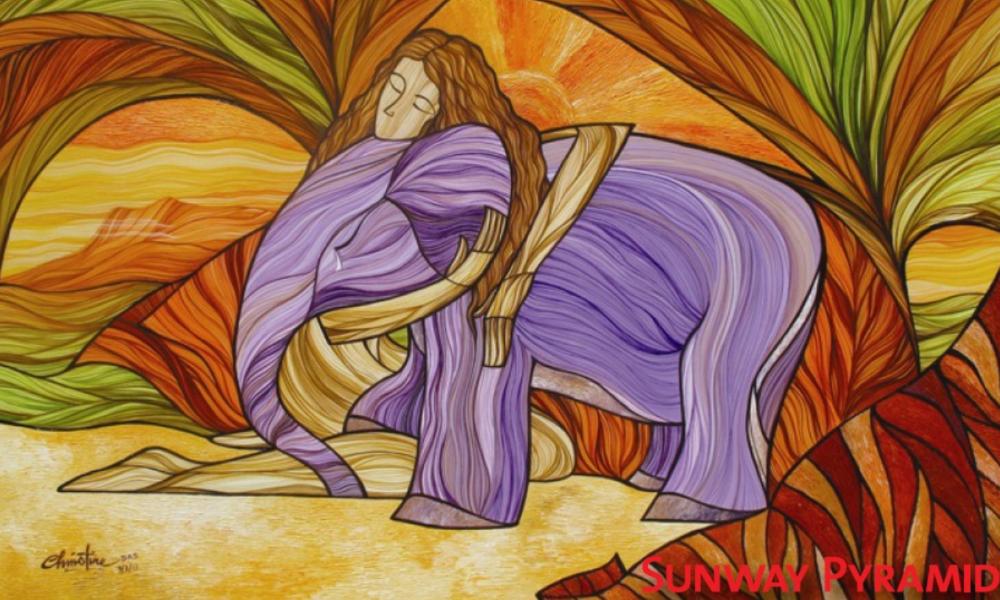
“To cope, I painted a picture of Mother Nature cuddling Little Joe. In a way, she is almost like my alter ego.
“This little elephant handed me my ultimate life purpose and mission in life before I had even met it,” she said.
A few weeks later Das shared her painting with the sales director of Sunway Pyramid who would later start a week-long entire campaign raising funds for the Borneo Conservation Trust for research and conservation efforts for pygmy elephants.
Independent local artists and talents were called in to paint elephant sculptures that were showcased in the mall throughout the campaign period.
Her painting, which she titled “Comfort” was put up for sale with half of its proceeds channelled into Borneo Conservation Trust.
“I told Borneo Conservation Trust ‘look, this little elephant has really given me my mission in life, and I want to support the conservation of elephants’.
“I asked them how I, as an artist, could help them out. Fast forward to six months later, I had the opportunity to fly to Sabah to meet Little Joe,” said Christine.
Little Joe currently resides in Lok Kawi Wildlife Park in Kota Kinabalu. The park is about a 10-hour drive from the Gunung Rara Forest Reserve where it was initially found.
Das shared that she still feels a strong passion for wildlife conservation, politics and education despite having to cope with the adverse effects of the pandemic on her career and discrimination within the art community.
Her story - in her own words
I have always been passionate about nature. My passion for wildlife started later on in life, but growing up in Penang I would spend my time observing nature and trees. During my walks to school, I would come across huge trees, with textures and various green shades that always piqued my fascination.
My uncle owned a tea plantation in Cameron Highlands, so a lot of our school holidays were spent there. Back then, the hills were lush with greenery and were still intact. We would spend our days running around the plantation and growing up around nature.
Even though my current work mainly focuses on elephant conservation, trees remain my passion. Habitat is key, therefore, I remain a huge proponent of tree planting.
Another factor that really sparked my love for nature was Zainal Abidin’s 1991 single “Hijau”. The entire song talks about the plight of Mother Nature. It incepted, within me, the idea that Mother Nature was in trouble.
As my experiences evolve, so does my art. My first nature series in 2009 was mainly about trees and the textures on them. However, it was right after I met the Borneo Conservation Trust in 2013 that I made my first trip into the rainforest.
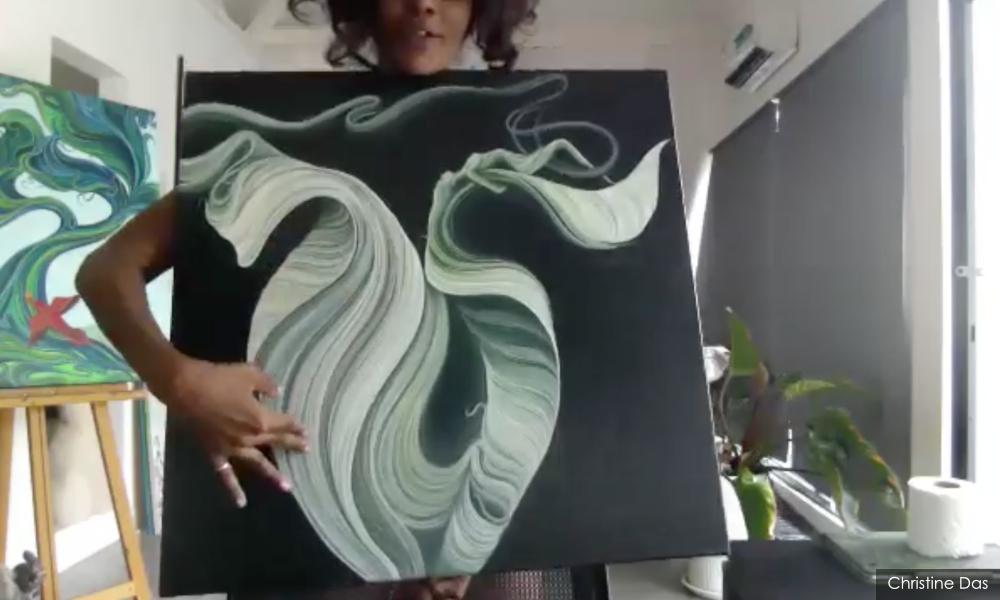
In the rainforest, everything is organic, and flowing, and dancing. It is so meditative and magical, which led to my art gravitating from textures to movements. I began to emphasise lines in my art because I felt like lines spoke about the movements best.
The best way to describe how art meets conservation is by bringing the beauty of nature into people’s homes. Nowadays, everyone is so busy and caught up in work and responsibilities. I try to bring the essence of nature into my work, hoping that it will resonate within someone and spark their love for the environment.
It’s common to want to protect something you love, and that is what I am trying to achieve.
My favourite animals would definitely be elephants and tigers. Tigers are so incredibly majestic, yet it upsets me that there isn’t more being done to protect them. In 2013, there was an estimated 250 to 340 Malayan tigers (followed which it was placed on the International Union for Conservation of Nature Red List of Threatened Species).
However, there are now less than 200 tigers left in the world. What happened during that time? Why weren’t national programmes implemented when the numbers were dwindling way back then? Now everyone is scrambling to save the tigers.
China loans their pandas in an effort to pay for local conservation. Malaysia has spent millions on these giant pandas, who aren’t even our local animals. It doesn’t make sense!
I know there is a national programme to save the tigers. Fingers crossed, it works.
I think all the governments we have had - both long term and short term - have not taken wildlife and our environment seriously. We have some of the oldest rainforests in the world - Taman Negara and Sundaland. Yet, we have lost 80 percent of our rainforests to logging and development.
If we had conserved our virgin rainforests, today we would be racking up so much money in ecotourism, research and documentaries. We had a fantastic heritage that was given to us on a golden platter, yet we lost it due to greed, corruption, and lack of forward-thinking.
Another major issue is that there are so many departments all handling separate matters. For example, we have the forestry department, the wildlife department, environmental department, natural resources department. When an issue arises, each department points fingers at one another. No one takes accountability.
The wildlife department is trying to save the tigers, while the forestry department is giving up licenses for deforestation. They contradict each other. Each department is dependent on the other and should be in one collective ministry to ensure responsibility and accountability.
Our education system does not teach us the importance of the environment, wildlife, and conservation. So many people, spanning across generations, do not even realise there is an issue. It should be a subject on its own. A lot of the things I know, I only learned through getting involved in conservation projects. The awareness is lacking.
On running for Parliament - I do believe I should advocate and educate the general public, perhaps just not in politics.
The lockdown made me realise that as an artist I cannot depend on one income stream. The sales of my original artwork were greatly affected because there was no opportunity to have exhibitions in the past two years. That affected my income.
I was lucky enough to have private commissions and collectors. Creatively, I have experimented a lot over lockdown, hence I have multiple pursuits.
I would like to run a wildlife art workshop sometime by the end of this year. It will be open to people of all ages, for them to learn about our endangered wildlife species. Each workshop I hold will feature a different animal, and participants will be able to learn about the animal and fun facts.
I want people to realise that wildlife is not separate from us humans - and that we need them.
I have always dreamt of having my own line of wearable art. Hopefully, it will be launched next year. I have come to a stage in my life where I am not going to let the fear of failure stop me from pursuing my dreams.
The pandemic allowed me to truly reflect on my life as an artist, as Christine, and that has given me the opportunity to further pursue my passions. I am a bit excited.
My family was very supportive of me leaving my corporate job. I think it also helped that my grandfather was an artist. Of course, there were a few people who had their reservations. I had gone through a state of panic when I was transitioning between careers - questioning if I would be able to afford a loaf of bread or rent in six months.
I eventually realised that I would need to leave in order to find something new. I saved up enough for me to survive for six months before tendering in my resignation. I began to teach art until I could sustain myself as a full-time artist.
When I began my art career, I was not really accepted in the contemporary fine art community. It was mainly because I was a self-taught artist who didn’t have a degree or masters in fine arts. Instead of waiting for someone to discover me, I took a different approach.
I ran my own shows and promoted myself. I even took a business course to learn more about sustaining myself. My ex-husband also worked in advertising which helped my brand as a nature artist, and later as a wildlife artist.
Occasionally as an Indian female, I am accepted into exhibitions to fulfil someone else’s diversity ticket. Instead of being offended, I use it as an advantage to get my work out there. However, I do wish it wasn’t that way.
On religious influences in art - One of my ventures, when I was dabbling in different types of art, was painting Jesus and Virgin Mary, as it felt like the most familiar subject matter to me at the time. When I switched to become a nature artist, I think it was still a spiritual journey.
In Catholicism, God is the Creator of everything. He created nature. To me, the tangible presence of God is in His nature. I feel it most when I am in the forests.
I also draw inspiration from Spanish modernist architect, Antoni Gaudi, whose masterpieces include the famous La Sagrada Familia and many other unique architectural wonders in the city of Barcelona. I truly resonate with his works.
My advice for those who want to make career changes but are afraid to do so is to stay in your job until you are able to sustain yourself full-time. If you want to quit your job, I would advise saving up to sustain a year without income.
Art supplies aren’t cheap. It is important to be practical and not have the romantic notion that everything will be fine.
When I quit my job in 2007, I was really stressed about my financial responsibilities and sustenance. I still had a part-time job for five years. I would suggest to someone in similar shoes to make art on the side, begin joining little group shows, and slowly transitioning the art scene.
Only take the plunge when your art can sell over and above your monthly requirements.
It makes me so happy that my hobby is also my job and life purpose. But apart from that, I really enjoy nights out dancing. I loved spending my weekends doing that, so I have really missed it over the course of the pandemic. I also love spending time with my three dogs or venturing into forests.
The most memorable experience in my career would definitely be meeting Little Joe. Never in my wildest dream would I think that an elephant would give me my life and be the vision for everything that I do now. It has also been an honour to meet all these individuals fighting tirelessly for the conservation of our wildlife.
MALAYSIANSKINI is a series on Malaysians you should know.
Previously featured:
The Malaysian dentist who just umpired an Olympic final
Standing up to defend Penang’s fishing community
Captain Planet to Family Frontiers - Activist's long journey to save forests, families
Half-Malay, half-Chinese Jamaliah sees bridging racial divide as key
Losing his father helped shape Khor's commitment to public health policy
Filmmaker Hidayah confronts past in gripping documentary Ayahku, Dr G
Grieving Yuna doesn’t want return to old normal but a better world




Report this comment
Are you sure you want to delete this comment?
This action cannot be undone.