


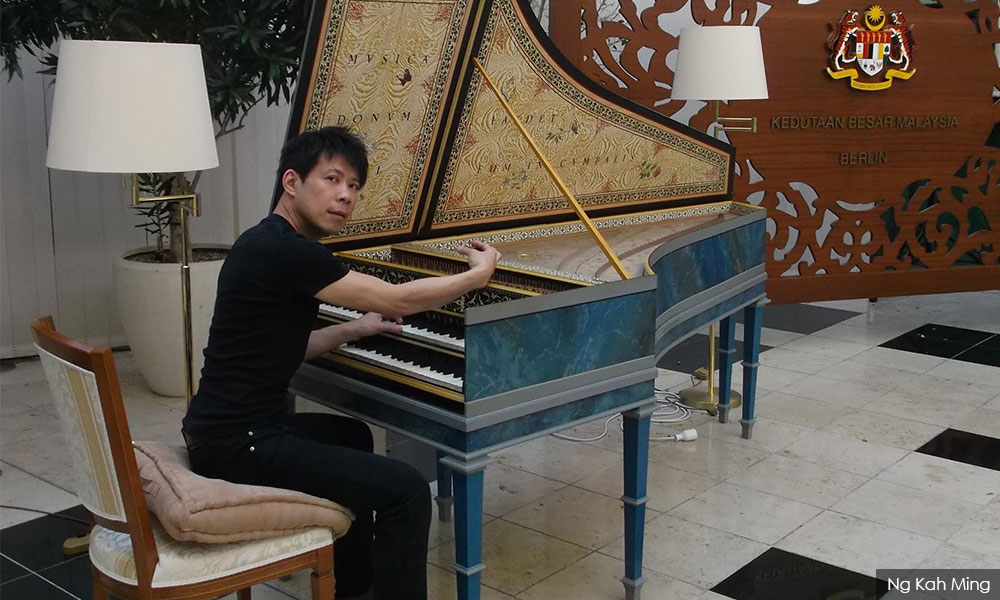

Harpsichordist to the stars Ng Kah Ming strikes right chord
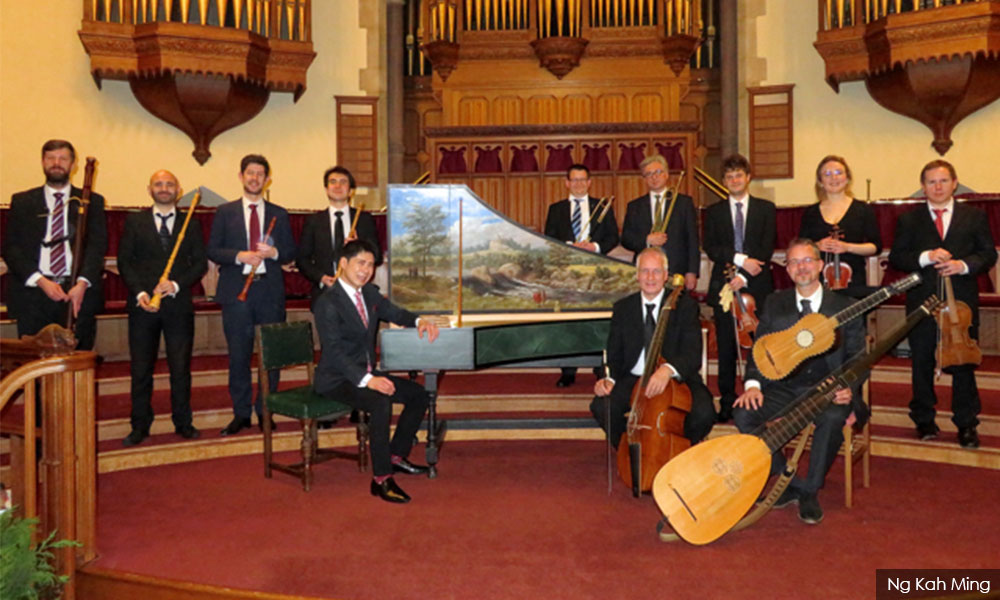
He performs regularly in front of royalty – the rock’n’roll variety as well as actual aristocrats and nobles. He heads his own Charivari Agréable company and has recorded no less than 22 CDs of fascinating Early Music.
All this is very far removed from the days when he graduated with a degree in civil engineering from Monash University and came back to Malaysia to work, initially in an engineering firm that designed improved drainage methods.
“Well, it was all rather serendipitous. I came out with a degree in structural engineering and worked as a consultant engineer for about nine months, but it was in the midst of an economic recession, and our firm was getting rather uninspiring work.
“A job came along as music master at the Alice Smith international school KL, and I found that this suited me because it gave me the time outside work to develop as a musician.
“I had a great time. I founded a choir and we did shows, which then brought me into connection with various cultural institutions like the Goethe Institute, Alliance Francaise and the British Council,” Ng told Malaysiakini in an interview.
He was actually awarded a Chevening scholarship, which he turned down in favour of...
MALAYSIANSKINI | Some career paths are mapped out from the very beginning while others take a sudden and unexpected turn. Petaling Jaya native Ng Kah Ming now spends most of his time in the UK after obtaining a doctorate from Oxford and has become both a leading harpsichord player and scholar of the Baroque era.
He performs regularly in front of royalty – the rock’n’roll variety as well as actual aristocrats and nobles. He heads his own Charivari Agréable company and has recorded no less than 22 CDs of fascinating Early Music.
All this is very far removed from the days when he graduated with a degree in civil engineering from Monash University and came back to Malaysia to work, initially in an engineering firm that designed improved drainage methods.
“Well, it was all rather serendipitous. I came out with a degree in structural engineering and worked as a consultant engineer for about nine months, but it was in the midst of an economic recession, and our firm was getting rather uninspiring work.
“A job came along as music master at the Alice Smith international school KL, and I found that this suited me because it gave me the time outside work to develop as a musician.
“I had a great time. I founded a choir and we did shows, which then brought me into connection with various cultural institutions like the Goethe Institute, Alliance Francaise and the British Council,” Ng told Malaysiakini in an interview.
He was actually awarded a Chevening scholarship, which he turned down in favour of studying in Germany through the Deutscher Akademischer Austauschdiens award.
“Having completed my studies at the Frankfurt State Academy of Music, I then had the temerity to ask for the Chevening scholarship to be revived and not just for one field of study but two.
“So I was able to study at the London Guildhall School of Music & Drama and thereafter Oxford University’s St Anne’s College and Keble College where I got my doctorate.
“It was very brazen of me, but if you don’t ask you don’t get and somehow I was able to convince them,” he recalled with a laugh.
Magic of baroque
For around 300 years from the 16th to the 18th centuries, the harpsichord was the leading domestic musical instrument. However, it was usurped by the piano at the beginning of the 19th century, for the latter allowed control of volume and dynamics.
Ng said that he considered himself a mediocre pianist at best, although it’s notable that he reached a high level, passing his Grade 8 before he first made contact with the harpsichord while at Monash.
“The university chapel took delivery of a new keyboard instrument for the chapel — a harpsichord. I begged to try it because I was also practising some Bach on the piano.
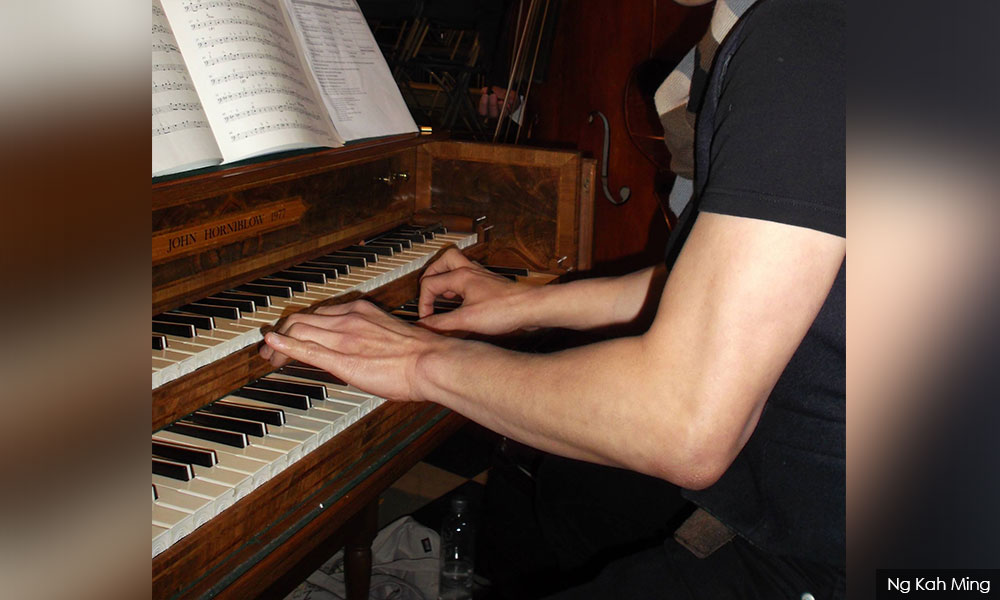
“I fell in love with it at once,” he said, adding that once he focused more and more on the harpsichord, he had to unlearn many piano techniques.
“The harpsichord has a very different mechanism to it. A harpsichordist requires more digital dexterity, nuances, and subtleties in his playing.”
Ng said it was a very common misconception that Baroque music would not allow room for creative interpretation on the performer’s part.
“My love is the music of the 17th and 18th century and that’s where I feel the deepest empathy. This is a period in which the musical composition doesn’t end with the original composer signing off.
“Scores from that era are not very detailed and are sparsely annotated in fact, so that there is much more room for creativity and interpretation from the performer.
“We are part of the composing process in the way that we interpret and realise what some of the composer’s intentions are through embellishments, variations and decorations that are in keeping with their styles. This is historically informed performance,” he added.
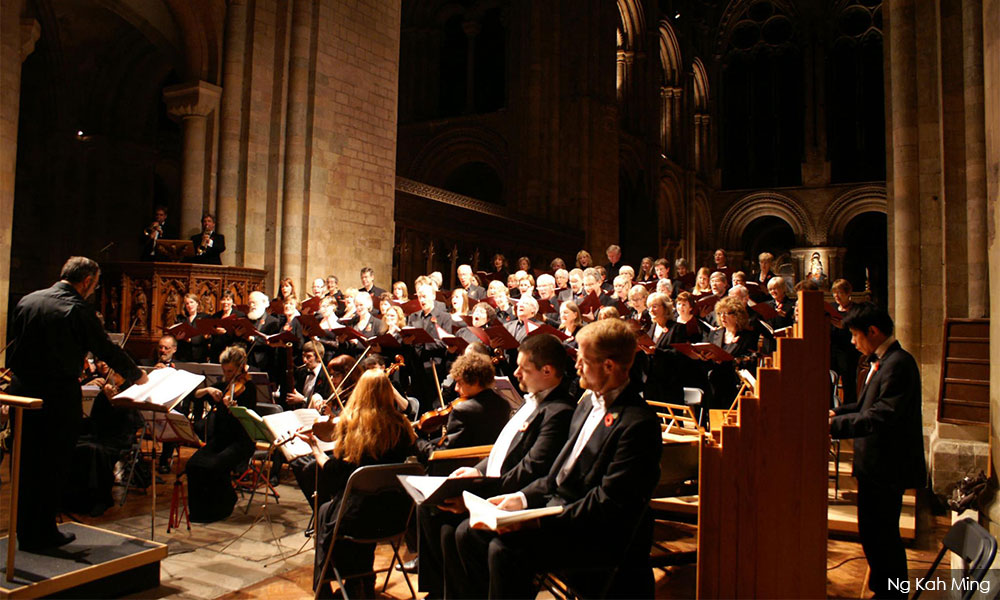
Ng said that his doctoral dissertation in figured bass accompaniment was a specialisation that required a great deal of improvisation.
“It’s creative and liberating. There’s a pioneering feeling in reviving and bringing little-known music of the distant past back to life for a contemporary audience. In resurrecting some delightful but obscure work that deserves a new audience.”
The biggest name of the Baroque era is, of course, Johann Sebastian Bach, while others include George Frideric Handel, Georg Philipp Telemann, Henry Purcell, Antonio Vivaldi and Tomaso Albinoni.
In his work, Ng has no intention of trotting out well-known chestnuts and he often jokes that Johann Pachelbel’s Canon in D, arguably the most popular Baroque piece of music of all, is torture to him.
“There is as much repertoire in the early era as there is during the time of Mozart and Beethoven, but most of it is hidden from view.
“I became a scholar and a musicologist partly because I was so fascinated with the private lives and scandals of these musicians. I remember I did this to the horror of my music theory teacher in PJ.
“I just recently went to the Basilica di San Petronio, where Giuseppe Torelli worked as violinist and composer.
“His Opus 6 was dedicated to Sophia Charlotte von Hanover, Electress consort of Brandenburg and first queen of Prussia. The only complete recording of his Opus 6 is in my CD ‘The Original Brandenburg Concertos’. This revival is its own reward,” Ng said.
It is this combination of original scholarly research and charismatic musicianship that has allowed Ng such a successful career with his Charivari Agréable (French for "pleasant tumult") ensemble considered among a leading group of its kind since he first established it in 1993.
Aside from the Torelli recordings, its impressive discography includes works by the likes of Claudio Montoverdi (Vespers for the Blessed Virgin), Thomas Tallis and Francois Couperin.
In recent years the prolific Ng has not produced CDs as often, yet he finds himself more in demand than ever before.
“After the lockdown, I feel like people are starved for this sort of live performance and the demand is never-ending.”
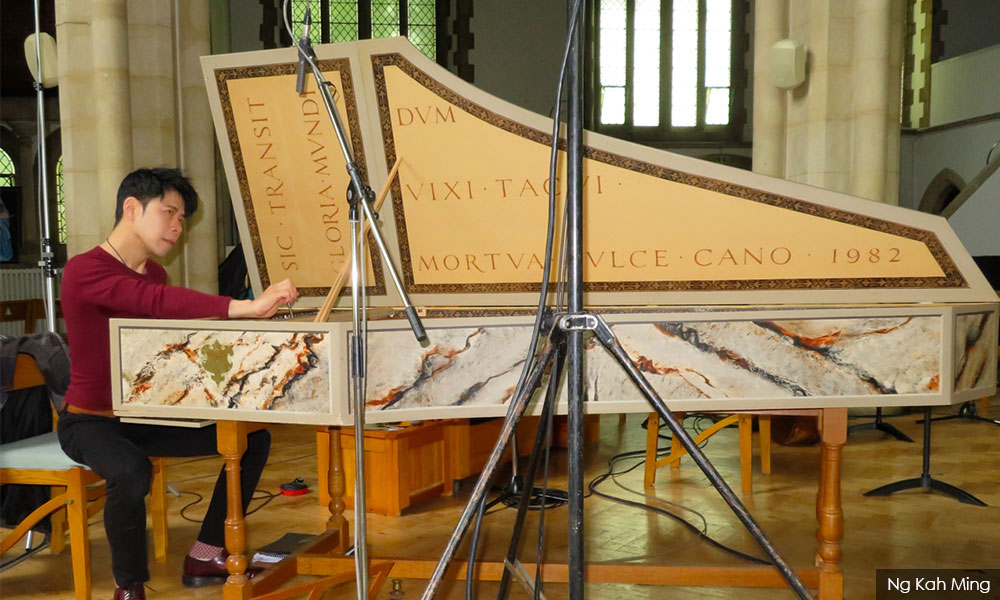
He feels the live performances allow him a special connection with his audience.
“One becomes a presenter and speaker putting the performance in context with anecdotes and snippets of history.
“People who come to see my shows do so not just to listen to the music but also to listen to me tell them in a humorous and informative way about the historical context of the music. I believe this really deepens their appreciation and their experience,” he added.
As a scholar-researcher, Ng takes pride in having authored two substantial entries on French and English baroque ornamentation in the New Grove Dictionary of Music & Musicians, the leading work of its kind.
Interesting performances
When Ng is back in Malaysia, he’s usually busy with an endless stream of casual catch-ups and formal get-togethers. He met this writer at a mutual friend’s birthday party, a meeting that was a long time coming as our mothers were friends and colleagues when they were teaching at Assunta Convent PJ in the early 1980s.
“When I’m back in Malaysia, I have so many social functions and so many people to catch up with that I really have to watch what I eat,” he said.
Ng’s parents have passed away and his sister also lives overseas but their family home is looked after by a caretaker. He returns to the UK shortly and will have his hands full with his Oxford 'Early Music by Candlelight' Summer Festival 2022, a series of 18 shows from July 8 to Aug 28 held at Oxford’s Exeter College Chapel.
“Even this came about from a happy accident. Many years ago, we had a show that was affected by a power outage. Well, the show must go on and so there was this idea that we would perform by candlelight. It has since become a tradition and a big part of our summer programme,” he said.
Ng has been booked for private parties by the likes of Duran Duran and Sting who in 2006 released ‘Songs from the Labyrinth’ an album of lute music by the 16th-century composer John Dowland.
“I once did this performance and we had a performer on the oud bass. Well, Trudie Styler (Sting’s wife) saw our performer with it and said, ‘my husband’s got one of those’ and he was just stunned when he realised who it was!”
He also revealed that Duran Duran bassist John Taylor is particularly fascinated by the harpsichord and can never resist trying it out.
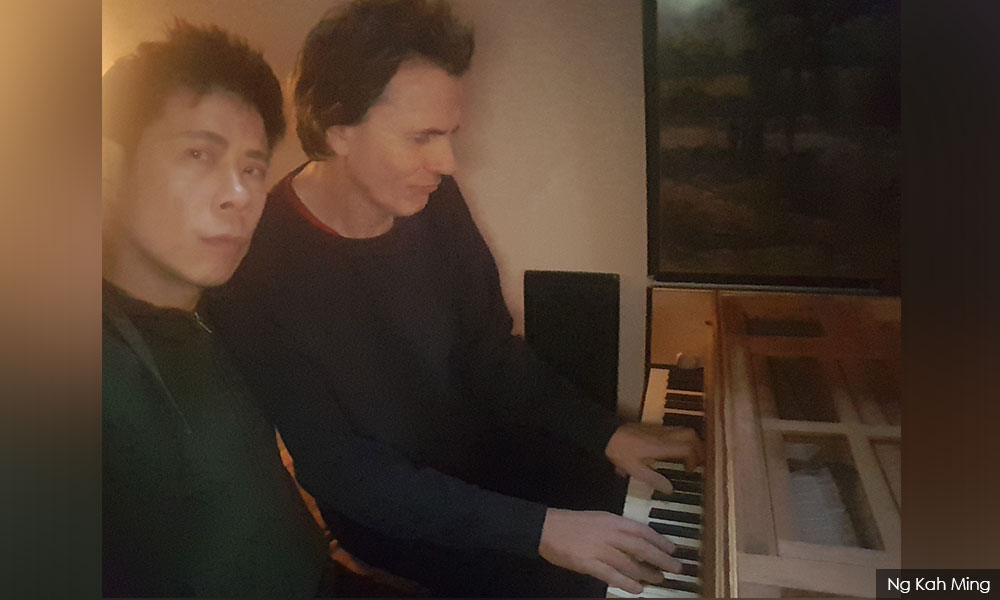
It should be noted that a harpsichord is a rare and expensive instrument. The most expensive harpsichord was one created by Joseph Johann Cochet in 1679, which fetched a price of US$390, 550 (RM1.7 million) in a Sotheby’s auction in 2001.
“Couchet is the Rolls Royce of harpsichords. I have recorded on original harpsichords (£120,000-£250,000) and a spinet (£60,000), all owned by a wealthy private collector who is my fan.
“My instruments in Oxford are a Flemish harpsichord (made by the famous builder Andrew Garlick), an Italian virginal (by equally famous Malcolm Rose) and a chamber organ,” Ng said.
Interestingly since the late 1950s, harpsichords have often been constructed by amateurs from kits, a system pioneered by the American builder Wolfgang Zuckermann.
“My harpsichord in PJ was built by an up-and-coming young professional maker whose single manual Italian I liked. When I asked him to assemble a double manual Flemish from a Zuckerman kit, he jumped at the chance,” Ng added.
Malaysianskini is a series on Malaysians you should know.
Previously featured:
It's about creativity, not glamour, for screenwriter Yasmin Yaacob
Halal hemp: Tengku Chanela leads the way for marijuana reforms
Rashid Salleh comes full circle with Iban sitcom Tembawai Kanyuk
Given a year to live, Swathi has just turned five
Underwater meadows: Jillian Ooi merges science and art to save seagrass
No job too small or big for writer, baker, undertaker Hasrul Rizwan
Law of science: From entomologist to environmental journalist
Special needs mom brings adaptive apparel to fashion forefront



Report this comment
Are you sure you want to delete this comment?
This action cannot be undone.