


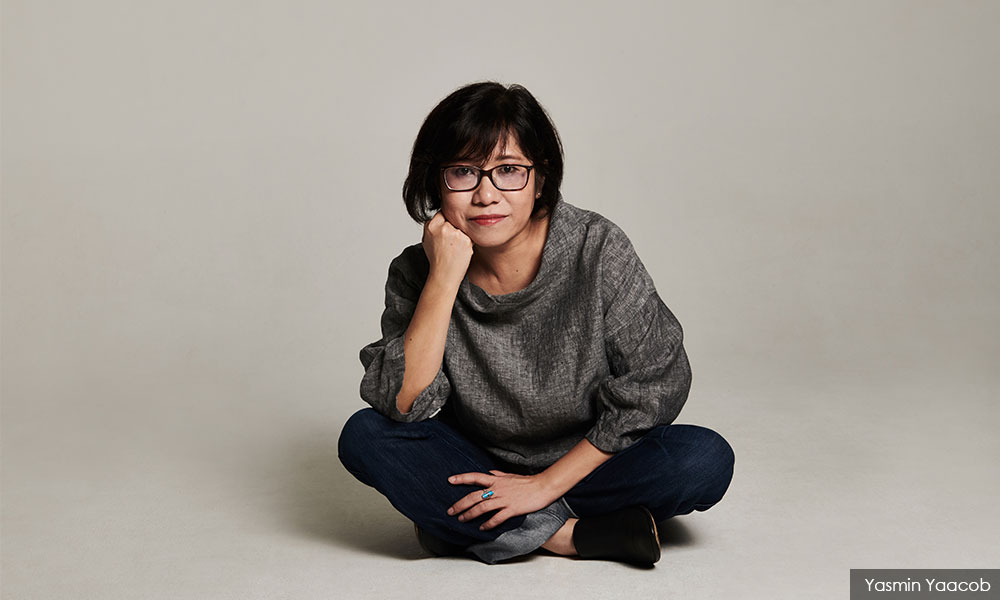

It's about creativity, not glamour, for screenwriter Yasmin Yaacob
She was still working a full-time job when she first forayed into scriptwriting and was juggling between the two for a while, getting only two to three hours of sleep a night, before she made the decision to focus solely on her current career.
But for her, there was no other way to hone her craft, especially since she truly loved writing stories.
Yasmin, who hails from Johor, has known she wanted to be a writer since she was about five or six years old when her headmaster at the time awarded her a ‘star’ for a short composition she wrote for school.
“But back in the day, you couldn’t be a writer, there was no such thing,” said the screenwriter, who laughingly declined to reveal her age.
So Yasmin went through...
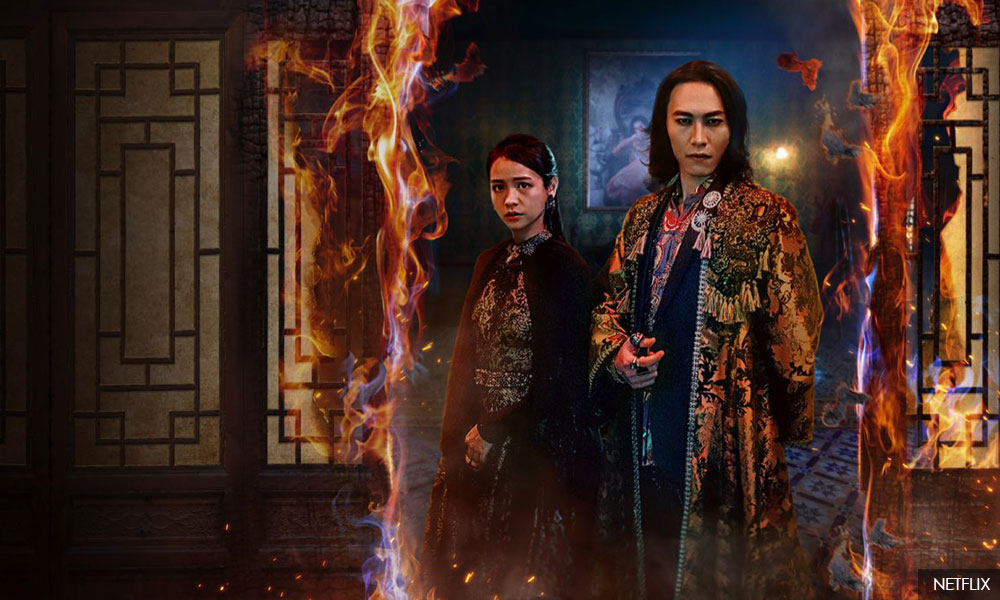
MALAYSIANSKINI | It was not an easy path that led Yasmin Yaacob to become a successful screenwriter, having held the position of director of development for Malaysia and Indonesia for streaming platform Viu as well as having worked on Netflix’s first original Malaysia-based series ‘The Ghost Bride’, among others.
She was still working a full-time job when she first forayed into scriptwriting and was juggling between the two for a while, getting only two to three hours of sleep a night, before she made the decision to focus solely on her current career.
But for her, there was no other way to hone her craft, especially since she truly loved writing stories.
Yasmin, who hails from Johor, has known she wanted to be a writer since she was about five or six years old when her headmaster at the time awarded her a ‘star’ for a short composition she wrote for school.
“But back in the day, you couldn’t be a writer, there was no such thing,” said the screenwriter, who laughingly declined to reveal her age.
So Yasmin went through what many consider the “normal” route; taking the Science stream in secondary school, accepting a scholarship to study at a New Zealand university and eventually graduating with a law degree.
But that was when she decided enough was enough.
Still wanting to make a career out of writing, she went into copywriting briefly before working in public relations and communications for companies such as Petronas and Astro.
While still working in corporate communications, Yasmin decided to join a scriptwriting workshop where she wrote a play.
Her first big break came when independent filmmaker Amir Muhammad noticed her play, which was successful enough to have showings at the Singapore Arts Festival.
“Amir asked me if I wanted to write scripts and at the time, I was like I don’t know how to write scripts but Amir was like, you’ll be fine.
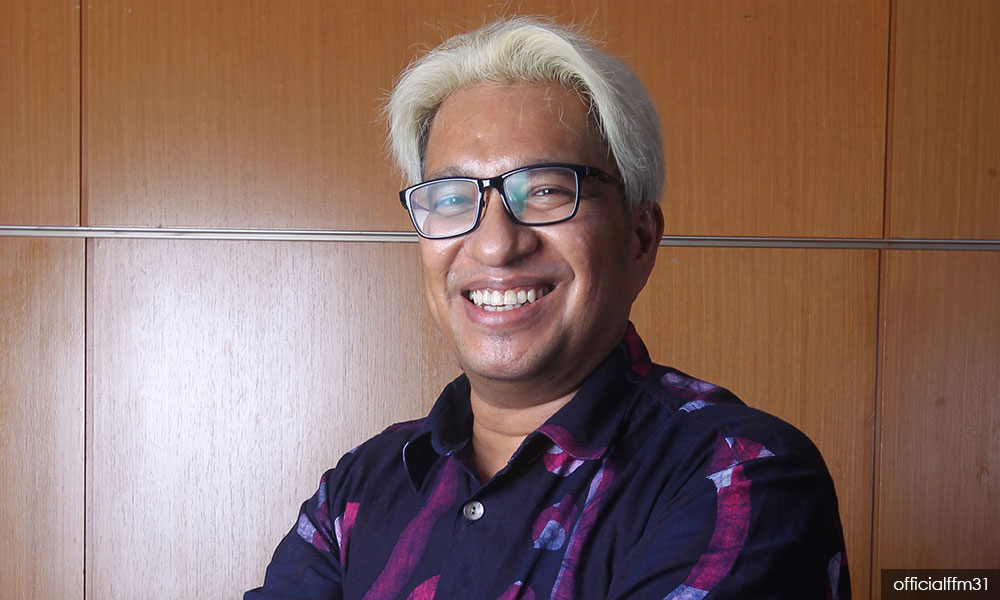
“So I did. I was moonlighting at the time so basically, I had to work (at my day job)… Work in the day, go home around nine or 10pm, start writing scripts until 5am, sleep around two to three hours and then go to work,” she said in an online interview with Malaysiakini recently.
She was writing scripts for a soap drama at the time, which she said was a really good way to exercise her creative muscle and learn how to do scriptwriting at the same time.
As someone who has always wanted to make independent films, she eventually quit her day job and freelanced for about 12 years.
Eventually, she was asked by a friend to join the content production firm Ideate Media (now known as Revolution Media), which was where she got the opportunity to work on ‘The Ghost Bride’, a series set in 1890s colonial-era Malacca, which was based on the book of the same name by author Yangsze Choo.
Yasmin said she was supposed to write for one episode but in the end, she was a co-writer for two other episodes for the show as well.
Later on, she worked for Viu Malaysia and Indonesia as the director of development.
Yasmin also appears to be passionate about encouraging fresh talent to join the creative industry, saying that her advice to them would be that they really need to love what they do because the industry is not as glamorous as they think.
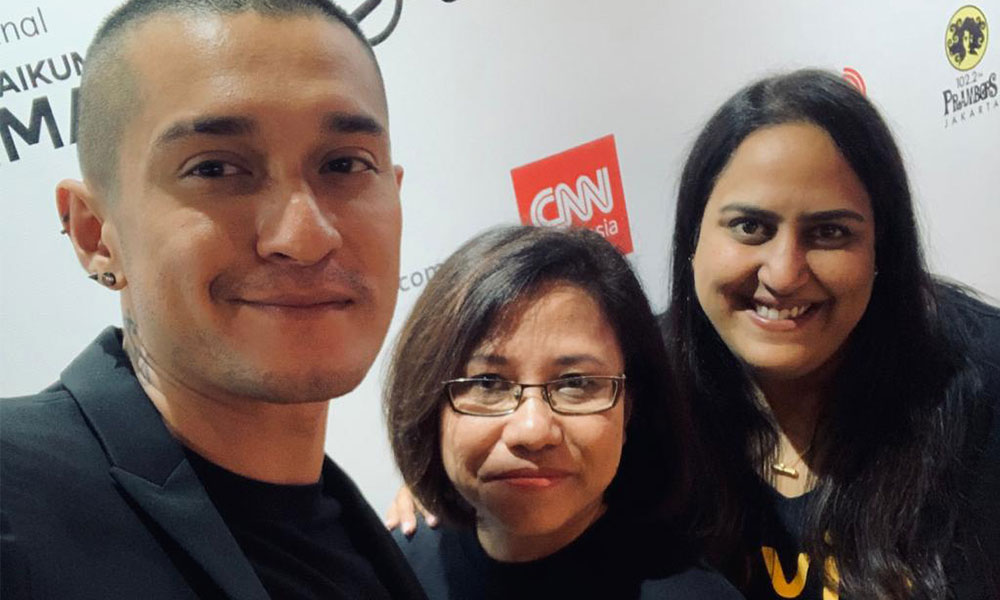
This is Yasmin’s story, in her own words:
I went to London as a child to live because my parents were students there at the time and I think that was the first time I considered being a writer, probably around five or six years old.
We were asked to write a composition in class – that seems hard now at six, now that I think about it. So I wrote this thing about a shepherd or something like that and I remember the headmaster called me out to his room.
I was worried thinking did I do something wrong, but I got up there and he gave me a star (sticker) for my book and he said “you did really well, this was really interesting” and he said: “You know what you’ve done, you’ve written a story.”
So I was like what does this mean and he said, “Well, you have a beginning, a middle, and an end,” which I still did not understand at the time.
But I thought that was great and I think that was the first inkling that I wanted to be a writer.
My mother told me that, even as a young child, when I could not write, I had a pen and paper always and I was always scribbling nonsense. It started there in a way.
All the time (throughout university), I still wanted to write. I always wanted to quit (law).
Every year I was hoping to fail so I could do English Literature, but that didn’t happen and I had to finish my law degree.
But after graduation, I said enough is enough, so I told my parents I did not want to practice ever.
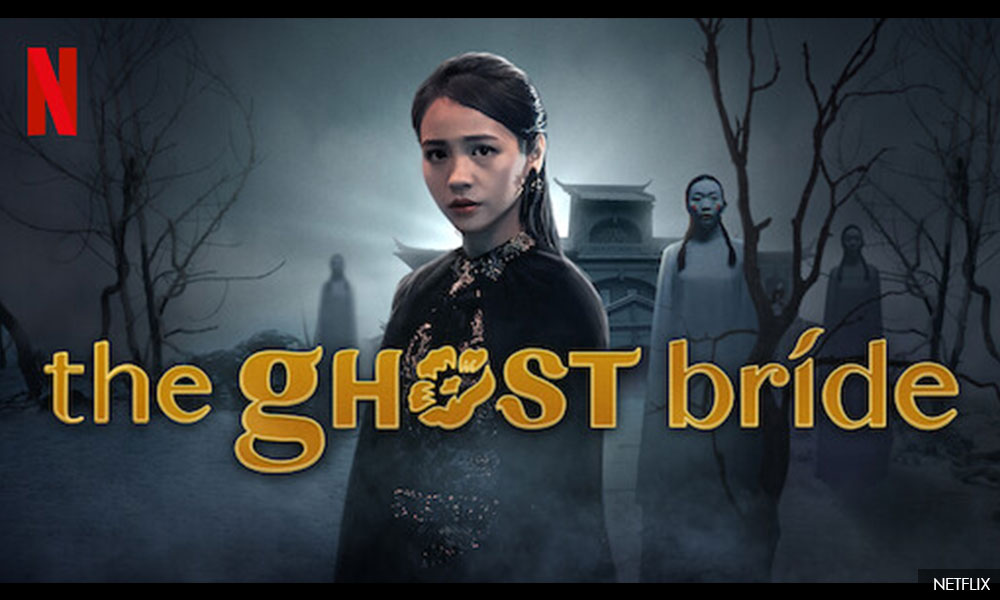
I was head of development for Ideate Media (at the time) so when Netflix approached us and said they wanted to do ‘The Ghost Bride’, they had already engaged a head writer, American-Taiwanese writer Kai Wu and they had already spoken to the author as well about the general direction they wanted it to go.
Kai came with Hollywood writing room experience, which, when I was younger, there was no such thing as a writers room. Basically, you have a couple of meetings then you go back and write.
What she taught us in their writers' room was quite intense, but basically, you’re in the room for at least six to eight weeks and you are breaking down the story and the scenes in detail, which was not conventional in these parts at the time.
So we would go away and write the storyline and then come back into the room, discuss it, and then go back and write the script. So that was interesting because a writers' room will have many different people, ideas, approaches, and sensibilities.
It was a very good experience and after that, I took a bit of that and put it into future writers’ rooms.
I like complicated stories. I like things with twists, so it is a challenge but I want things to be accessible. I am not the kind of writer who needs to make things that only I can understand.
It is called show business for a reason. It is a business, so we need to make sure people can get it, or if they don’t get it, at least they come away with emotion. I also like to take ordinary human experiences and put them in extraordinary situations.
Every writer will have a different reason for why they’re writing. For me, I think stories are important because as humans, and that differentiates us from other creatures.
Even if they are false stories but they are important for us to reflect on new ideas, new belief systems, different ways of looking at things, and how to develop empathy, all these things.
When I write stories, it’s out there. I don’t even have to see how well it’s doing. The creative process is the bulk of the satisfaction I get out of it.
But what I hope is that, because I love to put these things where it moves people, you go away from (one of my shows) and it still resonates with you, like you have taken it in emotionally and mentally.
It is like someone has taken a piece of it, so even if it is one person, I’m happy.
What I would like to say to young people (who want to join this industry) is to have a plan, have the discipline, and teach yourself because no one is going to teach you, which means reading about it and just writing.
It is not easy being in this line if you want to do well and do good stuff. I mean it is easy to do rubbish but to do really good stuff, I always say that if you want to try it, you need to really love stories.
You cannot be in this just because you think it is glamorous to be a writer because honestly, it is not glamorous at all.
It is like me, I had a full-time job and I was writing on the side, you can do that too.
You have to give it a good go because the thing is, Malaysia is not Hollywood.
Compared to Hollywood where a lot of writers don’t have work because there are thousands of them over there, here, there’s every opportunity for someone who’s new to be able to do it because there are more projects now than before, when I first started.
Be proactive about who you would like to work with. If you want to work with that producer, write something and show it to them, because in Malaysia, (the industry) is still that young that you can do that.
You can’t do that in the US with someone like (Oscar-winning filmmaker) Quentin Tarantino, but you can still do that here.
I’m not saying people want to see you but you can try because people are looking for writers, there are not enough writers.
Malaysianskini is a series on Malaysians you should know.
Previously featured:
Halal Hemp: Tengku Chanela leads the way for marijuana reforms
Rashid Salleh comes full circle with Iban sitcom Tembawai Kanyuk
Given a year to live, Swathi has just turned five
Underwater meadows: Jillian Ooi merges science and art to save seagrass
No job too small or big for writer, baker, undertaker Hasrul Rizwan
Law of science: From entomologist to environmental journalist
Special needs mom brings adaptive apparel to forefront of M’sian fashion


Report this comment
Are you sure you want to delete this comment?
This action cannot be undone.