


/file/publisher-c1a3f893382d2b2f8a9aa22a654d9c97/2022/11/d0011d9a2190e9d123873cd5067eda29.jpg)

Postal voter baffled to receive ballot papers twice
GE15 | A postal voter has received two sets of ballot papers in this general election, raising questions over the Election Commission’s handling of postal votes.
Adelia Abdul Rahim, who lives in Oregon, US, said she received the first set on Nov 11 - much earlier than other postal voters in the same state - and shipped the ballots off on Nov 14.
However, the next day, another set arrived by courier...
GE15 | A postal voter has received two sets of ballot papers in this general election, raising questions over the Election Commission’s handling of postal votes.
Adelia Abdul Rahim, who lives in Oregon, US, said she received the first set on Nov 11 - much earlier than other postal voters in the same state - and shipped the ballots off on Nov 14.
However, the next day, another set arrived by courier.
"Everything received here was in order; serial numbers match, only Envelope B did not have the returning officer's address. I saw many others have similar experiences with this. No big deal, I figured.
"I received the second set on Nov 15. Both sets were identical ie my name, address, and constituency, except for a different serial number, and minor ‘update’ - Envelope B had the returning officer’s address pasted on it," she told Malaysiakini via text message.
"I called the number for the EC's Postal Vote Management Unit (UPUP) but no answer. I decided to leave feedback/report through EC’s online form," she added.
She said the EC shipped out the first set on Nov 8 while the second set was shipped out on Nov 11.
Adelia, who has voted by post before, did not send back the second set of ballots.
"My question is, will this duplication affect my vote either way?" asked Adelia, who has lived abroad since 2015.
Malaysiakini has contacted the EC on the matter.
Mismatched serial numbers
Her case is believed to be an anomaly, but on the Facebook group set up by NGOs to assist postal voters, many have complained of other issues with their ballots.
These include the serial number on the ballots not matching the serial number on the envelopes or forms.
This has prompted Global Bersih to issue an advisory on the matter, after receiving clarification from the EC.
In its guide for postal voters, the NGO instructed voters facing this issue to cross out the serial numbers on the envelopes and under that, write down the serial number from the ballots.
"Do not mark on the ballot paper except to select your candidate," it said.
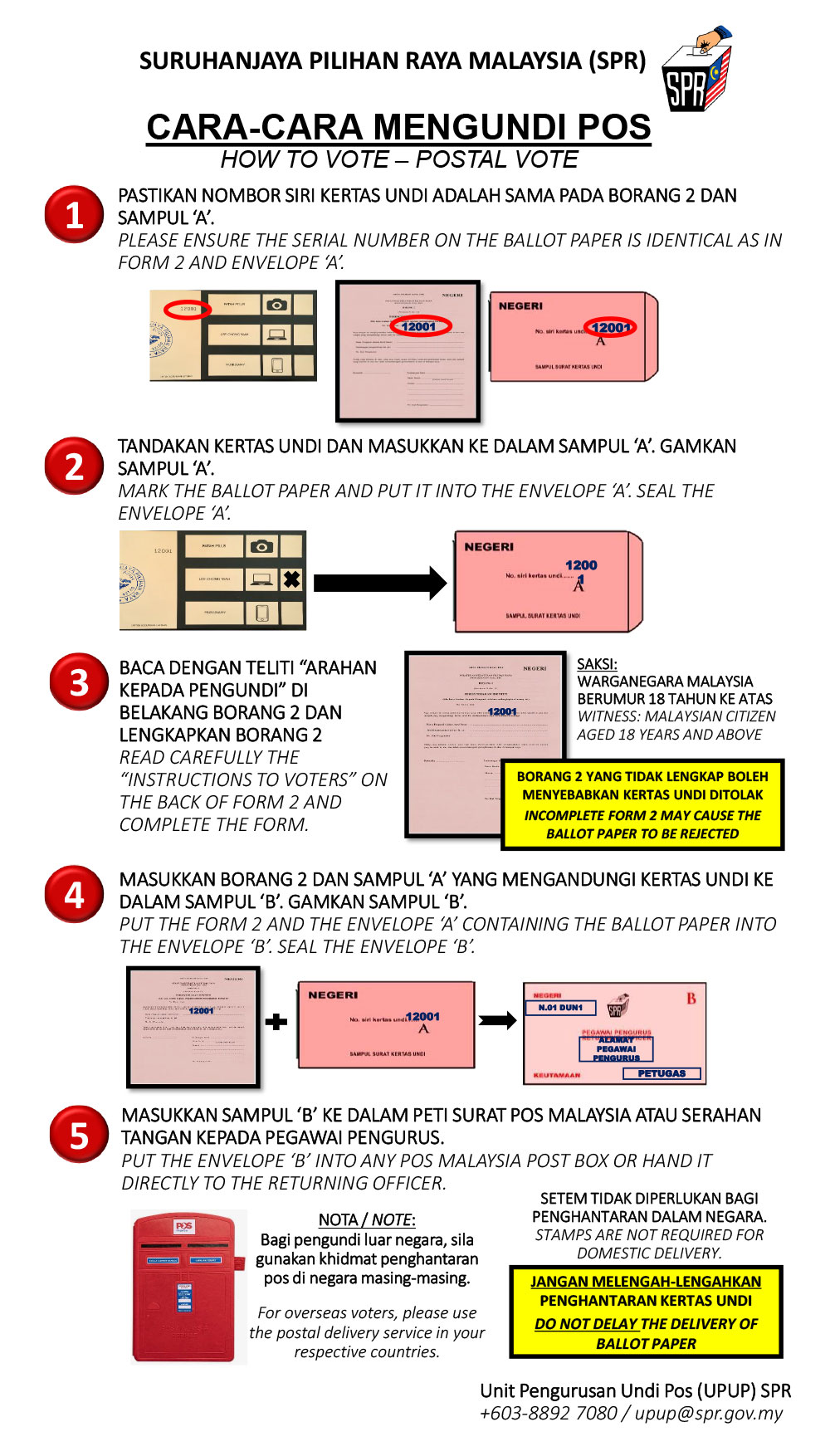
Postal voters must mark their ballots and seal them in a provided envelope (Envelope A). They must also get another Malaysian to act as their witness, by signing a provided form.
Envelope A and the form will then be included in another envelope (Envelope B), to be delivered to the returning officer.
Voters must ensure the serial numbers on Envelope A, Envelope B and the form match.
'Don't take our right to vote for granted'
Besides providing clarification over the ballots sent to her, Adelia also hopes the EC can consider the cost for overseas voters to send back ballots and the difficulty in finding a Malaysian witness.
In 2018, she paid US$80 (RM360) to send her ballots home but was able to do it for free this time thanks to the network of volunteers collecting and carrying the ballots back on passenger flights.
However, she initially had trouble finding a witness because she had only recently moved to Portland from San Francisco.
This was resolved when she found a Malaysian living a few kilometres from her, with the help of the Malaysian NGO networks who have stepped up to ensure Malaysians overseas are able to exercise their democratic rights.
She hopes the EC could better manage the process by providing more information and roping in Malaysian consulates to play a larger role in the process.
She said the misconception that overseas Malaysians are not interested in voting has been debunked by thousands of postal ballots, which made it back through the efforts of an international network of hundreds of volunteers.
Despite the difficulties, Adelia said she still intends to cast her ballots by post in the next general election, even if the system remains.
"If returning home to vote is not feasible, I’d definitely register as a postal voter again next time because not voting is not an option.
"Our right to vote should not be taken for granted," she added.
/file/publisher-c1a3f893382d2b2f8a9aa22a654d9c97/2022/11/d9a17abfa454f520dbb7a80d057ba6df.jpg)
/file/publisher-c1a3f893382d2b2f8a9aa22a654d9c97/2022/11/92bc180c69b73d40b4f68a6241c3644a.jpg)
/file/publisher-c1a3f893382d2b2f8a9aa22a654d9c97/2022/11/d528881daa204900d30ce23ddd3466ef.jpg)
/file/publisher-c1a3f893382d2b2f8a9aa22a654d9c97/2022/11/39075d6058709daab34c95f1e0b08929.jpg)


Report this comment
Are you sure you want to delete this comment?
This action cannot be undone.