


/file/publisher-c1a3f893382d2b2f8a9aa22a654d9c97/2022/12/5c527032f6e9486472c7c7b65b6f2d35.jpg)

Late poet’s daughter aims to preserve his literary legacy
He might not have received any national laureate awards from the powers that be, but poet, essayist, playwright and actor Salleh Ben Joned’s works continue to influence and capture the imagination of people.
The constant reference by his peers and the fact that so many young people are “discovering” his works speak for themselves.
Though he may not have come out with anything new over the past couple of decades due to mental illness, Salleh's death on April 29, 2020, at the age of 79 was felt in the literary world. As the media paid tribute to him, so did many luminaries in the local literary scene.
However, there is so much to learn about Salleh...
He might not have received any national laureate awards from the powers that be, but poet, essayist, playwright, and actor Salleh Ben Joned’s works continue to influence and capture people’s imagination.
The constant reference by his peers and the fact that so many young people are “discovering” his works speak for themselves.
Though he may not have come out with anything new over the past couple of decades due to mental illness, Salleh’s death on April 29, 2020, at the age of 79 was felt in the literary world. As the media paid tribute to him, so did many luminaries in the local literary scene.
However, there is so much to learn about Salleh - his early days growing up in Malacca, his university days in Adelaide (he was a Colombo Plan scholar), his return to Malaysia, his activism, his work, his love, and his loss.
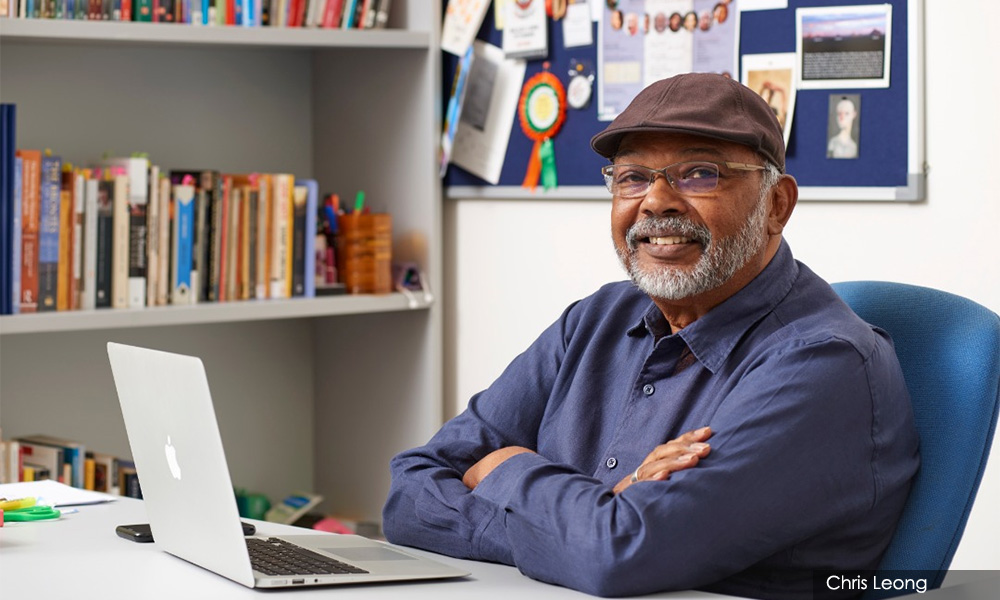
To that end, his eldest daughter Anna (above) has established the Salleh Ben Joned Literary Legacy Project, which is designed to preserve her father’s legacy through several initiatives.
The first is a two-part podcast series for the Australian Broadcasting Corporation, produced by Anna, called ‘Salleh Ben Joned: A Most Unlikely Malay’. This podcast offers listeners a personal story about Salleh’s life, from the perspective of a daughter.
There are projects focused on his work but one of the more notable ones is a new book, ‘The Poetry and Passions of Salleh Ben Joned’, that will be edited by Anna.
“At some point in 2016, we started a Facebook group for Salleh and a blog. When we did that, all of a sudden we got a better idea of how many people, the younger and older generation, had been touched by Salleh’s work. It brought to life the impact that he seemed to have had, which was not officially recognised in any way.
“When he died, the family was bowled over by the attention that his passing received. Astro Awani was having rolling coverage of his funeral, burial and tributes all day,” Anna told Malaysiakini.
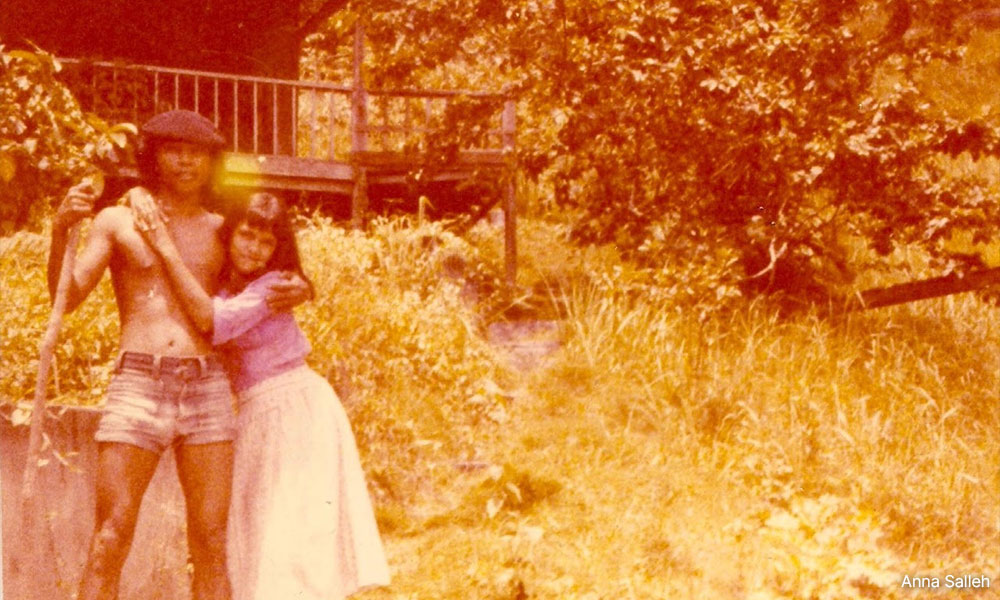
She was in Sydney when her father passed away and could not make it back to Malaysia because of the restrictions imposed during the Covid-19 pandemic.
“I guess all this was telling me and telling the family that he did have an impact, although he was never regarded as Sasterawan Negara or award-winning anything. I was interested to explore that more,” she said.
Salleh's identity and art
Anna said the podcast that she produced was a personal look at Salleh’s life from her perspective, his daughter.
“People said to me that they enjoyed the podcast but wanted to know more about his work. That’s when I got together with friends and family and started thinking about a book and other projects.
“It then just got bigger and bigger. What we are talking about is a literary legacy project. It involved many different aspects. The thing I am working on at the moment is his relationship with different people in the arts and literature scene,” Anna explained.
“He was inspired by, and he inspired poets, artists, dancers, playwrights, cartoonists, academicians, and musicians. This book will capture relationships and poems that he wrote for and about different people,” said Anna, citing luminaries such as Latiff Mohidin (modernist artist sculptor and poet), Syed Alwi Syed Hassan (theatre and literary giant), artists Ahmad Zakii Anwar (celebrated artist) and cartoonist Lat (Mohammad Nor Mohammad Khalid).
“It is also to tell stories about their relationship. To tell a story behind the poems and their significance in terms of the themes that preoccupied him.
“Salleh was very interested in the question of race and religion, the questions about identity, freedom in respect to these themes,” Anna elaborated.
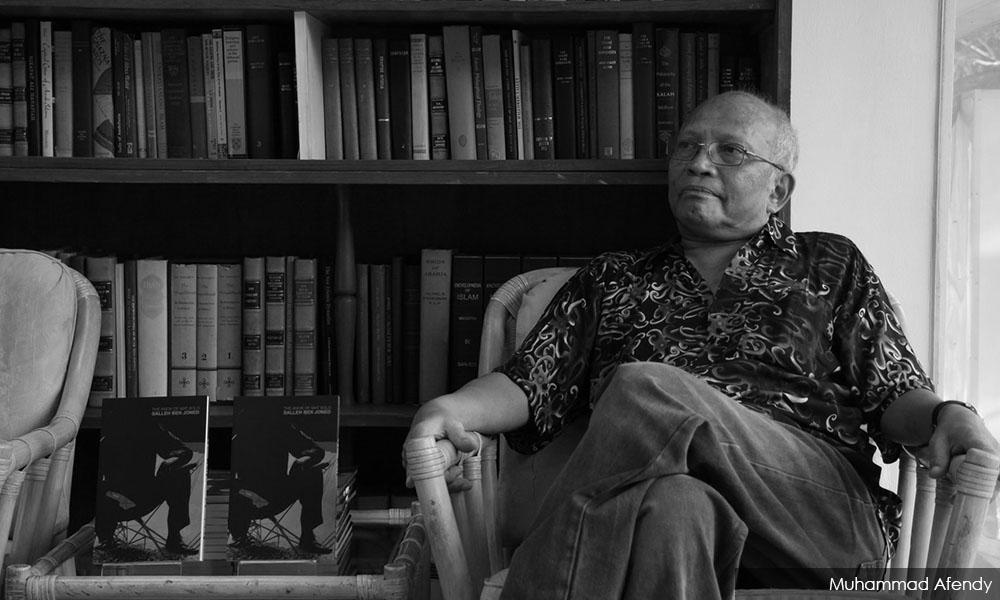
The idea is to make the book very visual with lots of photographs people have never seen before and unpublished material, such as excerpts from his letters and personal correspondence.
“I want it to be a visually stimulating experience for people and attractive to a wide number of people. I am looking for support for this. Whether it is through private donations to make this happen or if people have stories or pictures, archives on Salleh that they are willing to share, I will be keen to make contact with them,” she said.
Salleh had many ups and downs in his life, Anna said.
“As with the podcast, I don’t shy away from the less-than-positive aspects of his life. It was no secret that he had mental issues. This was exacerbated by the fact that he was hurt by being perceived as a traitor to his race in a way.
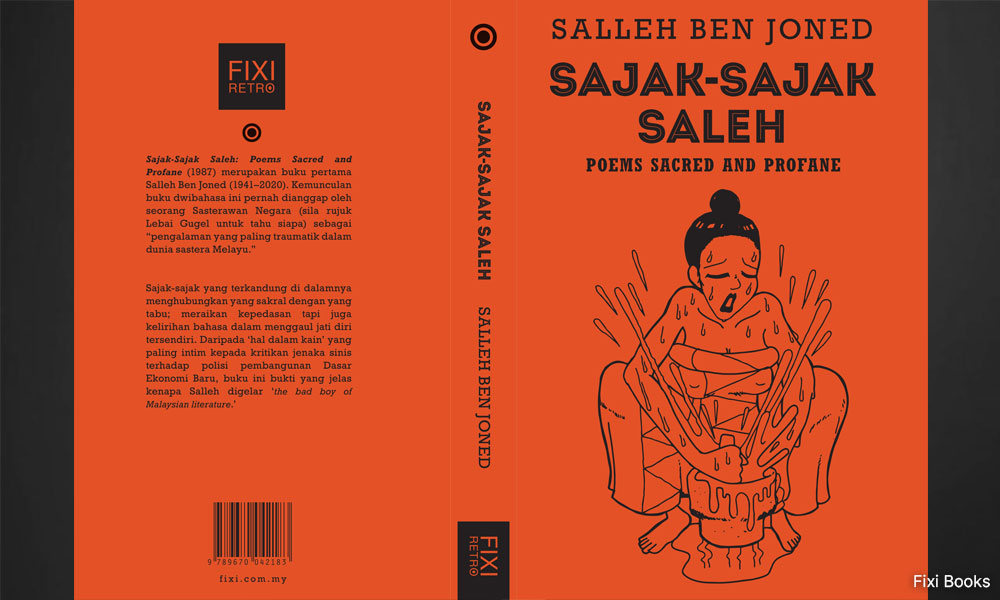
“He wrote in English and his style was not keeping to certain norms. When his first book of poems came out in 1987, ‘Sajak Sajak Salleh: Poems Scared and Profane’, 2/3 of it was Malay and 1/3 in English.
“When he first came back from Australia, he wrote a lot in Malay for Dewan Bahasa journals. No one noticed this. He did not get such a good reception. It was mostly silence from the Malay literary establishment. Slowly over time, he wrote less and less in Malay and until finally, he was only working in English,” said Anna.
Salleh’s ‘As I Please’ column in The News Straits Times was very popular and his books, ‘Nothing Is Sacred’, ‘As I Please: Selected Writing from 1975 to 1994’ and ‘Adam’s Dream’ were all written in English. Even ‘The Amok of Mat Solo: A Play’ was in English.
Not always embraced for who he was
“I think he was quite disappointed by the fact that Malaysia could not embrace him and his identity as one of the diverse expressions of being a Malay himself,” she said.
Anna plans to reflect on her father’s ups and down in the book because that is part of his personality and journey. Anna said that her father once shared his disappointment with Syed Alwi about the cultural context that they were working on.
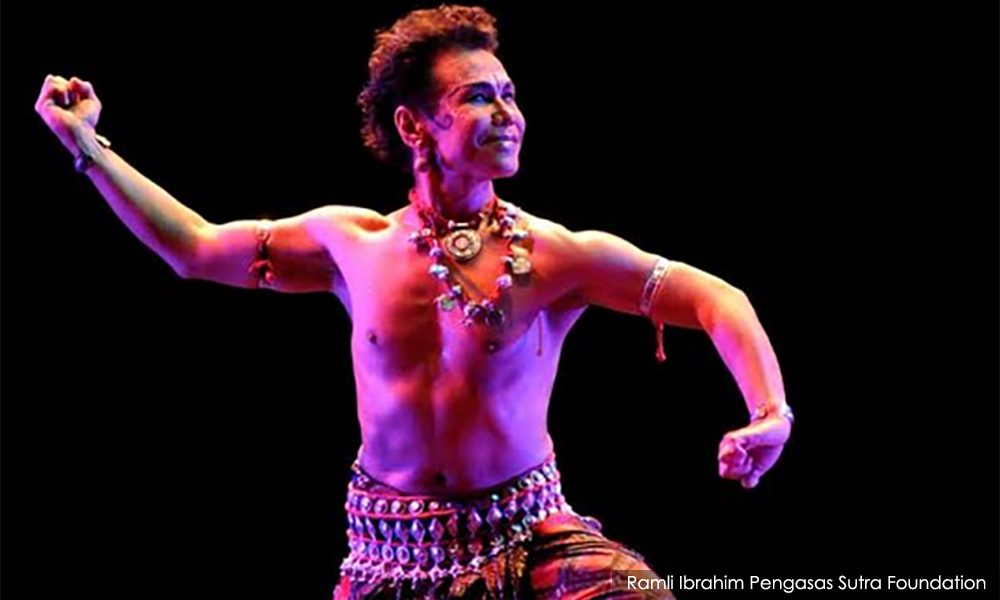
Salleh also celebrated Indian classical dancer Ramli Ibrahim in a poem called ‘Rasa’ and identified with him as trying to be a free spirit in a world where it was not encouraged.
Anna said her father loved his kampung roots and the earthy sensuality of kampung life.
The idea to do the podcast came about in 2011 after Anna, who had just made an audio documentary on her musical journey, ‘Brazil Calling’, heard what respected academicians like Ungku Abdul Aziz and others had to say about her father during the book launch of ‘The Amok of Mat Solo: A Play’.
It took a while, but it finally came together and provided a delightful insight into Salleh’s world.
Excerpts of his letters and poems were read out loud by an actor as Salleh was already suffering from mental health-related issues at that time.
The world of social media would have been something that Salleh would have revelled in, the ability to say what he wanted and not fear censorship, the way it was in the 1970s and 1980s.
Anna said that due to his mental health issues and the treatment he was receiving, Salleh was suffering from a slow decline.
“He became more and more introverted. He became a recluse. He had memory problems. Slowly he was unable to appreciate what was going on out there, he wasn’t able to read and write. “
When social media took off, he wasn’t aware of it. He wasn’t even aware of the Facebook group that was dedicated to him and his work.
His work was then exposed to a much larger audience, but Salleh had no idea what it all meant.
“Salleh himself did not understand or appreciate the role of social media. He was always amazed when I brought around young poets who wanted to meet him. He would enjoy their presence, I don’t think he could appreciate what he meant to them.”
She could not interview her father for the podcast because he was no longer in any state to have conversations.
The forthcoming book, ‘The Poetry and Passions of Salleh Ben Joned’, is just one of the few things the legacy project will cover. Other academicians have already been writing about Salleh and his contribution to the Malaysian literary scene.
“There is more than one book to be written, somehow, some time,” Anna said.
Asked what it is like to revisit her father's past, Anna admitted that it was hard, but that is something that comes with wanting to do a good job of it.
“I want to understand him. This is where having the stack of letters that he wrote to me from the 1970s to 2000s is very useful. I was able to understand him so much more by reading and re-reading these letters.
"It was profound because there were personal aspects of father and daughter, his internal life and his emotions, and there was information about projects he was involved in with other people. I needed to understand him and find his voice.”
For the podcast, she only has a few archival things on tape that she could use and had to use the letter.
“There was one recording of his in the podcast. It was him talking to me in 1976 on a cassette. The rest of it was by an actor.
“In some ways, it brings me closer to him and in some ways, it brings him alive more than ever within me. It is like he has not left me, and I can keep him close this way.”
A new release
‘The Poetry and Passions of Salleh Ben Joned’ is scheduled to be released at the end of 2023.
There are things that Anna hopes people will take away with them when they read the book.
“He was often regarded as not being Malay enough, not being a proper Malay. He was a true patriot and I say this because he was passionate about his culture, where he had come from, kampung roots, humour, earthiness and love of life that were all embedded in the culture he was brought up in. He shares this in so many forms with dancers and musicians, cartoonists, and poets.
“Salleh could have easily left Malaysia and taught English literature at a top-tier university abroad. Instead, he stayed in his county and wrote this and that, and was sometimes critical of what he observed. He wasn't afraid to talk about things such as race and religion at a time when the less you said in public is the better,” said Anna.
Anna Salleh will be reading her father’s works at Readings@Seksan, Seksan Gallery, 67 Jalan Tempinis 1, Lucky Garden, Bangsar, on Dec 17 from 3.30 pm onwards. Admission is free.
Readers can reach her at annasallehbossa@gmail.com.
/file/publisher-c1a3f893382d2b2f8a9aa22a654d9c97/2022/08/adb42c0f4f67e9aa6bcb54a8fc872309.jpg)


Report this comment
Are you sure you want to delete this comment?
This action cannot be undone.