


/file/publisher-c1a3f893382d2b2f8a9aa22a654d9c97/2020/01/b424e9a0670b0a904dbc94f208e7c207.jpg)

Govt's inaction on outsourcing migrant labour sparks stakeholder ire
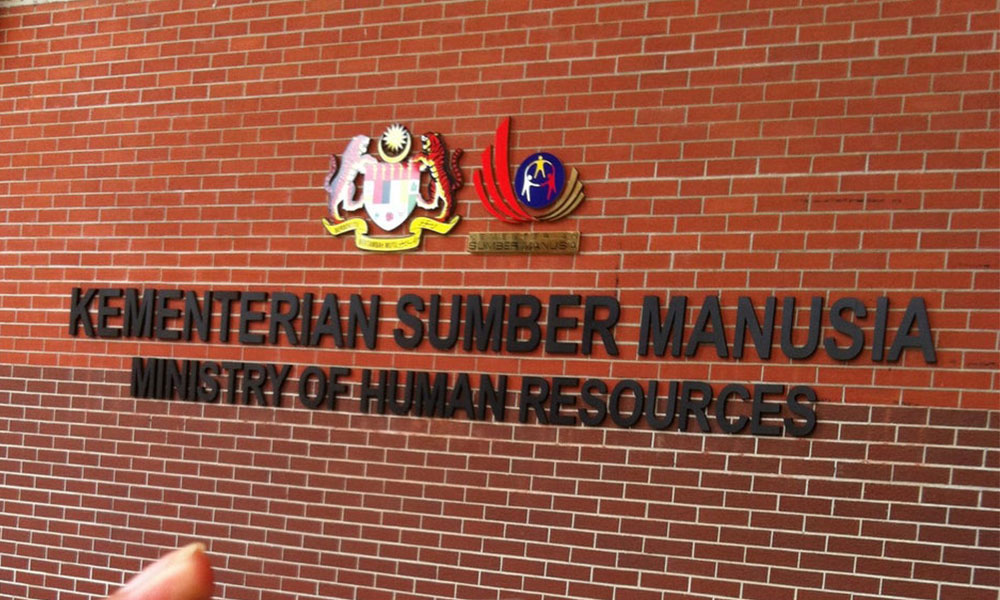
Giving rise to this fear and fuelling their ire was the Human Resource Ministry’s revelation in a written reply to Malaysiakini, published on June 15, that policing the act of outsourcing migrant labour did not fall under its purview...
Legal and illegal migrant worker recruitment agencies who did not stop outsourcing their workers may not have found themselves on the wrong side of the law for at least half a decade, stakeholders fear.
Giving rise to this fear and fuelling their ire was the Human Resource Ministry’s revelation in a written reply to Malaysiakini, published on June 15, that policing the act of outsourcing migrant labour did not fall under its purview.
“The Labour Department knows these cases because they receive the complaints, most of which are from workers themselves when they list the slew of labour violations any one company would have committed.
“When they interview workers during their investigations, it would have become obvious to them that the workers were leased out to third-party employers,” said a local labour rights NGO leader, who declined to be named.
Migrant rights stakeholders who spoke to Malaysiakini on condition of anonymity feared backlash from the ministry.
The loophole
The ministry’s claim of unaccountability raised the question as to what the ministry had been doing with tip-offs and complaints received about companies leasing out their migrant workers to third-party employers since the practice was banned in 2019.
In its written response, the ministry did not clarify which department or ministry was responsible to address this violation.
Hence, the possible loophole.
This is especially so with NGOs and industry players who diligently produced names, addresses and in many cases, details on the outsourcing operations, to the Labour Department with the hope that action would be taken against these operators of trafficking activities.
“I too have personally filed two cases involving a large number of workers but the outsourcing companies are still in operation and the Labour Department’s priority doesn’t seem to be directed at putting an end to the outsourcing that perpetuates human trafficking and forced labour.
“They claim they have taken action, but we don't know.
“That constant question surrounds the proactive measures taken by public servants who possess the knowledge, authority and mandate to address labour migration issues effectively,” said the migrant rights activist.
Complications arise when workers are transferred to other agents or subcontractors, particularly in the service sector, including roles such as cleaners, cooks, and security guards.
These instances exploit existing loopholes in the system, making it difficult to hold all parties accountable for labour violations.
Malaysiakini’s recent investigation found that multiple levels of traffickers not only charge prospective employers a sizable one-off fee for procuring the workers, but they also take commissions out of the workers’ hourly wages, leaving them with a paltry sum at the end of the month.
The labour rights activist said the situation highlighted a profound mystery that required the immediate attention of Prime Minister Anwar Ibrahim to establish a royal commission of inquiry (RCI) to investigate the matter.

“It's a big mystery and we wonder if there are hidden hands manipulating the system and preventing public servants from taking action,” he added.
‘Secret’ independent report better than RCI
A migrant rights lawyer told Malaysiakini she had little faith in the RCI and suggested that the Independent Committee’s report on the Management of Foreign Workers, which was submitted to the government in 2019, already addressed all the issues.
“I am not keen on RCI as we have seen in past RCIs, nothing comes out of it. It's just a waste of public funds.
“The Independent Committee’s report has many good suggestions that could help in managing the system better but the report itself is being guarded with such secrecy,” she said.
However, it was not only the ambiguity of the Labour Department’s enforcement powers that has irked stakeholders as inaction on companies reported to other enforcement agencies too was of no avail.
Three trafficking cases filed in different police departments in the Klang Valley have only resulted in action taken against workers and not the employers who are still in operation, said the legal practitioner.
Overlapping roles and ever-changing labour regime
“The whole migration system is so entrenched in corruption, it's going to be a herculean task to dismantle the system,” she said.
One potential reason for the confusion and ambiguity of powers is attributed to the different labour regimes that take force with the changing political regime of the country.
“We suspect that different labour regimes have different SOPs. This includes the approval of quotas,” said the migrant rights advocate.
Malaysia’s ban on migrant outsourcing
After February 2018, when the Private Employment Agencies (Amendment) Act 2017 came into effect, companies carrying out recruitment or placement of local and migrant workers were required to register with the Human Resources Ministry with a bond of no less than RM100,000 (depending on the type of licence).
Companies found guilty of operating without a ministry-issued licence were illegal and can face imprisonment not exceeding three years, a fine not exceeding RM200,000, or both.
Although this potentially ended the act of leasing out workers to third-party employers, however, the ministry clarified that this law did not empower it to enforce the ban on outsourcing workers by errant companies.

“Not under the jurisdiction of the Labour Department,” the ministry replied.
Foo Yong Hooi, president of the Association of Employment Agencies, Malaysia (PAPA) said that outsourcing could possibly be addressed under the Immigration Act for wrongful use of work pass.
An example would be when company “A” recruited migrant workers and subcontracted them to company “B” - who then contracts them to a third company for cleaning services, explained Foo.
In 2019, the Home Ministry issued a notice reminding companies of the government’s decision to terminate outsourcing services effective March 31 of the same year.
It stated the deadline for companies to return their workers with valid PLKS to their home countries was March 15, of that year.
Malaysiakini has contacted the Immigration Department for comments.
Restore migrant worker outsourcing
In the ongoing battle against labour violations faced by migrant workers, stakeholders on the ground hold contrasting perspectives on the regulation of outsourcing migrant labour.
Foo boldly called for the outsourcing of migrant labour to be restored through better regulations and limited to small and medium-sized companies that did not require a large workforce and don’t have the know-how on recruitment processes.
He proposed limiting the number of workers outsourced to not more than 10 workers per client, salaries paid directly to workers by client companies and retaining a management fee to the outsourcing company - which will shoulder the responsibility of protecting workers from labour violations.
/file/publisher-c1a3f893382d2b2f8a9aa22a654d9c97/2022/03/f35ee1654c90099e35bd8837c795bb51.jpg)
/file/publisher-c1a3f893382d2b2f8a9aa22a654d9c97/2022/08/f0a32b3b5f8a96e6c45c364e6ec69cba.jpg)
/file/publisher-c1a3f893382d2b2f8a9aa22a654d9c97/2022/10/e43a9309afb333cebc4c938c10de2bb4.jpg)
/file/publisher-c1a3f893382d2b2f8a9aa22a654d9c97/2021/06/d0ed969732f3786e62bb6095bda2f9ee.jpg)
/file/publisher-c1a3f893382d2b2f8a9aa22a654d9c97/2021/03/f2fc60d6c426f6911c6a510112b03105.jpg)
/file/publisher-c1a3f893382d2b2f8a9aa22a654d9c97/2021/03/5fb8b6f1a8ea9ee7b524fd42d6cd4152.jpg)
/file/publisher-c1a3f893382d2b2f8a9aa22a654d9c97/2023/06/9e8ff1a0b984b8a27ab3032ebbe36682.jpg)


Report this comment
Are you sure you want to delete this comment?
This action cannot be undone.