


/file/publisher-c1a3f893382d2b2f8a9aa22a654d9c97/2023/09/eb8176a647b0224e0638113366552227.jpg)

Suhakam: Lahad Datu Hospital under pressure, doing its best
This is the final installation of a six-part Malaysia Day series on the issue of statelessness in the country.
From losing their infants after being deemed unfit, to children suffering and dying from delayed access to medical care, Malaysiakini has over the week published a series of articles highlighting the plight of the stateless Bajau Laut community in Lahad Datu.
Many of the challenges were faced when seeking medical care at the Lahad Datu Hospital.
The Sabah Health Department has since lodged a police report refuting claims that 'baby snatching' occurred there.
During the course of Malaysiakini’s investigation, it came to light that the Suhakam had previously conducted its own...
This is the final installation of a six-part Malaysia Day series on the issue of statelessness in the country.
From losing their infants after being deemed unfit, to children suffering and dying from delayed access to medical care, Malaysiakini has over the week published a series of articles highlighting the plight of the stateless Bajau Laut community in Lahad Datu.
Many of the challenges were faced when seeking medical care at the Lahad Datu Hospital.
The Sabah Health Department has since lodged a police report refuting claims that “baby snatching” occurred there.
During the course of Malaysiakini’s investigation, it came to light that Suhakam had previously conducted its own inquiry into similar issues that hindered stateless individuals from accessing proper medical care at the hospital.
READ MORE: Baby snatching: How stateless mums lose their babies in Sabah hospital
The investigation team was headed by Suhakam commissioner Mariati Robert, who not only served as the Sabah attorney-general from 2013 to 2017 but also held the role of assistant legal director at the Sabah Legal Aid Bureau.
Malaysiakini sat down for an interview with Mariati.
The interview has been edited for brevity, language and flow.
Malaysiakini has documented several cases where stateless mothers claimed to have lost or were threatened with losing custody of their infants. Will Suhakam investigate these claims?
Mariati: If there is a baby racket (at the Lahad Datu Hospital), the (hospital) director, Dr Andi Md Shamsureezal, has to know about it and we can investigate that (allegation). He is a dedicated doctor and very committed, but we must have particulars to show to him.
If they (the alleged victims) want Suhakam to investigate, they have to lodge a complaint with us.
Would the victims need to lodge a police report before Suhakam can probe the matter?
For any (Suhakam) investigation, yes, we usually require the victims to lodge a report.
It’s a very dim world for them. I know.
Therefore, we understand that the undocumented are reluctant to lodge a police report owing to their immigration status, which is why they come to us.
We accept their complaint without judging their immigration status and investigate the human rights aspect of their case.
Aimah, the stateless mother who allegedly lost custody of her infant at Lahad Datu Hospital, says she wants to reclaim her child. Is that possible?
If she has given the baby up for adoption legally, she can’t claim the child.
But if she didn’t, even if you (the public) wanted to help her, she needs to make a police report and to do that, you can’t make the report because you are not supposed to harbour an undocumented person.
So, they (alleged victims) can’t make a police report. No doubt, it is a huge problem.
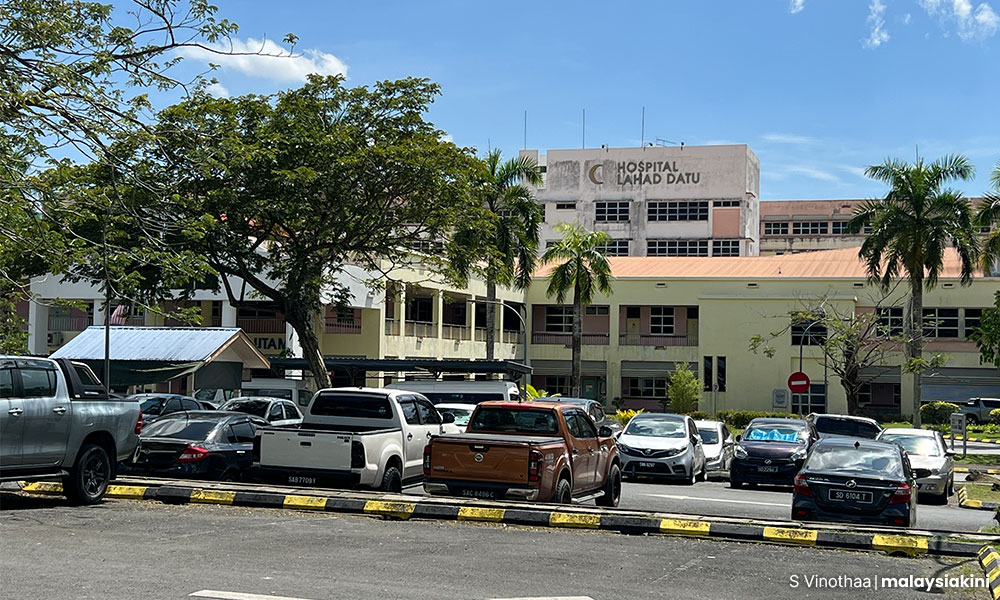
The adoption of Aimah’s baby was said to have transpired in Lahad Datu. In your experience, is it difficult for adoptions to go through?
It’s not easy for an adoption to go through, whether in the High Court or the native courts.
The chiefs who preside in the native courts are trained, but I don’t know how stringent the proceedings are.
That's why it (the adoption process) takes some time. I have no specific knowledge of how long it takes in the native courts.
However, adoptions are handled in the High Court (located in Kota Kinabalu). I don’t know how it was done in Lahad Datu.
Is the biological mother’s consent absolutely necessary in adoption cases?
No matter what, the consent of the mother is necessary.
Furthermore, they (the Welfare Department) cannot take the child from the mother without her consent and I have seen court adoption papers.
So even if the Welfare Department were to take over the child, the adoption process is another stage to go through.
To challenge this adoption, Aimah would need legal support. Can the National Legal Aid Foundation assist her?
Stateless people do not qualify for legal representation through the National Legal Aid Foundation, which is only for citizens.
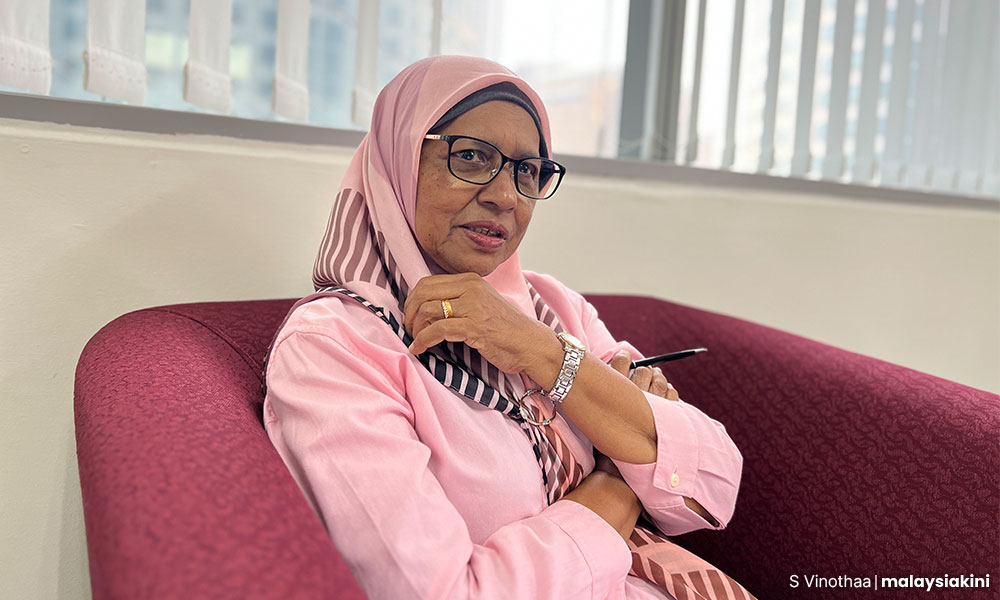
We understand that Suhakam is also investigating the case of a murder-suicide involving a teenage Bajau Laut mother and her five-month-old baby at the Lahad Datu Hospital in 2020. What have you found out about the case?
The hospital informed us that the patient was likely to have been scared in the hospital and had communication problems because she could not speak good Bahasa Malaysia.
Our sources tell us that the stateless patients, including this teenage mother, are subjected to rigorous demands for payment. Do you think the hospital is being unreasonable in its zeal to collect these fees from stateless patients?
Sabah ranks the highest in non-collection of fees from non-Malaysians and the Lahad Datu Hospital is RM3 million in the red because of fees not collected from undocumented people.
The hospital has been queried on this and this is partly the reason why they have to collect the fees.
However, there is a lot of humanity in the Lahad Datu Hospital.
It is the only hospital in Sabah that has introduced a standard operating procedure to allow patients charged with the “foreigner fees” to pay in instalments.
Is there room for discretion in collection of fees?
The (Lahad Datu) hospital director is the only one who has the discretion to waive payment, not the medical officials.
He tried to exercise his discretion as much as possible, so to say that there is absolutely no leniency, I will disagree.
The hospital is trying its best because when we talk to them we can really see that they are pressured.
The question of fairness is a bit hard (to address) and it’s a tough decision to determine the limit of accommodation for outsiders and undocumented migrants.
And there are impoverished Sabahans who are exempt from payment, making it challenging to find a balance.
So where do we draw the line? Whether they can accommodate the outsiders as well as the undocumented migrants is a tough call.
What sort of complaints has Suhakam received about medical fees charged to the stateless and undocumented community?
We received very few complaints about the RM100 registration fee.
Undocumented migrants sometimes prefer to go to private clinics which cost a similar amount of RM60 or RM70.
The issue is in the Yellow Zone for follow-ups and outpatient treatment (where patients have to pay an RM120 registration fee for each visit).
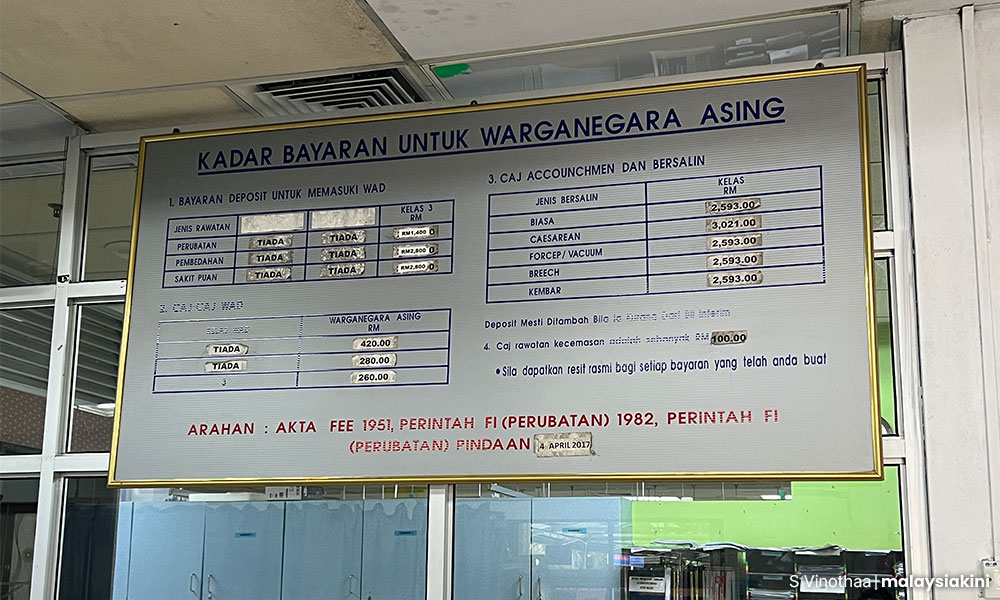
If the Health Ministry circulars on fees do not explicitly address stateless or undocumented individuals, why must a “foreigner fee” be imposed on them?
You are either Malaysian or not and the fees are there to protect Malaysians.
I think they have to prioritise the locals first and if we give the same (fees) there will be resentment because it raises the question of who is funding the stateless.
How can the Health Ministry manage this better?
Improve allocations for Sabah.
At the moment, all the states receive the same amount of allocation and Sabah is a large state which should be given a bigger budget.
The undocumented and stateless community in Sabah is larger than in other states. How has Sabah dealt with this issue of undocumented persons?
The presence of undocumented individuals was not being addressed as the state views them as people who are not supposed to be there and this attitude left a gap in the system that was becoming a problem.
Suhakam does not verify the statelessness of individuals whose complaints we investigate.
(In the case of the Bajau Laut villages in Lahad Datu), the state government has identified a place to resettle the community.
They have gazetted a seafront location and it is facing the sea because they are aware that they are seafarers.
Babies born in Malaysia to stateless parents do not even get birth certificates. Why is this so and should they get birth certificates?
The state does register children born to undocumented parents with birth certificates that declare them to be non-citizens but this is a highly contentious issue.
The locals fear that with the issuance of birth certificates, the undocumented would eventually be able to get citizenship.
Different undocumented communities are treated differently by the Sabah government. Can you explain the difference between them?
The state views those from the interiors of Sabah who are unregistered and those with the IMM13 documentation as stateless while all others are undocumented migrants.
(The IMM13 is a document issued to refugees who fled the violence in Mindanao, Philippines to Sabah in the 1970s, and their descendants.)
That’s how they can start looking at the problem, otherwise, they don’t know where to start.
If they are from Pensiangan, Keningau, Tongod or Kota Belud, they are natives.
The IMM13 holders can get married and can work (legally), but the others (who do not hold the IMM13) cannot.
The state views IMM13 identification holders as refugees and has plans to assimilate them into the population.
What do you think of this move?
I recommend that an authorised historian study their lineage to find out if IMM13 holders wanting to be assimilated were truly in Sabah before the formation of Malaysia.
Many have not been able to pick up Bahasa Malaysia despite their claims of living in Sabah for many years or even generations.
Most of the stateless individuals in Kota Kinabalu are of Filipino descent or citizens. Many claiming to be stateless are actually being deceptive about their immigration status.
Some stateless find it inconvenient to return to the Philippines to renew their immigration documents and take advantage of the freedoms granted through the IMM13.
Others are attracted to the higher-income opportunities in Malaysia, even if they are constantly on the run. There are also cases where individuals give birth in Malaysia and intentionally withhold their nationality.
The National Registration Department and the Immigration Department handle such inquiries respectively and each has discovered cases where stateless individuals conceal their citizenship.
Part 1: Baby snatching: How stateless mums lose their infants in Sabah hospital
Part 2: Stateless boy with HIV dies after deprived treatment for years
Part 3: Mounting hospital bills led to stateless mother-infant murder-suicide in Sabah
Part 4: Toddler’s death by croc attack shows tragic fate of the stateless
Part 5: Generations of Sabah stateless living in landfill may be evicted
/file/publisher-c1a3f893382d2b2f8a9aa22a654d9c97/2023/09/a6ecbecb1f631d1b504674858c921ac4.jpg)
/file/publisher-c1a3f893382d2b2f8a9aa22a654d9c97/2023/09/1811056fe44c591880f44a57a1deddd4.jpg)
/file/publisher-c1a3f893382d2b2f8a9aa22a654d9c97/2023/09/df61efc2e2f45099bbe40bb9cd736549.jpg)
/file/publisher-c1a3f893382d2b2f8a9aa22a654d9c97/2023/03/c6a3b1273ed473e67e38fe98809d86dc.jpg)


Are you sure you want to delete this comment?
This action cannot be undone.