


/file/publisher-c1a3f893382d2b2f8a9aa22a654d9c97/2024/08/c518ffe71d3046b78466e604684cd6fd.jpg)

Maverick ROTTW publisher Rom keeps looking forward
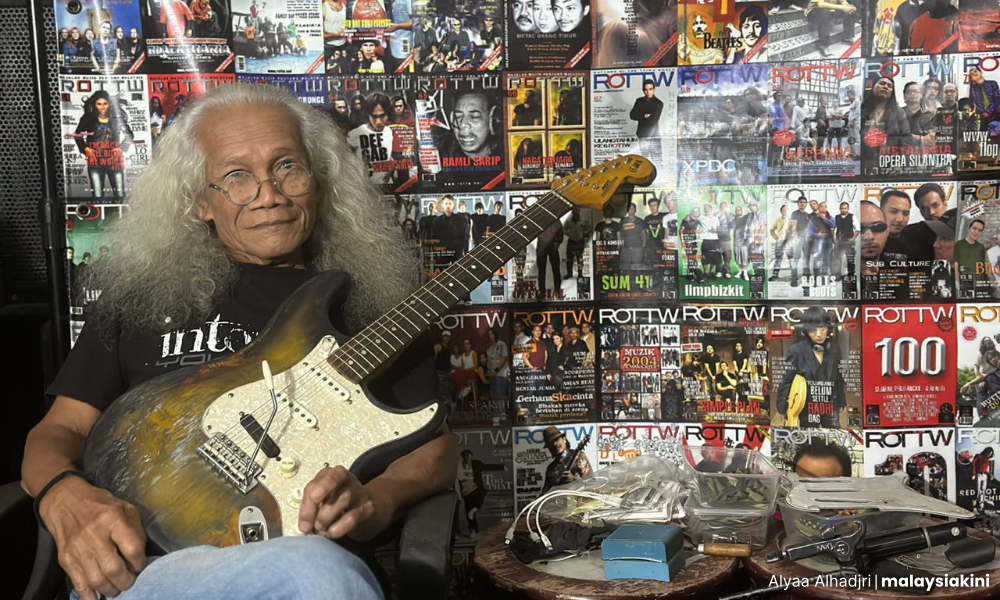
MALAYSIANSKINI | With a shock of long white hair and a house that looks like a haphazardly stacked museum of rock music, Mohd Rom Mohd Noor cuts quite an unlikely figure in the suburbs of Selayang.
Perhaps best known as the publisher of the iconic rock magazine ROTTW (short for Rhythms of the Third World), which ran from 1996 to 2016, he has played several roles in the music industry.
From supplying sound and guitar equipment to owning a music store, mentoring young bands, playing music himself and most prominently as a journalist and publisher.
Port Dickson native Abang Rom, as he’s fondly known, took a circuitous route to a career in publishing..
MALAYSIANSKINI | With a shock of long white hair and a house that looks like a haphazardly stacked museum of rock music, Mohd Rom Mohd Noor cuts quite an unlikely figure in the suburbs of Selayang.
Perhaps best known as the publisher of the iconic rock magazine ROTTW (short for Rhythms of the Third World), which ran from 1996 to 2016, he has played several roles in the music industry.
From supplying sound and guitar equipment to owning a music store, mentoring young bands, playing music himself and most prominently as a journalist and publisher.
Port Dickson native Abang Rom, as he’s fondly known, took a circuitous route to a career in publishing.
“I was the oldest of seven children and the oldest grandchild as well. I was supposed to be a medical doctor, and in 1974, I went to Universiti Malaya (UM). Then I discovered myself and flunked. Then I went to science, and again, I flunked.
“I was in a band called Bomb. We never recorded but we backed the upcoming Sudirman in 1975. I remember our drummer Yaakob Ahmad walked around campus barefoot all the time.
“The cartoonist Lat was also frequenting the UM scene although he was already in New Straits Times at the time,” the 70-year-old told Malaysiakini.
Rom recalled 1974 as a baptism of fire.
“It just so happened that when I joined it was at the time of the student protests led by (Prime Minister) Anwar Ibrahim and Hishamuddin Rais.
“I had my taste of tear gas during the protests when they came to my room but I did not follow down that path. I am not elitist and about grabbing power.
“I am the mass, the grassroots. I create my own world and build on personal relationships.
“Overall, I believe in change but not in politicians,” he said.
Irresistible call of music
He pinpoints a love and obsession with music as a defining aspect of his character.
“It was always there. When I was a child singing songs out loud. It was a short journey from the pop yeh yeh singer Jeffreydin to the psychedelic sounds of the Beatles and Jimi Hendrix.
“I loved it all the way. There was no specific thing – nothing consistent - just whatever the sounds were doing to you, the irresistible call of music. Especially in that era, they really captured your imagination and held you in a spell. Music could define aspects of culture - the hippies, the punks, what have you.
“I also always had a strong DIY streak. When I was young, I cut up a piece of wood, put nails in it to tie the string and built my own guitar,” he recalled.
He eventually left UM and turned to accountancy which included three years doing his International Certified Management Accountant (ICMA) in London in the late 1970s.
“It was an explosive time to be in London. There was punk but also a lot of other styles.
“The legendary guitarist Jeff Beck was a major influence on me. I saw him as a master who told stories without words. In 1980 I saw him in the Hammersmith Odeon. For three hours, my back didn’t touch the seat because I was so mesmerised.
“I also saw the Welsh hard rock band Budgie in the Marquee, up close with lead singer Burke Shelley right in front of me. Those were times I can’t forget. I was also very influenced by Eric Gale and Roy Buchanan.
“I even went to Italy as a folk musician doing songs like Simon & Garfunkel’s ‘The Boxer’,” he recalled.
Setting up shop
After coming back to Malaysia, Rom tried to toe the line by pursuing a career in finance. He stuck to the plan for a little while, but eventually, his passion for music took over. In the mid-1980s, he got married but also moved firmly into the music world.
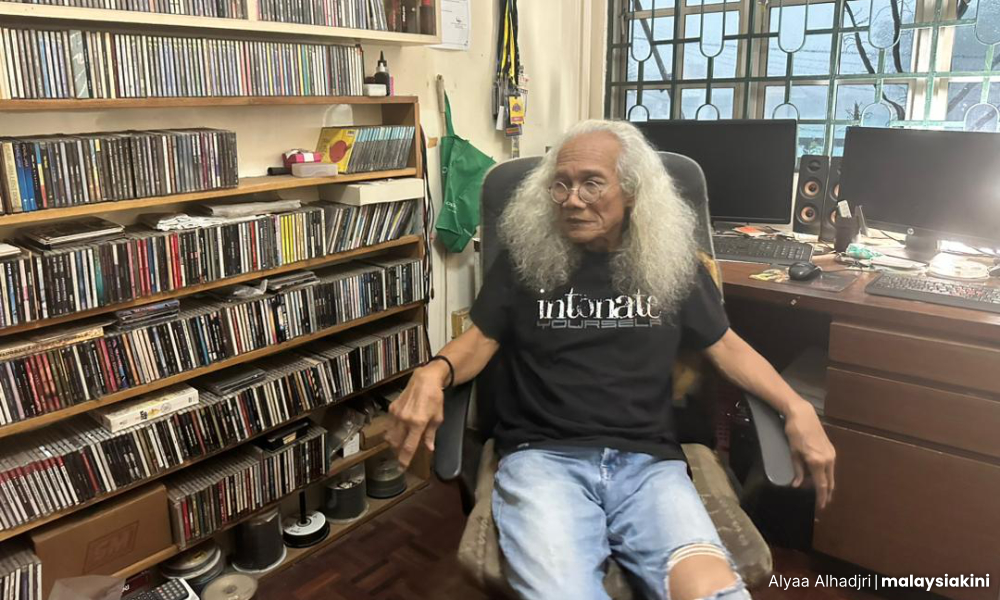
“I was never in a single place for long. I was always in a hurry to get to the next level.
“Writing about music was not my profession. I began with selling music equipment where I was the exclusive distributor. With each step that I took, I had to let go of something.
“In 1989, I opened a guitar shop in Wilayah complex called Rom Custom Guitar, which was probably the only shop where we really layan (engage) people, and it became a pod for musicians.
“Samad from Lefthanded, Kid from Search were there in the early days, all the way to OAG and Butterfingers and even Bunkface. I was always DIY - you build the guitar yourself, record the music yourself, you control your sound.
“My aim was perhaps unique. It was to guide a guy from beginner to star,” he mused.
Rom said that when he moved from guitars to fully importing professional equipment, he decided to start up ROTTW.
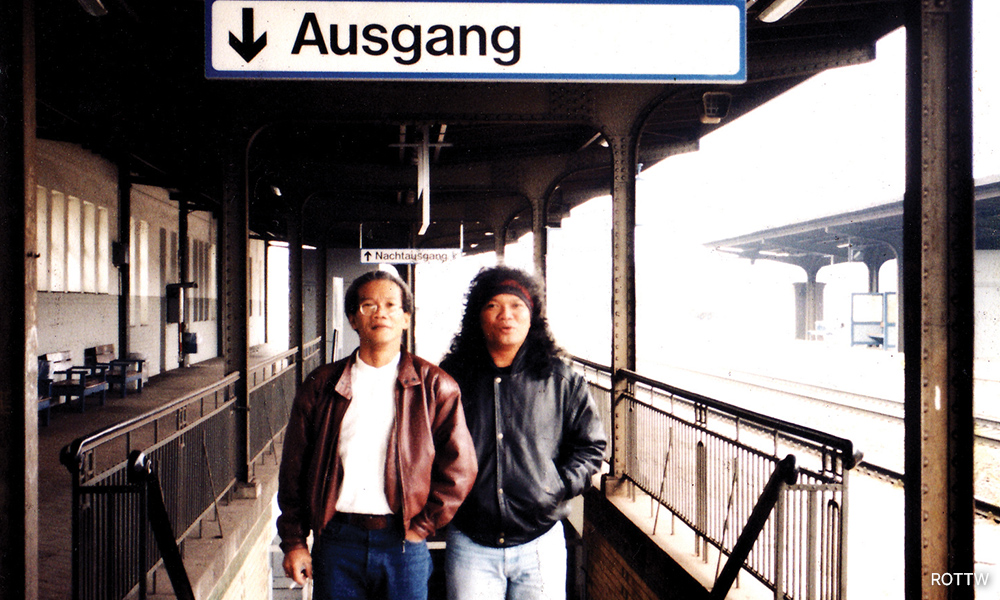
“That was started in 1996. I had been to Frankfurt in 1995 where I was playing blues and bending the notes in places they didn’t expect. I saw that music goes in cycles of influence. In the 60s the English turned to American bluesmen, which itself was imported from Africa.
“I believe Malaysian musicians need to embed who they are even into playing the world music.”
A unique niche
He might be a little-known name to the younger bands of today, but Rom still has over 76,000 followers on Facebook.
This is largely due to the impact of the magazine which ran for 20 years.
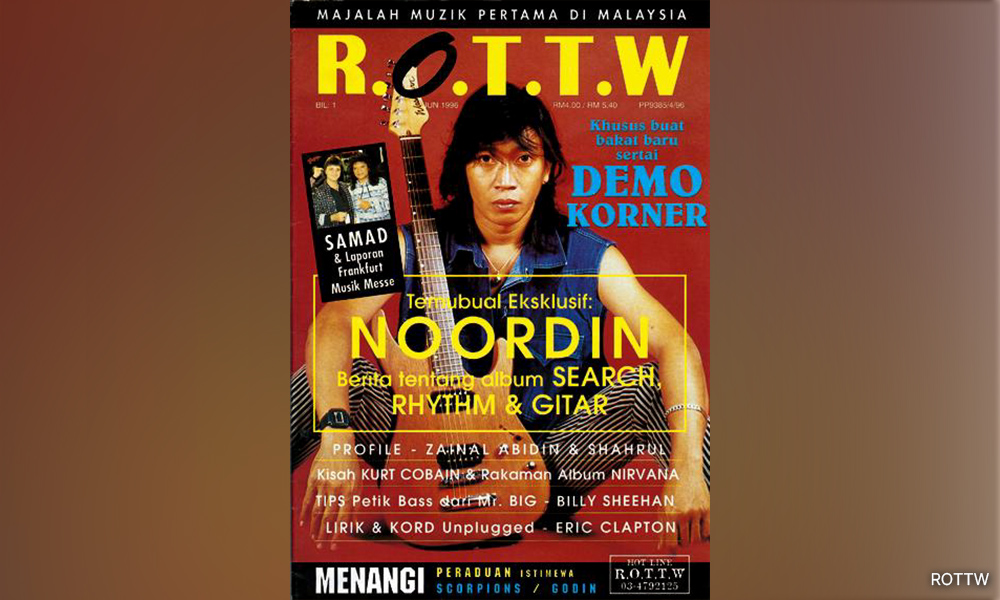
“The first issue of ROTTW was priced at RM4 and came out in June 1996. It was erratic at first but then became monthly until 2016. To me all the while, it had a purpose but not truly a commercial one.
“This was not a magazine about gossip but about music. In those days, some Malay media kacau (harassed) those boys like nobody’s business. I have a personal desire that people must benefit from what I do.
“My best interviewees were Steve Howe, the guitarist of Yes who could not stop talking. I also spoke to Ace Frehley of Kiss and jazz guitarist Steve Khan who liked me so much that he gave me 12 of his albums.
“I scolded Red Hot Chilli Peppers for their lousy sound in Singapore in 2000. I also met Metallica’s James Hetfield, but didn’t like him much,” he recalled with a laugh.
Rom lamented that the archiving of music in Malaysia was so poor during most of his time.
“It can’t be helped. We didn’t have internet and easy ways of documenting. That’s why so much is lost.
“I myself didn’t take the trouble to do a lot of recording.
Looking to the future
Rom is working on a book to document his efforts, which also include running “Guitar and Bass” magazine for two years and organising the ROTTW Soundstage series of gigs.
“Through the years people come in and out, so I have a huge community. Now I am trying to see how I can assist.
“I had to close the magazine. It had done its job, the name is there. There is no choice, time flies.
“But the things I do, no bloody fool will do. To try and create change,” he said.
He said the new dilemma was that making music is cheaper but selling music doesn’t really happen for most artists.
“You get just a pittance from Spotify. I also fear that AI could kill music - the only place to make a living is live shows, but even that doesn’t compare to pre-pandemic levels,” he said.
Rom also said there needed to be openness in the Malaysian and Malay art worlds.
“My stance is we are not a creating nation - we are a following culture.
“If we want to be ourselves, don’t conform - you have to do it even if people won’t like you.
“Look at our musicians. From birth you are playing covers - you will never know who you are as a musician, as a person. Club boys don’t add to the value of art.
“If you sound like so and so here and so and so there … where do you sound like yourself? What do you have to say?” he questioned.
He also thought Zainal Abidin’s solo album from the early 1990s was a masterpiece, but they are few and far between.
“He was very lucky because it was much better than Headwind (Zainal’s previous band). The brain behind it was the songwriter Mukhlis Nor, the audio artistry of Roslan Aziz and the soulful rhythmic contribution of Zahid Ahmad.
“But we don’t have many creative forces like them,” said Rom.
“When I do a review, I want to be fair. I may whack you to your face, but I want to be fair.
“Many can’t take constructive criticism, but I bluntly give it for a reason. Sometimes I scar you so you remember it. If you can’t take all this, you should balik kampung.
“Just imagine … some have even feared my review and refused to send me their new album!” he said with a laugh.
MALAYSIANKINI is a series on Malaysians you should know.
Innovative way to assist visually impaired Muslims in prayer
20 years on, FreedomFilmFest still all about nation-building
Borneo Komrad activist dedicates life to being voice of the unheard
From first graduate in family to Harvard-trained global neurosurgeon
/file/publisher-c1a3f893382d2b2f8a9aa22a654d9c97/2024/06/429722857eb27f7790597de97381f359.jpg)
/file/publisher-c1a3f893382d2b2f8a9aa22a654d9c97/2024/05/a8438da74f6c1e4ac65c08205e5d255a.jpg)
/file/publisher-c1a3f893382d2b2f8a9aa22a654d9c97/2024/05/10fa263253a4af582a6d44f095918049.jpg)
/file/publisher-c1a3f893382d2b2f8a9aa22a654d9c97/2024/05/ecf5a5afac3585724081f319a58a7dc5.jpg)
/file/publisher-c1a3f893382d2b2f8a9aa22a654d9c97/2024/04/f4522b1f18fad3f28e4fbe2d7c0b8676.jpg)


Report this comment
Are you sure you want to delete this comment?
This action cannot be undone.