


/file/publisher-c1a3f893382d2b2f8a9aa22a654d9c97/2024/04/353766a1e3b67e870b070995f260fd14.jpg)

KINIGUIDE | 'Deity's send-off': Unravelling move against Guan Eng
KINIGUIDE | DAP is set to hold its Central Executive Committee (CEC) election on March 16.
Originally intended to select a leadership team to prepare for the next general election, internal conflicts have unexpectedly intensified, leading to a movement aimed at removing Lim Guan Eng.
KINIGUIDE | DAP is set to hold its Central Executive Committee (CEC) election on March 16.
Originally intended to select a leadership team to prepare for the next general election, internal conflicts have unexpectedly intensified, leading to a movement aimed at removing Lim Guan Eng.
Guan Eng, who was nicknamed “tokong” (deity) in 2012 after then-Penang deputy chief minister Mansor Othman criticised his perceived arrogance, has long been uneasy with the moniker despite later clarifications that it signified esteem. Now, Chinese-language media and political circles have taken inspiration from this infamous title and dubbed the movement the “deity send-off”.
The “deity send-off” ceremony is a traditional pre-Chinese New Year ritual where households bid farewell to deities, especially the Kitchen God, as they ascend to heaven to report on the family’s deeds.
Guan Eng stepped down as DAP secretary-general and assumed the role of chairperson in 2022. So why has he become the centre of the storm in this party election?
Malaysiakini spoke to various sources within DAP to outline what we know so far about this intense contest.
Why is this DAP election particularly intense?
DAP’s past polls have largely projected an image of unity, with almost two decades passing without significant factional struggles. However, this time, the contest is markedly different.
Many within the party believe that the tensions originated in Penang and were ignited by the selection of candidates for the 2023 Penang election.
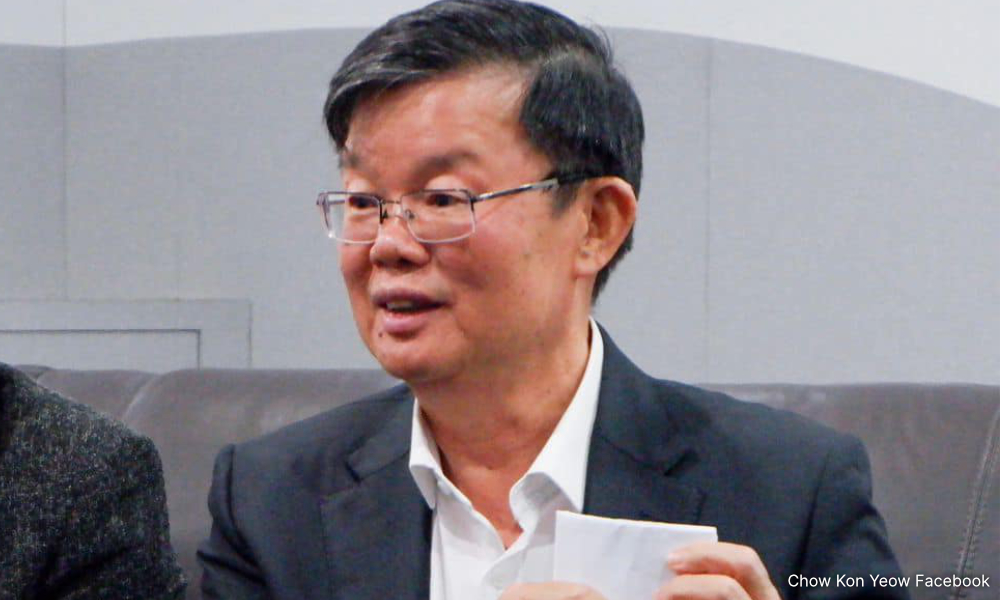
At least two informed sources told Malaysiakini that Penang Chief Minister Chow Kon Yeow had travelled to Kuala Lumpur specifically to submit a candidate list to the party’s candidate selection committee, known internally as the five-member committee.
However, Chow was not invited to discuss with the powerful committee. Instead, he merely submitted the list and returned to Penang.
Ultimately, only 10 incumbent assemblypersons were retained in their original constituencies, one was moved to a different seat, and eight – including five incumbent exco members – were dropped.
As most of the candidates on this list were Guan Eng’s supporters, it gave the impression that his influence overshadowed that of Chow.
Although DAP secretary-general Anthony Loke repeatedly assured that Chow would remain chief minister, the party leadership still decided on a major restructuring of DAP’s exco in the state government.
A year later, ahead of the Penang DAP election, speculation arose that Guan Eng was attempting to install his sister, Hui Ying, as state chairperson to pave the way for her to become the next chief minister.
This provoked an even greater backlash within the party. However, with Loke’s backing, Human Resources Minister Steven Sim was elected as state DAP chief, while Hui Ying remained state DAP secretary.
Those opposing Guan Eng argue that if his influence is not curbed in the upcoming CEC election, steering the party in the future will become even more difficult.
At least two neutral DAP leaders outside of Penang told Malaysiakini that to resolve this dispute, the root cause – Penang – must first be addressed.
One of them noted that there was no reconciliation after the state DAP election last September, hence, the tensions have now escalated to the national party election.
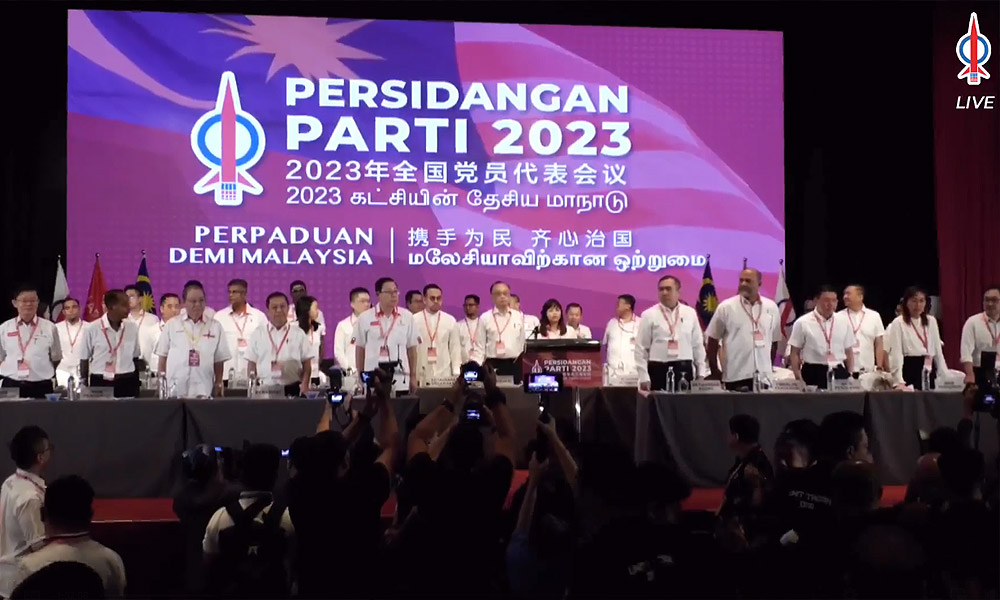
“Everything stems from Penang, and now it has spread nationwide,” said the source.
The other leader suggested that Guan Eng should remain in the CEC but be removed from the chairperson position.
However, the source added that, given his personality, he is unlikely to yield to the anti-Lim faction in Penang.
What is the five-member committee?
The five-member committee is DAP’s core leadership body responsible for selecting election candidates.
Since the party constitution does not explicitly mention this committee, critics argue that candidate selection should be handled by the secretary-general, the CEC, or the Central Working Committee (CWC).
Unlike other parties where the president is the leader, DAP’s highest executive authority rests with the secretary-general, as stipulated in its constitution.
The CWC functions similarly to the political bureaus of other parties, such as Umno and PKR.
In the past, the candidate selection committee has operated with three or four members instead of five.
The committee comprises secretary-general Loke, parliamentary leader Nga Kor Ming, party chairperson Guan Eng, deputy chairperson Gobind Singh Deo, and vice-chairperson M Kulasegaran.
As Kulasegaran has announced that he will not contest in the CEC election, the committee will likely be restructured post-election. If Guan Eng loses the chairperson position, he may also be removed from the committee.
Who are key figures in this election?
Lim Guan Eng: The embattled former secretary-general
Sixty-five years old, party chairperson
Despite stepping down as secretary-general, he remains influential
Engaging grassroots members to secure support and privately claims that “external forces” are interfering in the election
If he loses the chairperson position, he may no longer control key decisions, such as candidate selection
2. Anthony Loke: The steadily rising secretary-general
Forty-eight years old, transport minister
Took over as secretary-general in 2022 and has steadily built his leadership authority
Has two more terms under the party’s term limit
Asserted his influence in the Penang DAP election by backing Sim, disrupting Guan Eng’s alleged plans
If Guan Eng’s influence wanes, Loke will have greater freedom in shaping DAP’s future direction
3. Nga Kor Ming: The de facto No 2 in the party
Fifty-three years old, housing and local government minister
Party vice-chairperson and parliamentary leader
Has firmly established control in Perak, one of the party’s largest delegate bases
Seen as a likely successor to Loke as secretary-general
Unlikely to take over the chairpersonship now, as it may disrupt his future leadership prospects
4. Gobind Singh Deo: Defeated in Selangor DAP election, but a win in the CEC election?
Fifty-two years old, digital minister
Party deputy chairperson and a member of the candidate selection committee
Son of the late party chairperson Karpal, known for his strong oratory and political style reminiscent of his father
Suffered a setback in last year’s Selangor DAP election, failing to secure a state committee seat and hence losing the state chairpersonship
Deemed as one of the potential candidates to replace Guan Eng as chairperson if the post is vacant
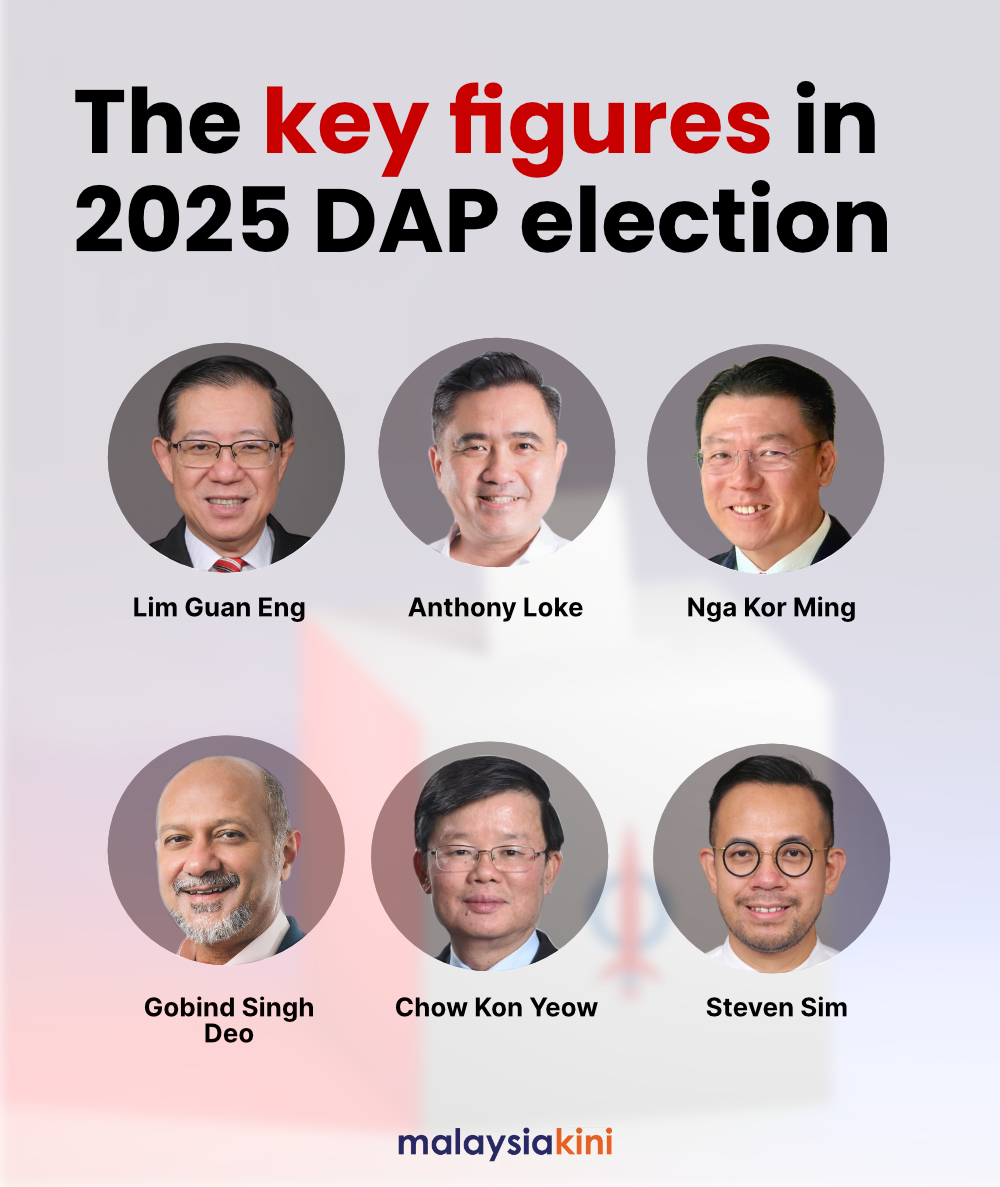
5. Chow Kon Yeow: Stepping down in Penang, focusing on the CEC election
Sixty-seven years old, Penang CM and party vice-chairperson
Previously skipped the Penang DAP election last September and stepped down as state DAP chairperson
Has announced his candidacy for the CEC but has not confirmed if he would accept the DAP chairperson post if he was voted into the CEC and offered the title
Seen as one of the alternative candidates for chairperson backed by the anti-Lim faction
6. Steven Sim: The rising star though labelled a “traitor” by opposing faction
Forty-three years old, human resources minister
Party organising secretary
Won the Penang state chairpersonship last September but was labelled a “traitor” by Guan Eng’s camp
Was publicly heckled after a tribute dinner for Lim Kit Siang on Feb 15
What do Guan Eng supporters say on keeping him in leadership?
Guan Eng’s supporters argue that he still has much to contribute, particularly as he is not bound by a ministerial position, allowing him greater freedom to speak on sensitive issues.
A CEC member, speaking anonymously, said DAP needs a blend of senior and young leaders, especially when dealing with seasoned political figures like Prime Minister Anwar Ibrahim and Umno president Ahmad Zahid Hamidi.
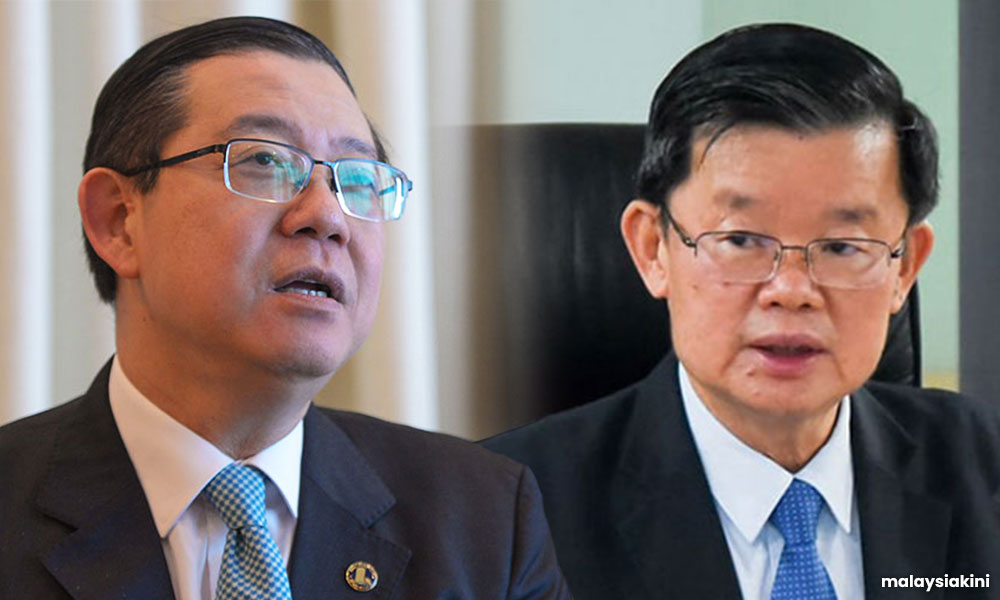
“We love the party and don’t want to see DAP being bullied,” said the source.
The CEC member also explained that while outsiders may perceive Guan Eng’s approach towards Chow as aggressive and overbearing, he has his reasons.
“If we put ourselves in each other’s shoes, we can understand both perspectives. Chow would feel, ‘I have my own way of doing things, you’re no longer in power, why are you interfering with me?’
“But Chow has made several problematic decisions, which Guan Eng considers unacceptable.”
The CEC member cited issues such as cash flow problems and water shortages under Chow’s administration, as well as the awarding of the Batu Kawan Industrial Park 2 project without an open tender, which violated the party’s “CAT” (Competency, Accountability, Transparency) governance principles.
“For Guan Eng, if just one term under Chow has resulted in so many issues, he has serious concerns. So, from his perspective, I sympathise with Chow, but when it comes to governance, he is no match for Guan Eng.
“People only see a former leader bullying Chow. But from Guan Eng’s perspective, he is trying to save the Penang government and the situation,” the source added.
Among those opposing the “deity send-off” movement, some are not necessarily Guan Eng’s supporters but rather neutrals, such as former CEC member Teng Chang Khim and former DAP Youth deputy chief Chiong Yoke Kong.
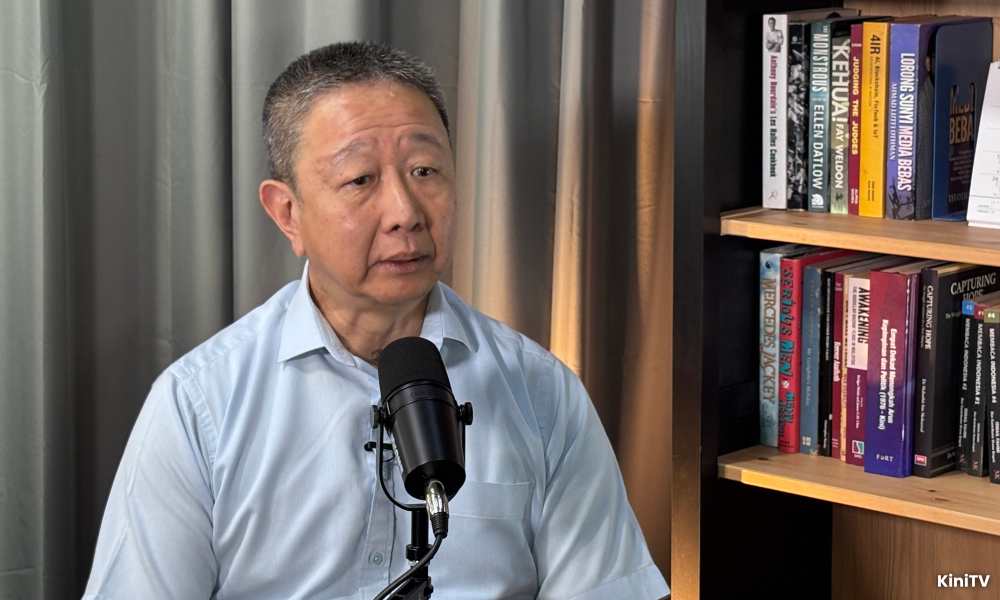
Teng opined that Guan Eng should be retained in the CEC for three more years to give the new generation of leaders more time over the next three years to build their leadership credibility and track record to navigate the political landscape.
However, he opposes Hui Ying’s retention in the CEC, warning against the continuation of a “Lim dynasty” and advocating against family-based leadership succession in the party.
How does DAP elect its leaders?
DAP’s CEC election follows a two-tier process. Delegates first elect 30 members into the CEC, of which at least nine must be women, as required by the party’s constitution.
After the first round, the 30 newly elected CEC members convene and internally vote for the office-bearers, including the secretary-general—the highest post in DAP, comparable to the president’s role in other parties.

Therefore, any leader aspiring to a top position must ensure both themselves and their allies secure enough votes in the first round to stand a chance in the final election.
This election will not only determine the party’s leadership but also mark a generational transition.
If Guan Eng loses the chairperson position, the five-member committee may be reshuffled, redistributing its decision-making power.
Additionally, several veteran leaders - including Kulasegaran, Tan Kok Wai, Fong Kui Lun, and Phee Boon Poh - are not contesting, signaling that the next generation is set to take the reins.
Out of the four, only Phee is not a sitting CEC member.
/file/publisher-c1a3f893382d2b2f8a9aa22a654d9c97/2024/08/8d50d9d87a6f9fb7f903d3ad75ed2be7.jpg)
/file/publisher-c1a3f893382d2b2f8a9aa22a654d9c97/2025/02/ab199afdca80361947fa9715ff28639d.jpg)
/file/publisher-c1a3f893382d2b2f8a9aa22a654d9c97/2020/10/a189fa4a58c132a3ff89d2823868c5cf.jpg)
/file/publisher-c1a3f893382d2b2f8a9aa22a654d9c97/2025/02/07e3d70f551b9f107b4c6cc1ad58b2db.jpg)
/file/publisher-c1a3f893382d2b2f8a9aa22a654d9c97/2025/02/710acbf3ef4be872748ec04006683b3c.jpg)
/file/publisher-c1a3f893382d2b2f8a9aa22a654d9c97/2025/02/2195d6e646efda0528464afc9b1bf49a.jpg)
/file/publisher-c1a3f893382d2b2f8a9aa22a654d9c97/2025/02/a43e9f1858a341c0e940cffff044d511.jpg)


The heading of this article "deity's send-off" is not only disgusting, but also clearly show the author is strongly biased against LGE. This hark back to the time when LGE was a chief minister and someone in PR equated him to a "tokong". It has been a continuous effort to remove LGE from DAP. Just like they wanted to remove AI from PKR before he becomes a PM.
Report this comment
Are you sure you want to delete this comment?
This action cannot be undone.