


/file/publisher-c1a3f893382d2b2f8a9aa22a654d9c97/2026/05/332418e3b19fd56b9ec95c5b991d9bf5.jpg)

Rafizi says Bersama to be merit-based, seeks young professionals ready for 'leap of faith'
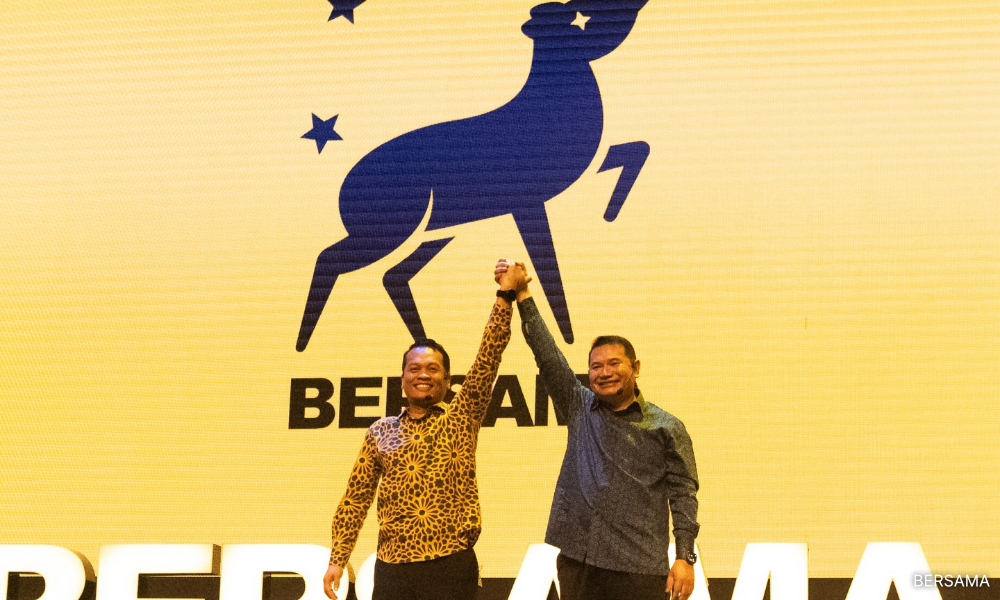
Parti Bersama Malaysia (Bersama) will be made a merit-based political party, said its de facto leader, Rafizi Ramli, as it aims to attract young professionals and to offer voters a pool of talented candidates as their potential leaders.
According to the former economy minister, there is a plan to include in Bersama’s constitution a requirement for its office-bearers to have competence and merit.
“Actually...
Parti Bersama Malaysia (Bersama) will be made a merit-based political party, said its de facto leader, Rafizi Ramli, as it aims to attract young professionals and to offer voters a pool of talented candidates as their potential leaders.
According to the former economy minister, there is a plan to include in Bersama’s constitution a requirement for its office-bearers to have competence and merit.
“Actually, I have drafted a new constitution for Bersama from scratch. But this would be for later, as constitutional amendments would have to go through the due process required by the Registrar of Societies, so we will maintain the current policy for now while we get ready for the upcoming general election.
“But in this new constitution that I drafted since October (...) I believe Bersama will be the first political party whose constitution puts merit and competence to ensure its main office bearers are fit to form a shadow cabinet and speak about government policies,” Rafizi said during a podcast.
The former Pandan MP was a guest speaker on the “Lebih Masa” podcast hosted by journalist Kamarul Bahrin Haron, aired on YouTube last night. He was joined by former Setiawangsa MP Nik Nazmi Nik Ahmad, who is also a Bersama co-leader.
Untapped sea of talent
Rafizi said their plan to introduce a new structure and culture in Bersama is to gain the confidence of young talents who were previously uninterested in the political arena.
The country, he added, has so many talents overlooked by political parties.
“Usually in politics, when the (parties) look for candidates, they always try to search from among the existing pool when we have a big ocean out there to fish from.
“I believe we will move toward this approach, but we also have to balance it with necessity. For example, if there are seasoned politicians who are interested in joining,” he said.
Rafizi said there have been several young professionals who expressed their readiness to leave their careers, including some who plan to return from overseas to contest in elections, but admits that it would be a challenge to convince more to do the same.
“It’s a leap of faith. It will depend on how many such figures we can put forward, because I think the country needs it. So everything that we do must be in this direction,” he said.
Responding to a question from the host, Rafizi said he believes the strategy might work, citing recent global voting trends where young professionals succeeded in elections.
He pointed to New York mayor Zohran Mamdani, Hungarian Prime Minister Peter Magyar, and the recent victory of C Joseph Vijay in Tamil Nadu.
Rafizi said the digital age has changed the political landscape, where social hierarchy is no longer a determinant in elections.
“The most powerful campaigning tool is an idea, and it goes back to the very nature of digital (communication), which is, as I have mentioned before, the network effect,” he said.
/file/publisher-c1a3f893382d2b2f8a9aa22a654d9c97/2026/05/001e4e941e1b99097b1f88de23ebcbf0.jpg)
/file/publisher-c1a3f893382d2b2f8a9aa22a654d9c97/2022/11/e3ce3e077c27179b101b9621d00562b6.jpg)
/file/publisher-c1a3f893382d2b2f8a9aa22a654d9c97/2026/04/fa4cde5cad7db18c286cee11618c9712.jpg)
/file/publisher-c1a3f893382d2b2f8a9aa22a654d9c97/2026/05/8e504c76680b1283419b0be3c26e827b.jpg)
/file/publisher-c1a3f893382d2b2f8a9aa22a654d9c97/2026/05/bd873d281f26f001e0626544fd68882a.jpg)
/file/publisher-c1a3f893382d2b2f8a9aa22a654d9c97/2026/05/d4cc452cc8a8575fabf2442e10cb272e.jpg)


Report this comment
Are you sure you want to delete this comment?
This action cannot be undone.