


/file/publisher-c1a3f893382d2b2f8a9aa22a654d9c97/2026/09/9f7b42bad8b5da7180e28db20e2d10e8.jpg)

PAS eyes ummah unity and Putrajaya, but road to federal power still bumpy
Throughout the 72nd PAS muktamar, which concluded on Saturday, the Islamist party’s steadfast insistence on spearheading ummah unity efforts remained a constant theme advocated by leaders and delegates alike.
Talks on the agenda were often coupled with pushes for an end to any delays hindering PAS’ cooperation with BN, particularly since the attendance of Umno leaders at the event in Kota Bharu, Kelantan, was perceived as an olive branch of sorts.
If Bersatu was previously considered a factor behind BN linchpin Umno’s cold shoulder towards cooperation with Perikatan Nasional, the party led by former prime minister Muhyiddin Yassin might no longer be an obstacle after PAS severed political cooperation with it.
Questions remain on how PN, helmed by..
Throughout the 72nd PAS muktamar, which concluded on Saturday, the Islamist party’s steadfast insistence on spearheading ummah unity efforts remained a constant theme advocated by leaders and delegates alike.
Talks on the agenda were often coupled with pushes for an end to any delays hindering PAS’ cooperation with BN, particularly since the attendance of Umno leaders at the event in Kota Bharu, Kelantan, was perceived as an olive branch of sorts.
If Bersatu was previously considered a factor behind BN linchpin Umno’s cold shoulder towards cooperation with Perikatan Nasional, the party led by former prime minister Muhyiddin Yassin might no longer be an obstacle after PAS severed political cooperation with it.
Questions remain on how PN, helmed by PAS vice-president Ahmad Samsuri Mokhtar as its chairperson, will eventually officially remove Bersatu - whether on paper or not - from the coalition.
Political observers expect to see how PAS manages Bersatu’s presence in PN post-muktamar, with PAS secretary-general Takiyuddin Hassan noting that a meeting will be held in Kuala Lumpur this month to discuss the position of PN’s component members - including Bersatu.
Ahead of the 16th general election, he added that the meeting with PN’s top leadership will also review the performance of the coalition’s state chiefs.
READ MORE: PN chief counters Hadi, says Bersatu still part of coalition
The scheduled review comes at a time when open demands have been voiced by Selangor PAS figures who want the state PN chief seat, currently held by Bersatu secretary-general Azmin Ali, to instead be occupied by a PAS leader.
/file/publisher-c1a3f893382d2b2f8a9aa22a654d9c97/2024/09/428dbd95c537a969f59e7c3eb2b6ab01.jpg "Bersatu Azmin Ali interview by Mkini malaysiakini 180924")
Besides Azmin, who is perceived to be a Muhyiddin loyalist, other Bersatu leaders also occupy positions in PN’s leadership - a matter which could be considered a thorn in not just PAS’ side, but also PN itself, which now includes former Bersatu deputy president Hamzah Zainudin’s Parti Wawasan Negara.
In a Selangor election scenario, capturing the state would likely be a target set by PAS-PN, but it is unlikely that it aims to achieve the goal together with Azmin or his Bersatu peers.
Similarly, BN is surely eager to settle its score after being ousted from the state’s administration nearly 20 years ago.
READ MORE: PAS calls for MN 2.0 to strengthen Malay-Muslim position
PAS-Umno ties not easy
While it appears that PAS is resolute for the time being in its decision not to look back after severing its political ties with Bersatu, the road to achieving a PAS-Umno unity dream is unlikely to be completely smooth sailing.
In particular, the upcoming Malacca election could act as either a minor speed bump or a road hazard for a PAS-Umno pact, with the severity of disruptions depending on how hard either party will step on the brakes.
READ MORE: How BN is using flawed polls results to deny PN equal partnership in Malacca
PAS has clearly stated its stance that it would prefer cooperation with Umno to proceed as it did during the Negeri Sembilan polls, when both parties avoided seat clashes in an alliance under the name of Malay-Muslim unity.
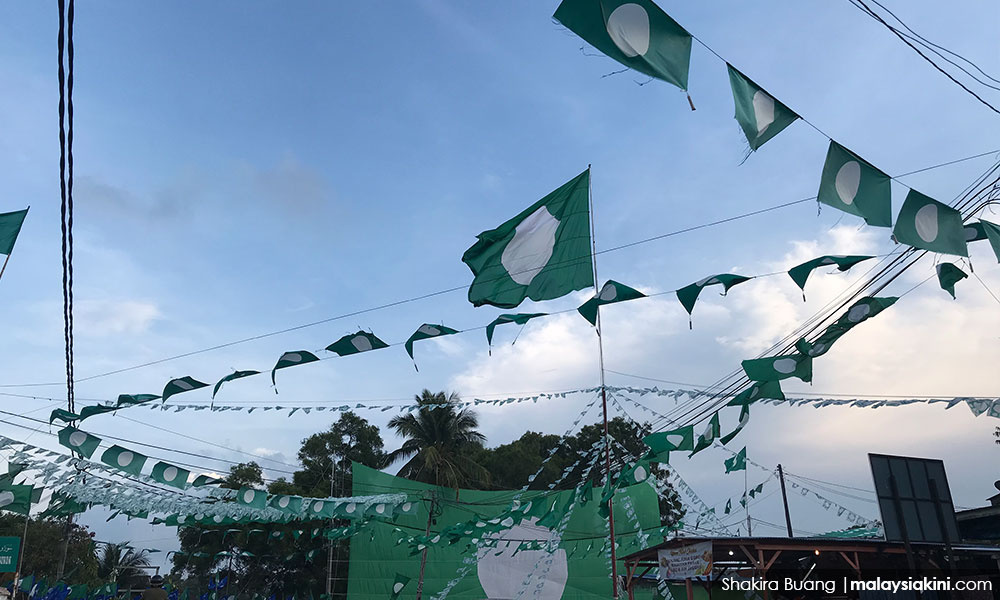
With compromise and a willingness to be magnanimous vital for any cooperation between PAS and Umno, would the latter party be willing to sacrifice a portion of BN’s current 21 seats in the land of Hang Tuah to PAS, which now has no state assembly representatives?
The GE16 question
Beyond Malacca, questions also arise on how a PAS-Umno cooperation will operate during GE16.
PAS’ leadership has repeatedly declared that it will defend all seats it currently holds, whether in state assemblies or Parliament, with several delegates stressing that the party should be firm in its mission to wrest control of Putrajaya.
So, would BN seek to field its representatives in the four states - Kelantan, Terengganu, Kedah, and Perlis - which PN administers? Or will Umno be willing to allow PAS to retain its leadership of the states?
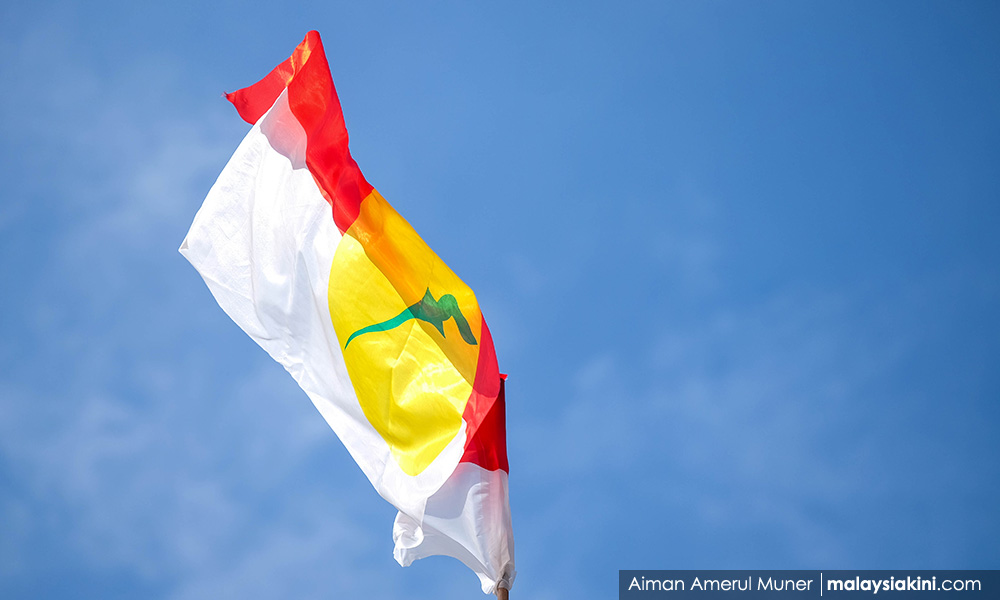
Additionally, calls for PAS to act as the leader in attempts to establish a government, including a Terengganu PAS’ delegate’s push for a prime minister candidate to come from the state, may lead to tensions in its dealings with BN.
Seat allocations among PN and BN, particularly among its non-Muslim component parties, might also cause some friction due to the overlapping nature of their targeted electorate.
However, tensions and anxieties might be assuaged if both parties are willing to consolidate their forces while focusing on the vast potential that could be in their grasp if they manage to land on Putrajaya’s doorstep.
Not sidelining non-Muslims
Amid pushes for ummah unity issued during the PAS muktamar, party deputy president Tuan Ibrahim Tuan Man affirmed that the unity is not “solely for the Malays” and will not sideline the rights of non-Muslims.
/file/publisher-c1a3f893382d2b2f8a9aa22a654d9c97/2026/09/c347e4f35b136a61c0e78b4de1517024.jpg "ceramah pas jubli intan 75 tahun pas muktamar kota bharu tuan ibrahim tuan man 050926")
However, earlier in the event, PAS Youth chief Afnan Hamimi Taib Azamudden implied that the influence held by Malay-Muslims as the majority population in Malaysia may be affected by other racial and religious groups if the community fails to rally its strengths.
Additionally, a Federal Territories PAS delegate said if the party succeeds in forming the next government after GE16, it should make the Federal Territories Department a “priority portfolio” to demonstrate how Islam can solve issues such as housing, urban poverty, and social wellbeing.
That push for Islamic governance was later underscored by party president Abdul Hadi Awang, who said that under the system offered by PAS, potential cabinet positions for non-Muslim leaders would not include ministries with the power to make policies affecting Muslims.
While the Marang MP’s winding-up speech specified that the “implementation of syariah must be by a Muslim”, it remains unclear whether this stance would extend to other ministries or to local authorities handling matters for the nation’s multiracial population.
/file/publisher-c1a3f893382d2b2f8a9aa22a654d9c97/2026/09/37996bb2b60eb58410ee7053c2845f7c.jpg "Muktamar Dewan Ulama PAS Pusat in Kota Bharu Kelantan DAY 2 030926 Abdul Hadi Awang speech")
Takiyuddin, who is also the PN secretary-general, also told attendees at a ceramah on the muktamar’s sidelines that by following all Islamic teachings - as championed by PAS - and abandoning whatever is deemed haram, a reward awaits in the form of a place in heaven.
READ MORE: Mahfuz's heavenly reminder: PAS not immigration counter for hereafter
In essence, PAS remains an Islamist party at its core, but whether it can win over non-Muslim voters (and some Muslim voters), rather than simply reassuring them, while also pushing for ummah unity, remains an open question.
/file/attachments/orphans/mahfuz1_452980.jpg)
/file/publisher-c1a3f893382d2b2f8a9aa22a654d9c97/2022/09/dd7ec8d77653ffd126a1923b443393bb.jpg)
/file/publisher-c1a3f893382d2b2f8a9aa22a654d9c97/2026/09/8c3e9367172479ce74556ba84db09fe0.jpg)
/file/publisher-c1a3f893382d2b2f8a9aa22a654d9c97/2026/09/c347e4f35b136a61c0e78b4de1517024.jpg)


Time to exit and move to another forum for genuine unbiased news
Mkini new format and font are ugly, unfriendly and a step backward..
MKini, can I comment that I dislike your new format and layout. Can I request for the old to be restored? And you are limiting each comment to only 500 characters.
Are you sure you want to delete this comment?
This action cannot be undone.