


Malaysia to review AI chip shipments for illegal re-exports, says deputy minister
PARLIAMENT | Malaysia will conduct its own review under domestic law to determine whether chips brought into or routed through the country were re-exported and whether the shipments complied with local laws, said Deputy Investment, Trade, and Industry Minister Sim Tze Tzin.
The review will be carried out by local authorities, while data centre operators seeking to use advanced US-made AI chips must also comply with US regulations.
The move comes after the US tightened export controls on the chips to several countries, including Malaysia, to...
PARLIAMENT | Malaysia will conduct its own review under domestic law to determine whether chips brought into or routed through the country were re-exported and whether the shipments complied with local laws, said Deputy Investment, Trade, and Industry Minister Sim Tze Tzin.
The review will be carried out by local authorities, while data centre operators seeking to use advanced US-made AI chips must also comply with US regulations.
The move comes after the US tightened export controls on the chips to several countries, including Malaysia, to further limit China’s access to those chips in the wake of alleged espionage targeting Nvidia to circumvent US sanctions.
Sim said his ministry was working with the Customs Department and other enforcement agencies to investigate the matter.
“Malaysia will conduct its own independent review in accordance with Malaysian law and based on the available evidence,” he said when winding up the committee-stage debate on his ministry’s Budget 2027 allocation in the Dewan Rakyat today.
He added that the ministry would engage industry players to assess how export controls could affect local companies’ operations and exports.

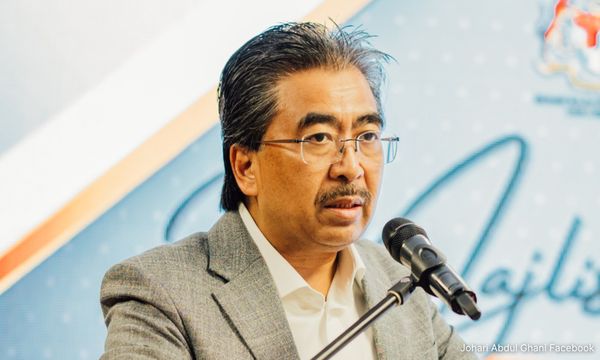
Sim also said his minister, Johari Abdul Ghani, had reiterated at the Asia-Pacific Economic Cooperation (Apec) forum in Shenzhen, China, that Malaysian data centre operators must comply with US rules if they wished to use advanced US AI chips.
READ MORE: How is Malaysia linked to Nvidia spy affair scandal?
US pact raises concerns over China ties
Earlier, Wan Ahmad Fayhsal Wan Ahmad Kamal (PN-Machang) cited the alleged diversion of Nvidia chips to question whether the Malaysia-US Agreement on Reciprocal Trade (ART) could draw Putrajaya further into the trade and technology rivalry between Washington and Beijing.
“If the US imposes sanctions on China tomorrow, will Malaysia also have to impose sanctions on our own largest trading partner?” he asked.
Article 5.1 of the agreement provides that Malaysia may adopt or maintain measures with equivalent restrictive effects, or agree on a timeline with Washington to address a shared economic or national security concern, after receiving US notification of a third-country import restriction.
Article 5.2 separately addresses alignment with US export controls.

The Investment, Trade, and Industry Ministry previously said both countries would discuss any proposed action under Article 5.1 and that Malaysia would only need to act on matters of shared concern.
China was Malaysia’s largest trading partner in 2025, accounting for RM541.9 billion, or 17.7 percent, of Malaysia's total trade.
Rare earth exports
Wan Fayhsal also questioned whether allowing limited exports of raw rare earths to France would encourage other countries to seek similar arrangements, potentially undermining Malaysia’s efforts to develop its downstream industry.
In response, Sim said the cooperation with France was aimed at developing the industry's value chain and building technological expertise locally, rather than granting any party exclusive access to Malaysia's rare earth resources.
He said exemptions under the moratorium on raw rare earth exports were limited to research and development, as well as processing, under guidelines that came into effect on Oct 1.
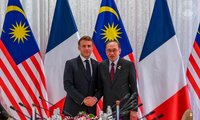
On Tuesday, Prime Minister Anwar Ibrahim said Malaysia had agreed to allow limited exports of raw rare earths to France after Paris committed to working with Malaysia on processing.
Anwar and French President Emmanuel Macron also witnessed the exchange of a memorandum of understanding on critical minerals as the two countries elevated their ties to a strategic partnership.
Meanwhile, Khairil Nizam Khirudin (PN-Jerantut) asked how much revenue the exports had generated for Perak and the federal government, and whether the shipments were intended for research or commercial purposes.
Sim referred the questions to the Natural Resources and Environmental Sustainability Ministry, saying his ministry's responsibilities covered midstream and downstream activities.




Report this comment
Are you sure you want to delete this comment?
This action cannot be undone.