


/file/publisher-c1a3f893382d2b2f8a9aa22a654d9c97/2021/07/5b7a143287301b9c9fe45c2010a00bdb.jpg)

COMMENT | Time to rethink FT Mufti Bill
COMMENT | We, the members of G25 Malaysia, would like to express our deep concern regarding the Federal Territories Mufti Bill 2024 and its implications on the constitutional rights of Malaysians.
We stand in solidarity with Sisters in Islam and other civil society organisations and individuals who have spoken up to oppose this bill and to add our voice to the other compelling arguments against it.
While proponents of the bill continue to promote the need for...
COMMENT | We, the members of G25 Malaysia, would like to express our deep concern regarding the Federal Territories Mufti Bill 2024 and its implications on the constitutional rights of Malaysians.
We stand in solidarity with Sisters in Islam and other civil society organisations and individuals who have spoken up to oppose this bill and to add our voice to the other compelling arguments against it.
While proponents of the bill continue to promote the need for centralised authority and uniformity in Islamic law, these arguments do not adequately address the potential risks and constitutional concerns associated with the legislation.
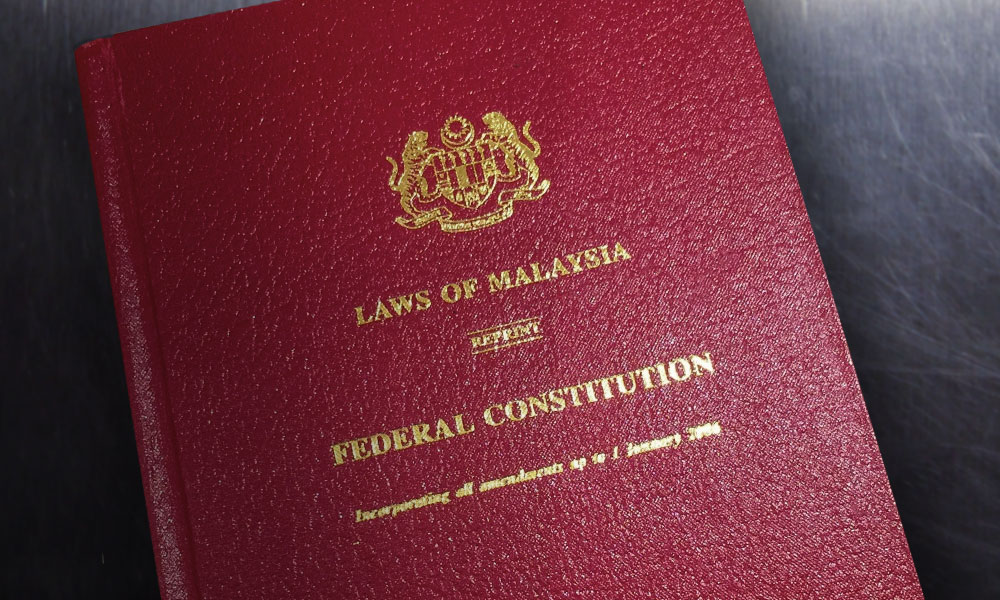
It must be remembered that Malaysia is a constitutional democracy. While Islam is indeed the religion of the Federation by virtue of Article 3 of the Federal Constitution, Article 4 makes it clear that the Constitution is the supreme law of the Federation, and any laws inconsistent with it will be void.
It is therefore pertinent that any bill drafted and discussed in Parliament must first and foremost be consistent with the Constitution.
Limiting Islam’s definition
The definition of “Ahli Sunah Waljamaah” under Clause 3 of the bill is fundamentally unconstitutional and ultra vires (beyond the powers of) Articles 3, 8, and 11 of the Constitution.
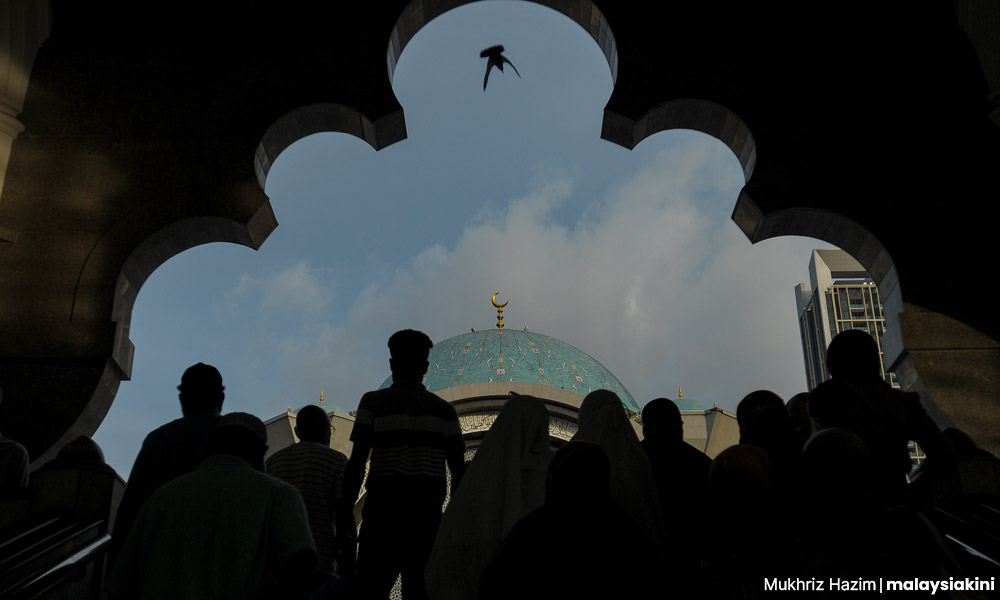
The word “Islam” in Article 3 of the Constitution should be given a liberal interpretation. The word “Islam” should be interpreted as to be inclusive and encompass a wide spectrum of schools of thought and jurisprudence.
However, we see that Clause 3(4)(a) of the bill narrows its definition by specifying specific streams in respect of akidah (belief) in Islam by using terms such as al-Asyairah and al-Maturidiyah, which many Muslims may not be familiar with.
READ MORE: KINIGUIDE | Polemics surrounding FT Mufti Bill
In addition, no school of thought should be given prominence over another. However, Clause 3(4)(b) of the bill gives prominence to the Syafie school of thought, with the other three recognised schools of thought having the condition to be followed “in certain circumstances”.
Clause 3 of the bill contradicts Article 11 of the Constitution, which guarantees the freedom to practise one’s religion according to their personal beliefs and conscience.
This means that Muslims have the freedom to practise Islam in a way that aligns with their beliefs and conscience without being constrained by any particular school of thought, so long as they adhere to and do not deviate from the fundamental principles of the faith.
Furthermore, the definition in Clause 3 undermines the spirit of the Amman Message of 2004 of which Malaysia is a signatory and endorsed by our delegation which included our prime minister at the time, Abdullah Ahmad Badawi, and our Prime Minister Anwar Ibrahim (then former deputy prime minister) among other notable members of the Malaysian delegation.
Limiting Islam to a specific interpretation marginalises minority voices and does not reflect the diversity within the religion. The broad and inclusive interpretation of Islam should remain.
Mufti’s position
The designation of the mufti as the “chief authority” on matters of Islamic law as provided for in Clause 4 of the bill is ultra vires Articles 3(5) and 34(1) of the Constitution.

Article 3(5) establishes the Yang di-Pertuan Agong as the head of Islam in Kuala Lumpur and Labuan. Designating the mufti as the chief authority when there should only be one sole “chief authority” is highly inappropriate and undermines the authority of the king.
Clause 15(3) of the bill, which states that a mufti cannot be summoned by a court to provide evidence on Islamic law, contradicts Article 121(1) of the Constitution and undermines judicial authority.
Preventing courts from summoning the mufti compromises the checks and balances essential to a fair legal system, threatening its integrity.
The judiciary must have the authority to question any entity, including religious figures, to maintain justice and accountability in all matters.
Violation of religious freedom
While uniformity may provide consistency, Clause 11 of the bill which states that fatwa shall be binding on every Muslim without exception is inconsistent with Articles 5 and 11 of the Constitution.
Article 5 of the Constitution guarantees the right to personal liberty, while Article 11 protects freedom of religion. By making all fatwas binding, the bill infringes on individuals’ rights to make personal choices about their beliefs and practices.
The original provisions in the Administration of Islamic Law Act 1993, particularly Section 34(3) of the act, acknowledge the right of individuals to depart from fatwa in matters of personal belief and practice.
This existing framework acknowledges the diversity of beliefs and practices within the Muslim community and allows for personal discretion. The bill’s shift toward mandatory adherence disregards this crucial aspect of religious practice, effectively nullifying the protections already established in law.
Clause 29 of the bill introduces “akidah consultants”. The functions given to the akidah consultant under Clause 29(3) seem to allow intervention by these consultants on matters of personal faith.
This violates Article 11 of the Constitution which provides for a person’s fundamental freedom to profess their religion without undue interference.
Lack of clarity, oversight
Clause 10(6) of the bill, which states that “any other ruling of Islamic law which is not published in the Gazette, shall remain to be respected”, lacks clarity.
Clause 10(6) is not clear as to what is meant by “...any other ruling…” The vagueness surrounding these other rulings which are not gazetted could potentially lead to confusion among the public on what it means to respect an ungazetted ruling.
While Clause 12 of the bill requires the mufti to consult the Fatwa Committee prior to issuing a fatwa, it also permits amendments to the fatwa without requiring the committee’s approval.
The Fatwa Committee, which seems to serve as a check on the mufti’s authority, is sidelined in the amendment process. This lack of oversight could lead to arbitrary changes in the fatwa, which may not reflect the consensus or the broader views of the Muslim community.

It also diminishes the role of the committee which is meant to provide diverse perspectives and ensure that fatwa are rooted in collective wisdom and expertise.
Reconsider bill
In conclusion, G25 Malaysia calls upon our MPs to reconsider the Mufti Bill 2024 as it does not align with the principles of justice, equality, and constitutional rights as enshrined in our Constitution.
The arguments made in favour of the bill thus far do not sufficiently outweigh the potential risks and implications posed by the legislation.
A balance must be struck that respects constitutional rights and ensures that any authority is held accountable to the people it serves.
Checks and balances are essential for good governance and to instil trust and confidence in our administration.
G25 is an NGO of individuals, rich with experience in various fields with diverse views but a common goal and common vision.
The views expressed here are those of the author/contributor and do not necessarily represent the views of Malaysiakini.
/file/publisher-c1a3f893382d2b2f8a9aa22a654d9c97/2024/10/70dd5420a4fd46a2549e8df14a18da68.jpg)
/file/publisher-c1a3f893382d2b2f8a9aa22a654d9c97/2024/10/bc98aa74c1de87bd3645b0c46d791e18.jpg)
/file/publisher-c1a3f893382d2b2f8a9aa22a654d9c97/2024/07/89ddb9b0bda9358603d6e85557597eac.jpg)
/file/publisher-c1a3f893382d2b2f8a9aa22a654d9c97/2023/10/8057db374f3eba8d6ee4cc3e845490a8.jpg)
/file/publisher-c1a3f893382d2b2f8a9aa22a654d9c97/2023/11/e898fde820b8587e559d3630d04e4251.jpg)
/file/publisher-c1a3f893382d2b2f8a9aa22a654d9c97/2021/07/5b7a143287301b9c9fe45c2010a00bdb.jpg)
/file/publisher-c1a3f893382d2b2f8a9aa22a654d9c97/2023/10/21ca119e8d7a701b6b00f5d67796f704.jpg)


Are you sure you want to delete this comment?
This action cannot be undone.