


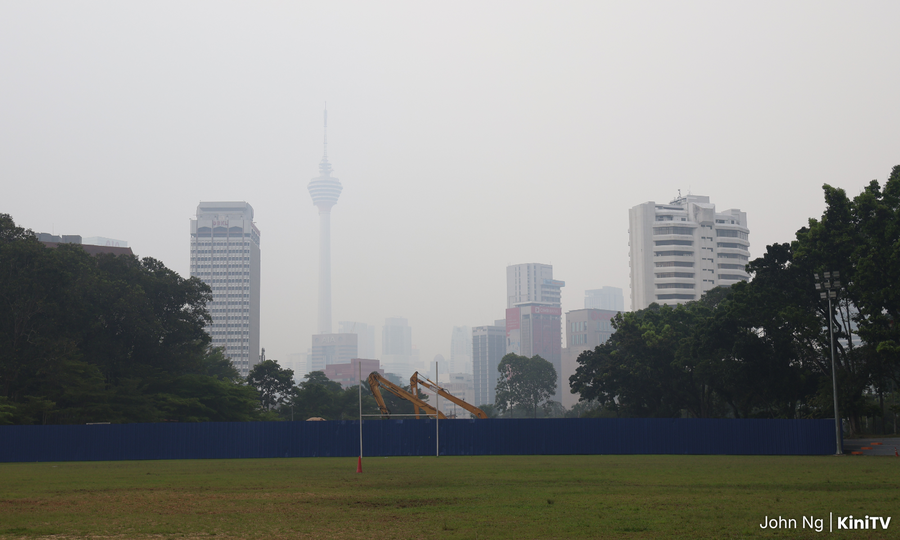

COMMENT | Stop blame game, just solve the haze problem
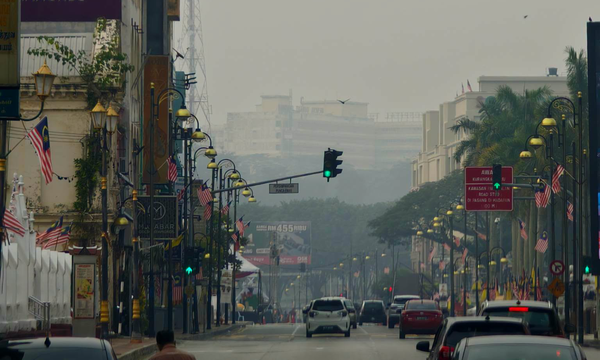
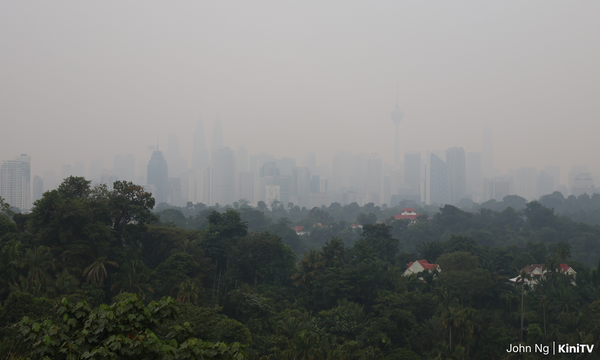
COMMENT | I’m very happy today because it looks like the monsoon winds have come; that means the haze that has been coming from all the forest fires and open burning in Indonesia has more or less disappeared.
Finally, I can resume my daily runs outdoors instead of indoors on a boring treadmill.
I think the haze season has gone away for the year (I hope!). This year, it has been particularly bad, as you would already know.
Usually, it lasts around a month, but this time it lasted more than two months. Schools had to be closed, and the number of people seeking treatment for respiratory issues was at a record high.
Now I am very aware that things have improved greatly in Peninsular Malaysia, but the situation in Sarawak is still very much critical. Hopefully, the monsoon winds will also pick up in the east, and the haze in Sarawak will start to clear up as well.
The sad thing is that it’s considered an annual season, which means we already expect it, and it’s not even a natural environmental season. I would much rather receive snow in Malaysia than expect the haze every single year at the same time.
I guess...
COMMENT | I’m very happy today because it looks like the monsoon winds have come; that means the haze that has been coming from all the forest fires and open burning in Indonesia has more or less disappeared.
Finally, I can resume my daily runs outdoors instead of indoors on a boring treadmill.
I think the haze season has gone away for the year (I hope!). This year, it has been particularly bad, as you would already know.
Usually, it lasts around a month, but this time it lasted more than two months. Schools had to be closed, and the number of people seeking treatment for respiratory issues was at a record high.
Now I am very aware that things have improved greatly in Peninsular Malaysia, but the situation in Sarawak is still very much critical. Hopefully, the monsoon winds will also pick up in the east, and the haze in Sarawak will start to clear up as well.
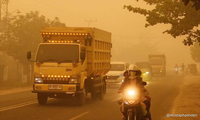
The sad thing is that it’s considered an annual season, which means we already expect it, and it’s not even a natural environmental season. I would much rather receive snow in Malaysia than expect the haze every single year at the same time.
I guess what I’m trying to say is that I really don’t like the fact that the haze in Malaysia, and the rest of Southeast Asia really, has been normalised after decades. It is publicly known that the root cause is open burning in Indonesia.
Same old song and dance
The countries most affected by this, Malaysia and Singapore, have for decades communicated this to the Indonesian government. Yet nothing has been done.
In fact, this year, the country’s leaders even came back with comedic comments like “we provide most of the oxygen”.
Seriously though, diplomatic communication with Indonesia happens every year regarding the haze. But as much as the talks happen, not much has come out of it in terms of black-and-white, solid, cross-border, or regional legally binding memorandums. I don’t know why that is so.
This year, Malaysia and Singapore have even offered assistance to put out the fires. However, Indonesia insists that they have things under control.
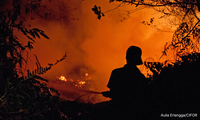
But obviously, the fires are still raging. Even though the haze is clearing in Malaysia, it’s due to the winds shifting rather than the fires ending.
I think the countries need to move past the accusations and finger-pointing about where the fires are happening. The annual blame-trading and denial performance needs to stop because it is old, boring, and people can just see right through it.
Data-sharing, common legal framework
The region needs to have some sort of scientific data-sharing procedure to identify hotspots and how to handle the problems that occur.
Multinational companies need to be monitored better as well, with ownership and management transparency being demanded by the different countries’ authorities together.
This is the issue that leads to finger-pointing when accusations surface about the plantations in Indonesia that practice open burning as being Malaysian- or Singaporean-owned.
READ MORE: COMMENT | Pull up Indonesia at Asean summit for 'haze crime'
Some form of transboundary law needs to be adopted, similar to Singapore’s Transboundary Haze Pollution Act (THPA).
I know it is easier said than done. Even Singapore finds it challenging to enforce the THPA, but it’s possible if there is political will among the countries in the region.
And to this, I say that the finger-pointing and accusations need to stop. We just need to accept that this happens and move forward together to solve it.
We need to move forward and away from just asking Indonesia to fix the problem. Our region needs to come together and collaborate to address the issue.

Asean would be the perfect platform for negotiations, so let’s make full use of it because, if you all haven’t noticed, it is affecting the whole region.
We could start a regional haze fund to help deal with the fires when the season starts and for investigations and litigation against the parties that are committing the crime.
Not only that, but it can also be used for research and data gathering to prevent this from becoming an annual occurrence.
The main point here is that sometimes it is more worthwhile to stop the blame game when it comes to a longstanding problem that has been happening for decades and just come together and solve it.
The situation is becoming so out of hand and dangerous that people can’t live properly anymore.
ZAN AZLEE is a writer, documentary filmmaker, journalist and academic. Visit fatbidin.com to view his work.
The views expressed here are those of the author/contributor and do not necessarily represent the views of Malaysiakini.



Twenty years ago, a fund was created to help Indonesian farmers abandon slash-and-burn farming. Yet, every dry season, the haze returns like an unwelcome guest who never pays the bill. Now, should we create another fund? More money, more committees, more consultants, more reports—and more officials to oversee the money before it reaches the farmers? Of course, the return of the haze does not automatically prove corruption or that the original fund failed. But after two decades, the public deserves more than another funding announcement and another round of promises. Where did the money go? How much reached the farmers? What measurable results were achieved? Where are the independent audits? The forests burn, the region chokes, and taxpayers foot the bill. The only thing that must not go up in smoke is accountability. Before launching another fund, let’s see the accounts of the last one. Otherwise, we’ll keep funding the fight against the haze while the only thing successfully cultivated is bureaucracy—and the only thing harvested is public money.
Indonesia faces far bigger issues than concern about its neighbours, with its own citizens struggling to breathe amid thick smoke. The economy is on a downward spiral, and the current government seems to be running around aimlessly. Corruption is rampant, and countries led by military figures are often doomed from the start.
The blame is easy but the truth is harder and the reality on the ground is layered, and part of it stretches back centuries. The Dayak communities of Kalimantan have practised "ladang berpindah" swidden agriculture, slash-and-burn — for generations, and it was never the villain of this story. It is a careful ecological cycle: selective clearing that leaves the canopy intact, controlled burning whose ash fertilises the acidic rainforest soil, seasonal planting of "padi ladang", vegetables and tubers, then a ten-to-twenty-year fallow that lets the forest regenerate. For centuries, it was sustainable. It worked precisely because it was small, measured, and allowed the land time to heal. The tragedy is what happens when that ancient rhythm collides with a severe El Niño. Controlled burns escape, and in a tinder-dry landscape they become wildfires — joined by fires set by smallholders and rogue actors clearing land on the cheap. That is the inconvenient middle ground the blame game ignores: neither the traditional farmer nor the certified plantation alone, but a fragile landscape pushed past its limits by drought, drained peat, and weak enforcement. This is where the Indonesian government has a real role to play. Long-term education on zero-burning replanting practices is a critical bridge between legal environmental enforcement and the economic survival of millions of smallholder farmers. While Jakarta enforces strict laws against open biomass burning, traditional slash-and-burn methods remain common simply because they are cheap. Educational frameworks must therefore give farmers the knowledge, mechanical skills, and alternative agricultural methods they need to replant cash crops such as padi, vegetables and oil palm without setting a single fire. Enforcement without education only punishes poverty; education is what makes compliance possible. So yes — stop the blame game. But solving the haze means understanding the ground truth, not picking the most convenient culprit. Policy that criminalises centuries-old tradition while ignoring the deeper drivers will not clear the skies.
Report this comment
Are you sure you want to delete this comment?
This action cannot be undone.