


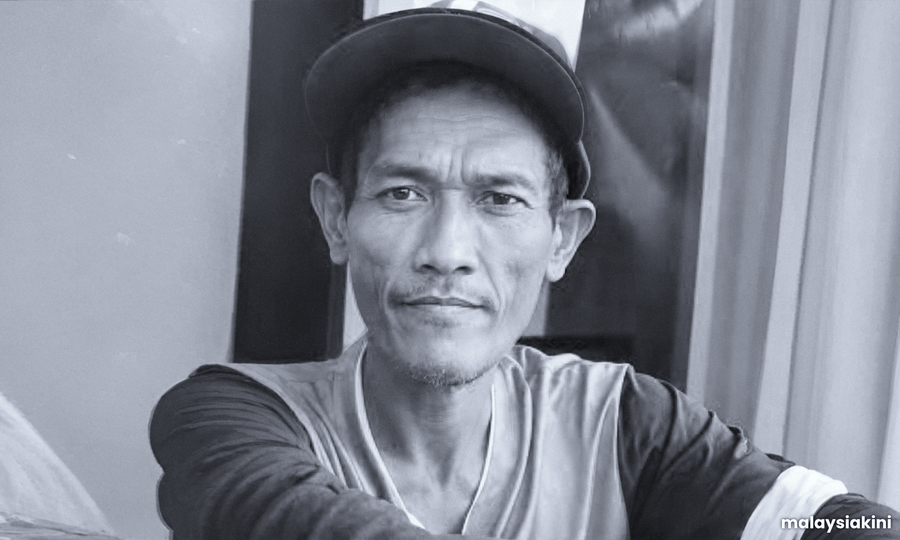

COMMENT | Why Noorizwan's death matters to all of us
COMMENT | How does a man enter police custody and die with 21 injuries reportedly documented during a post-mortem examination?
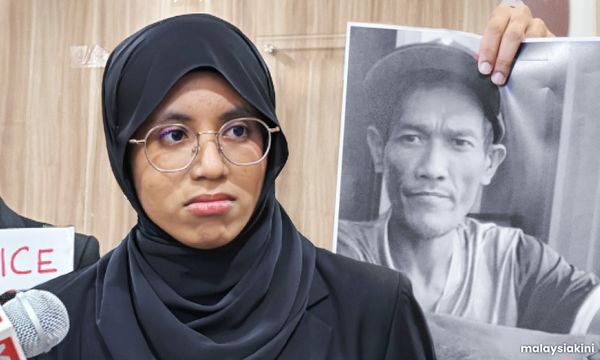
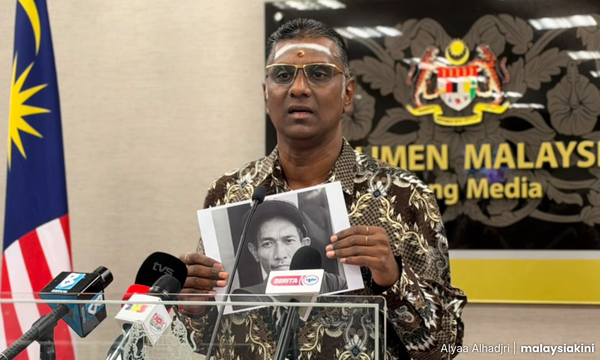
Noorizwan Zulkefly, 42, a father, died on Oct 1 after being detained at the Cheras district police headquarters lock-up.
His family's lawyers described extensive injuries, including severe swelling of the skull, bleeding in the brain, and internal bleeding in the intestinal area. The pathologist said he died from blunt-force trauma to the head.
These are grave findings.
According to reports, Noorizwan was detained on Sept 19. His family said they were unaware that he was in custody and only learnt of his death afterwards.
Why was he arrested? What were the grounds for his detention? What happened during...
COMMENT | How does a man enter police custody and die with 21 injuries reportedly documented during a post-mortem examination?
Noorizwan Zulkefly, 42, a father, died on Oct 1 after being detained at the Cheras district police headquarters lock-up.
His family's lawyers described extensive injuries, including severe swelling of the skull, bleeding in the brain, and internal bleeding in the intestinal area. The pathologist said he died from blunt-force trauma to the head.
These are grave findings.
According to reports, Noorizwan was detained on Sept 19. His family said they were unaware that he was in custody and only learnt of his death afterwards.
Why was he arrested? What were the grounds for his detention? What happened during those 12 days? When was his family notified? Why was his family informed of his death only hours later?
Identifying the offences under investigation does not explain what Noorizwan was accused of, what evidence the police had, or why he needed to be detained.
A person suspected of an offence does not forfeit the right to lawful treatment. Neither does an arrest give the state unrestricted control over someone's body, dignity, or safety.
Questions surrounding the death
The family's lawyers' account of the post-mortem findings detailed injuries involving the victim's head, eyes, ears, shoulders, back, arms, wrists, hips, thighs, knees, calves, and feet.
The lawyers said areas of swelling showed subcutaneous bleeding during the post-mortem examination. They interpreted the findings as evidence of severe beatings.
Naturally, the precise circumstances and responsibility should be established through evidence. But the reported findings cannot simply be brushed aside.
There were also reported differences between the family's lawyers' account and subsequent police statements concerning the internal injuries and the status of the cause of death. Police said laboratory analysis was outstanding and the full post-mortem findings were still required.
Kuala Lumpur police chief Fadil Marsus made insensitive and irresponsible remarks that understandably angered and distressed Noorizwan's grieving family.
Instead of explaining how a man detained in police custody sustained 21 injuries, Fadil chose to highlight Noorizwan's alleged criminal record. A person's criminal record does not cancel his right to protection under the law, especially when he is in police custody.
More importantly, Inspector-General of Police Khalid Ismail eventually directed Bukit Aman CID to investigate Noorizwan's death immediately and make its findings public.
Why should it take public outrage, sustained media coverage, lawyers representing the family, and an intervention by the IGP before this happened? Shouldn't a death involving 21 reported injuries in police custody have triggered this level of scrutiny from the outset?
Bukit Aman CID director M Kumar then promised that the investigation would be conducted "thoroughly and professionally, without any element of a cover-up".
Again, why should the public be reassured by another official promise? How many similar assurances have followed previous deaths in custody? What became of those investigations? Were lessons learnt? Were those responsible held accountable?

The public has heard the same promises umpteen times. It wants to see results.
Noorizwan's family deserves more than assurances. It deserves the truth.
Another promise; what about answers?
So, what happened?
Has all relevant CCTV footage been preserved? We are aware that in previous cases, we were told that the camera did not have any film in it, that it was not programmed to record, or that it was being repaired or undergoing routine maintenance. Bizarrely, we have also been told that the camera was pointing in the wrong direction.
What do the custody records show? Who had access to Noorizwan? Were medical examinations conducted? Were injuries or requests for treatment recorded?
These should not be read as accusations against individual officers. They are questions a credible investigation must answer.
Police later said the case had been referred to the Independent Police Conduct Commission, while Bukit Aman CID was taking over the investigation.

However, what progress has been made? What evidence has been secured? When will the family receive a substantive update?
The absence of a publicly announced arrest does not establish that investigators have done nothing. Nor does an ongoing investigation guarantee that accountability will follow.
The authorities must explain what happened without compromising the investigation. A statement that investigations are ongoing cannot become a permanent substitute for answers.
Justice musn't depend on public pressure
When someone dies in police custody under circumstances that demand explanation, the consequences extend beyond the immediate family.
The rakyat begins to wonder whether their own relatives would be safe if detained. Would the family be informed? If something happened, would the truth emerge?
The question is particularly important for ordinary families who may lack the money, legal assistance, or connections to challenge an official account.
Justice must not depend on a family's ability to sustain a public campaign.
Accountability is the test of reform
So, if this Madani administration is serious about reform, it must demonstrate that commitment where it matters most: in institutions entrusted with exercising power over citizens.
The home minister and IGP should explain what safeguards are in place, what went wrong, if anything, and how accountability will be ensured.
If criminal wrongdoing is established, those responsible must face the appropriate legal process. Equally, findings must be based on evidence, not assumptions.
Holding the police accountable does not weaken the institution; it reinforces the principle that nobody is above the law.
Noorizwan's death matters to all of us because the protection of one person's rights is part of the protection of everyone's rights.
MARIAM MOKHTAR is a defender of the truth, the admiral-general of the Green Bean Army, and the president of the Perak Liberation Organisation (PLO). Find her on her website and on X.
The views expressed here are those of the author/contributor and do not necessarily represent the views of Malaysiakini.


Report this comment
Are you sure you want to delete this comment?
This action cannot be undone.