


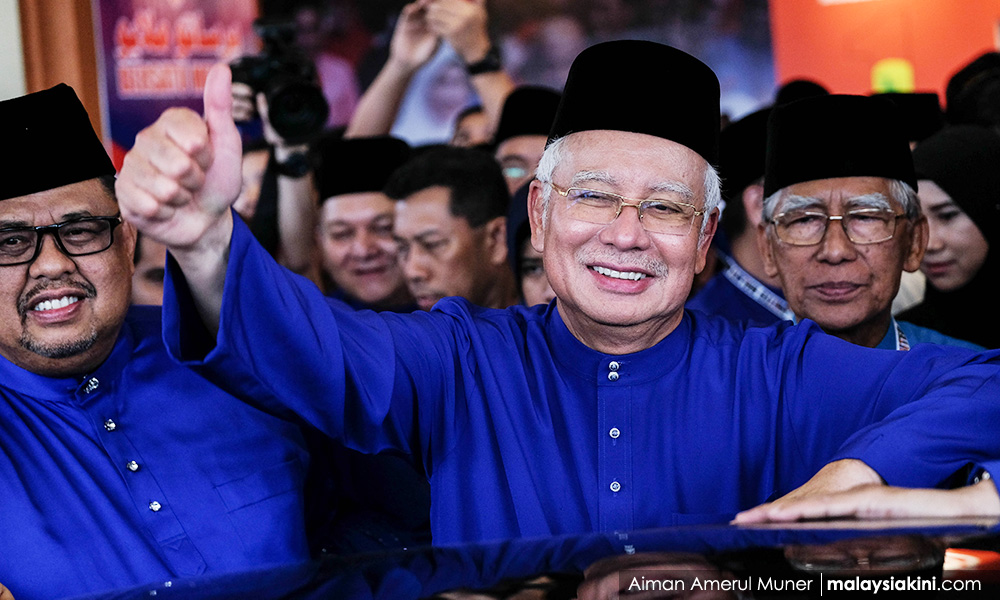

COMMENT | When power meets privilege: Najib's house arrest and Anwar's reform test
COMMENT | When I invited the late professor Syed Hussein Al-Attas to speak at Stamford College, where I was then lecturing, he began his address with a rather unsettling observation: “This country has lost the concept of shame”.
Those words have stayed with me over the years. Reading the reported minutes of the Federal Territories Pardons Board meeting concerning former prime minister Najib Abdul Razak, I find myself returning to that very same observation.
The revelations raise deeply troubling questions about the integrity of our institutions, the exercise of public office, and the standards of accountability we expect from those entrusted with governing this country.
According to the reported minutes, Attorney-General Dusuki Mokhtar and Minister in the Prime Minister’s Department (Federal Territories) Hannah Yeoh expressed objections to granting house arrest, citing the absence of a legal basis and the potentially serious implications for the country. Other board members reportedly shared similar reservations.
Yet the decision ultimately went in a different direction. These are matters that deserve public scrutiny, not political spin.
Constitutional respect isn't a shield
Let me be clear...
COMMENT | When I invited the late professor Syed Hussein Al-Attas to speak at Stamford College, where I was then lecturing, he began his address with a rather unsettling observation: “This country has lost the concept of shame”.
Those words have stayed with me over the years. Reading the reported minutes of the Federal Territories Pardons Board meeting concerning former prime minister Najib Abdul Razak, I find myself returning to that very same observation.
The revelations raise deeply troubling questions about the integrity of our institutions, the exercise of public office, and the standards of accountability we expect from those entrusted with governing this country.
According to the reported minutes, Attorney-General Dusuki Mokhtar and Minister in the Prime Minister’s Department (Federal Territories) Hannah Yeoh expressed objections to granting house arrest, citing the absence of a legal basis and the potentially serious implications for the country. Other board members reportedly shared similar reservations.
Yet the decision ultimately went in a different direction. These are matters that deserve public scrutiny, not political spin.
Constitutional respect isn't a shield
Let me be clear: the constitutional prerogative of the Yang di-Pertuan Agong is a matter that must be respected. This is not an invitation to question or undermine that prerogative.
But respect for constitutional authority should not become a blanket excuse for avoiding legitimate questions about the process leading to a decision, the advice placed before the Board, and the responsibilities of the government and its representatives. Constitutional respect and public accountability are not mutually exclusive.
What is particularly difficult to reconcile is the reported account that the AG himself maintained there was no legal basis for house arrest, a position apparently shared by the minister responsible for the Federal Territories.
If these objections were formally recorded, Malaysians are entitled to understand the legal and administrative considerations that subsequently informed the outcome. The public deserves clarity, particularly when decisions of this magnitude have implications for confidence in the justice system.
There is also a question that Prime Minister Anwar Ibrahim cannot simply sidestep: Why was Najib’s pardon application fast-tracked? What was the urgency? Who determined the pace at which it was processed, and what considerations informed that decision?
The prime minister may not have the constitutional authority to determine the outcome of a pardon, but his government has a responsibility to ensure that the process is conducted with fairness, consistency, and transparency.
Questions over preferential treatment
It is precisely here that Anwar’s political leadership must be scrutinised. A government that came to power promising institutional reform cannot expect the public to accept preferential treatment or unexplained haste in dealing with a former prime minister convicted of serious offences.
This is not about denying anyone their constitutional right to seek a pardon. Nor is it about personal animosity towards Najib. It is about the principle that justice must not only be done but must be seen to be done.
Ordinary Malaysians serving prison sentences do not enjoy the same political access, public attention, or institutional influence. The perception that a former prime minister’s application received exceptional consideration, while questions about the process remain unanswered, risks reinforcing an already damaging belief that there are different standards of justice for the powerful and the powerless.

The reported amendments to the proposed house arrest procedures, including changes concerning who could reside with Najib and the removal of a provision allowing him to participate in events with prior approval, raise further questions about how these arrangements were conceived and considered.
These details may appear administrative, but they have significant implications for the nature and conditions of house arrest. Malaysians should not have to piece together important constitutional and administrative decisions through leaked documents and media reports. The relevant authorities should provide an accurate account of the proceedings, subject to proper legal and constitutional requirements.
A test of institutional integrity
Ultimately, this is a test of our institutions and of the political leadership that claims to champion reform.
Anwar cannot continue to invoke institutional independence when it is convenient while avoiding accountability for the actions and decisions of his own government.
Respect for the monarchy, the rule of law, and the independence of the Pardons Board must go hand in hand with transparency and public trust.
Syed Hussein’s words were harsh, but they were a warning about what happens when a country loses its sense of institutional and moral responsibility.
Clearly, those words remain an enduring indictment of Malaysia.
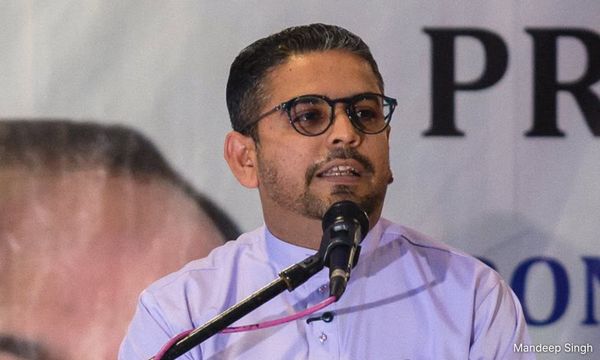
CHARLES SANTIAGO is a former three-term MP of the Klang constituency in Selangor.
The views expressed here are those of the author/contributor and do not necessarily represent the views of Malaysiakini.



"But respect for constitutional authority should not become a blanket excuse for avoiding legitimate questions about the process leading to a decision" Very important point to consider! If nothing is done about this case involving an ex-PM now, then this case will be quoted in future by the PMs who commit similar crimes of using government money for personal use.
Anwar pandered to UMNO and Zahid in fast tracking the pardon application. Najib had already appealed and had his sentence halved. There was no urgency or even a need to put forward the pardon application till at least 4 of the six years had been served. Anwar paid for his pandering when zahid played him out in the state elections.
What Charles Santiago should be questioning directly is the transparency of how petitions are submitted to the pardon board. What are the criteria for determining whether a case is worth deliberating? Can we limit the clemency to a person? What if Najib fail in all his appeal for 1MDB case? Is he then still qualify for pardon? Serial rapist or killer? This is the kind of reform the rakyat would like to see. PH promised transparency and yet now they are stuck in this conundrum because there are no transparency.
Report this comment
Are you sure you want to delete this comment?
This action cannot be undone.