


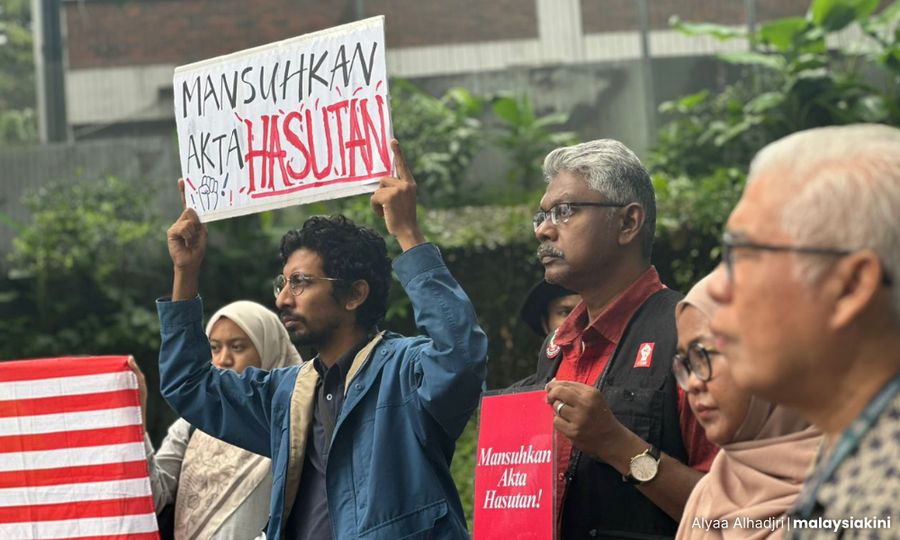

COMMENT | Will speaking out on corruption be considered seditious?
“One of the greatest advantages of the totalitarian elites of the twenties and thirties was to turn any statement of fact into a question of motive.” - Hannah Arendt, The Origins of Totalitarianism
COMMENT | Pasir Gudang MP Hassan Karim being questioned by the state for a poem he wrote is a reminder to rational people that when it comes to sedition laws in this country, intent is irrelevant.
Umno alleged that Tony Pua's Facebook posting of the declassified Pardons Board minutes constitutes some form of incitement. Both of these situations are the continuation of a narrative that would eventually mean that anyone speaking out on corruption is engaging in seditious behaviour.
The state will never come out and say that speaking out on corruption is seditious. What the state will do is link, however tenuously, corruption with one of the 3Rs (race, religion and royalty) and then use the relevant laws against the average rakyat for speaking out against corruption and corrupt personalities.
Returning to Hassan. He is...
“One of the greatest advantages of the totalitarian elites of the twenties and thirties was to turn any statement of fact into a question of motive.” - Hannah Arendt, The Origins of Totalitarianism
COMMENT | Pasir Gudang MP Hassan Karim being questioned by the state for a poem he wrote is a reminder to rational people that when it comes to sedition laws in this country, intent is irrelevant.
Umno alleged that Tony Pua's Facebook posting of the declassified Pardons Board minutes constitutes some form of incitement. Both of these situations are the continuation of a narrative that would eventually mean that anyone speaking out on corruption is engaging in seditious behaviour.
The state will never come out and say that speaking out on corruption is seditious. What the state will do is link, however tenuously, corruption with one of the 3Rs (race, religion and royalty) and then use the relevant laws against the average rakyat for speaking out against corruption and corrupt personalities.
Returning to Hassan. He is on public record as saying that he is not anti-monarchy. What he is against is: "... if the system begins to lean towards an absolute monarchy or feudalism, that is something I cannot agree with."
From reportage: For Hassan, respecting the monarchy does not mean staying silent when royal powers are exercised in ways he disagrees with. This stance is evident in his criticism of the royal pardon granted to former prime minister Najib Abdul Razak and his assessment of the government's reform record.
Muzzling speech on corruption
So why are police summoning him when all he did was write about his dissatisfaction with how a constitutionally created instrument was used? Similarly, all Pua did was post documents that were in the public interest.
The state has already muzzled speech when it comes to the 3Rs. Now it is time to put a muzzle on speech regarding corruption. And really, there is very little political backlash for doing this. Is corruption really a big issue when it comes to a majority of Malaysians?

We have the influential preacher Zakir Naik, who was welcomed by political and religious figures under both BN and Pakatan Harapan administrations, and who preached that it is better to vote for a corrupt Muslim than an honest non-Muslim.
Not to mention religious operatives like PAS president Abdul Hadi Awang, who said that "integrity without Islam is not accepted by Allah, and a person with faith who has no integrity is still better than someone with integrity but no faith".
The elites, be they political, religious or constitutional, do not want the unwashed masses talking about issues that face this country. Totalitarianism is merely a constructed reality in which all are forced to publicly believe and remain fearful in private of the diktats of the state.
Keep in mind that Hadi claimed that corruption issues were “frequently weaponised” and the disclosure of public malfeasance was meant to discredit political rivals. Bersama's Rafizi Ramli claimed that the delayed release of the royal commission of inquiry report on Tabung Haji by Madani was to “protect Umno's feelings”.
Don't talk about it
Look at the recent Sabah corruption scandal, where the whistleblower was outed. Latheefa Koya, the former MACC chief, has claimed that someone high up threatened the whistleblower.
The state's vilification of whistleblowers sends a clear message to corporate and public institutions that their interests are safeguarded, and a message to whistleblowers that it is not worth the hassle of reporting pecuniary malfeasance to Madani.
This, of course, goes against international norms when it comes to law enforcement tradecraft and democratic norms when dealing with corrupt or illegal activities in private and public institutions.
And do not forget, whenever a corruption scandal erupts, the rakyat are warned not to talk about it because this is an ongoing investigation. These kinds of bully boy tactics are extremely effective. This is why Umno is obsessed with whether the minutes of Najib's pardon were declassified. They do not want anyone to know if people objected to the pardon and who advocated for the pardon.
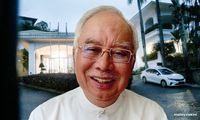
The most important thing about the declassified Pardons Board minutes is that it lays bare how politics works in this country. Now the average rakyat has no idea how the government works. Indeed, many people will not understand what all the fuss is about these declassified documents.
The reality is that, when it comes to the political calculation of not wanting to endorse this house arrest, it is negligible for the Malay uber alles types in this country; indeed, the recent Malacca polls demonstrate this. What is important is that laws are used to keep people from asking honest questions.
Hence, those asking legitimate questions are met with calls of derhaka or sedition. The state enables political operatives who turn legal processes, which any citizen should question, into sensitive topics which touch on the 3Rs. The state uses laws which are there to muzzle free speech to threaten anyone who questions the policies of the state.
These laws are enacted to muzzle the public and to remind the public that whatever they say or do against the state is always under scrutiny. You can never tell what you say or do is seditious or illegal because these laws are there for the convenience of the ruling elite, rather than any kind of traditional normative values or reasoning of a functional democracy.
Remember, the state can always add to the 3Rs.
S THAYAPARAN is Commander (Rtd) of the Royal Malaysian Navy. Fīat jūstitia ruat cælum - “Let justice be done though the heavens fall.”
The views expressed here are those of the author/contributor and do not necessarily represent the views of Malaysiakini.



Malusia is a hopeless and lawless country (as in the laws are being applied differently to normal citizens vs the political elites and the rich and famous) where corruption is enabled by the politikus and also the two that shall not be named, so it could continue to thrive and enrich a certain group. God also give up and no eye see, but let this country to self destruct in time.
S Thayaparan, you have an uncanny ability to focus just on the negative part of life. It's a special abilty few possess. The truer fact is that this country talks non-stop about, on, of and against corruption. Everyday, the media and socmed is full of corruption allegations, mostly without real evidence. The reality is that our corruption perception index (CPI) improved by 3 ranks last year, and Malaysia is often just behind Spore in ranking for many years. I am not saying that we dont have corruption and we dont need to talk about it, of course we do. But to say that anyone who talks about corruption is clamped down is catastrophsizing the issue and ignoring the strides that have been made by the government on implementing reforms and fighting corruption.
Many Malaysians watch on social media how the fierce criticisms Americans make against their President. President Trump does fire back against these dissenters but they are given freedom of speech. We hardly hear the US Govt arresting people based on seditious statements. And that’s how the democratic countries should progress to. Sometimes these people have a point while other times they’re not. But having difference of opinions doesn’t make one seditious.
Report this comment
Are you sure you want to delete this comment?
This action cannot be undone.