
Two years on, resettled Penan can only count broken promises
MALAYSIANS KINI The indigenous people who once lived where the Murum dam now stands were showered with promises of proper resettlement and compensation before the construction of the dam.
Though they still fought against the construction of the dam, setting up blockades and such, the indigenous people comprising mostly Penan and some from the Kenyah tribe, were eventually forced to relocate.
A total of seven communities were resettled into two areas, with three villages in Tegulang and another four in the more remote Metalun area.
MALAYSIANS KINI The indigenous people who once lived where the Murum dam now stands were showered with promises of proper resettlement and compensation before the construction of the dam.
Though they still fought against the construction of the dam, setting up blockades and such, the indigenous people comprising mostly Penan and some from the Kenyah tribe, were eventually forced to relocate.
A total of seven communities were resettled into two areas, with three villages in Tegulang and another four in the more remote Metalun area.
"We were moved from our old village in Nov 2013, but we did not do so willingly, we were forced to move.
"How can we be happy, how can we be willing to leave behind our lands, our farms?" one of the resettled Penan villager Gereng Jadung said, in an interview with Malaysiakini.
Despite that, at least the promises of resettlement and compensation remained, or so they thought.
Unfulfilled promises
Now, more than two years after they were forced to move, Gereng, who was resettled in Long Luar in Metalun, said they have yet to receive most of the compensation they were promised.
Among the promises left unfulfilled were a school, clinic, tarred roads, access to clean water, free electricity, housing for every family and 15 hectares of land per household.
Right now, their kids are attending a makeshift school about three hours away by foot, hampered by the lack of proper tarred roads.
Meanwhile, without a clinic, the nearest medical centre is a hospital in Bintulu, which is eight hours away, Gereng said.
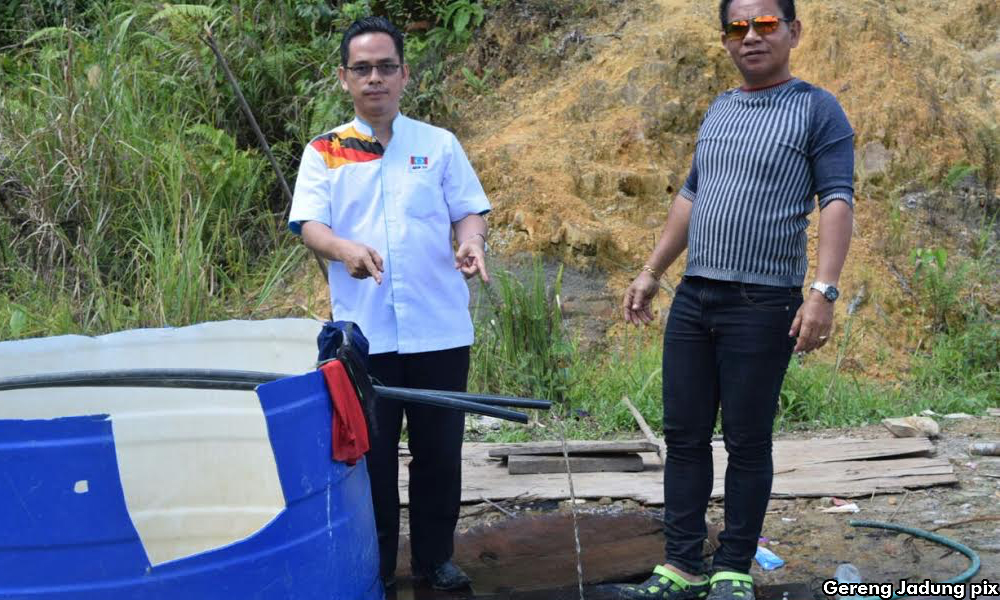
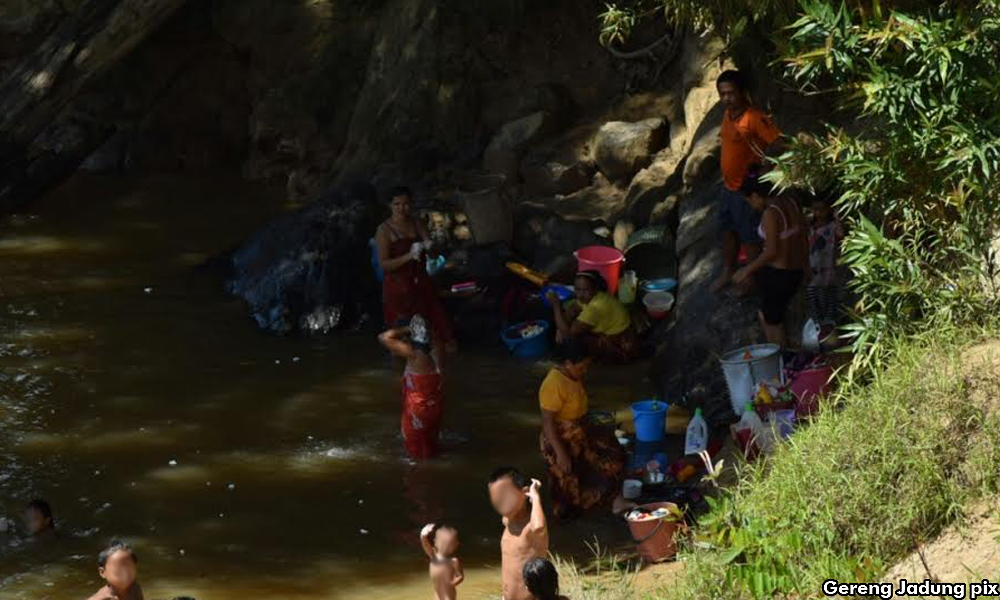
To make matters worse, his village had been going without stable access to clean water for about one year and nine months.
They had been making do by collecting rainwater in tanks, but their children are falling sick and they've been forced to travel to the Bintulu hospital for their treatment.
"The doctors at the hospital have already diagnosed that the children are getting sick from the water," Gereng said.
They've already complained about their lack of access to clean water to the relevant authorities, he added, but until now, there has been no response.
Most of the relocated villagers were given RM22,500 for each household, but some of the families still do not have their own residences (pintu) in the longhouses.
In his village of Long Luar, Gereng said there are six families going without whereas in Long Manapah, there are seven families.
"The families, they have residences and land in the old village, but now that we moved to Metalun, they don't have residences anymore.
"We want the government to give us what they promised us," he said.
The longhouses provided to them are also in bad condition, even though it has only been slightly over two years since they moved in.
The plaster is falling off the ceiling, and the cement walls are cracking, Gereng complained, and the kitchen is exposed to the elements, as there is a missing wall.
"The house only looks nice from the outside," he said.
The promise for free electricity is also yet to be fulfilled, as Gereng said his fellow villagers and he receive electricity bills every month.
"I have a stack of these bills at home. I refuse to pay. Why should I?" he said.
The villagers are also given a temporary allowance, to help them settle into their new villages, but Gereng also expressed dissatisfaction over this.
Each household is entitled to a temporary allowance of RM250 in cash form and RM600 in food supplies, for a total of RM850.
However, Gereng said that the food supplies that they receive monthly do not look like they are worth RM600.
Though he could not recall the exact items they receive, he did note that they vary monthly, with each household occasionally getting three bags of rice or sometimes two, along with other cooking essentials like sugar and cooking oil.
Metalun forests cleared
When they first chose Metalun as their resettlement area, Gerend said it had been filled with lush forests, ripe for hunting and farming.
By the time they moved there, he said the area had been cleared by logging activities and their forests had been replaced with oil palm plantations.
"How can we do our farming or hunting in oil palm plantations?" he questioned.
As they have also yet to receive their 15 hectares of land per family, he said the villagers just farm on whatever empty parcel of land they can find.
When it comes to hunting, they have to travel a very far distance to reach the nearest forest, he said.
"We were not given education by the government, so we make our living by hunting in forests and farming.
"We have to hunt in a faraway place now and we just farm wherever we can.
"We're not educated so we cannot find jobs anywhere else. We don't even have jobs with the companies who are doing the logging and oil palm plantations (in Metalun)," Gereng said.
They have sent memoranda to every relevant authority they could meet, he said, including to the Sarawak chief ministers and any members of parliament who visit them, but all they've been told to do is to be patient and wait.
Now, he said, the relocated villagers are seeking RM500,000 per household as compensation from the government.
The villagers are sad when they think about their future in the new settlement, he said, but there are no other places left for them to go.
Construction on the Murum dam began in 2008 and it became fully operational in 2015. It is the second mega dam project in Sarawak.
Even as Gereng lamented the fate of his people, fellow indigenous people in the Baram area are still fighting to preserve their lands and stopping the construction of a new mega dam.
Though the state government has revoked the gazette in the Baram area for the construction of the dam, the indigenous communities intend to continue their blockade until they receive an official and public cancellation of the project.
MALAYSIANS KINI is a series on Malaysians you should know.
Previously featured:
Stroke victim revamps massage spas run by the blind
Discovering Pang Khee Teik - faith, sexuality, art and activism
Sex, religion and everything in between - Projek Dialog goes where few would
Gerakan Youth chief insists he’s no Twitter troll
Malaysian movie mania - Are viewers back for good?
Branded as 'deviant', Muslim scholar remains defiant
For Thasleem, life has indeed come a full circle
Poster girl for diversity? No thanks, says novelist Zen Cho
M’sian int’l hackathon champ shows computer games good for you
Pianist bears no grudge over concert cancellation due to Bersih 2
Facing possible jail time, Lena's main worry is dad finding out
This Malaysian youth has helped 10,000 Syrian families and counting


Are you sure you want to delete this comment?
This action cannot be undone.