


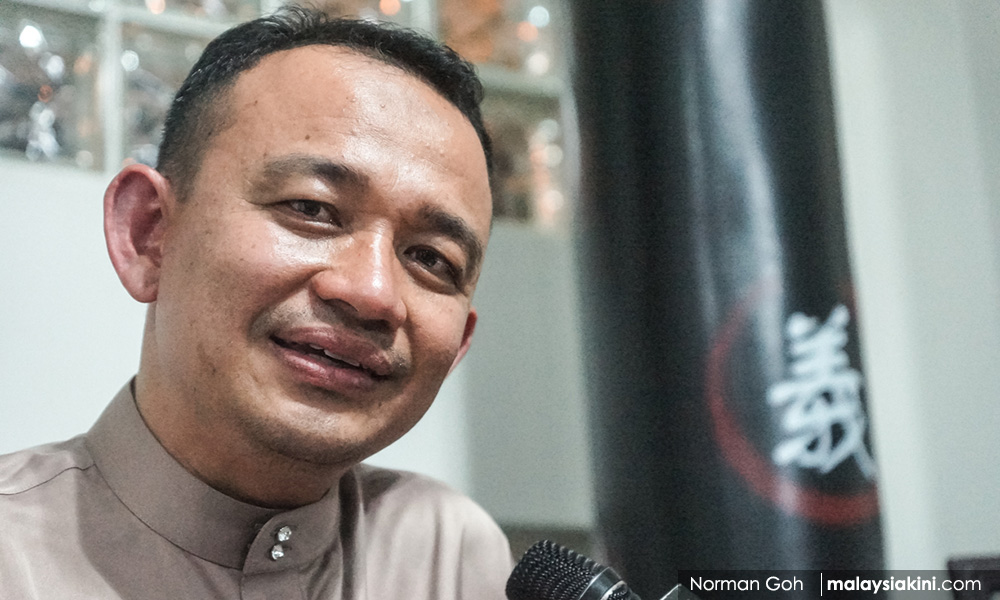

Maszlee prepares to harness strengths of the education system
INTERVIEW | Rather than seeing it as a problem to be solved, newly-minted Education Minister Maszlee Malik believes in harnessing the strengths of the present disparate education system.
His political inexperience notwithstanding - the former academician joined politics just three months ago - he is confident in being able to preserve the present system while expanding on the ways schools can work together for good.
In his first interview since being named for the ministerial post last Friday, Maszlee spoke about his plans to “connect” different schools as well as his consultative approach to governance.
“I am not here to impose regimentation or rulings on schools.
“Whatever school streams that we have, my vision is to try and connect them, to bridge them with one another.
“We want to celebrate our differences, we want to make it as a strength rather than as a weakness, and make it a unifying factor rather than a dividing factor,” Maszlee told Malaysiakini when met at his home...
INTERVIEW | Rather than seeing it as a problem to be solved, newly-minted Education Minister Maszlee Malik believes in harnessing the strengths of the present disparate education system.
His political inexperience notwithstanding - the former academician joined politics just three months ago - he is confident in being able to preserve the present system while expanding on the ways schools can work together for good.
In his first interview since being named for the ministerial post last Friday, Maszlee spoke about his plans to “connect” different schools as well as his consultative approach to governance.
“I am not here to impose regimentation or rulings on schools.
“Whatever school streams that we have, my vision is to try and connect them, to bridge them with one another.
“We want to celebrate our differences, we want to make it as a strength rather than as a weakness, and make it a unifying factor rather than a dividing factor,” Maszlee told Malaysiakini when met at his home.
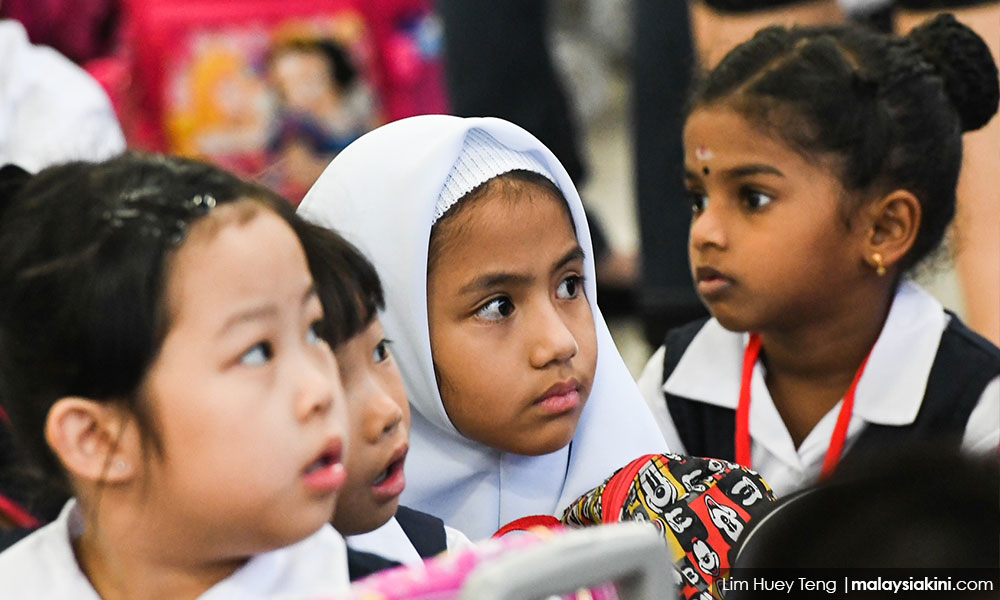
Aside from national schools where Malay is used as the medium of instruction, the Malaysian education system is made up of Chinese and Tamil vernacular schools, homeschools, Islamic religious schools (tahfiz) as well as various types of private and international schools.
Rather than do away with vernacular schools, as some have called for, Maszlee believes a better way to foster national unity would be to get different types of schools to collaborate.
“For example, I would love to see an Islamic school having a lot of programmes with a Chinese school; Tamil schools coming together in events with missionary schools; international schools working with Orang Asli schools,” he said.
He further mooted the creation of a more multilingual society through schools but did not offer specific methods.
“One of our strengths in Malaysia is that we live in a multilingual society. We should celebrate that, use that as our strength and inculcate the culture of a multilingual community.
“To do that, we need to make learning languages as fun as we can,” he added.
Maszlee, whose mother is Hakka-Chinese, sends his children to Chinese national schools.
‘I would go for DLP’
As for the call for the return of English-medium schools, especially from communities in East Malaysia, the Simpang Renggam MP said he would have to resort to the cabinet for a decision on the issue.
He would also be bound by a cabinet decision with regard to whether the controversial Dual Language Programme (DLP) for the teaching of Science and Mathematics will be continued. And he offered a personal take.
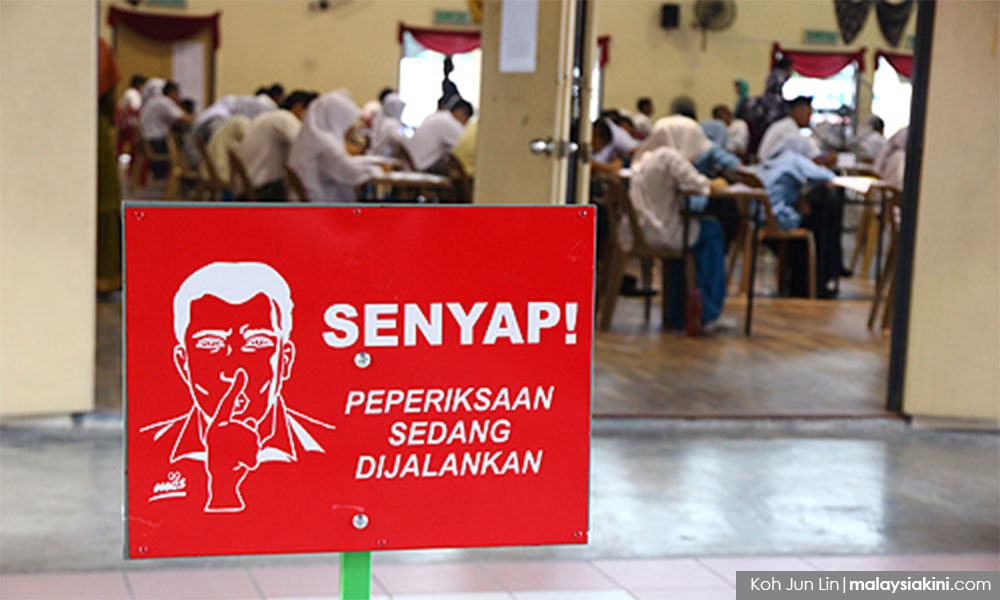
“Personally, I would go for DLP. The choice should be given to parents and students as to what language to learn Science and Mathematics in.
“In urban places, parents would love their children to learn Science and Mathematics in English. But there are certain places, communities and schools that are not able to cope with that.
“You can’t force them or punish them by making them learn Science and Mathematics in English,” he said.
Maszlee’s vision for the national education system is one that is less about examinations or academic ranking and more about enjoying the process of acquiring knowledge.
“I will try to bring humanistic elements back into our education system. To make education fun and joyful again,” he vowed.
A more moderate Islamic discourse
As education minister who is also an Islamic scholar, Maszlee will seek to reform Islamic discourse in the country, beginning with tahfiz schools.
“We need to re-adjust the mainstream Islamic discourse that has been practiced by Muslims in Malaysia, we need to bring more moderate and progressive elements there.
“We will try to make sure that students, not only in tahfiz schools but in all schools, will learn to mutually respect each other regardless of race and faith,” he said.
He elaborated that certain subjects, like Bahasa Malaysia and History, would be standardised for tahfiz schools, and graduates will be offered courses in vocational and semi-vocational fields to prepare them for the working world.
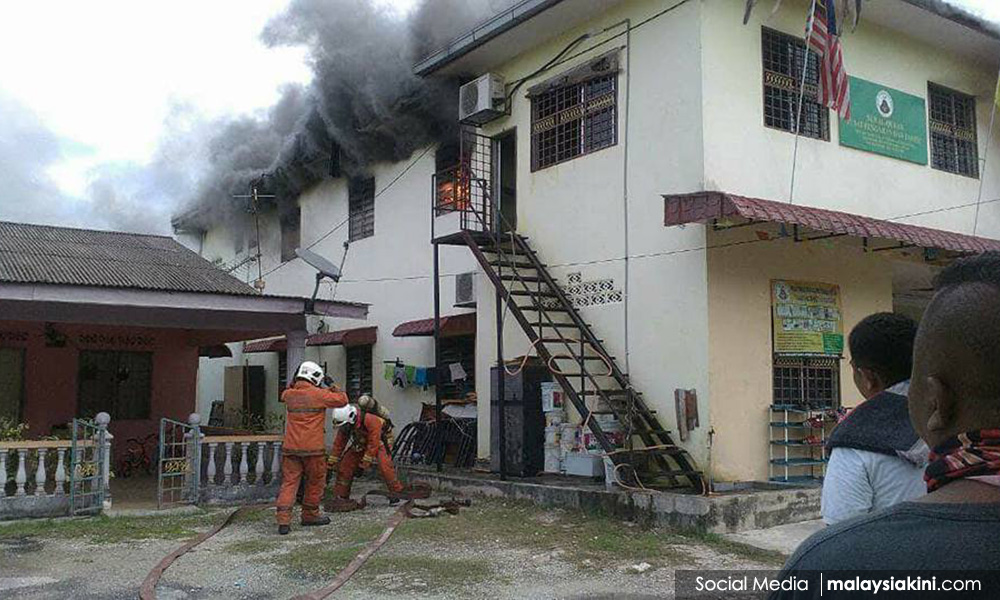
The safety and regulation of tahfiz schools, which became a nationwide discussion after a fire razed one and a tahfiz student died following abuse from a teacher, will also be addressed.
“The infrastructure of tahfiz schools should be regulated, the regulations are there... but we need enforcement to make sure they (enforce them).
“The enforcement should not only be by the Education Ministry but by all agencies, even the Fire and Rescue Department,” he said.
Prior to joining Bersatu, Maszlee was a frequent political commentator, an academician at the International Islamic University of Malaysia (IIUM) and a scholar in Islamic jurisprudence and its principles (Fiqh and Usul al-Fiqh).
He was previously attached to think-tanks such as Ideas, Penang Institute and the National University of Singapore’s (NUS) Institute of Southeast Asian Studies (Iseas).
EARLIER REPORTS
I was a victim too, says Maszlee of controversial UUCA
Maszlee: I support freedom of speech but not Zakir's 'extremism'
This interview was jointly conducted by NORMAN GOH, LU WEI HOONG and ANNABELLE LEE.


Are you sure you want to delete this comment?
This action cannot be undone.