



Survey: Harapan gets 'average' score on gov't satisfaction index
A study by Emir Research has found that respondents across all categories are “averagely satisfied” with the Pakatan Harapan administration.
Between zero and one on the Government Satisfaction Index (GSI), the 1,992 survey takers polled 0.53.
The result was derived from respondents’ satisfaction towards the performance of several...
A study by Emir Research has found that respondents across all categories are “averagely satisfied” with the Pakatan Harapan administration.
Between zero and one on the Government Satisfaction Index (GSI), the 1,992 survey takers polled 0.53.
The result was derived from respondents’ satisfaction towards the performance of several cabinet ministers.
However, the think-tank declined to release further details on this data set today.
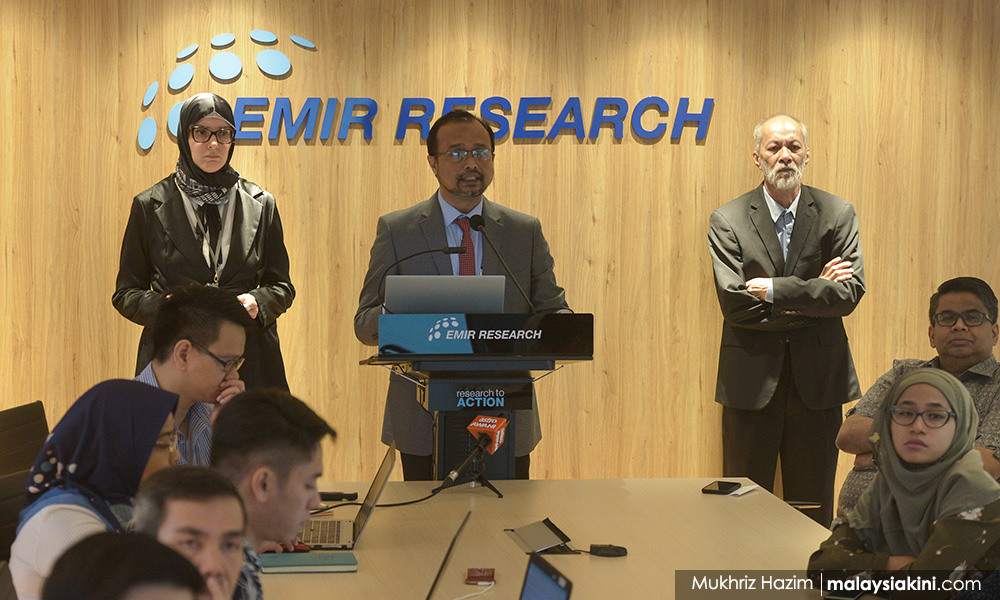
“From our perspective, it is unethical to present or reveal the satisfaction (data) because we don’t have the permission (of the ministers),” said participating researcher Mohamad Sahari Nordin when asked for the results during a press conference in Bukit Damansara today.
Emir Research president and CEO Rais Hussin added that the intention of the study was to uncover public perception towards the cabinet as a whole, rather than just towards individuals.
“When you look at the cabinet, it is a collective decision, a collective performance and a collective evaluation,” he said.
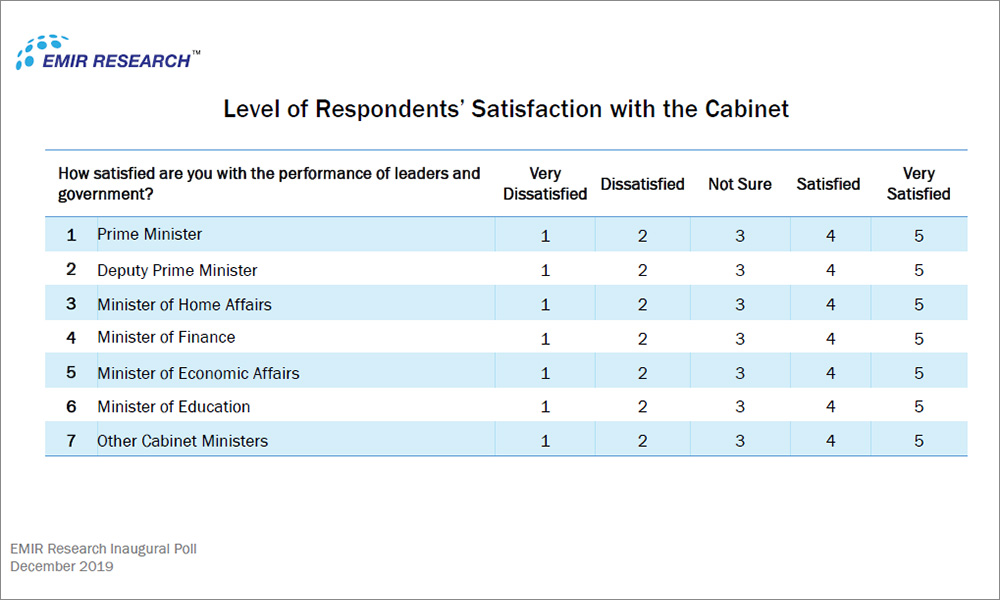
Among the ministers polled were Prime Minister Dr Mahathir Mohamad, Deputy Prime Minister Dr Wan Azizah, Home Minister Muhyiddin Yassin, Finance Minister Lim Guan Eng, Economic Affairs Minister Mohamed Azmin Ali and Education Minister Maszlee Malik.
The research report issued to the media indicated that respondents were asked on 14 leaders but a full list was not provided.
Rais, who is a Bersatu supreme council member, added that such data could be made public in the future.
The think-tank plans to conduct the GSI survey four times a year.
From rural dissatisfaction to taking over tolls
Besides questions on ministerial performance, the study also ran on-the-ground surveys on Harapan’s efforts in fulfilling several manifesto promises.
The promises were grouped in four dimensions — economy, health and transport, agriculture and affordable homes.
Respondents could answer between one and five, with one and two indicating dissatisfaction while four and five indicated the converse.
As a whole, over a third of respondents were satisfied with the government’s performance in the economic dimension.
Higher dissatisfaction levels were registered for “handling the issue of the ringgit” and “stabilising the price of basic necessities” questions.
In particular, 42 percent of Malay and bumiputera respondents said they were dissatisfied with the government’s efforts to “stabilise the price of basic necessities” compared to 38 percent who were satisfied.
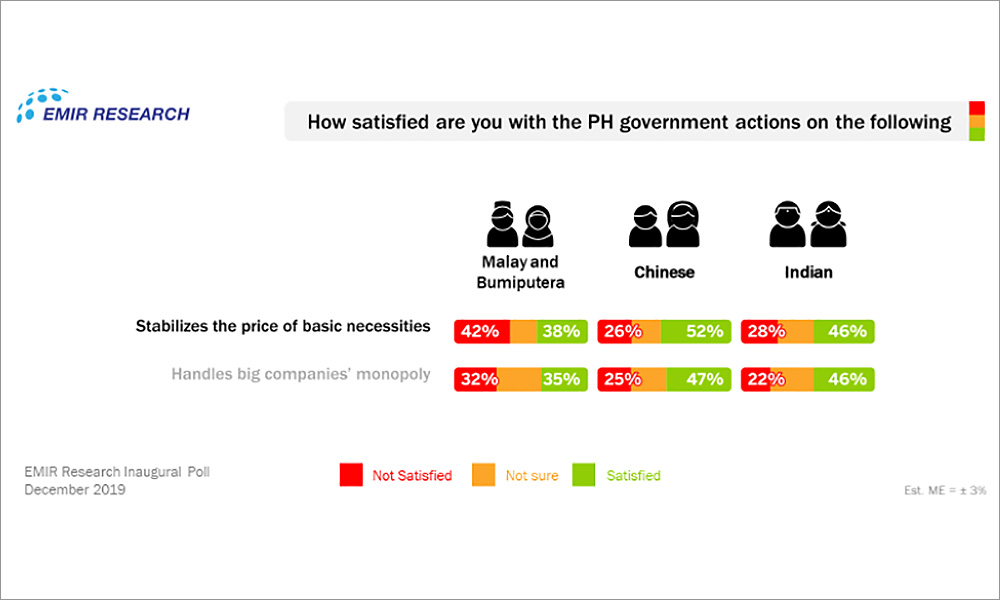
Chinese and Indian respondents generally answered that they were satisfied with this issue.
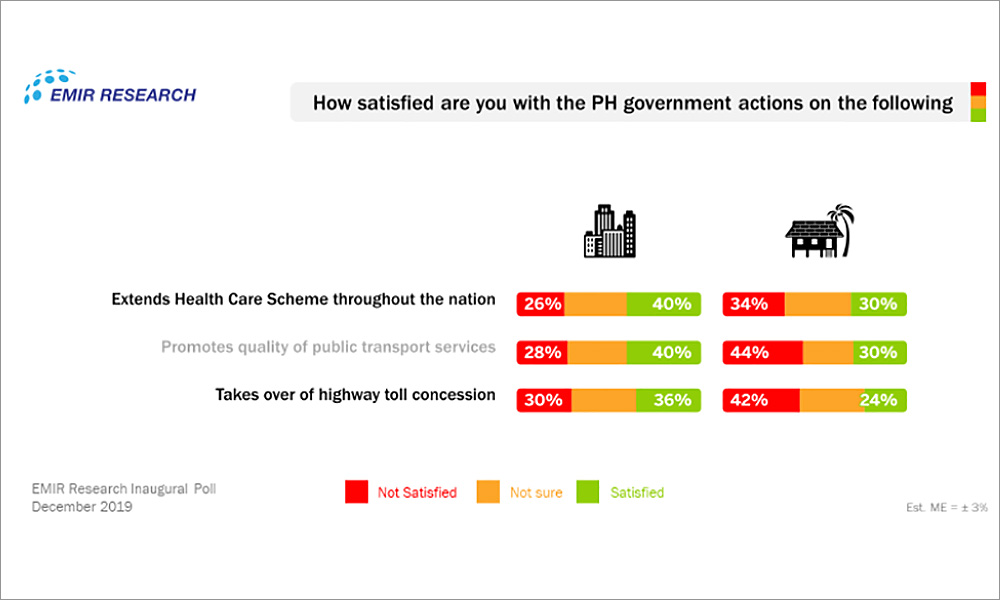
In the health and transport dimension, a third and more of all respondents stated they were satisfied with government’s performance in “allocating budget for health services”, “extending the healthcare scheme throughout the nation”, “promoting quality of public transport services” and “taking over highway toll concessionaires”.
Dissatisfactions levels were generally below 31 percent.
For rural respondents, however, 42 percent said they were dissatisfied with “taking over highway toll concessionaires”. Only 24 percent in this category said they were satisfied with the move.
The cabinet previously approved the Finance Ministry's plan to acquire the Shah Alam Expressway (Kesas), the Damansara-Puchong Expressway (LDP), the Sprint Expressway and the Smart Tunnel for RM6.2 billion.
Putrajaya is also considering several proposals to take over highway tolls from concessionaire Plus Malaysia Bhd.
In the agriculture and affordable policy dimensions, general satisfaction levels were above 30 percent.
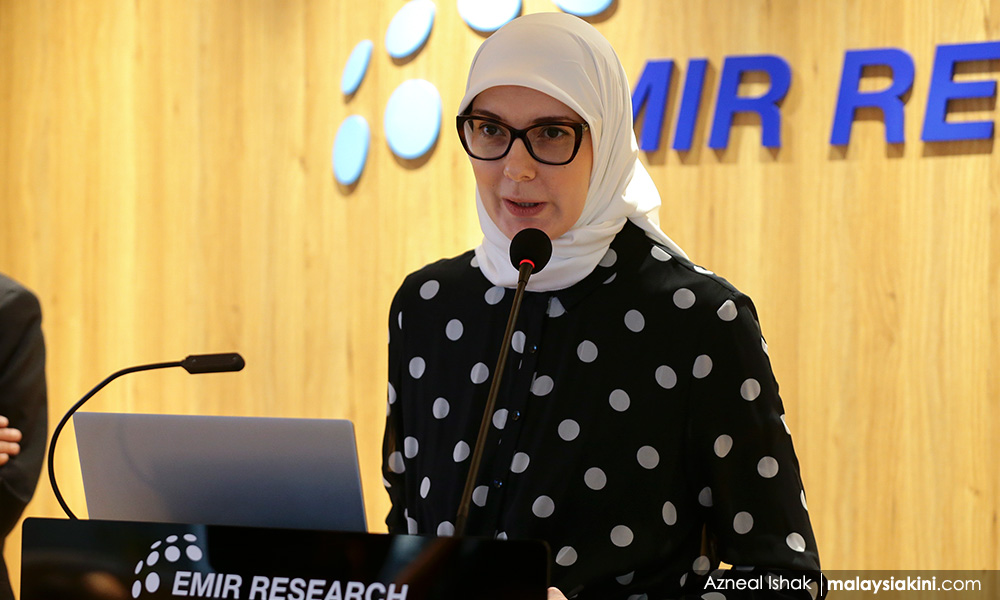
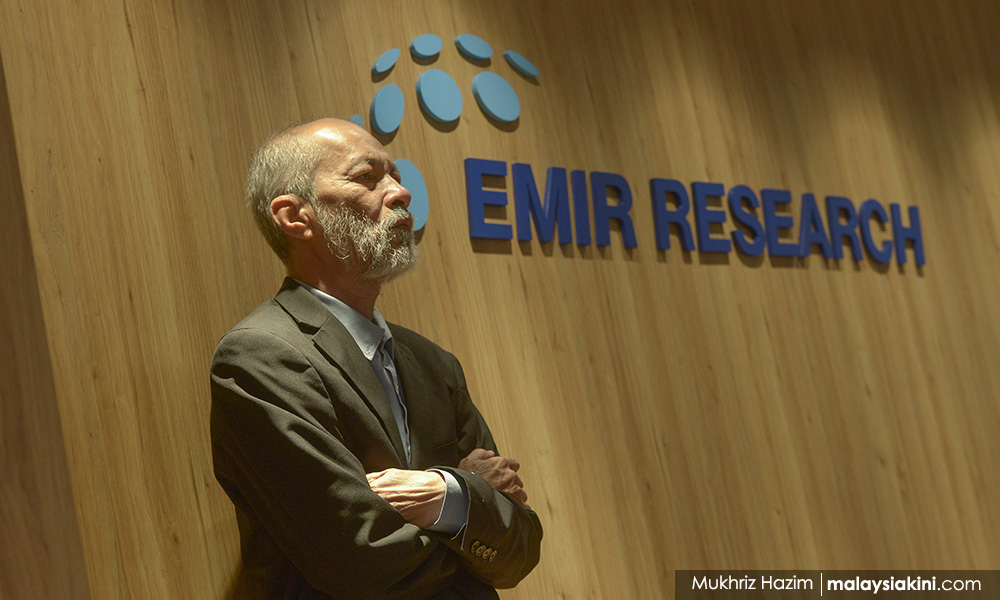
Commenting on the results, participating researcher Margarita Peredaryenko (above) analysed that the fulfilment of manifesto promises had an effect on the GSI.
“The fulfilment of manifesto promises was an important entry point to influence the rakyat’s voting decision,” she said.
This conclusion was arrived at using the “Worry-Satisfaction Variance Model”, which factors respondents’ concerns as well as their satisfaction levels towards the government.
Earlier, the think-tank found that Muafakat Nasional’s popularity among respondents was “neck to neck” with that of Harapan’s.
The opposition pact was especially popular among respondents who were low-income young Malays and bumiputera from rural areas.





Are you sure you want to delete this comment?
This action cannot be undone.