


/file/publisher-c1a3f893382d2b2f8a9aa22a654d9c97/2026/07/cbf33dffa25e60aefff2e8a71e592b92.jpg)

'No feeling to vote': Chinese voters in Johor towns signal reluctance to cast ballots
Interviews conducted by Malaysiakini among voters in several state seats indicated that the apparent fatigue among residents runs deeper than misgivings against any single party or candidate, with most making it clear that their apathy is not due to a lack of knowledge regarding the election.
Instead, what came up repeatedly was a sense of unaddressed frustrations resulting in a calculated move to withhold their vote, evidenced by their comments insisting that voting changes little, coupled with their belief that those elected will disappear after polling day.
In at least one household, the distrust has become deep enough to pass down to the...
JOHOR POLLS | As politicians tout their campaigns for the Johor state election, a concerning refrain appears to be emerging among Chinese voters in small urban areas: some might not turn up to cast their ballots at all, no matter how many promises are made.
Interviews conducted by Malaysiakini among voters in several state seats indicated that the apparent fatigue among residents runs deeper than misgivings against any single party or candidate, with most making it clear that their apathy is not due to a lack of knowledge regarding the election.
Instead, what came up repeatedly was a sense of unaddressed frustrations resulting in a calculated move to withhold their vote, evidenced by their comments insisting that voting changes little, coupled with their belief that those elected will disappear after polling day.
In at least one household, the distrust has become deep enough to pass down to the next generation, with one elderly lorry driver speaking of his decision to tell his children working in Kuala Lumpur not to bother coming home to vote.
Speaking during a break between his rounds collecting recyclable materials from factories, Lim (not his real name) said his instruction this time around is a stark reversal compared to prior elections when he would encourage relatives to travel back.
“(Previously), no matter how far they were, I would tell them to come back and support ‘rocket’ (DAP) as well as (Pakatan Harapan chairperson and prime minister) Anwar Ibrahim, but what have they done for us?” he questioned.
“A lot of other Chinese people are saying to come back and vote for Harapan, but I don’t want to vote - there’s no ‘feeling’.
“I might as well rest at home and watch football,” the Bukit Naning voter said when met at a kopitiam in Bukit Bakri.
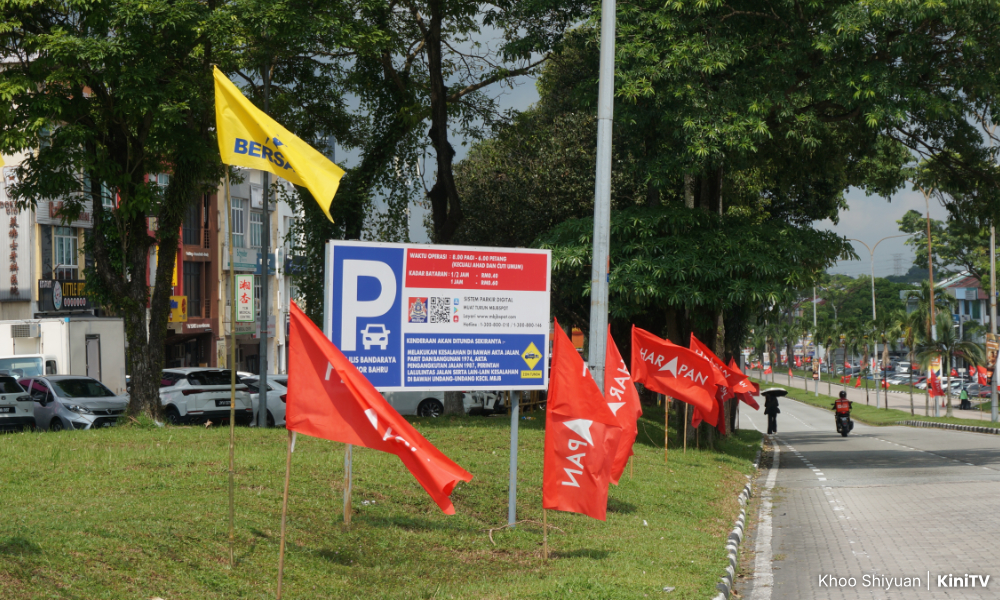
Like many other voters, Lim’s reasons for disengaging from the state election were mostly related to matters which affected his livelihood, including road transport regulations he associated with DAP secretary-general-cum-Transport Minister Anthony Loke.
Between a rock and a hard place
While Lim conceded that the rules are probably beneficial in principle, he said they still left him feeling pressured as he is caught between doing right by the law and forking out hard-earned funds over matters he has little say over.
Accusing government leaders of being disconnected from the plight faced by ordinary citizens, the senior citizen lamented: “Whoever wins, I will still be a lorry driver.”
His apathy is such that even his fears that PAS may one day rule the country and oppress minorities do little to motivate him to cast his ballot.
For Lim, it has come to the point where he said that if he could afford it, he would have left the country.
Lim’s grievances point to a wider dynamic supposedly shaping ground sentiment ahead of the state election: frustrations with federal-level policies and personalities could be bleeding into how voters approach what is, on paper, a separate state-level contest.
‘Whoever wins, Chinese will struggle’
The situation was further exemplified by a Mengkibol voter, Chua (not his real name), who expressed similar sentiments in painting a bleak picture of the economic pressures shaping his outlook on the polls.
“Times are hard now; even earning a living is difficult. I’m too tired to even vote,” he said while manning a stall at a night market in Kampung Paya.
He noted that as someone who isn’t particularly inclined to any one party, he remains undecided on whether he will turn up at his voting centre on July 11, saying: “If there are only two candidates, I’ll give my vote to whoever I think is good.
“If I don’t like either of them, then I won’t go vote. I’ll see how I feel on that day.”
Chua added that his reluctance to head to the polls is also fuelled by a broader disillusionment over how politicians typically engage voters in a seemingly transactional relationship, which tends to evaporate once ballots are counted - an assessment supported by numerous other voters.
ALSO READ: Ex-DAP MP projects crushing defeat for Harapan in Johor election
While Bukit Naning voter Wee (not his real name) said he has not decided who will secure his vote, his remarks hinted at a resignedly chagrined outlook on the state of national politics, regardless of who holds power.
“Whoever wins, the Chinese will struggle. Our heart aches with Malaysia,” the man in his 40s said as he cut fruits to sell in a parking area by a badminton court.
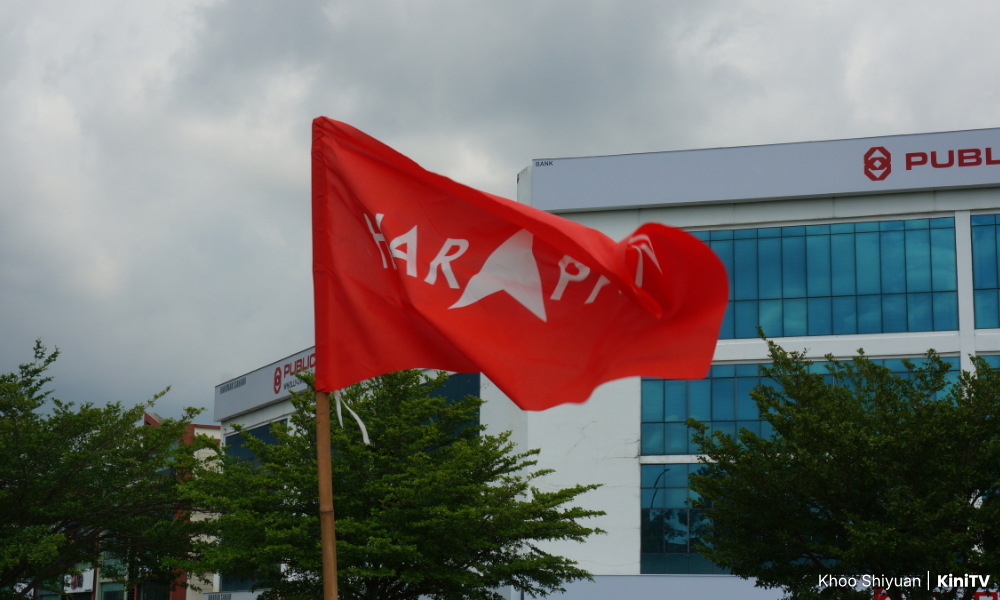
He said things could be better if politicians were more focused on efforts towards nation-building rather than bickering, asserting that the exodus of local talent, particularly among non-Malays, can be traced back to insufficient development of national resources.
“What does Singapore have that we don’t? Even their water comes from us,” he quipped.
Can Bersama make a difference?
Wee’s sense of futility was shared by another Mengkibol voter over 90km away, with an 81-year-old who wished to be known only as Tan arguing that even areas held by DAP have little to show.
He suggested that the Harapan party’s rise to federal power, which he emphasised was only made possible due to the support of the Chinese, has made little practical difference to residents on the ground.
It is against this backdrop of fatigue with the status quo that Parti Bersama Malaysia, the multiracial party making its Johor debut this election, has entered the conversation for some voters.
READ MORE: Bersama candidates include JB MP's ex-officers; Rafizi aims for a 'miracle'
Tan said he would have made an exception to his general reluctance to vote this time if Bersama had fielded a candidate in his state constituency.
His support, however, was framed more as a vote against everyone else on the ballot than an endorsement of Bersama.
Speaking under the shade of a tree across a morning market where Bersama’s Mahkota hopeful, Abd Hamid Ali, had just completed a walkabout, Tan said: “I told him (Hamid) not to lose his deposit and go around more places so people will support him - only then can he win.
“I don’t want to let the other parties win - they just sprinkle promises and sweet talk,” he grumbled, noting that he used to be an ardent DAP supporter during previous polls.
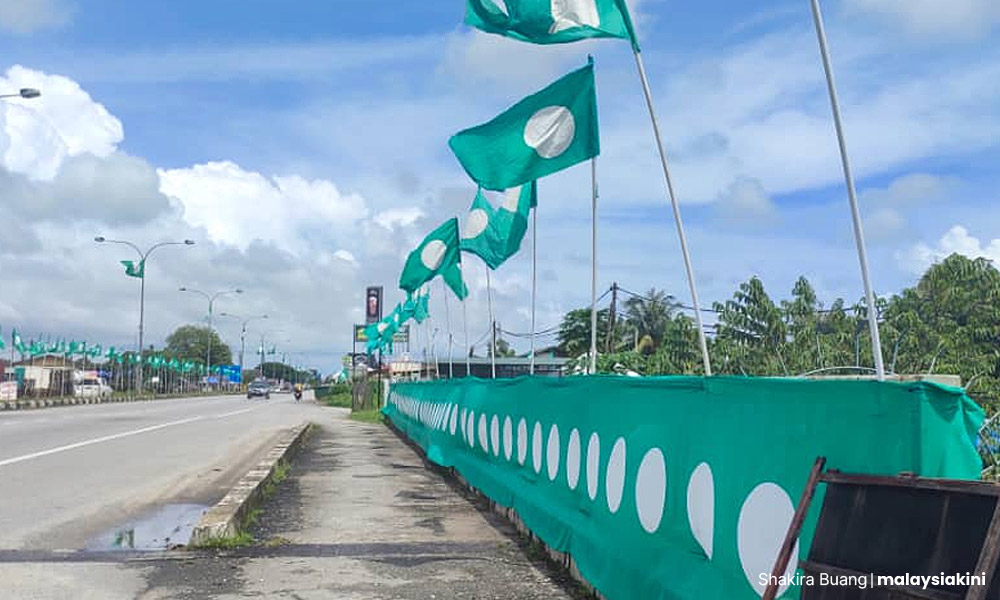
Asked who he would rather support in the seat’s straight fight between BN and Harapan after being informed that Bersama is not contesting Mengkibol, Tan declared that he would rather furnish his vote to PAS - which is also not on the ballot in his constituency.
READ MORE: How straight fights virtually guarantee 7 BN wins, 3 for Harapan
A group of three other Mengkibol voters at the same market also said they would have supported Bersama if the party led by former ministers Rafizi Ramli and Nik Nazmi Nik Ahmad had vied for the state seat.
Contrary to Tan, their backing of the party factored in its “balanced” composition in terms of racial representation and embraced a more understanding attitude towards the fledgling political outfit’s visibly under-resourced campaign, which they attributed to limited funds.
Not everyone’s a fan
While the trio - who declined to be named - said they remain undecided between keeping Mengkibol in DAP's hands, or returning the seat to MCA, such goodwill towards Bersama proved far from universal as a Mahkota voter outright rejected Hamid.
Eng, 70, said he is unconvinced by the candidate’s profile, highlighting that DAP and MCA’s candidates elsewhere are young contenders with professional credentials, such as a lawyer or someone with a university education.

“Voters will either look at your race or your career - (Hamid) looks too old, and I don’t even know what his occupation is,” the voter said while packing up his wares earlier displayed at a booth several lots away from the trio.
According to his candidate profile on Bersama’s website, Hamid, 55, is a community activist who holds a diploma in accounting and had previously served as an aide to Mahkota’s BN assemblyperson from 2022 to 2024, the late Sharifah Azizah Syed Zain.
Another Mahkota voter, Ray Chong, 74, opined that it might have been more strategic for Bersama to sit out the Johor polls in order to solidify its base first before presenting its offerings to the public.
“(Bersama should) just wait and bide their time - the way it’s going now, they’re just wasting time,” he bluntly said, noting that while he had previously volunteered to assist DAP’s representatives, he has also since become “not as politically enthusiastic”.
Reservations against the party also extended to unease over its leadership. Loo, 67, who also votes in Mahkota, said he would not be supporting Bersama due to how Rafizi became involved in the party.
Loo likened Rafizi’s departure from PKR after he failed to retain the deputy presidency against Anwar’s daughter, Nurul Izzah, as a huff instead of a principled exit.
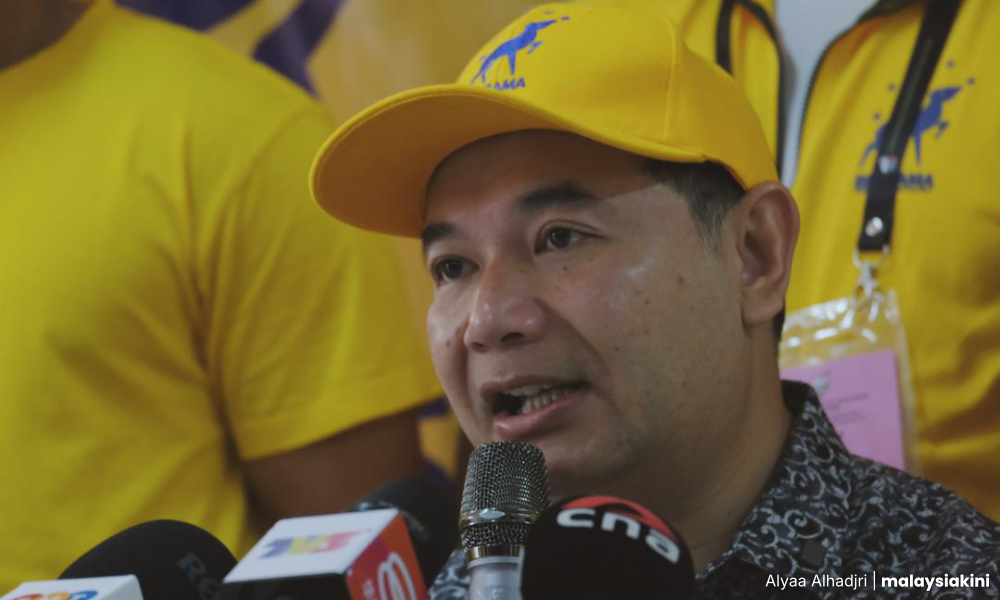
“He lost a party election, lost the ‘mood’, and jumped ship - it’s like he was sulking.”
Loo also affirmed that he intends to cast his vote for BN instead, partly out of personal loyalty to its candidate and the seat’s incumbent, Syed Hussien Syed Abdullah, whom he called a friend.
The turnout tide
In the three seats - Mahkota, Mengkibol, and Bukit Naning - whose voters Malaysiakini spoke to, Chinese voters make up 30 percent of the electorate or more. Their votes, or lack thereof, could make a significant difference at the ballot box.
During the last state election in March 2022, low turnout, hampered by the Covid-19 pandemic, allowed BN to win two of these seats: Mahkota and Mengkibol.
When voters came back in force later for the 2022 general election, an analysis of voting patterns indicated that had state polls been held then, Harapan would have won all three.
READ MORE: Behind the narrative: Why 25 Johor BN seats are actually at risk
However, if the apathy expressed by those Malaysiakini met is widespread, then it could be a tough fight for Harapan in these seats.
Previously, during the 2024 Mahkota by-election, there was already a notable drop in Chinese turnout, with less than 50 percent of the seat’s Chinese voters casting their ballots.
More interestingly, there was a small wave of protest votes among Chinese voters going towards PSM.

This time around, Mahkota will see a three-cornered challenge between BN, Harapan, and Bersama, while Mengkibol will see a straight fight between BN and Harapan.
The contest is more crowded in Bukit Naning, which will see a five-way bout between BN, Harapan, Perikatan Nasional, Bersama, and one independent.
Johor goes to the polls on July 11.
/file/publisher-c1a3f893382d2b2f8a9aa22a654d9c97/2026/07/91ca4afcda0bd918fe752214a68dbc67.jpg)
/file/publisher-c1a3f893382d2b2f8a9aa22a654d9c97/2026/07/59d67eeafef00ab1391df9b74dfdaf1f.jpg)
/file/publisher-c1a3f893382d2b2f8a9aa22a654d9c97/2022/08/83e4a518b493d3fb95ccd5f96db39668.jpg)
/file/publisher-c1a3f893382d2b2f8a9aa22a654d9c97/2026/07/c3e2e553e88fc084a521194f328fe039.jpg)


Report this comment
Are you sure you want to delete this comment?
This action cannot be undone.